

How to Furnish a Small London Flat: The 57 Square Metre Playbook
The average London flat measures just 57 square metres. That's roughly the footprint of a large shipping container, yet it's home to millions of Londoners navigating the daily puzzle of where to put their sofa, whether a dining table will actually fit, and how to create a bedroom that doesn't feel like sleeping in a wardrobe.
The challenge isn't finding furniture. It's finding furniture that fits—physically, visually, and functionally. Traditional furniture shopping fails small spaces spectacularly. Showroom floors make oversized sofas look modest. Online photos strip away all sense of scale. And the return logistics of a sofa that won't fit through your Victorian terrace hallway? Nobody wants that phone call.
This guide takes a different approach: dimensions-first furniture selection. Before aesthetics, before price, before that perfect shade of boucle—we start with measurements. Every recommendation here considers the spatial realities of compact London living, from the narrow hallway to the bijou bedroom.
We'll work room by room, covering specific dimension guidelines, the concept of visual weight (crucial for making small rooms breathe), and curated recommendations from brands that understand UK spaces: Loaf, Castlery, OKA, and others in the £1,000-3,000 range where quality meets attainability.
> What is Visual Weight? > Visual weight describes how heavy a piece of furniture appears, regardless of actual weight. Furniture with thick legs, solid backs, dark colours, and dense materials has high visual weight. Open frames, light colours, and transparent materials have low visual weight. In small spaces, managing visual weight prevents rooms from feeling cramped—even when they technically are.
---
The Measurement Fundamentals: Before You Buy Anything
Every furniture mistake in a small flat traces back to the same root cause: inadequate measurement. Not just "roughly 3 metres" but precise dimensions that account for the realities of London housing stock.
What to Measure (And What People Forget)
The obvious:
Wall lengths, including alcoves and chimney breasts
Room width and depth at multiple points (older flats are rarely perfectly rectangular)
The frequently forgotten:
Radiator positions and projections (typically 10-15cm from wall)
Window sill heights (furniture below sill height preserves light)
Skirting board depth (adds 1-2cm to wall measurements)
Door swing clearance (a door needs 90cm arc to open fully)
Ceiling height (Victorian: 2.7m+; modern builds: 2.4m standard)
The delivery-critical:
Front door width (typically 76-81cm)
Stairwell turning space
Lift dimensions (if applicable)
Any tight corners between entrance and room
The Clearance Rules
These aren't suggestions—they're minimums for comfortable daily living:
60cm: General circulation around furniture
90cm: Primary traffic paths (hallway, route to kitchen)
45cm: Absolute minimum squeeze-through zones
90cm: Behind dining chairs for someone to pass when seated
60cm: To stand up from a dining table
The Tape Test
Before committing to any significant piece, mark its footprint on your floor with painter's tape. Live with those tape outlines for 48 hours minimum. Walk around them. Sit in imaginary chairs. You'll discover problems before they arrive on a delivery lorry.
---
The Visual Weight Equation: Why Some Rooms Feel Bigger
Two identically sized rooms can feel vastly different based on the visual weight of their contents. A room packed with solid, dark, bulky furniture feels oppressive. The same room with carefully chosen pieces can feel spacious, even airy.
The 70/30 Rule for Small Spaces
Aim for this balance:
70% of furniture: Low to medium visual weight
30% of furniture: Substantial anchor pieces
This doesn't mean everything should be flimsy or transparent. You need grounding elements—a proper sofa, a real dining table. But balance them with pieces that let the eye travel: glass surfaces, visible legs, open shelving.
High Visual Weight (Use Sparingly)
Solid wood sideboards with closed fronts
Fully upholstered headboards
L-shaped sofas with solid bases that meet the floor
Dark timber in large surface areas
Heavy curtains pooling on the floor
Low Visual Weight (Use Generously)
Glass or acrylic coffee tables
Furniture with visible legs (hairpin, spindle, tapered)
Open shelving instead of closed cabinets
Stools and benches without backs
Wall-mounted furniture (floating shelves, wall desks)
Mirrors (they reflect light and create depth)
Colour Considerations
Colour affects visual weight independently of form:
A light oak sideboard feels lighter than the same piece in walnut
A pale grey sofa reads as less imposing than navy velvet
For 57sqm, prioritise warm whites, soft greys, pale timbers, and muted accent colours
---
The Living Room: Your 14 Square Metres
The living room in a typical 57sqm London flat measures roughly 4m x 3.5m—about 14 square metres. It's the room that works hardest, often serving as lounge, dining area, home office, and guest accommodation. Every piece earns its place or gets eliminated.
The Sofa: Your Anchor Decision
The sofa is the largest piece you'll choose. Get this wrong, and everything else becomes compromise.
Dimension Guidelines:
Type | Width | When It Works |
|---|---|---|
2-seater | 135-170cm | Rooms under 15sqm; leaves space for armchair |
2.5-seater | 175-200cm | Most 57sqm flats; comfortable for two plus guest |
3-seater | 200-240cm | Only if sacrificing dining table or other seating |
Critical: Check the depth. Many sofas marketed as "compact" are still 95-100cm deep. In a 3.5m-wide room, that's nearly a third of your space before adding a coffee table and circulation. Look for depths of 85-90cm for small rooms.
Leg visibility matters. A sofa with visible legs (10-15cm clearance) shows floor beneath, making the room feel larger. Sofas that meet the floor create visual bulk—fine for large rooms, problematic for small ones.
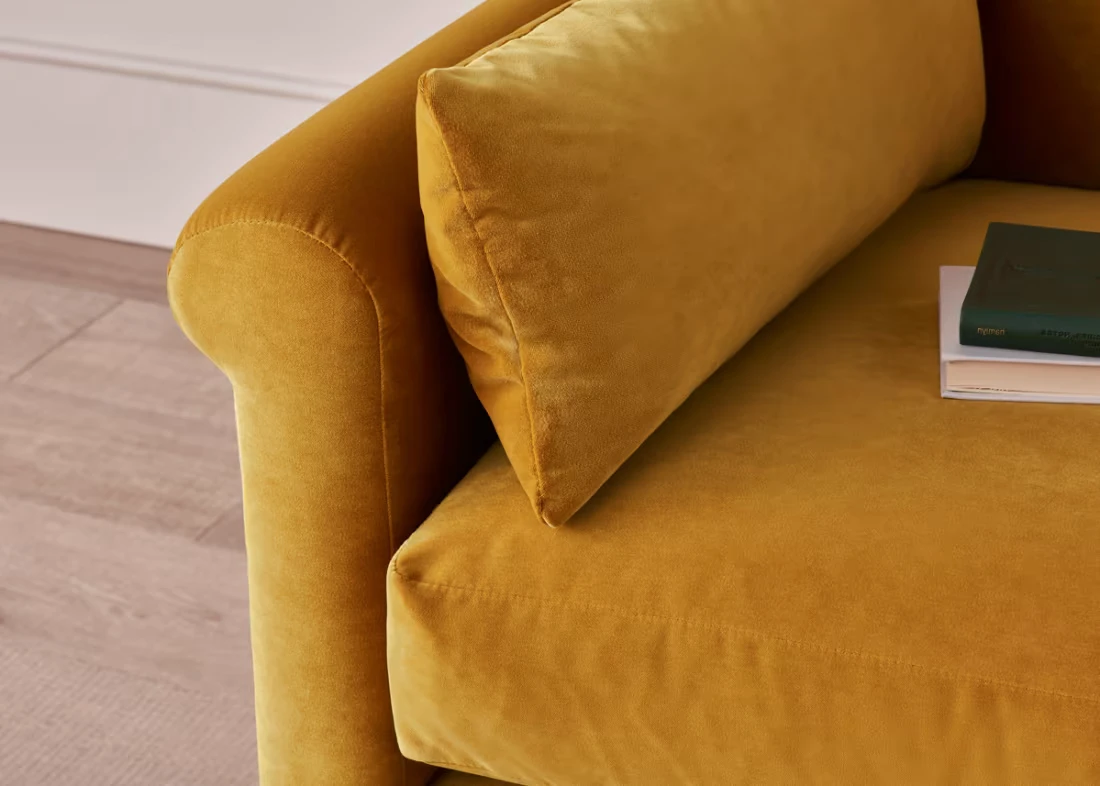
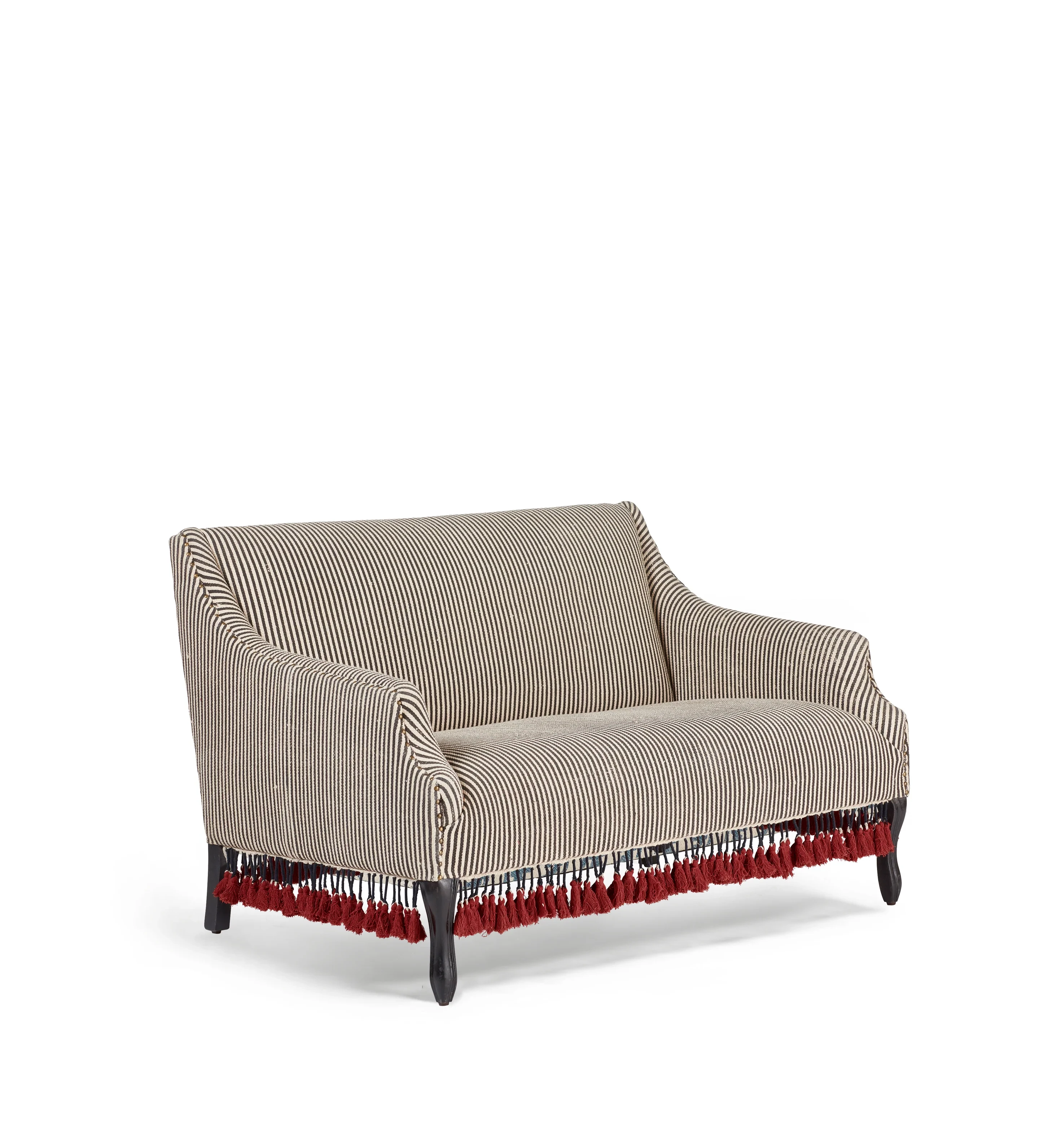
Recommended for Small London Living Rooms:
The Coffee Table Question
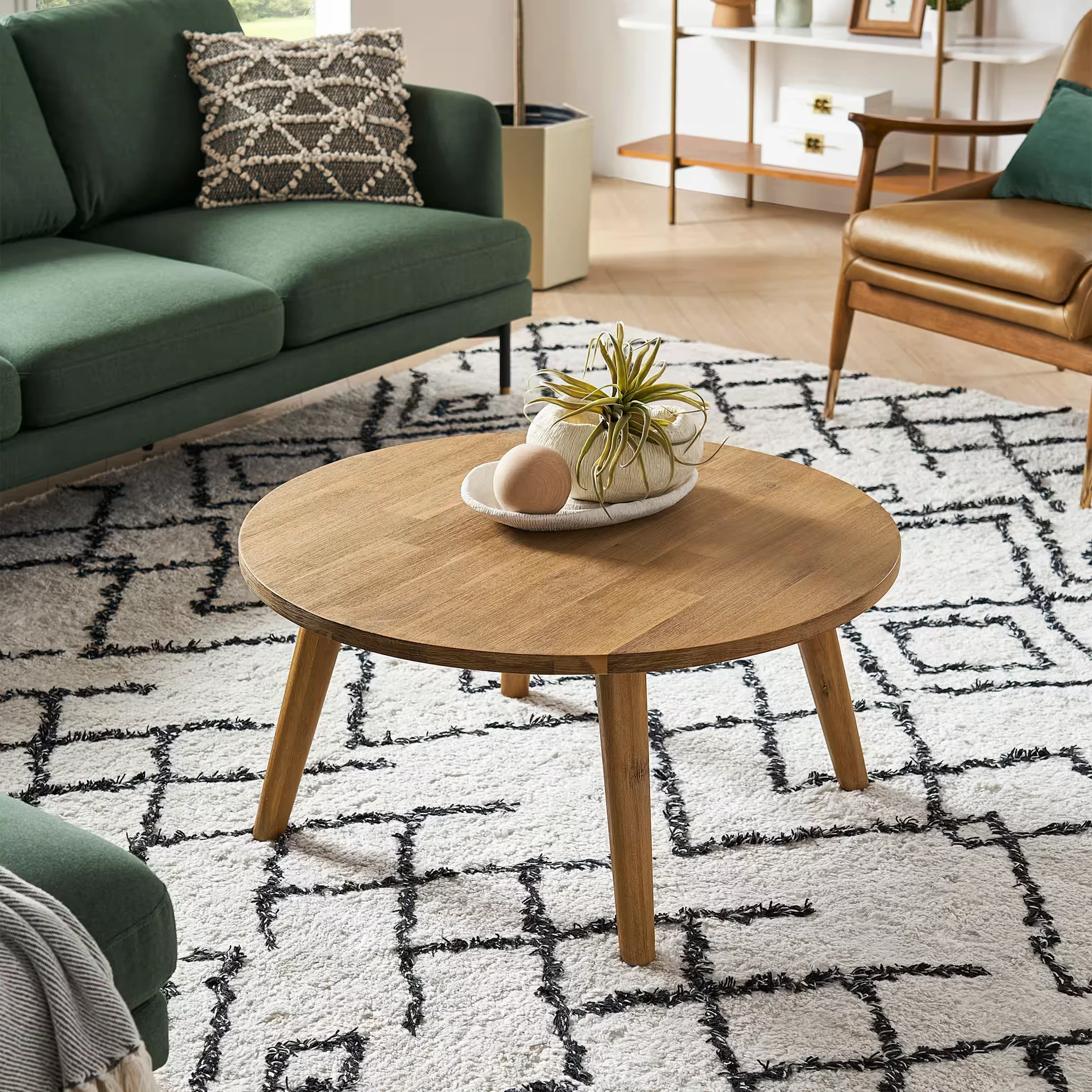
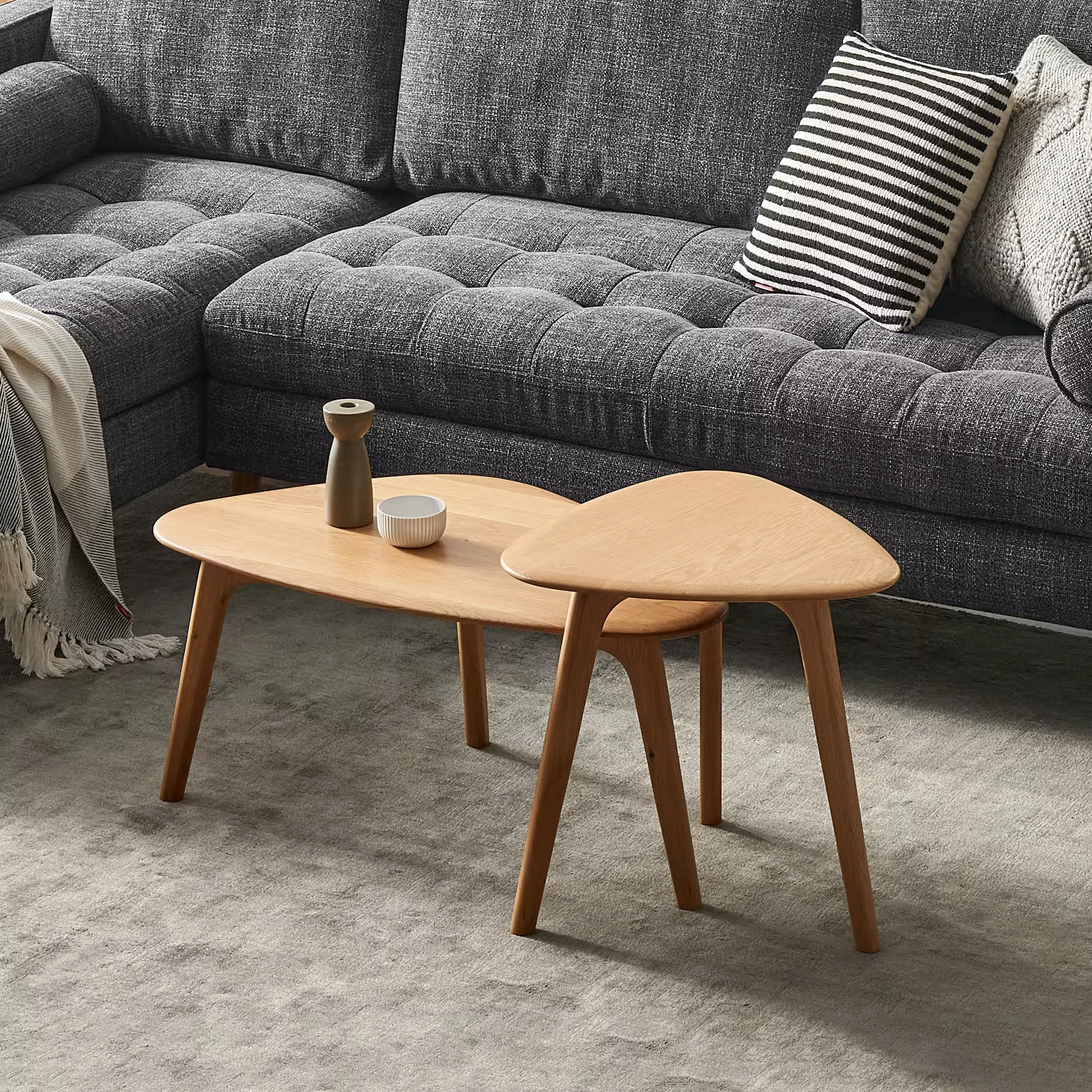
Not every small living room needs a coffee table. But if you want one, size it correctly:
Length: Approximately 60% of your sofa's width
Height: Same as or slightly lower than sofa seat (typically 40-45cm)
Clearance: 45cm between sofa and table edge; 30cm minimum
For small spaces, consider:
Nesting tables: Tuck away when not needed, expand for guests
Round or oval shapes: No sharp corners, better flow around furniture
Glass tops: Lowest visual weight; floor remains visible
Storage Without Bulk
The temptation in small spaces is to add storage units everywhere. Resist. Multiple small storage pieces create visual chaos. Instead:
One substantial storage piece (sideboard or media unit) rather than several small ones
Wall-mounted shelving over floor-standing bookcases
Media units with visible legs (floor visibility = perceived space)
Behind-sofa console for additional surface without floor footprint
The Living Room Hierarchy
Buy in this order—each decision constrains the next:
1. Sofa (anchor; determines remaining floor space) 2. Media/TV solution (if applicable) 3. Coffee table (based on what remains) 4. Lighting (floor and table lamps use vertical space, not floor space) 5. Occasional seating (only if room genuinely allows after above)
---
The Bedroom: Making 10-12 Square Metres Work
London flat bedrooms typically measure 3-3.5m x 3m—roughly 10-12 square metres. The bed dominates by necessity, but smart choices in frame, storage, and supporting furniture can make a small bedroom feel considered rather than cramped.
Bed Sizing Reality Check
UK Bed Dimensions:
Size | Dimensions | Minimum Room Width |
|---|---|---|
Double | 135cm x 190cm | 2.7m (with 45cm clearance each side) |
King | 150cm x 200cm | 3m (with 60cm clearance each side) |
Super King | 180cm x 200cm | 3.6m (rarely feasible in 57sqm flats) |
For couples in a standard London bedroom, a King (150cm) is usually the maximum advisable. You need 60cm on at least one side to make the bed comfortably; 60cm on both sides if two people access it nightly.
Frame Types for Small Bedrooms
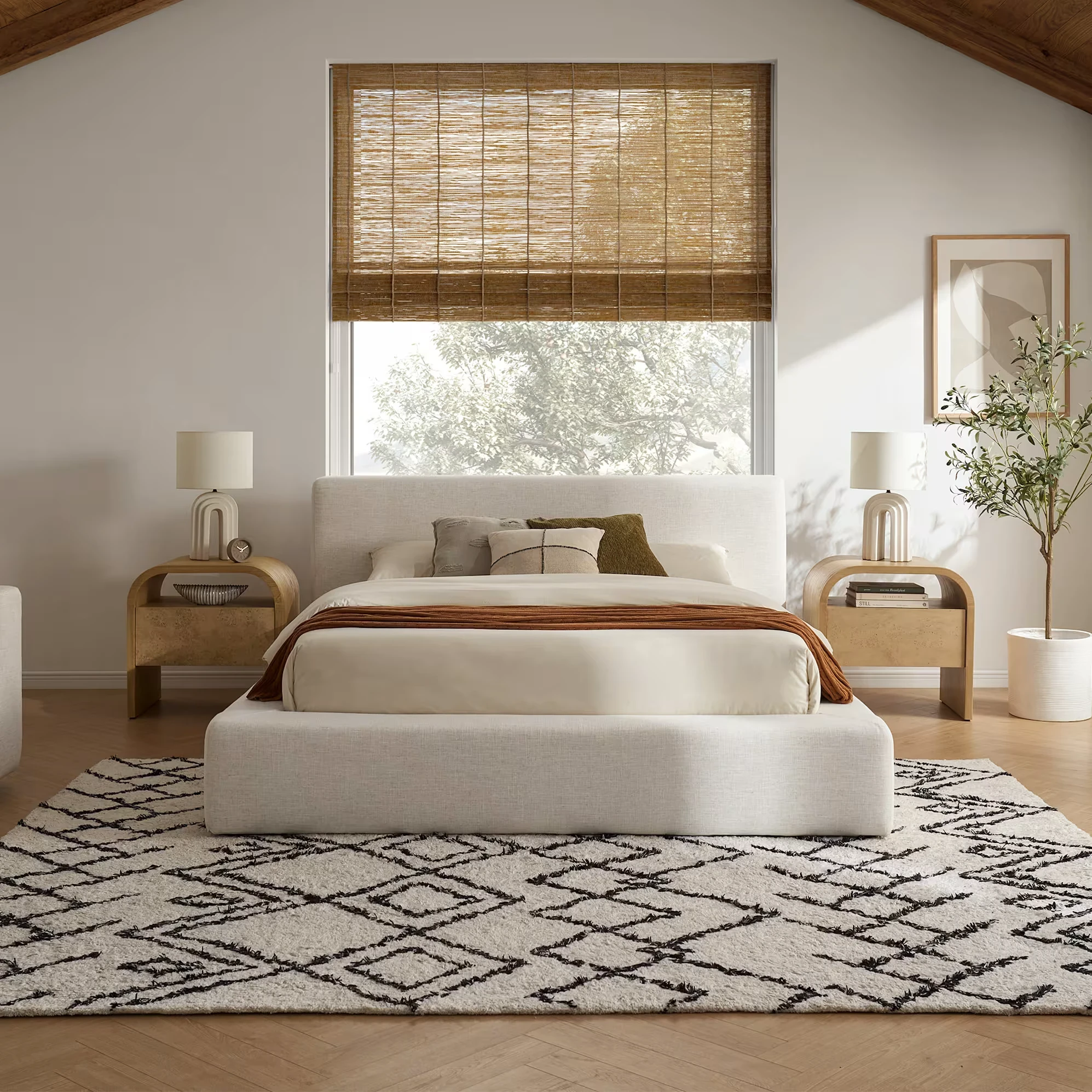
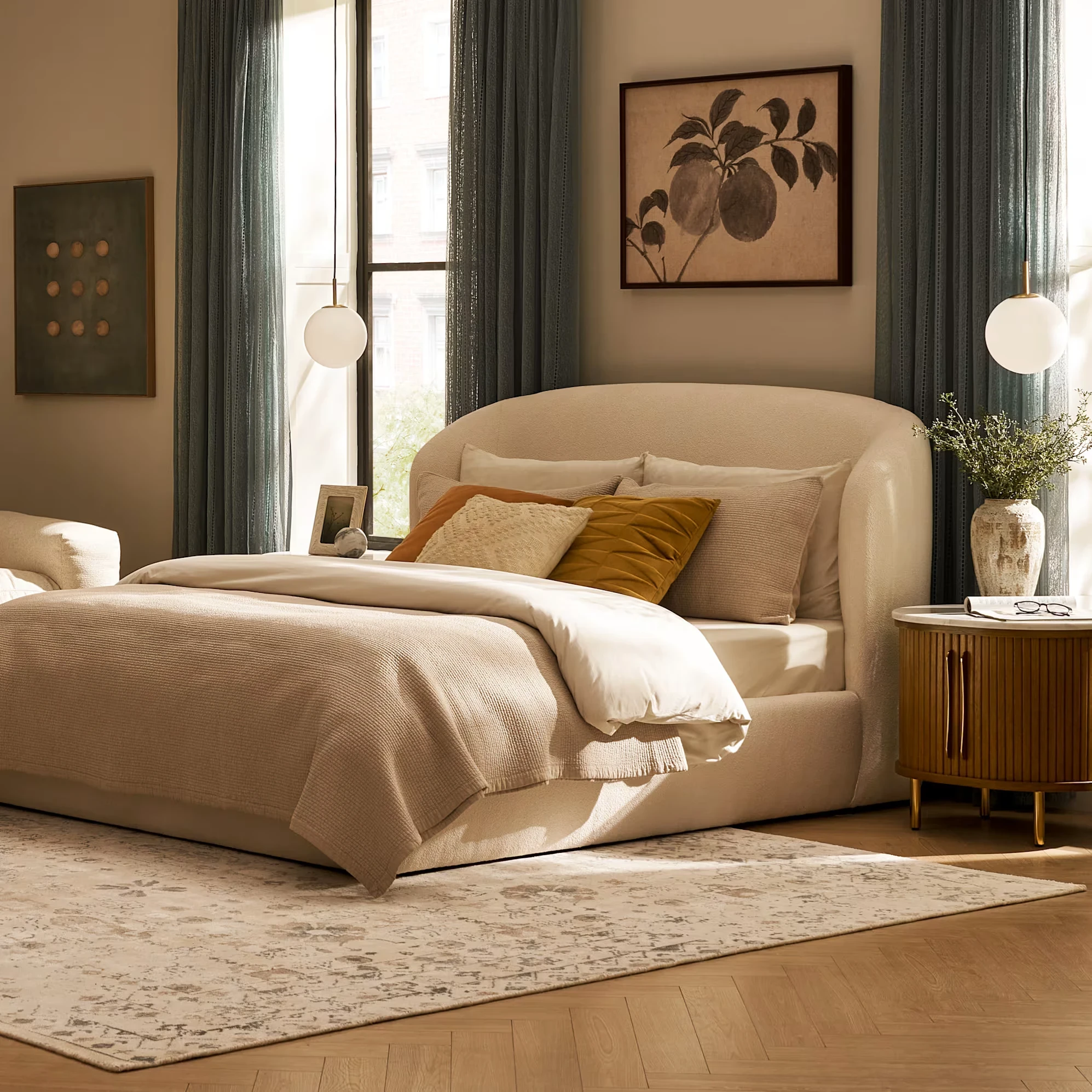
Ottoman storage beds: Excellent hidden storage. The entire mattress lifts to reveal deep storage underneath—perfect for bedding, luggage, seasonal items. Trade-off: high visual weight, heavier to operate, more expensive.
Platform beds with visible legs: Low visual weight, floor visibility extends the visual space. No built-in storage, but the room feels larger.
Divan with drawers: Practical middle ground. Less storage than ottoman, less visual weight. Works well if you need accessible storage (daily items rather than seasonal).
Wall-mounted/floating beds: Lowest visual weight, most dramatic space-expanding effect. Requires secure wall mounting—check with landlord if renting.
Bedside Solutions
Traditional bedside tables (50cm wide, 40cm deep) consume significant floor space. In small bedrooms, consider:
Wall-mounted shelves at mattress height (0 floor footprint)
Narrow consoles (30cm depth maximum)
Floating drawers mounted to wall
Stacking boxes or stools (dual purpose, easily moved)
Whatever you choose: height should match or slightly exceed mattress top, and you need enough surface for essentials (phone, water, lamp, book).
Wardrobe Strategy
The maths: A standard wardrobe requires 60cm depth for hanging. Add door swing (another 60cm for hinged doors) and you've consumed 120cm of room depth just for the wardrobe to function.
Solutions for small bedrooms:
Sliding door wardrobes: Eliminate door swing; save 60cm floor space
Mirrored doors: Reflect light, create depth illusion, functional for dressing
Built-in around chimney breast: Use the alcoves either side (common in Victorian conversions)
Open rail with curtain: Lowest cost, adaptable, requires tidy habits
If going freestanding, measure twice: width is flexible, but depth is fixed at 58-60cm for standard hanging.
---
The Dining Zone: Where and How
Dedicated dining rooms are rare in 57sqm flats. More commonly, dining happens at a table in the living room corner, a breakfast bar adjoining the kitchen, or a fold-down solution that appears when needed.
Dining Table Dimensions
Per person requirements:
Width: 60cm (elbow room)
Depth: 40cm (plate and glass space)
Common table sizes:
Seats | Dimensions | Reality Check |
|---|---|---|
2 | 75cm x 75cm | Café style; works in kitchen corners |
4 | 120cm x 75cm | Standard; tight fit in most 57sqm layouts |
6 | 180cm x 90cm | Requires dedicated space; unlikely unless open-plan |
Clearance needed: 90cm behind chairs for someone to pass while seated; 60cm minimum just to stand up from the table.
Table Shape Strategy
Round tables: No corners to navigate, better flow, harder to push against a wall, seats can squeeze closer.
Oval tables: Combines flow benefits of round with space efficiency of rectangular; excellent for galley-style layouts.
Rectangular tables: Most space-efficient when pushed against a wall; maximises seating per square metre.
Square tables: Compact, works in corners, often available with extending leaves.
The Extendable Table Solution
For small flats that occasionally host, an extendable table is essential. A 90cm square that extends to 130cm transforms a 2-person daily table into 4-person dinner party seating.
What to look for:
Extension mechanism operable by one person
Stored leaves (tables where you store the leaf elsewhere are impractical)
Sturdy when extended (some designs wobble at full extension)
Seating That Disappears
Stackable chairs: Store in a closet or corner when not in use
Folding chairs: Even more compact storage; less comfortable for long meals
Benches: Tuck completely under table; can seat extra guests in a squeeze
Stools: Versatile; move to kitchen counter, use as plant stands, stack easily
---
The Home Office Corner: Post-Pandemic Essential
Remote and hybrid work means most 57sqm flats now need a workspace. Rarely does this mean a dedicated room—more often, it's a corner of the living room, a bedroom alcove, or a clever kitchen integration.
Desk Dimensions for Productivity
Minimum functional workspace: 100cm wide x 50cm deep Comfortable workspace: 120cm wide x 60cm deep Under-desk clearance: 60cm height for legs (more if you're tall)
Small Space Desk Solutions
Wall-mounted fold-down desks: 0 square metres when closed. Open for work, fold flat against wall when done. Ideal for living rooms where the workspace shouldn't dominate.
Secretary desks: The Victorian solution, still brilliant. Close the front to hide workspace chaos; when open, provides full desk functionality plus small storage compartments.
Console table doubles: A console table in the hallway or behind a sofa can serve as standing desk or occasional work surface. Choose one at standing height (100-110cm) or pair with a high stool.
Alcove desks: Many London flats have chimney breast alcoves—perfect for built-in or fitted desks that use otherwise dead space.
Seating That Doesn't Scream "Office"
If your desk is in a living space, avoid the black mesh ergonomic office chair. Instead:
Upholstered desk chairs that read as dining chairs
Compact task chairs without arms (fit under desk when not in use)
Quality stools for standing desk transition
---
Hallways and Forgotten Spaces
The average London flat hallway: 100-120cm wide, 3-4m long—often dismissed as purely transitional. But this is valuable linear space, perfect for storage that doesn't intrude on living areas.
The 30cm Depth Rule
In a 100cm hallway, furniture can be maximum 30cm deep while maintaining the 70cm minimum passage width. At 40cm deep, you create a squeeze point.
What fits in 30cm depth:
Narrow console tables
Wall-mounted coat hooks and key organisers
Slim shoe cabinets (vertical storage)
Full-length mirrors (creates depth, functional for outfit checks)
Floating shelves for mail and everyday items
Vertical Emphasis
Hallways benefit from vertical storage—it draws the eye up and uses wall space rather than floor space. Tall, narrow shoe storage (30cm wide, 120cm tall) holds more than a wide, low unit while consuming less visual space.
---
The Brands That Understand Small UK Living
Not all furniture retailers think about UK housing realities. These do, offering pieces scaled for how we actually live:
Loaf Known for comfortable, relaxed designs with excellent fabric options. Note: some Loaf sofas run deep (100cm+), so check dimensions carefully. Strong on sofa beds for guest accommodation in small flats. Price range: £1,200-2,500 for sofas
Castlery Clean, contemporary design with a growing UK presence. Good range of explicitly compact pieces. Strong on storage beds and modular options that adapt to different spaces. Price range: £1,000-2,000 for sofas
OKA Heritage British brand with well-proportioned pieces. Higher price point but excellent quality. Good for anchor pieces you'll keep for decades. Price range: £1,500-4,000 for sofas
Heal's Curated designer collections with thoughtful dimensions. Investment-level pricing, but pieces hold value. London showroom worth visiting to see scale in person. Price range: £2,000-4,000+ for sofas
When shopping any brand, always filter by dimensions where available, or use MeetFelix's dimension-aware search to find pieces that actually fit your space.
---
Rental-Friendly Furniture Decisions
Most Londoners in 57sqm flats are renting. This changes the furniture calculation in several ways:
Portability Matters
You may need to move with 8 weeks' notice. Furniture that comes apart for transport—modular sofas, flat-pack frames, beds with removable legs—saves hundreds in moving costs.
Portability hierarchy: 1. Flat-pack (highest portability, variable quality) 2. Modular (reconfigurable for next space) 3. Removable legs (easier to manoeuvre through doorways) 4. Single-piece solid (lowest portability, often highest quality)
Damage-Free Living
Without drilling walls, you can still:
Use freestanding furniture instead of built-in
Mount pictures with Command strips (removes cleanly)
Use tension rod shelving in alcoves
Place heavy furniture on felt pads to protect floors
The Resale Test
Before any purchase: "Could I sell this on Facebook Marketplace in two years?"
Neutral colours retain value better than trends
Known brand names have established resale markets
Quality pieces photograph well and attract buyers
Ultra-trendy items date quickly and sell for little
Working With Landlord Furniture
Some rentals come part-furnished with immovable landlord furniture. Options:
Store it: With landlord permission, store their pieces in a cupboard or storage unit
Integrate it: Use throws and cushions to make mismatched landlord furniture work with your aesthetic
Upgrade together: Some landlords will remove dated furniture if you're improving the flat at your expense
---
Eight Mistakes That Make Small Flats Feel Smaller
1. Buying before measuring The fix: Measure everything. Tape test for 48 hours. Never assume.
2. Choosing small furniture because the room is small The myth: small room needs small furniture. The reality: fewer, appropriately-scaled pieces work better than many tiny ones. One comfortable 2.5-seater sofa beats two cramped armchairs.
3. Ignoring vertical space The fix: Tall bookcases, high-hung curtains, wall-mounted storage. Draw the eye up to create height perception.
4. Dark colours throughout The fix: Limit dark or saturated colours to 20-30% of the room. Use them as accents, not dominant surfaces.
5. Blocking natural light The fix: Keep furniture below window sill height where possible. Use sheer curtains rather than heavy drapes. Position mirrors to reflect natural light deeper into rooms.
6. Forgetting negative space The fix: Not every wall needs furniture against it. Visual rest areas—empty corners, clear sightlines—make rooms feel larger.
7. Over-accessorising The fix: Edit ruthlessly. One statement object beats seven small decorative items. In small spaces, clutter accumulates visually faster than in large rooms.
8. Ignoring multifunctional options The fix: Every piece should ideally serve two or more purposes. Ottoman with storage. Sofa bed for guests. Nesting tables that expand for entertaining. Coffee table with shelf underneath.
---
Your 57sqm Action Plan
Step 1: Measure everything Room dimensions, door widths, delivery access, window positions, radiator locations, socket placements. Record it all.
Step 2: Define your zones Mark where living, dining, sleeping, and working will happen. Accept overlap—it's inevitable and manageable.
Step 3: Identify your anchor pieces Usually: sofa, bed, dining table. These are the largest pieces, and they determine what else fits.
Step 4: Apply the 70/30 visual weight rule 70% low-medium visual weight pieces; 30% substantial anchors.
Step 5: Source strategically Use dimension filters on retailer sites. Check depth as carefully as width. Order fabric samples before committing.
Step 6: Tape test everything Mark footprints with painter's tape. Live with the outlines before purchasing.
Step 7: Buy anchors first, accessories last Lock in the large items. Fill gaps with flexible secondary pieces. Accessories come last, once you understand what the space actually needs.
Step 8: Edit continuously Small spaces punish accumulation. If something isn't earning its floor space, sell it or donate it.
---
Frequently Asked Questions
What furniture should I buy first for a small London flat? Start with anchor pieces: the sofa for living areas, the bed for bedrooms. These largest pieces determine what else fits. Once anchors are placed, add secondary pieces (coffee table, bedside tables) and finish with accessories and storage. Avoid the common mistake of buying many small pieces—fewer, well-scaled items work better.
How do I make a 57 square metre flat feel bigger? Focus on visual weight management. Choose furniture with visible legs, glass or open surfaces, and light colours. Use mirrors to reflect light, mount storage on walls rather than floor, and maintain negative space—not every wall needs furniture against it. Vertical emphasis (tall bookcases, high-hung curtains) draws the eye up and creates height perception.
What size sofa fits a small London living room? For a typical 14sqm living room, a 2-seater (135-170cm wide) or 2.5-seater (175-200cm wide) works best. Check depth as well as width—aim for 85-90cm; anything over 100cm will dominate a small room. Sofas with visible legs (10-15cm clearance) reduce visual weight and make the room feel larger.
Is it worth buying quality furniture for a rented flat? Yes, if you choose with portability in mind. Quality pieces hold resale value, feel better to live with daily, and can move with you. Focus on modular or easily-transported designs in neutral colours that have resale markets. The £1,000-3,000 range offers genuine quality without excessive investment risk for renters.
How do I create separate zones in a studio flat? Use furniture to create visual separation rather than physical walls. A sofa back can define living from sleeping zones. Rugs demarcate different areas. A bookshelf placed perpendicular to the wall works as a room divider while maintaining light flow. Keep the colour palette unified across zones but vary textures to distinguish areas.
What is the minimum space needed around furniture? Allow 60cm for general circulation around furniture, 90cm for main traffic paths, and 45cm as an absolute minimum for squeeze-through zones. Behind dining chairs, allow 90cm for someone to pass when seated; 60cm to stand up from the table. These clearances are necessary for comfortable daily living—don't compromise them to fit larger furniture.
---
Living Well in 57 Square Metres
Small space living isn't about sacrifice—it's about curation. Every piece in a 57sqm flat should earn its position. The sofa that fits perfectly. The storage that hides chaos. The dining table that expands for guests and tucks away for daily life.
The principles are simple: measure first, manage visual weight, buy quality over quantity, and edit continuously. London rents are expensive enough without paying for square metres occupied by furniture that doesn't work.
Start with your anchor pieces. Build around them thoughtfully. And remember that the goal isn't to make your flat feel bigger than it is—it's to make it feel exactly as good as it can be.
Looking for furniture that fits your space? Use MeetFelix's dimension-aware search to discover pieces from boutique UK brands, filtered by the measurements that matter.
---
Related Articles:


