

How to Make a Small Room Look Bigger: 15 Expert Tricks for UK Homes
Key Takeaways:
The core principle: Maximise natural light, create uninterrupted sight lines, and scale furniture correctly to trick the eye into perceiving more space
Best quick wins: Hang curtains at ceiling height, choose furniture with visible legs, use one large rug instead of several small ones
Colour strategy: Paint walls and ceiling the same colour ("colour drenching") to eliminate visual boundaries
Furniture rule: The 2/3 Rule – furniture should fill roughly two-thirds of wall or rug space, not more
Mirror placement: Position mirrors opposite windows to double natural light and visual depth
Making a small room look bigger relies on maximising natural light, creating uninterrupted sight lines, and scaling furniture correctly to trick the eye into perceiving more space. The goal isn't adding square metres – it's removing the visual cues that make your brain register a room as cramped.
Whether you're working with a compact Victorian terrace, a box room in a new build, or a studio flat with alcoves that eat into usable space, these 15 techniques will help you create rooms that feel open and airy without knocking down walls.
Do's and Don'ts Cheat Sheet
DO | DON'T |
|---|---|
Use ONE large rug | Scatter multiple small rugs |
Choose furniture with visible legs | Pick pieces with skirted bases |
Paint ceiling same colour as walls | Create harsh ceiling contrasts |
Hang curtains at ceiling height | Mount curtains at window frame |
Select one bold statement piece | Fill space with many small items |
Keep surfaces clear | Display collections everywhere |
Use mirrors opposite windows | Place mirrors facing dark walls |
Choose glass or transparent furniture | Opt for heavy, solid pieces |
Leave 45cm clearance around furniture | Push everything against walls |
Use vertical storage | Ignore wall space above eye level |
---
Visual Tricks to Deceive the Eye
1. Use Mirrors to Double Visual Depth
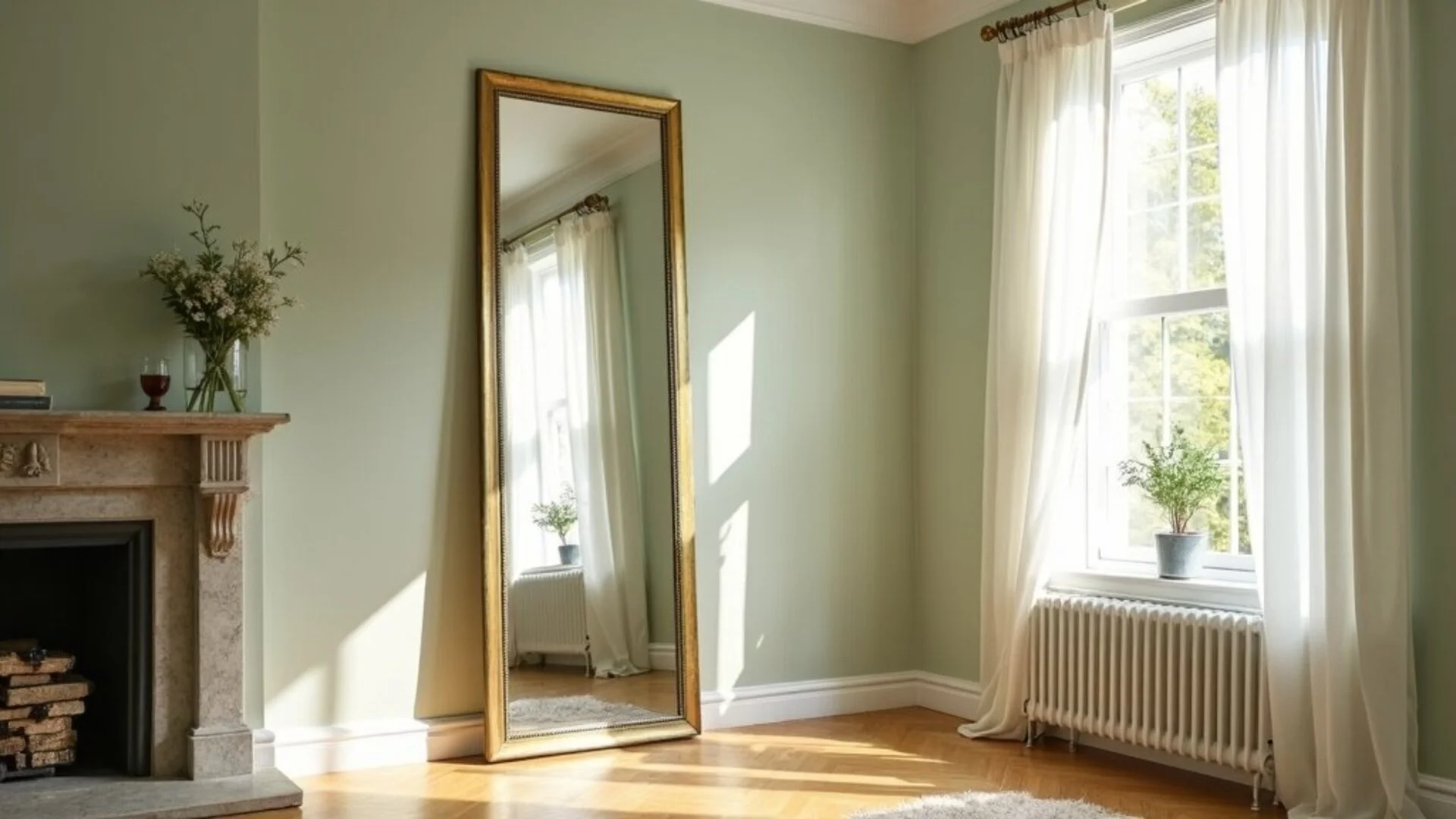
A strategically placed mirror doesn't just reflect light – it creates the illusion of a room extending beyond its walls. The key is positioning: place mirrors opposite or adjacent to windows to bounce natural light deep into the space.
Why it works: Your brain interprets the reflection as additional space, effectively doubling the perceived depth of the room. A full-length mirror on a narrow wall can make a corridor-like room feel twice as wide.
How to do it right:
Position mirrors to reflect the brightest part of the room (usually the window)
Avoid placing mirrors opposite cluttered areas – you'll double the visual chaos
Consider swivel mirrors that let you angle reflections toward light sources
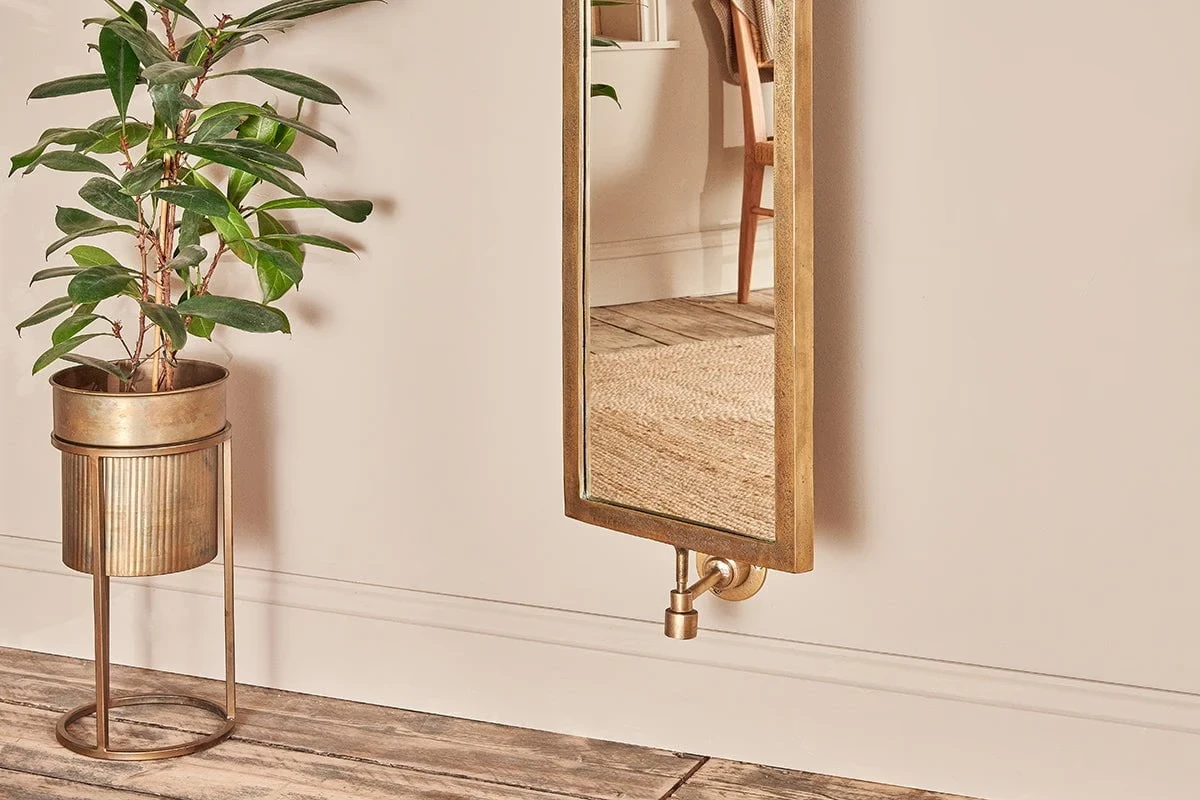
Why We Picked It:
Swivel mechanism lets you angle reflections toward windows, maximising light bounce
Full-length design creates maximum visual depth
Wall-mounted saves floor space while making a dramatic impact
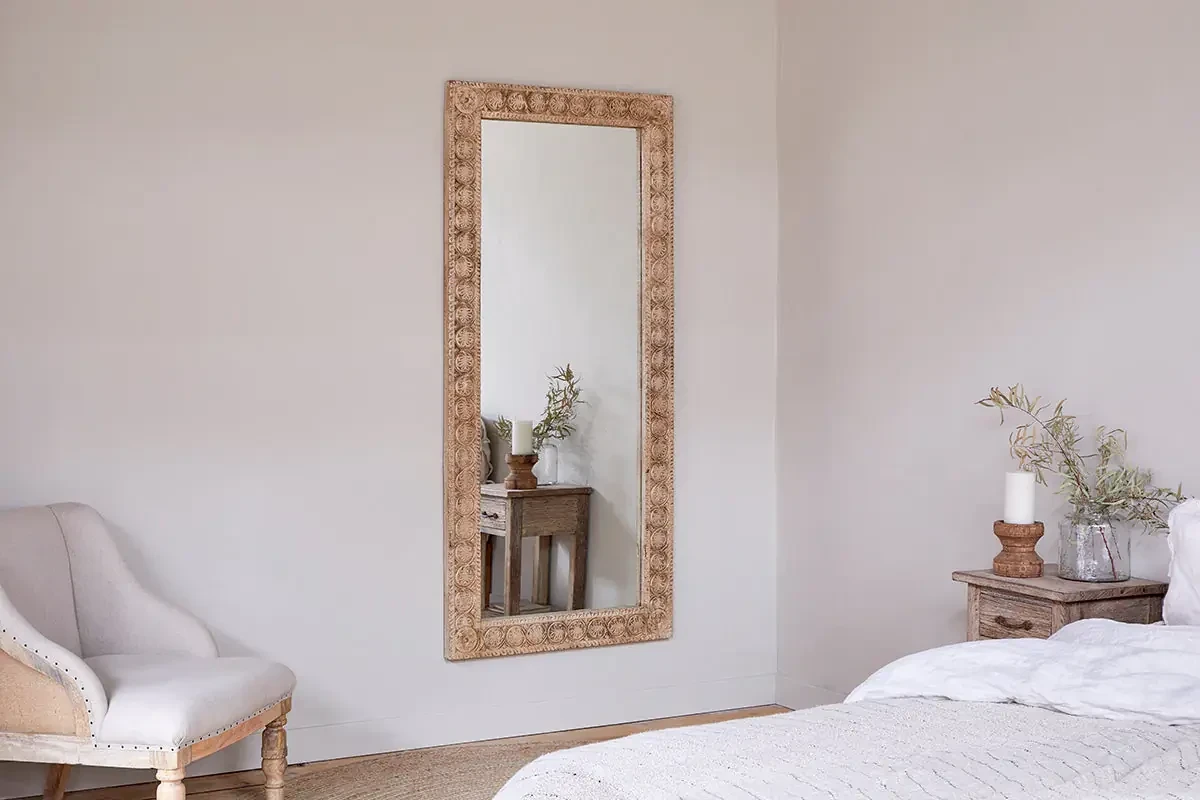
Why We Picked It:
Carved mango wood frame adds warmth without visual weight
Natural materials complement rather than compete with your space
Substantial enough to anchor a wall without overwhelming a small room
2. Colour Drenching: Paint Walls and Ceiling the Same Colour
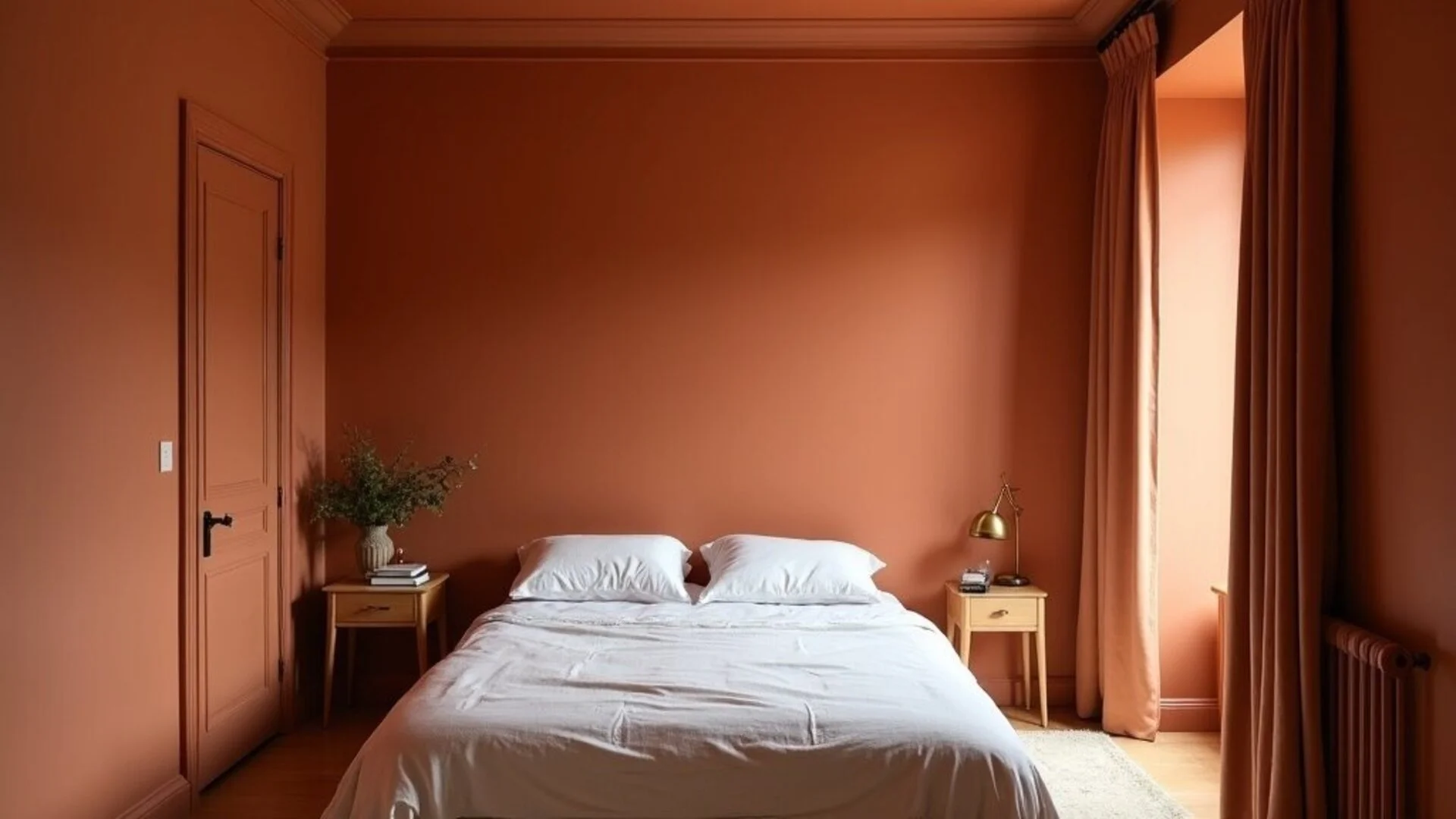
Colour drenching – painting walls, ceiling, and sometimes trim in the same shade – eliminates the visual boundaries that make rooms feel boxy. When your eye can't detect where walls end and ceiling begins, the space feels continuous and larger.
Why it works: Contrasting colours create visual "stops" that emphasise a room's edges. Matching colours blur those boundaries, tricking your brain into perceiving a more expansive space.
How to do it right:
Light colours reflect more light, amplifying the effect
This technique works particularly well in rooms with low ceilings or awkward angles
Don't forget picture rails and skirting boards – paint them the same colour for maximum impact
3. Hang Curtains High and Wide
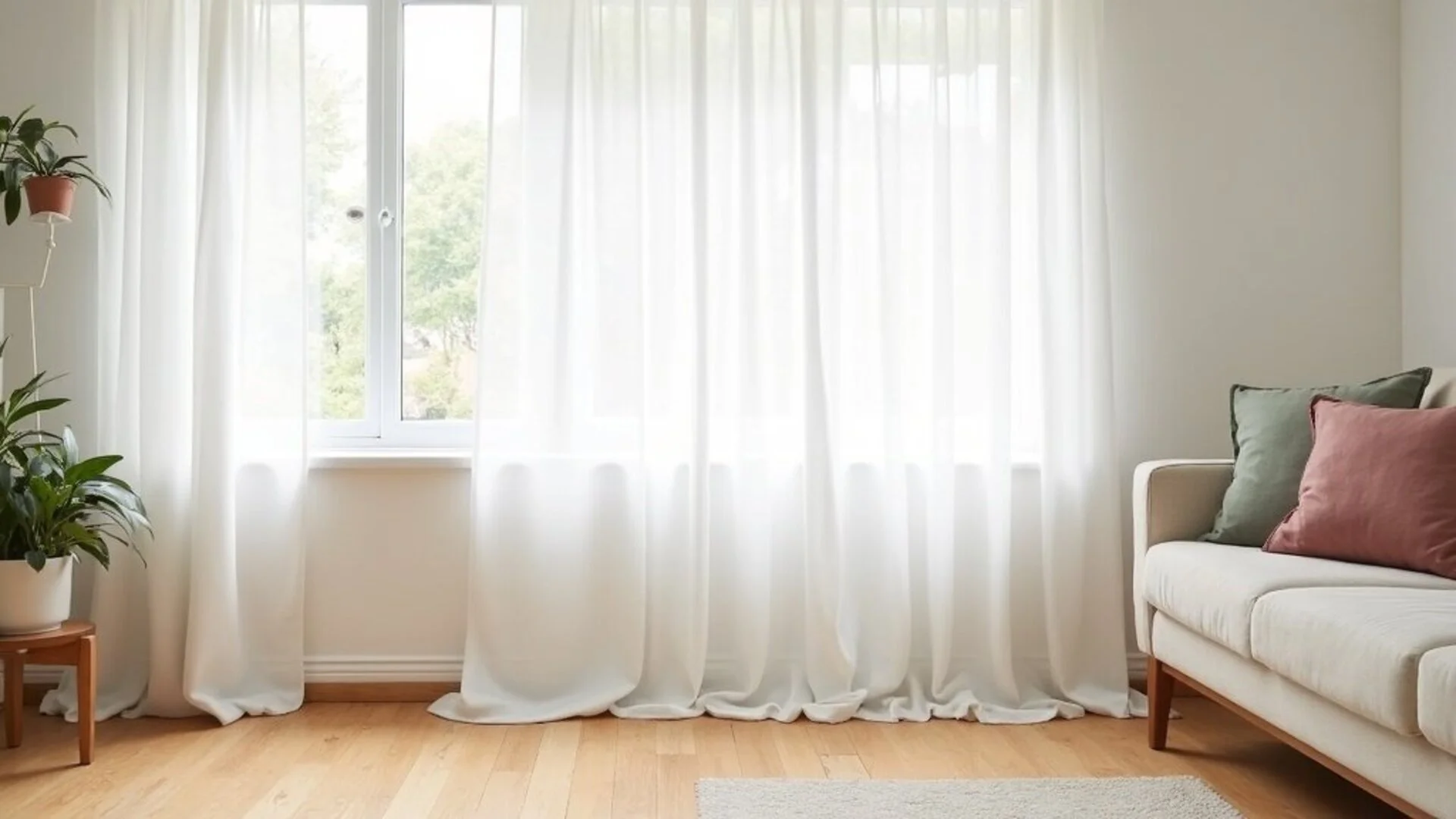
Mounting curtains at ceiling height rather than just above the window frame draws the eye upward and creates the illusion of taller ceilings. Extending the rod 15-20cm beyond the window frame on each side makes windows appear wider.
Why it works: We subconsciously use window height to gauge room height. Taller curtains suggest taller windows, which suggests a taller room.
How to do it right:
Mount the rod 10-15cm below the ceiling, or at the ceiling itself
Choose curtains that pool slightly on the floor (1-2cm) for a luxurious look that emphasises height
Sheer fabrics allow light through while still creating the height illusion
4. Use Vertical Patterns to Elongate Walls
Vertical stripes, whether on wallpaper, curtains, or even a tall bookshelf arrangement, draw the eye upward and create the perception of higher ceilings.
Why it works: The same optical illusion that makes vertical stripes slimming on clothing works on your walls. The eye follows the vertical lines upward, emphasising height over width.
How to do it right:
Subtle stripes work better than bold ones in very small rooms
A single accent wall with vertical pattern is often more effective than four patterned walls
Tall, narrow artwork hung in vertical arrangements achieves a similar effect
5. Maximise Light with Reflective Surfaces
Every surface that reflects light extends the perceived boundaries of a room. Beyond mirrors, consider metallic accents, glass surfaces, and high-gloss finishes that bounce light around the space.
Why it works: Light is the most powerful tool for making spaces feel larger. Reflective surfaces multiply the light you have, reducing dark corners where visual space "disappears."
How to do it right:
Choose window treatments that maximise natural light (sheers, blinds that stack fully)
Position lamps near reflective surfaces to amplify their effect
Consider furniture with metallic legs or glass tops
---
Furniture: Scale and Transparency
6. Choose Leggy Furniture to Reveal Floor Space
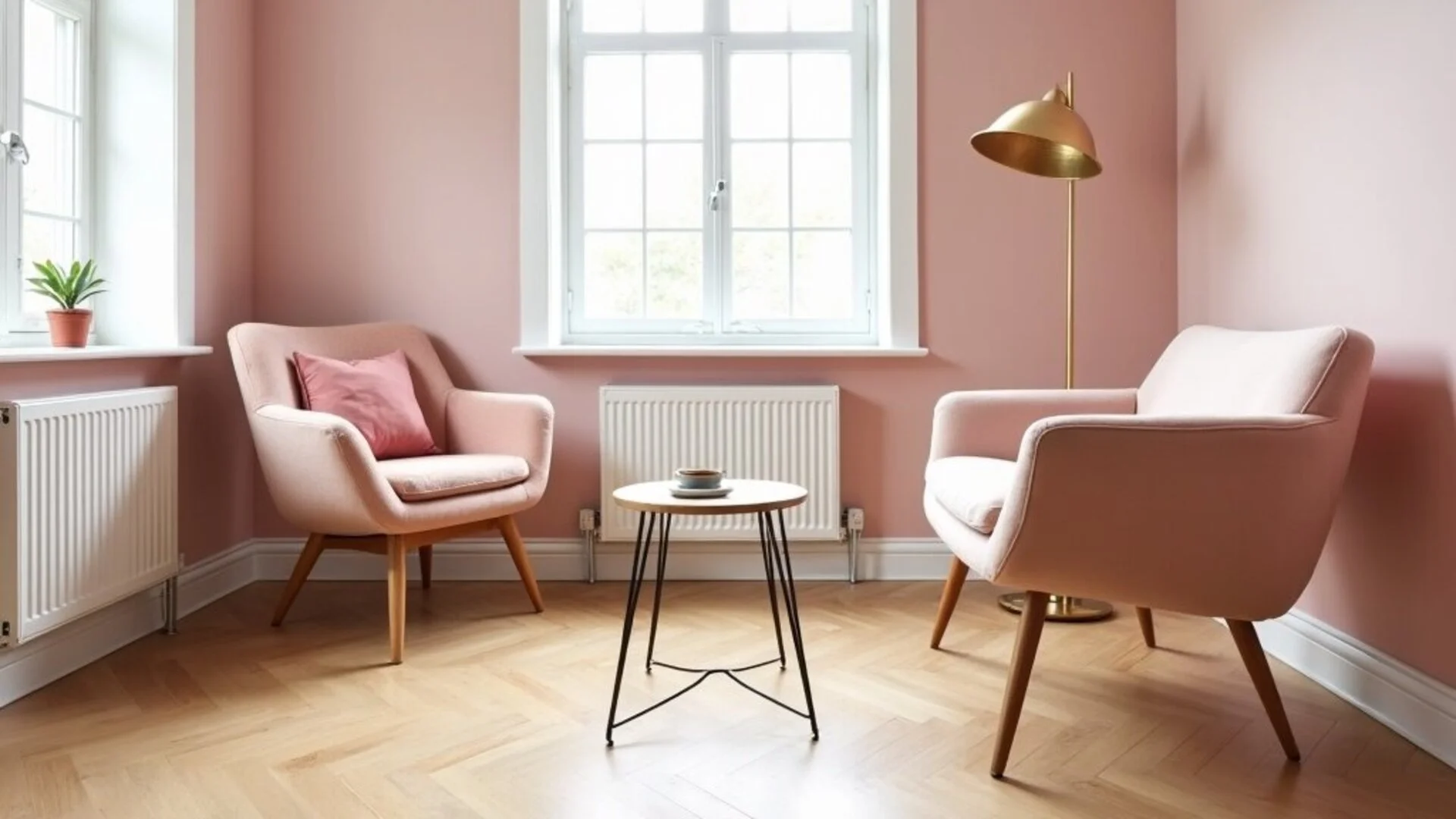
Furniture with visible legs shows more floor, and more visible floor means a room feels larger. The 10-15cm of space beneath a sofa or armchair creates visual flow that solid, skirted pieces block.
Why it works: Continuous floor visible beneath furniture creates uninterrupted sight lines. Your eye travels across the floor rather than stopping at each piece, making the room feel more expansive.
How to do it right:
Look for sofas and chairs with legs at least 10cm high
Raised bed frames show floor space in bedrooms
Side tables with slim legs maintain visual flow
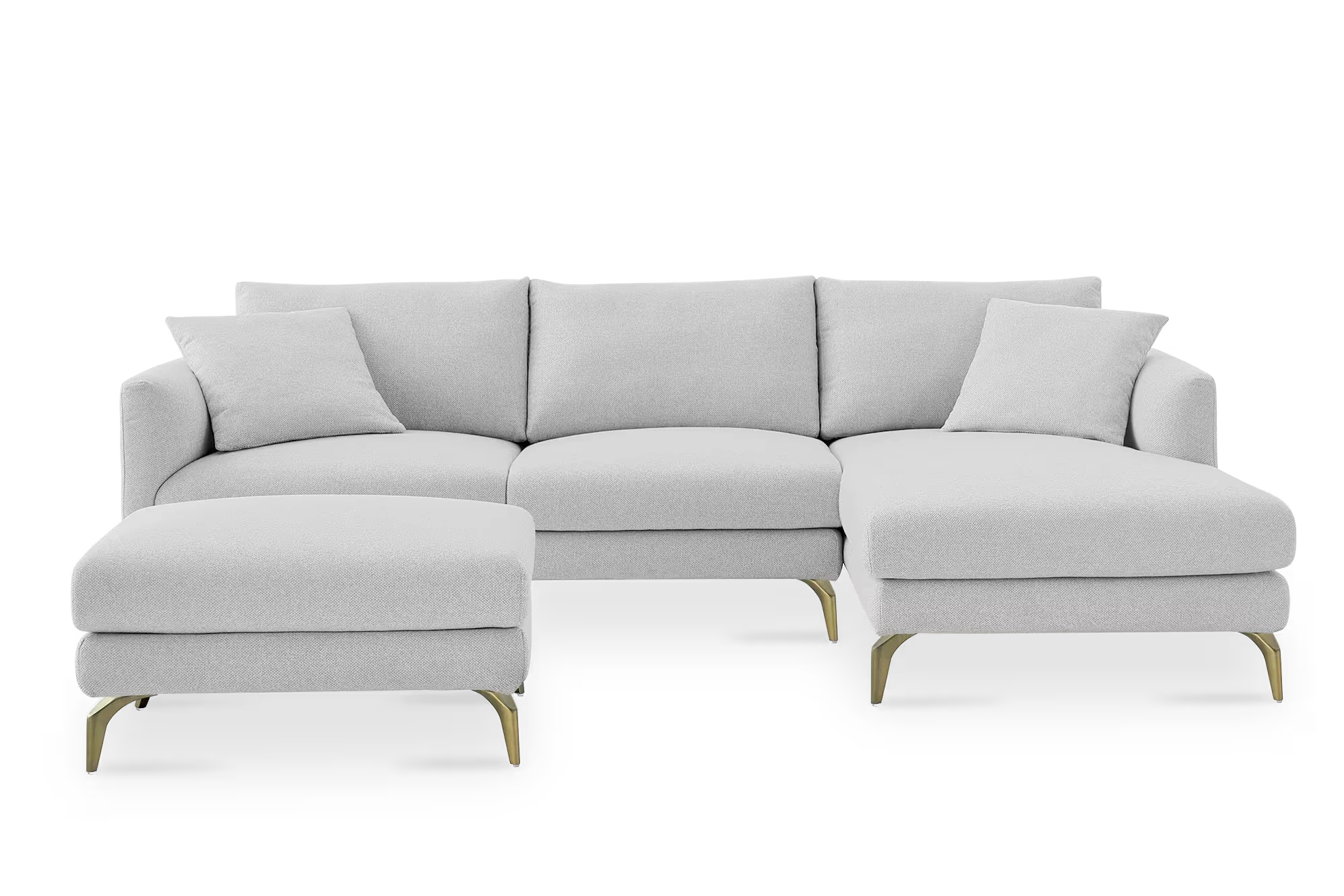
Why We Picked It:
Raised legs reveal floor space, creating visual flow through the room
Performance fabric resists stains – practical for compact spaces where furniture gets heavy use
Clean, modern lines that won't overwhelm a small living area
7. The Invisible Look: Glass and Acrylic Furniture
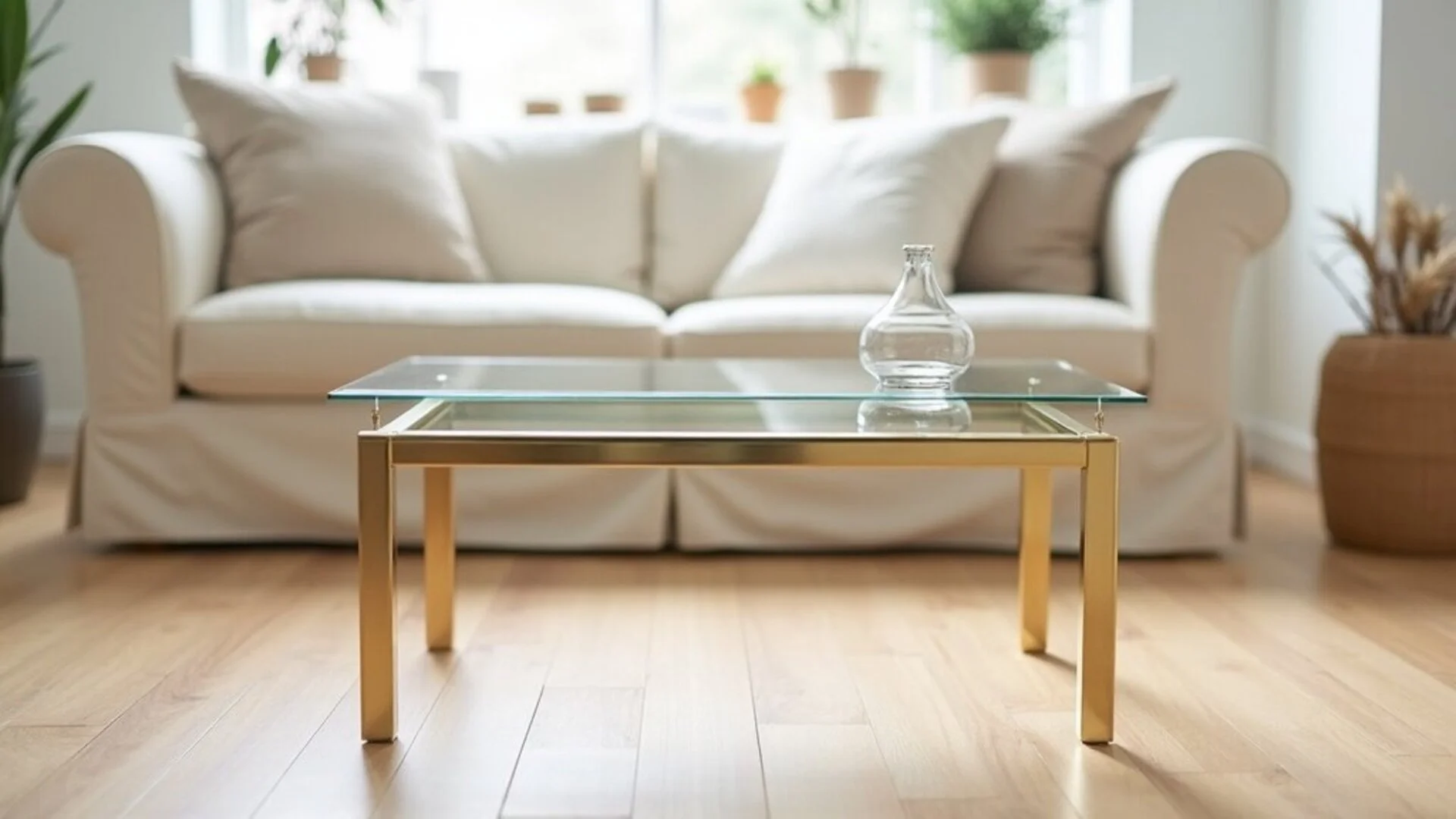
Glass and acrylic furniture provides function without visual mass. A glass coffee table holds your books and tea just as well as a solid wooden one, but the eye travels right through it, maintaining open sight lines.
Why it works: Transparent materials don't register as "obstacles" to your visual processing. You perceive the space as emptier, even when it's fully furnished.
How to do it right:
Coffee tables and side tables are the best candidates for glass or acrylic
Pair with solid, grounding pieces so rooms don't feel insubstantial
Choose tempered glass for safety and durability
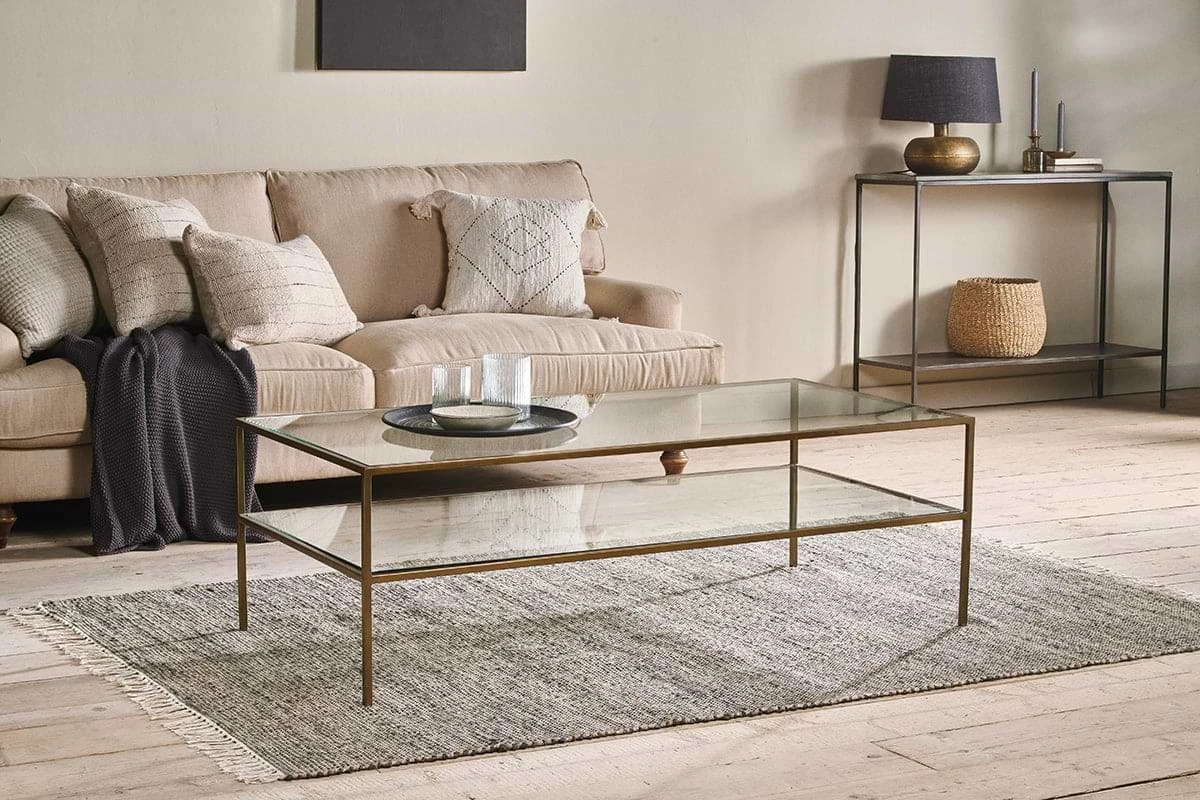
Why We Picked It:
Glass top creates zero visual clutter – the eye travels right through it
Iron frame provides elegant structure without bulk
Works equally well as a coffee table or console
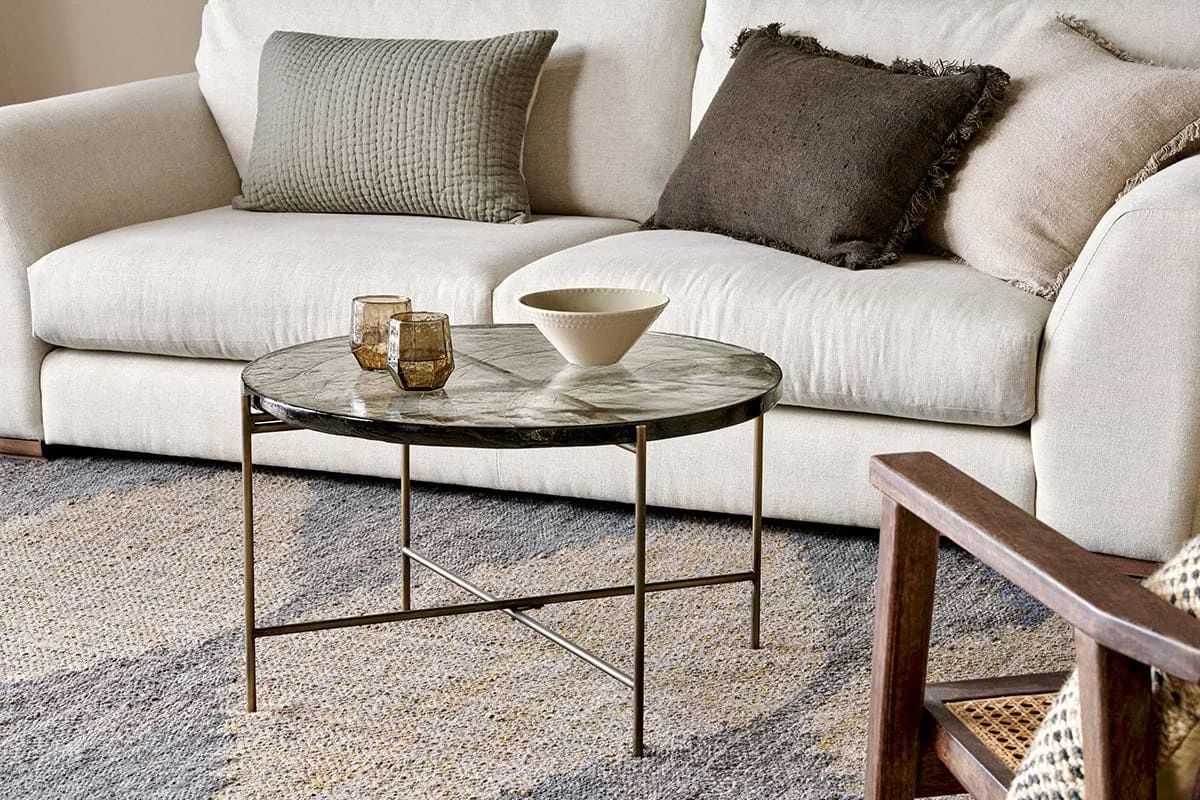
Why We Picked It:
Clear glass maintains sight lines across the room
Antique brass frame adds warmth without heaviness
Substantial enough to anchor a seating area while remaining visually light
8. The 2/3 Rule: Getting Furniture Scale Right
Furniture should fill roughly two-thirds of the available wall or rug space, leaving one-third as breathing room. A sofa that spans the entire wall makes the room feel cramped; one that leaves space on either side feels intentional and generous.
Why it works: The 2/3 rule creates visual balance between furnished and open space. Too much furniture overwhelms; too little makes a room feel sparse and awkward.
How to do it right:
Measure your wall length, then look for furniture 60-70% of that measurement
A 3m wall suits a 2m sofa with 50cm breathing room on each side
Apply the same principle to rugs under dining tables and beds against walls
9. Statement Pieces: One Bold Piece Beats Ten Small Ones
Counter-intuitively, one substantial piece of furniture can make a room feel larger than several small ones. Multiple pieces create visual clutter; one confident selection creates a focal point that doesn't overwhelm.
Why it works: Visual clutter – many objects competing for attention – makes spaces feel chaotic and smaller. A single statement piece gives the eye somewhere to rest while leaving surrounding space open.
How to do it right:
Choose one hero piece per room (a beautiful sofa, a striking chair, an interesting table)
Let the statement piece do the work; resist filling space with additional items
Quality over quantity – one well-chosen piece beats three mediocre ones
10. Nesting Tables: Flexible Footprints
Nesting tables provide surface space when you need it and disappear when you don't. They expand for entertaining, then tuck back together to free floor space for everyday living.
Why it works: Adaptable furniture means you only use the footprint you need at any moment. A set of three tables might occupy less daily space than one fixed coffee table, but spread out to provide more surface when guests arrive.
How to do it right:
Keep them nested most of the time to maximise floor space
Pull out smaller tables as side tables when entertaining
Choose sets where the smallest can double as a laptop stand
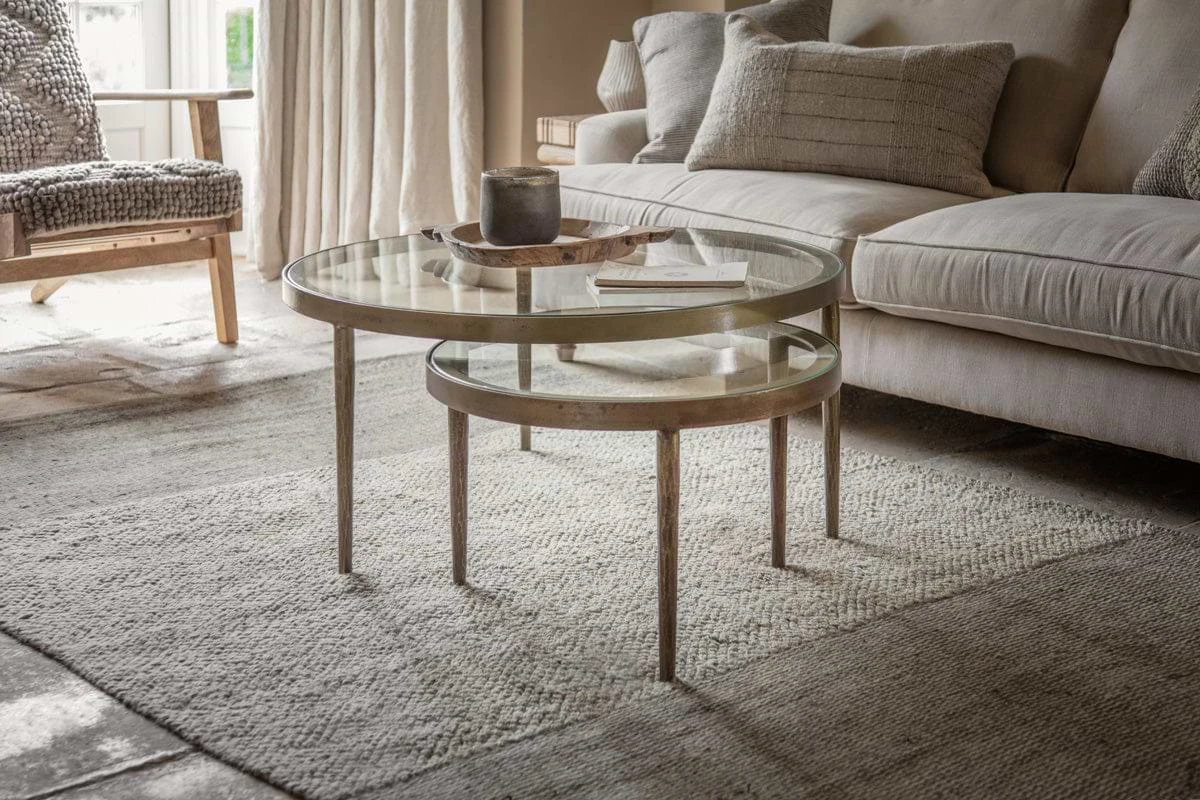
Why We Picked It:
Glass tops maintain visual lightness even when all three are deployed
Brass frames add warmth without bulk
Nest compactly when not in use, freeing valuable floor space
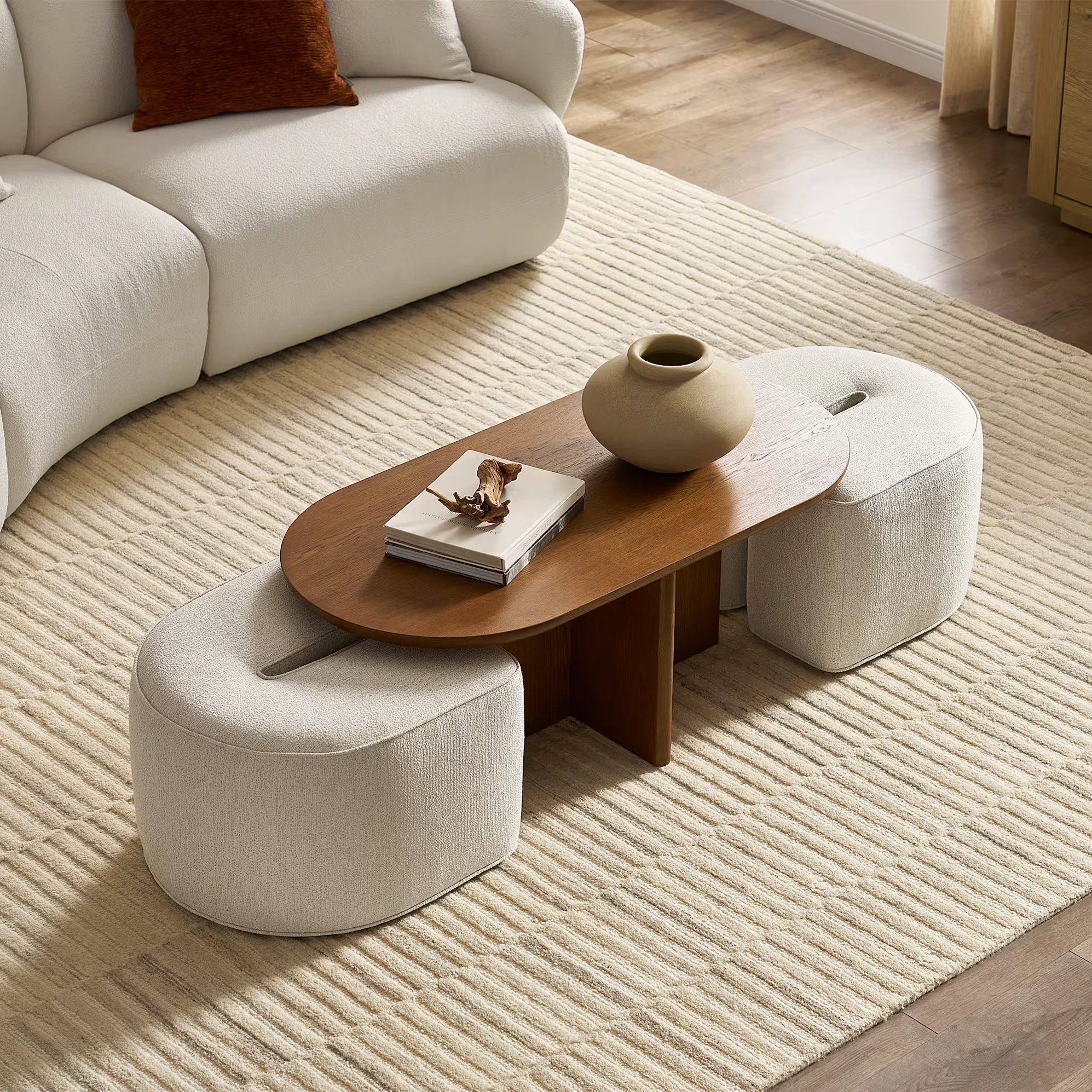
Why We Picked It:
Rectangular shape fits naturally in front of sofas
Tucks away when not in use, freeing floor space
Solid construction that works for daily use, not just occasional entertaining
---
Layout and Storage Hacks
11. Vertical Storage: Use the Full Wall Height
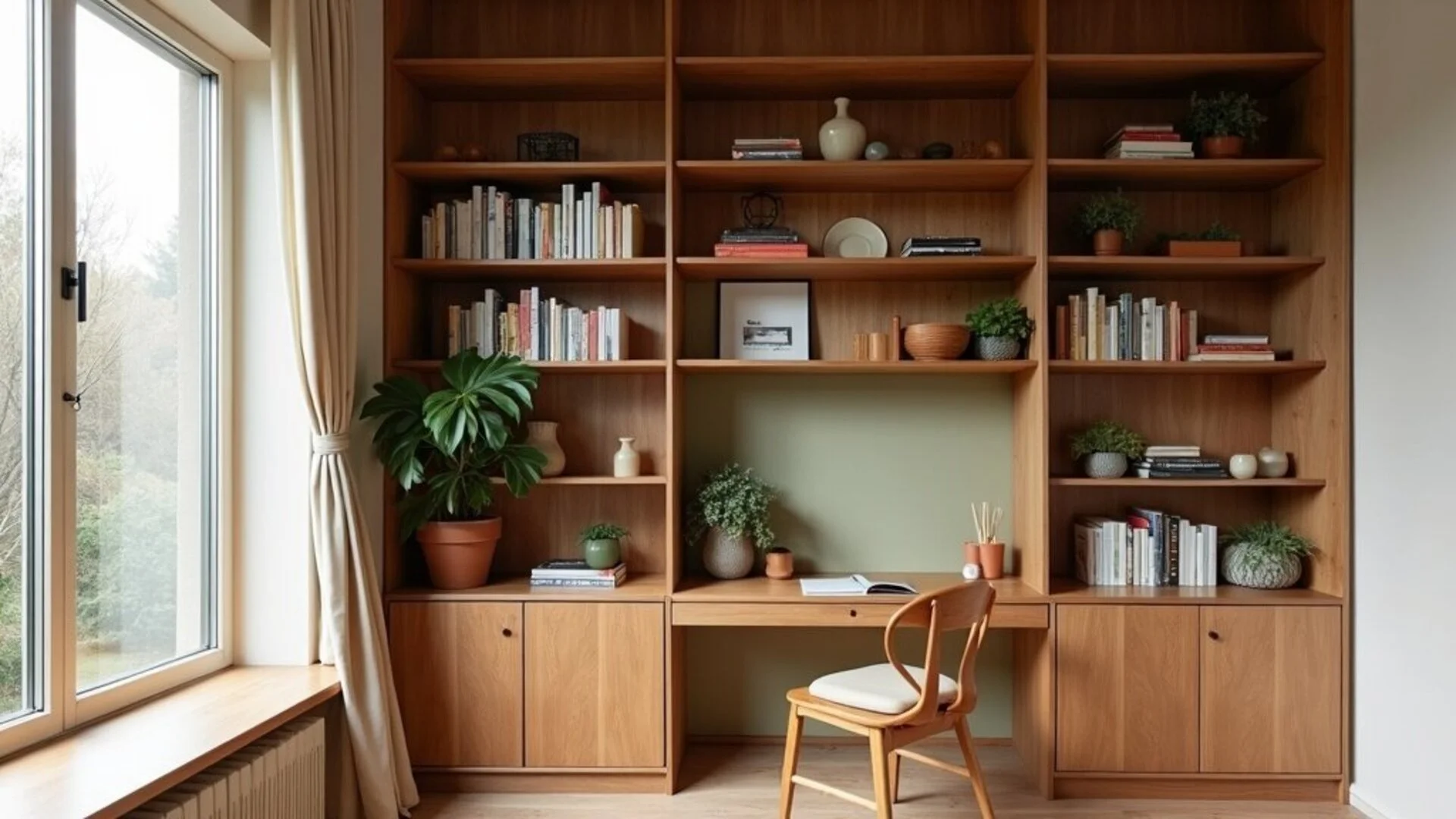
Tall, narrow shelving stores more than short, wide units while using less floor space. Drawing the eye upward also emphasises ceiling height, making rooms feel taller.
Why it works: Vertical storage exploits height – the dimension most small rooms have in relative abundance – while minimising floor footprint. It's the same storage in less ground space.
How to do it right:
Install shelving from floor to ceiling where possible
Keep frequently used items at eye level, less-used items higher up
Avoid blocking windows or creating visual barriers across the room
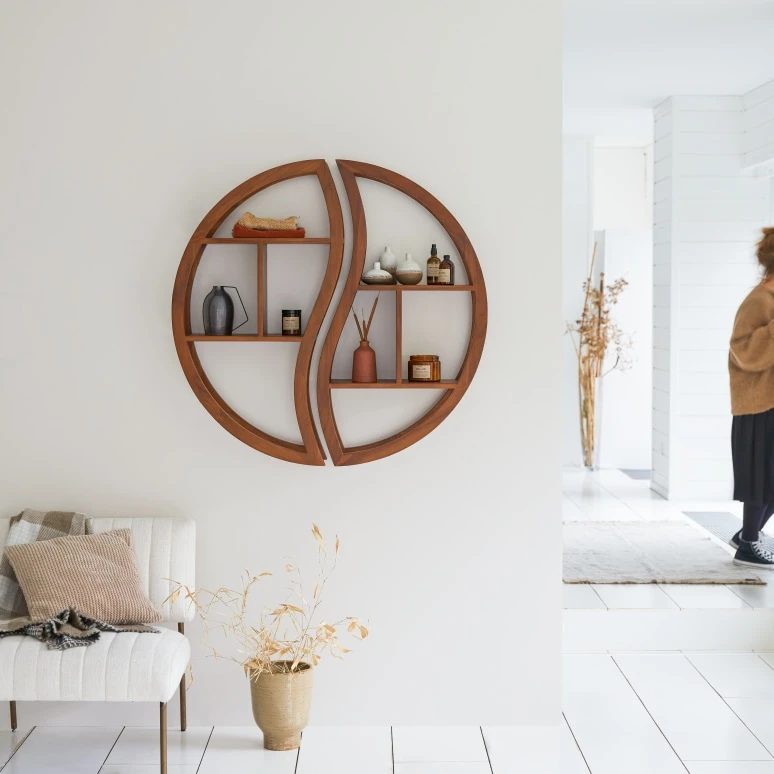
Why We Picked It:
Wall-mounted design frees floor space entirely
Teak construction is durable and warm without being heavy
Asymmetrical design draws the eye upward while adding visual interest
12. Floating Furniture: Wall-Mounted Desks Free Floor Space
Wall-mounted desks, shelves, and cabinets eliminate floor footprint entirely. A floating desk can provide a full workspace while leaving the floor beneath clear.
Why it works: Floor space is the scarcest resource in small rooms. Wall-mounted furniture taps into vertical space while keeping the floor – and your visual sense of room size – unobstructed.
How to do it right:
Check your wall type before purchasing (plasterboard needs specialist fixings)
Ensure mounting is rated for the weight you'll place on the furniture
Cable management is crucial – floating furniture loses its impact with cables trailing to the floor
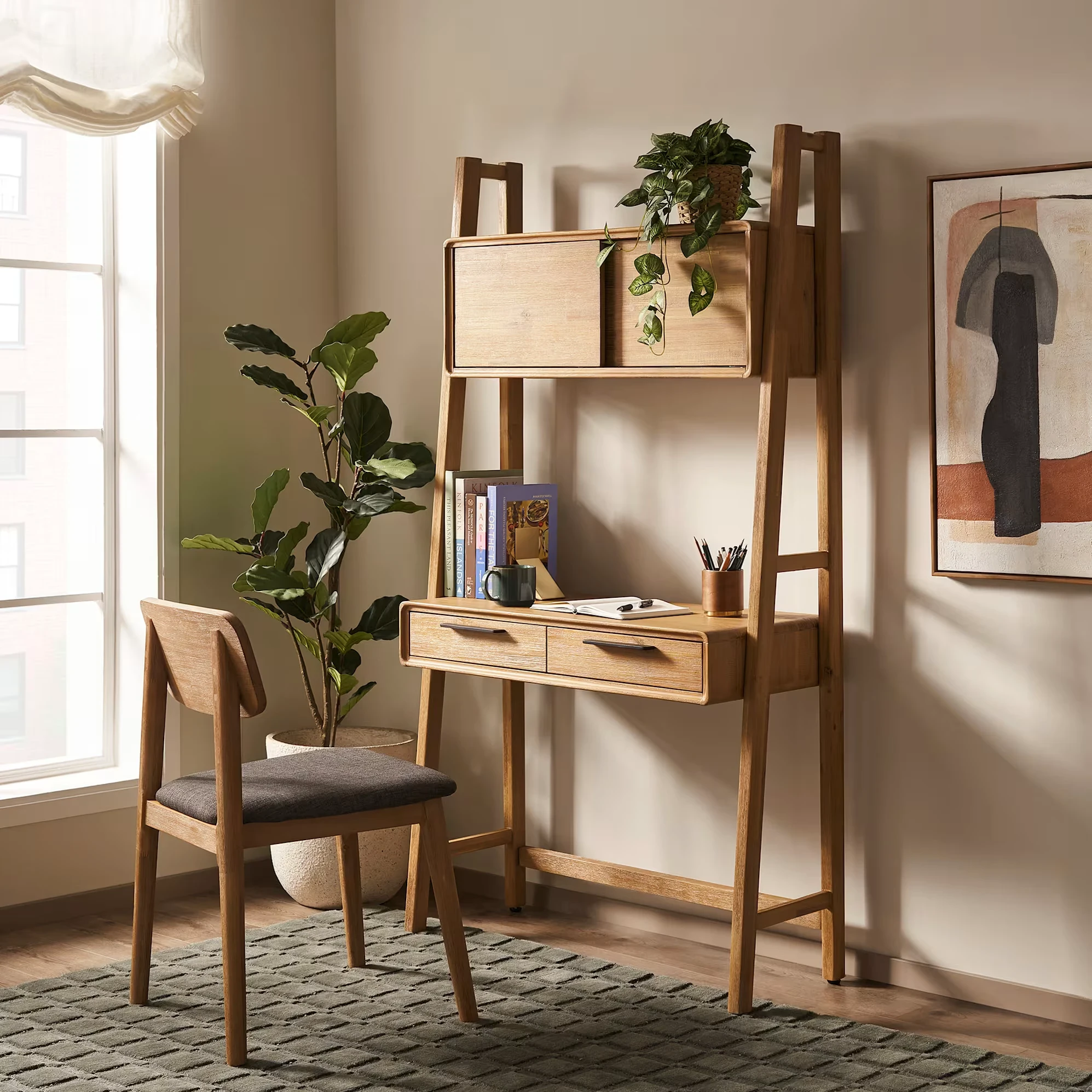
Why We Picked It:
Wall-mounted design frees precious floor footprint entirely
Integrated cable management keeps tech clutter hidden
Solid oak construction supports monitors and laptops while looking beautiful
13. Ruthless Decluttering: The Surface Rule
Keep surfaces clear. Every item on a surface – every book, candle, ornament – fragments your visual space. The "surface rule" is simple: nothing visible on surfaces except one or two intentional decorative items.
Why it works: Visual clutter makes your brain work harder to process the environment, registering the space as smaller and more chaotic. Clear surfaces create visual breathing room.
How to do it right:
Apply the "one in, one out" rule for decorative items
Store frequently used items in closed storage, not on surfaces
Consider whether each visible item earns its visual real estate
14. Rug Sizing: Why One Large Rug Beats Several Small Ones
A single large rug that extends under furniture creates visual continuity; multiple small rugs fragment the floor and make rooms feel smaller. In a small living room, the rug should be large enough that all furniture legs sit on it.
Why it works: The rug creates a visual "zone" that unifies the furniture arrangement. Multiple small rugs create multiple competing zones, dividing rather than expanding the perceived space.
How to do it right:
Front legs of all seating should be on the rug as a minimum
Ideally, the rug extends fully under the coffee table and partially under the sofa
Leave 30-45cm of floor visible around the rug's edges
15. Sight Lines: Keep Pathways Open and Uninterrupted
Open sight lines – unobstructed views across and through a room – make spaces feel larger. When you can see from one end of a room to another without visual barriers, your brain registers the full extent of the space.
Why it works: Visual barriers (tall furniture, room dividers, cluttered surfaces) create the impression of separate, smaller spaces. Open sight lines let your eye travel the full room dimension.
How to do it right:
Avoid placing tall furniture in the middle of sight lines
Keep paths through the room clear (90cm minimum width)
Consider how a room looks from the doorway – that first impression sets spatial expectations
---
Renter-Friendly Hacks
Not everyone can paint walls or mount furniture. These techniques work without permanent changes:
Lean large mirrors against walls rather than mounting them
Use command strips for lightweight floating shelves
Hang curtains from ceiling-mounted tension rods – no drilling required
Choose furniture with storage instead of adding separate storage pieces
Layer lighting with plug-in wall sconces and floor lamps to eliminate dark corners
---
Frequently Asked Questions
What colours make a room look bigger?
Light neutral colours – warm whites, soft greys, and pale beiges – make rooms appear larger by reflecting natural light. The most effective technique is "colour drenching": painting walls and ceiling the same colour to eliminate visual boundaries. However, even a dark colour applied consistently can work if it blurs where walls meet ceiling.
How do I arrange furniture in a tiny living room?
Follow the 2/3 rule: furniture should fill roughly two-thirds of available wall space, leaving one-third as breathing room. Pull furniture slightly away from walls (10-15cm) rather than pushing everything to the perimeter – this creates shadow depth and paradoxically makes rooms feel larger. Maintain 90cm clear pathways for comfortable movement.
Does a mirror actually make a room look bigger?
Yes, but placement matters. A mirror positioned opposite or adjacent to a window reflects light and creates the illusion of depth – your brain interprets the reflection as additional space. A mirror facing a dark or cluttered wall simply doubles the problem. Full-length mirrors on narrow walls are particularly effective at widening corridors and tight spaces.
What is the 2/3 rule in interior design?
The 2/3 rule states that furniture should fill approximately two-thirds of available wall or rug space, leaving one-third as visual breathing room. A 3-metre wall, for example, suits a 2-metre sofa with 50cm of space on each side. This creates visual balance and prevents rooms feeling cramped or, conversely, sparse and awkward.
What furniture makes a small room look bigger?
Furniture with visible legs (showing floor beneath), glass or acrylic pieces (maintaining sight lines), and multi-functional items (nesting tables, storage ottomans) all help small rooms feel larger. Avoid bulky, low-slung furniture with solid bases that block floor visibility. One well-scaled statement piece typically works better than several small items.
How can I make my ceiling look higher?
Hang curtains at ceiling height rather than just above windows, paint the ceiling the same colour as walls, use vertical stripes or tall, narrow furniture, and install lighting that draws the eye upward. Avoid heavy crown moulding or features that emphasise where wall meets ceiling.
---
Making a small room feel bigger isn't about tricks that fool the eye temporarily – it's about understanding how we perceive space and designing accordingly. Natural light, open sight lines, appropriate scale, and reduced visual clutter combine to create rooms that genuinely feel more spacious to live in, not just photograph well.
Start with one or two techniques – perhaps hanging those curtains higher or swapping a bulky coffee table for a glass one – and notice how the room feels different. Small changes compound, and the best part is that most of these principles also make rooms more functional and pleasant to use.


