

Living Room Storage Ideas: How to Organise Your Space Without Losing Its Character
The most common storage mistake in a living room is treating it as a problem to solve rather than a design opportunity to embrace. A well-chosen sideboard, a thoughtfully placed bookcase, or even a coffee table with a lower shelf can hold as much as a built-in cupboard -- and look considerably better doing it. In our current collection, MeetFelix lists over 320 storage pieces from boutique UK retailers in oak, teak, walnut, and mango wood, priced from under £50 to over £5,000. This guide covers how to add storage that works with your room, not against it.
Whether you are drowning in children's toys, hiding cables behind your TV stand, or simply want a surface that does more than collect dust, the right approach starts with understanding what you actually need to store -- and where.
Start With What You Need to Store, Not What You Want to Buy
The single biggest mistake people make with living room storage is buying furniture before they know what it needs to hold. A £1,200 sideboard is a waste if your real problem is cable clutter behind the TV, and a bookcase does nothing for a household that barely reads.
The first step to better living room storage is an honest audit of what is in the room right now. Books, remote controls, blankets, games, vinyl, chargers, children's art supplies -- every household accumulates differently. List your items by frequency of use: daily, weekly, and rarely. Daily items need open access. Weekly items belong behind a door. Rarely used items should be elsewhere entirely.
This distinction shapes every decision that follows. A family with young children needs closed storage at low level and display shelves higher up. A couple without children might prefer open shelving and a curated surface. A room used primarily for TV watching needs cable management and media storage. A room centred on conversation needs less.
Storage Need | Best Solution | Why It Works |
|---|---|---|
Books (50+) | Tall bookcase or floor-to-ceiling shelving | Keeps weight stable, uses vertical space |
Media equipment | TV stand with cable management | Hides wires, keeps devices ventilated |
Blankets and cushions | Ottoman with interior storage | Doubles as seating, keeps textiles dust-free |
Children's toys | Sideboard with doors at low level | Accessible for children, hidden from guests |
Display objects | Open shelving or glass-fronted cabinet | Visible without cluttering surfaces |
Board games | Deep-drawer sideboard or trunk | Accommodates irregular box sizes |
Once you know what goes where, you can choose furniture that fits the purpose rather than forcing your belongings into whatever you bought first. This is the approach outlined in our guide on choosing anchor pieces first -- and it applies to storage just as much as sofas and dining tables.
The Five Storage Pieces That Work Hardest in a Living Room
Not every living room needs every type of storage. But across our collection of over 320 pieces, five categories consistently earn their place in UK homes. Here is what each does well, where it falls short, and how to choose between them.
Sideboards: The All-Rounder
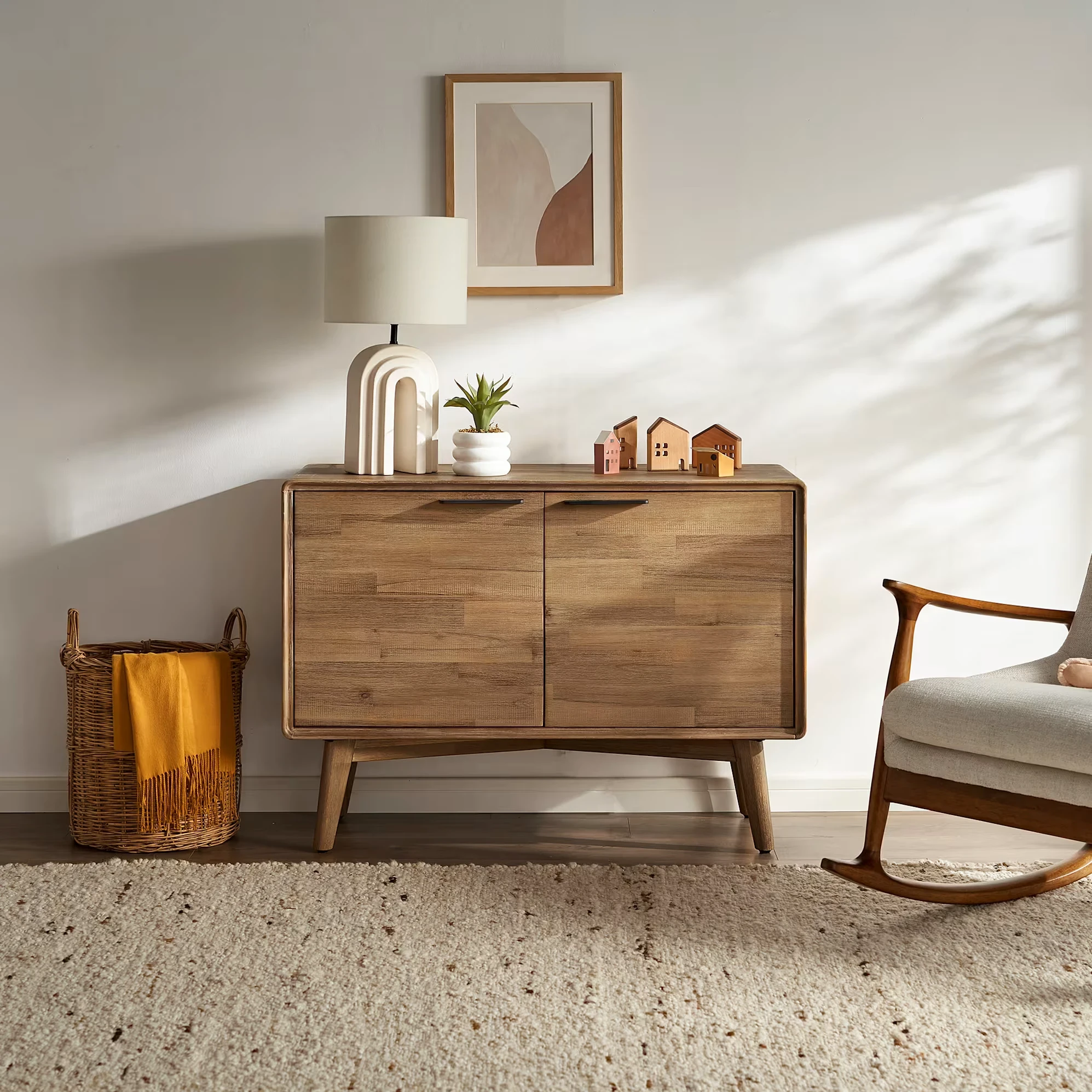
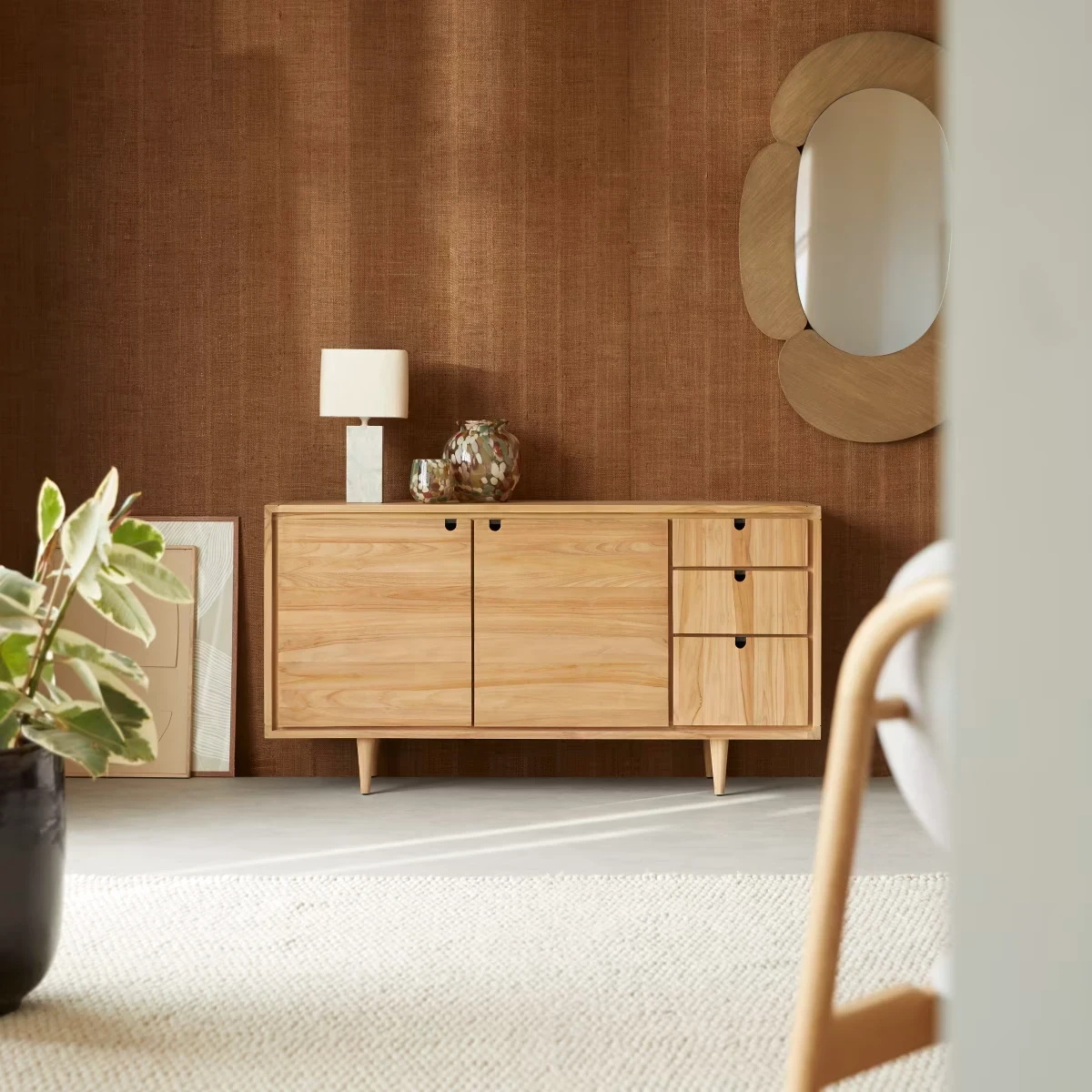
A sideboard is the most versatile storage piece you can put in a living room. At 80-100cm tall, it sits below eye level and provides a surface for lamps, artwork, or a curated display -- while hiding everything from table linen to board games behind its doors. In our current catalogue, we list over 60 sideboards from boutique UK retailers, priced from £649 for a solid pine piece to over £2,900 for handcrafted teak or walnut designs.
Oak and teak are the most popular materials, accounting for roughly half of the sideboards in our collection. If you want something with industrial character, look for models combining solid wood with raw steel -- a pairing that works particularly well in open-plan spaces. For a deeper look at sizing, materials, and what to prioritise at every budget, see our complete sideboard buying guide.
TV Stands and Media Units: Storage in Plain Sight
A TV stand does more than hold your screen. The right media unit conceals cables, houses consoles and streaming boxes, and provides shelf space for books or speakers without dominating the room. The key dimensions to get right: your TV stand should be at least as wide as your TV screen (wider looks better), and the screen centre should sit at seated eye level -- roughly 100-110cm from the floor.
Look for units with cable management holes at the back and adjustable shelves inside. Open-fronted compartments keep remote-control signals working. Closed doors hide clutter. The best units combine both. Our TV stand buying guide covers sizing and material choices in detail.
Bookcases and Display Shelving: Vertical Space Put to Work
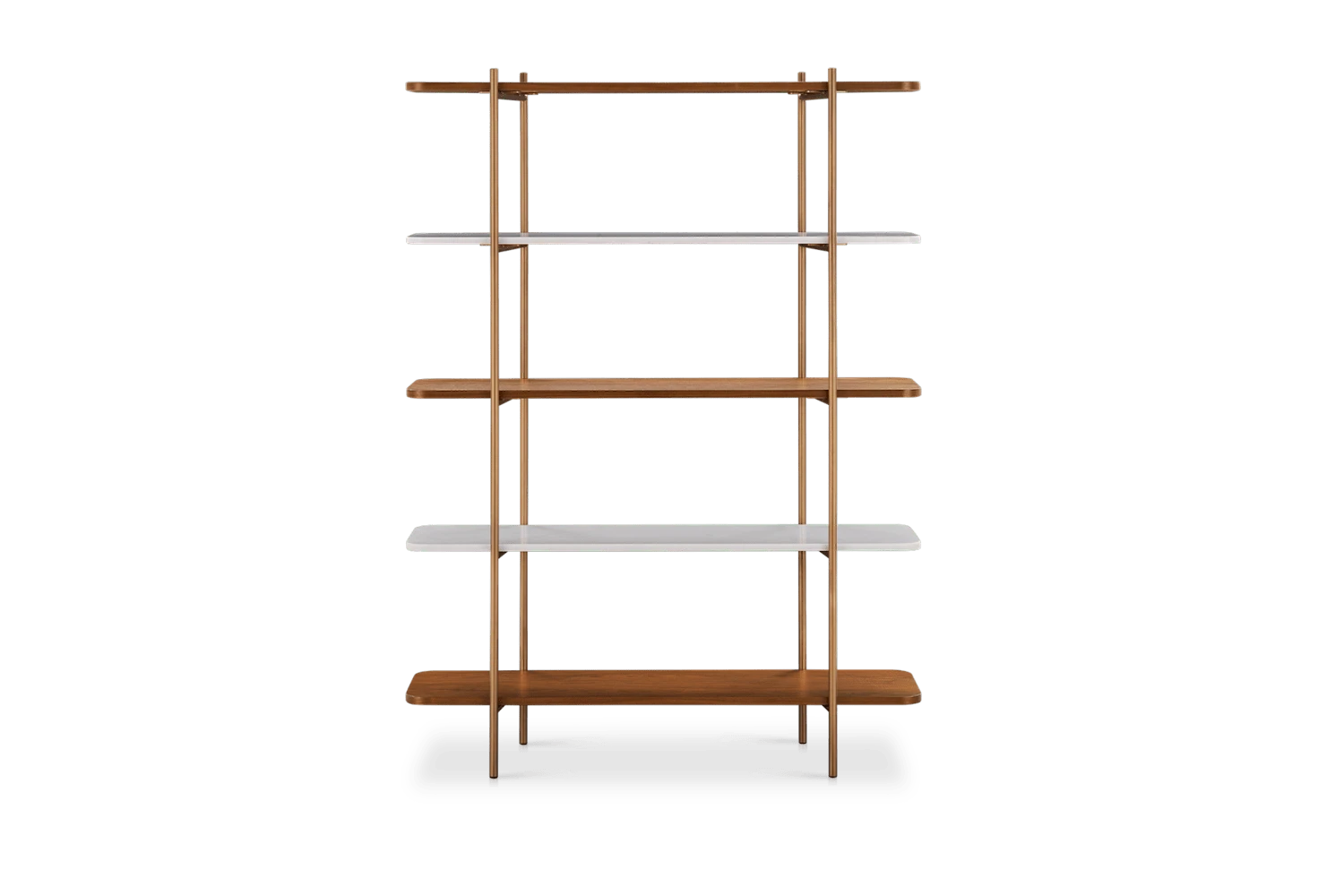
In a room where floor space is tight, vertical storage makes the biggest difference. A tall bookcase uses wall space that would otherwise sit empty, turning a blank stretch of plaster into functional display and storage. The 60/30/10 styling rule works well here: fill 60% with books, 30% with decorative objects, and leave 10% as breathing room.
Freestanding bookcases in solid wood or metal suit most living rooms. For small spaces, a narrow ladder shelf takes up under 50cm of wall width while offering four or five tiers. In our collection, Castlery's Esther Bookcase combines marble and walnut veneer for a more considered look that works in both modern and traditional rooms.
Coffee Tables With Storage: The Double-Duty Centre Piece
A coffee table with a lower shelf or drawer is one of the most underrated storage solutions in a living room. It keeps magazines, remote controls, and coasters within reach without cluttering the surface. Tables with a shelf underneath are easier to style than those with drawers -- you can stack books or place a basket -- but drawers hide mess completely.
The sizing rule is simple: your coffee table should be roughly two-thirds the length of your sofa, and the top should sit level with or slightly below the sofa seat cushions. Our coffee table buying guide covers dimensions and materials in detail, but for storage specifically, look for designs that offer at least 15cm of clearance between the shelf and the floor.
Ottomans and Storage Boxes: Hidden Capacity
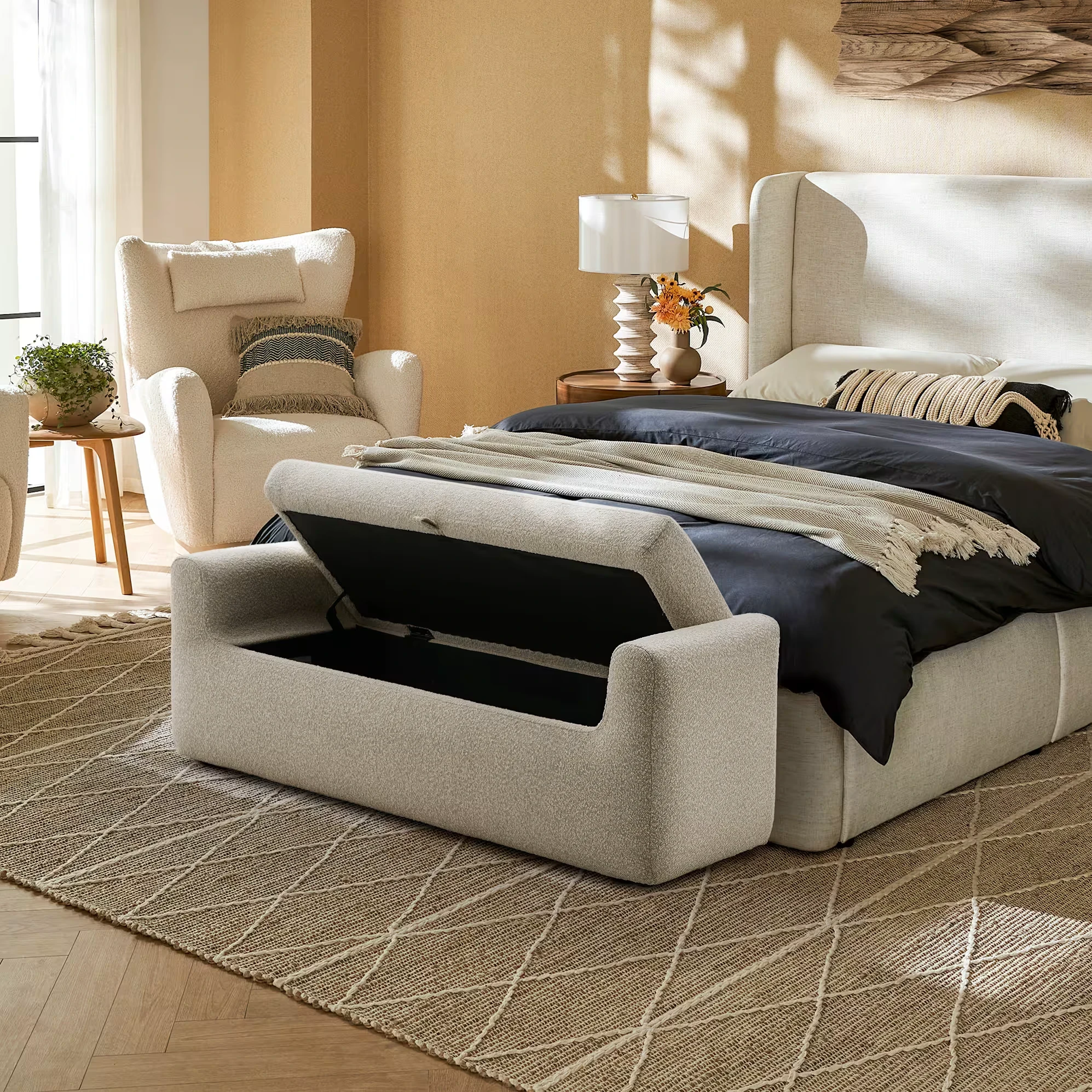
A storage ottoman combines seating, a footrest, and a concealed compartment in a single piece. In a living room with children, this is invaluable -- blankets and toys disappear inside, and the surface provides extra seating when guests arrive. Performance fabrics like bouclé resist stains and wear better than linen or velvet in high-traffic use.
How to Add Storage to a Small Living Room
For living rooms under 18 square metres -- the typical size in UK terraced houses and new-build flats -- every piece of furniture should serve at least two purposes. A sideboard that holds your TV eliminates the need for a separate stand. A window seat with storage underneath replaces a bookcase. A nest of tables with a tray top replaces a coffee table and side table in one.
Three rules for storage in compact spaces:
Go tall, not wide. A 180cm bookcase takes the same floor footprint as a small side table but holds twenty times as much. Wall-mounted shelves use zero floor space.
Choose furniture with built-in storage. Coffee tables with shelves, TV stands with drawers, sofas with storage arms -- these compound savings add up. Our guide to furniture for small spaces covers compact designs across every category.
Keep surfaces clear. In a small room, visual clutter makes the space feel smaller than physical clutter does. Closed storage (doors, drawers, boxes) works harder than open shelving when square metres are limited. See our tips on making a small room look bigger for more on this.
Room Size | Storage Strategy | Best Pieces |
|---|---|---|
Under 14 sq m (studio/one-bed) | Multi-function furniture, wall-mounted options | Ottoman, wall shelves, narrow console |
14-18 sq m (standard UK living room) | One anchor storage piece + one accent | Sideboard + coffee table with shelf |
18-25 sq m (generous living room) | Dedicated storage zone + display | Sideboard + bookcase + TV unit |
Over 25 sq m (open plan) | Zoned storage by activity area | Multiple pieces, one per zone |
Choosing the Right Material for Living Room Storage
The material you choose for storage furniture affects durability, appearance, and how well it ages. In our collection of over 320 storage pieces, oak, teak, and walnut are the three most popular solid woods -- each with distinct characteristics.
Oak is the workhorse. Dense, scratch-resistant, and available in light or dark finishes, it suits everything from farmhouse to Scandinavian interiors. It accounts for the largest share of storage furniture in our catalogue. Our oak furniture buying guide covers what to look for in detail.
Teak is the premium choice for longevity. Naturally oily, it resists moisture and does not need sealing. It develops a warm, honeyed patina over time. At time of writing, teak sideboards in our collection start from around £700.
Mango wood offers the best value among solid hardwoods. It is lighter than oak, takes stains well, and has a distinctive grain pattern. Prices tend to sit 20-30% below equivalent oak pieces. See our mango wood furniture guide for care and sourcing advice.
Metal and wood combinations -- particularly raw steel with oak or walnut -- dominate the industrial and mid-century modern categories. In our current collection, industrial-style storage accounts for 55 of the 320+ pieces, offering a deliberately unfinished look that works well in open-plan living spaces. Our industrial furniture guide covers the style in depth.
![Teal Sideboard [Oak]](https://zpeqbrudpqjbpfhmntcb.supabase.co/storage/v1/object/public/product-images/konk-furniture/konk-furniture-tealsidebo-mjbz59ro/original/6f585769f41c.webp)
How to Style Storage Furniture So It Looks Intentional
Storage furniture that simply sits against a wall and holds things is doing half its job. The other half is visual: creating a surface display or shelving arrangement that makes the room feel considered rather than cluttered.
Sideboards and media units: The rule of three works consistently. Group objects in clusters of three at varying heights -- a lamp, a framed photograph, and a small plant, for example. Leave at least 30% of the surface empty. Resist the urge to centre everything; asymmetry feels more natural.
Bookcases and open shelving: Alternate vertical and horizontal book stacks. Break up rows of spines with a decorative object every 30-40cm. Use the top shelf for taller items and the bottom for heavier ones -- it grounds the piece visually and keeps it stable. The scale and proportion guide explains why this balance matters.
Ottomans and baskets: These work best when the container itself is part of the decor. A woven seagrass basket inside a sideboard adds texture. A leather ottoman in a contrasting colour becomes a focal point rather than a footnote.
The principle behind all of these is the same: storage should disappear when it needs to and contribute to the room when it does not.
Browse Living Room Storage on MeetFelix
MeetFelix brings together storage furniture from boutique UK retailers so you can compare sideboards, cabinets, bookcases, and media units side by side. Browse all storage furniture, explore sideboards in oak and teak, or discover industrial-style storage -- with real prices, materials, and dimensions from every retailer.
Frequently Asked Questions
How do you maximise storage in a small living room?
Choose furniture that serves two purposes: a coffee table with a lower shelf, an ottoman with interior storage, or a TV stand with closed cabinets. Go tall rather than wide -- a narrow bookcase uses minimal floor space while offering significant capacity. Wall-mounted shelves use no floor space at all. In rooms under 14 square metres, limit yourself to one anchor storage piece and keep surfaces clear to preserve the sense of space.
What is the best furniture for hiding living room clutter?
A sideboard with doors is the single most effective piece for concealing clutter in a living room. At 80-100cm tall, it sits below eye level and hides everything from board games to paperwork behind closed doors while providing a display surface on top. Storage ottomans are the next best option, particularly for blankets, cushions, and children's toys.
What materials last longest for living room storage furniture?
Solid hardwoods -- oak, teak, and walnut -- are the most durable options, each lasting 20-50 years with basic care. Wipe spills promptly, keep furniture out of direct sunlight to avoid fading, and apply a wood oil or wax once or twice a year. Engineered wood (MDF, particleboard) typically lasts 5-10 years before showing wear at joints and edges. If longevity matters, solid wood costs more upfront but saves money over time.
Should living room storage be open or closed?
It depends on what you are storing and how disciplined you are about arrangement. Open storage (shelves, display units) works well for curated collections of books, art, and objects -- but requires regular tidying. Closed storage (doors, drawers) hides everything and suits busy households with children. The most practical approach combines both: a sideboard with doors below and open shelves above, or a bookcase alongside a closed cabinet.
How much should I spend on living room storage furniture?
Budget depends on material, size, and how long you need it to last. In our collection, solid-wood sideboards from boutique UK retailers start from around £650, with premium handcrafted pieces in walnut or teak reaching £2,000-3,000. Ottomans with storage start from around £500. A well-made oak or teak sideboard will last 20-30 years, making the cost-per-year comparable to replacing a cheaper piece every five.
How do I choose between a sideboard and a bookcase for my living room?
A sideboard is better if you need to conceal clutter and want a surface for display, lamps, or a TV. A bookcase is better if you have a large collection of books or objects you want visible and your room has more wall height than floor width. If you have the space for both, place the sideboard on the main wall and the bookcase in an alcove or secondary wall -- this creates visual variety and distributes storage across the room.


