

Best Sideboards UK: How to Choose the Right One for Your Living Room
A sideboard does two things well: it stores everything from table linen to board games, and it gives you a surface to style with lamps, artwork, or a well-chosen vase. In our current collection, we found 56 sideboards across 5 boutique UK retailers, ranging from £649 to £2,909 — with solid wood options in teak, oak, acacia, walnut, and mahogany. This guide breaks down what to look for so you end up with a piece that earns its place in the room.
What Size Sideboard Do You Actually Need?
For most living rooms, a sideboard between 140cm and 180cm wide offers the right balance of storage and proportion. Narrower than 110cm and you lose useful internal space; wider than 200cm and it starts to dominate unless you have a large open-plan layout.
Depth matters more than people expect. Standard sideboards sit around 40-50cm deep. If your hallway or room is tight, look for pieces under 45cm — in our collection, the Jeanne Solid Oak from Tikamoon comes in at 45cm deep and 150cm wide, sitting comfortably against a wall without swallowing floor space.
Quick Size Guide
Room Size | Recommended Width | Recommended Depth |
|---|---|---|
Small living room (under 15m²) | 100-140cm | 38-42cm |
Medium living room (15-25m²) | 140-180cm | 40-48cm |
Large or open-plan (25m²+) | 180-240cm | 45-55cm |
Hallway | 100-130cm | 35-42cm |
Height typically falls between 70-100cm. A lower sideboard (70-80cm) works well beneath a window or in a modern, low-slung setting. Taller pieces (85-100cm) suit traditional rooms and provide more internal shelf height for bottles or taller items.
At time of writing, we list 12 sideboards under 130cm wide — compact enough for smaller rooms — and 8 that span 200cm or more for generous spaces.
Which Material Should You Choose?
The material sets the tone for the whole piece — and determines how it ages, what it costs, and how much care it needs. Across our sideboard collection, solid wood dominates, with teak, oak, acacia, and walnut the most common timbers.
Material Comparison
Material | Character | Durability | Price Range (in our collection) | Best For |
|---|---|---|---|---|
Oak | Warm grain, ages to honey | Very high | £949-£2,649 | Traditional and Scandi rooms |
Teak | Rich golden-brown, naturally oily | Exceptional | £699-£1,799 | Mid-century and contemporary |
Walnut | Dark, dramatic grain | High | £1,499-£2,599 | Statement pieces |
Acacia | Varied grain, warm tones | High | £699-£1,399 | Rustic and bohemian rooms |
Pine | Pale, knotty character | Medium | £649-£1,399 | Scandi and country styles |
Mahogany | Deep reddish-brown | Very high | £879-£1,899 | Mid-century and classic rooms |
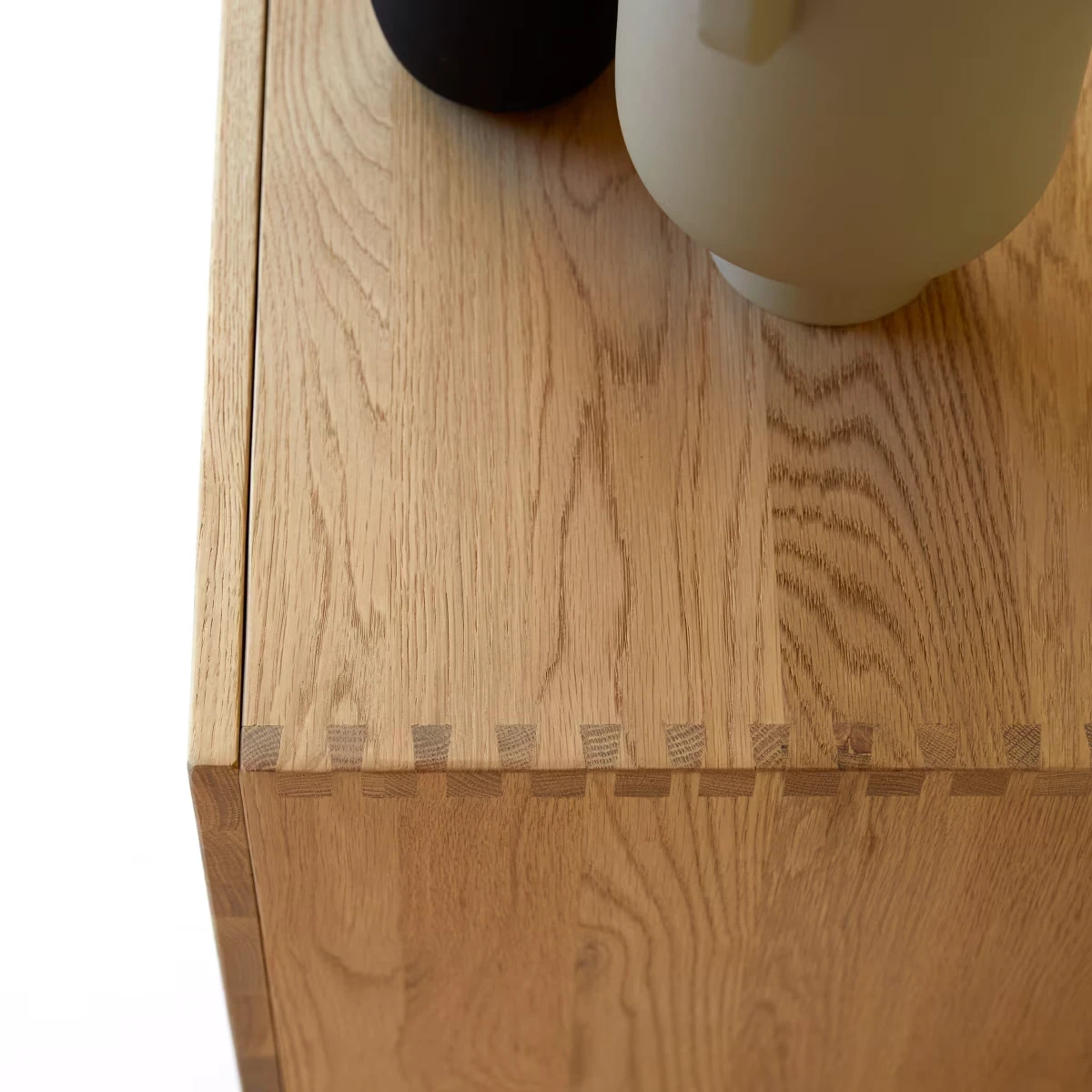
Oak is the safest choice for longevity. It handles the knocks of everyday life — keys dropped on the surface, a glass set down without a coaster — and only improves with age. In our current catalogue, we carry 8 oak sideboards from three different makers.
Teak is the material you choose when you want something that practically looks after itself. Its natural oils resist moisture and scratching. The Tikamoon Minimalys in solid teak at 170cm wide (£999) is a particularly clean-lined option for contemporary rooms.
For something with more presence, walnut brings a darker, richer grain — though it comes at a premium. The Tikamoon Esmee in solid walnut (£1,499) is one of the more characterful pieces in our collection.
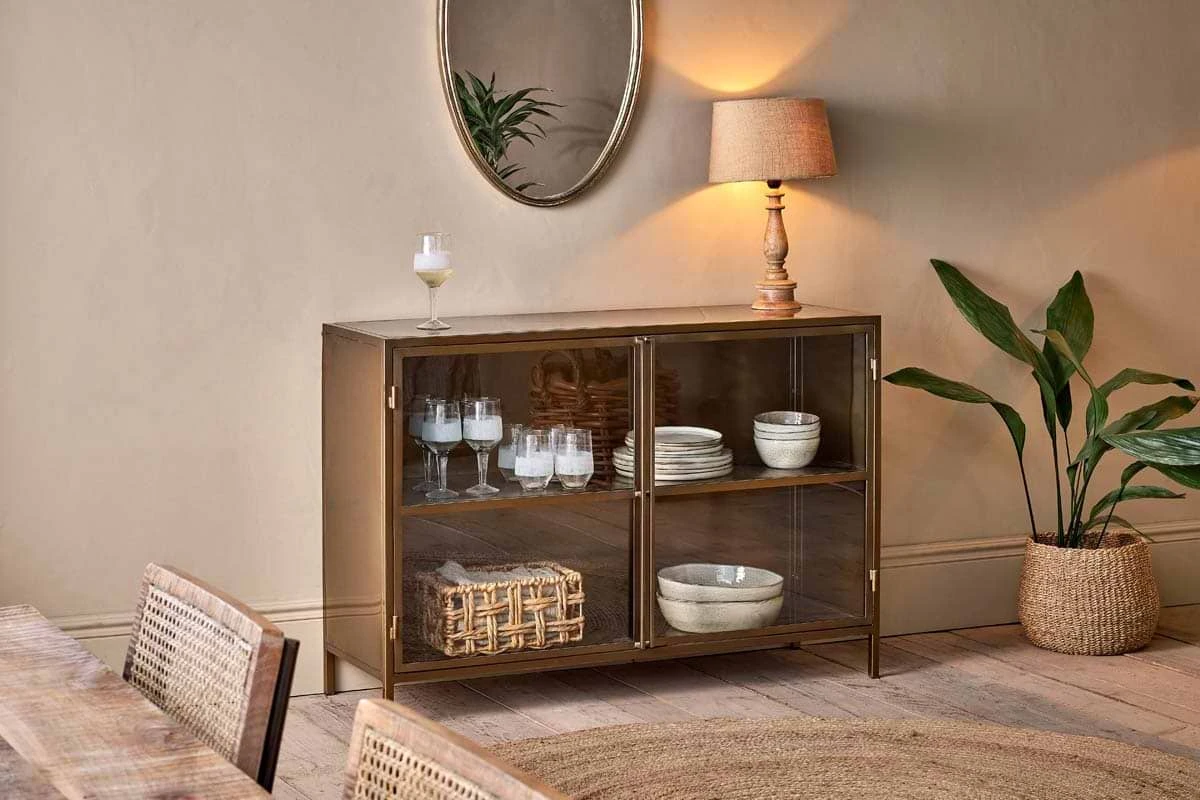
Mixed materials add visual interest. The Nkuku Ranchi combines iron and glass with a brass-tone finish (£900) — a different proposition entirely from a solid timber sideboard, and one that works well in industrial or eclectic spaces.
Five Styles of Sideboard and Where They Work
The five most common sideboard styles — mid-century modern, Scandinavian, industrial, contemporary, and rustic — each suit different rooms and existing furniture. Mid-century is the most popular in our collection, accounting for 15 of 56 sideboards, while industrial pieces from UK makers like Konk offer handmade character. Choosing comes down to what is already in the room: a sideboard should feel like it belongs, not like it wandered in from a different house.
Mid-Century Modern
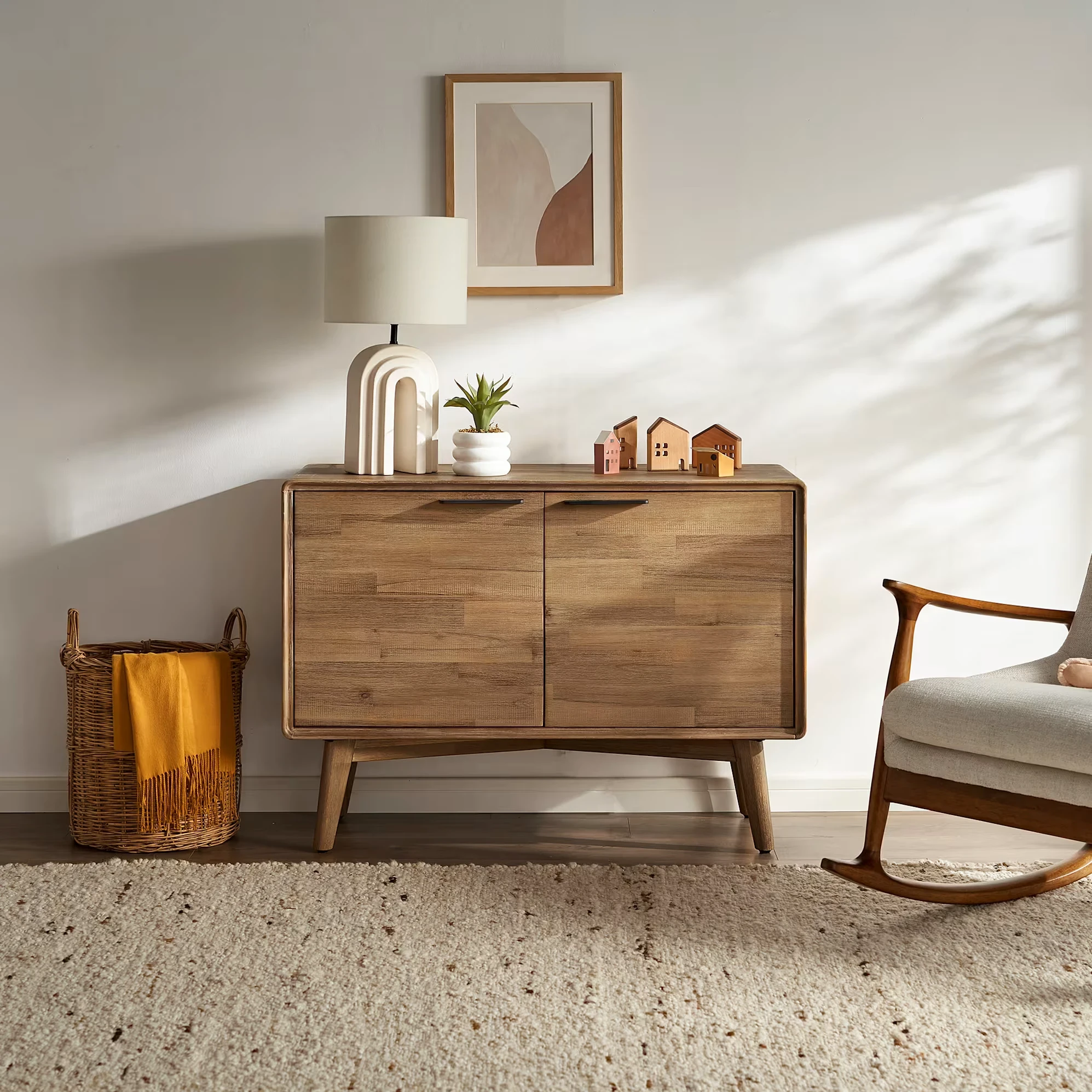
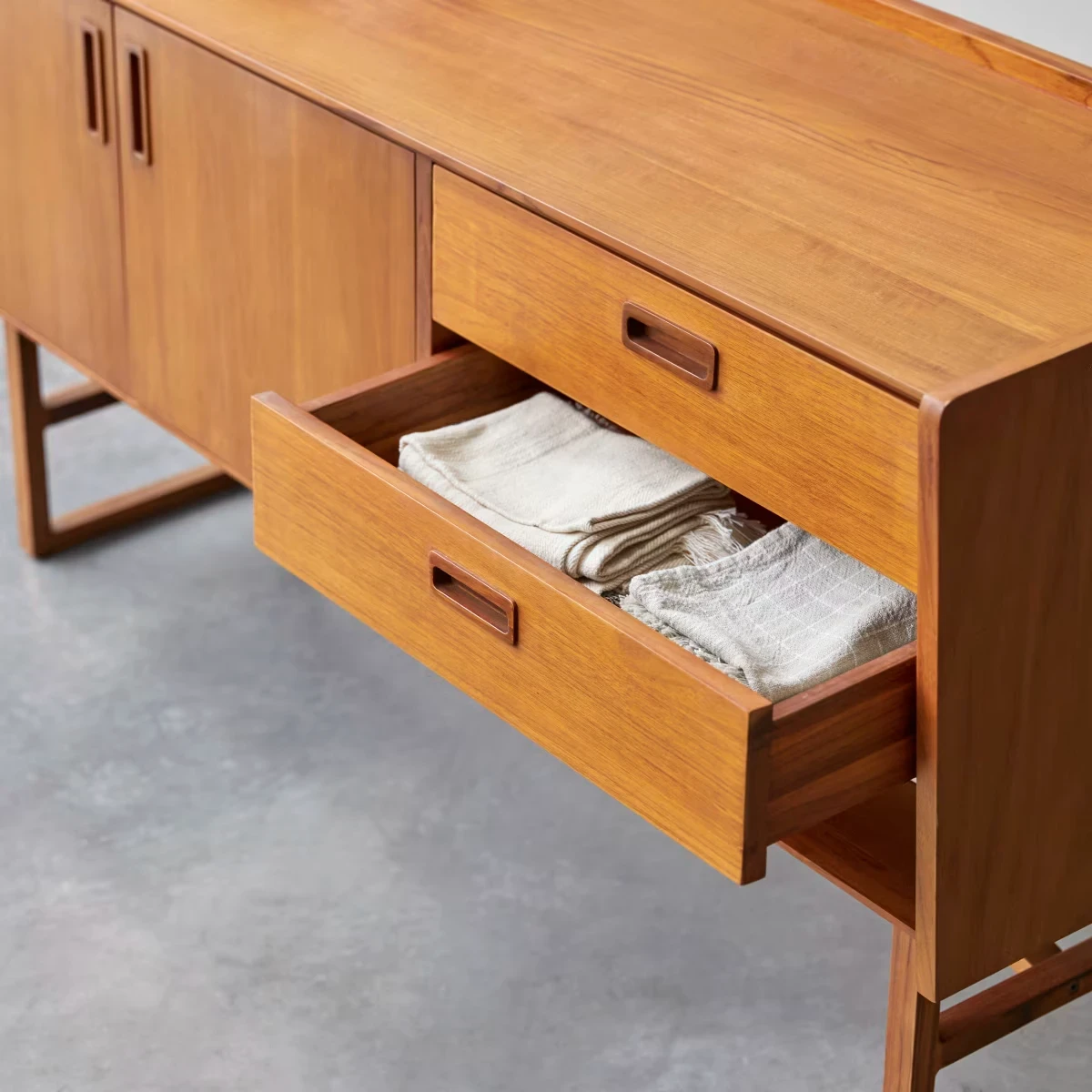
Clean lines, tapered legs, and warm wood tones. This is the most popular style in our collection — 15 of our 56 sideboards fit this category. They sit well in rooms with open floor space because the raised legs create visual lightness. The Tikamoon Marcus in solid teak (£1,099) is a textbook example: low-slung, 160cm wide, with a warm honey tone that pairs with most colour palettes.
Scandinavian and Minimalist
Pared-back shapes, pale timbers (often oak or pine), and a focus on function over ornament. These sideboards tend to be the most versatile — they work in period homes and new-builds alike. Look for pieces with soft-close drawers and internal dividers for genuine day-to-day usefulness.
Industrial
Raw steel frames combined with solid wood shelving or doors. The Konk range from their Sheffield workshop pairs character-grade oak with powder-coated steel — handmade in the UK, which is increasingly rare. Prices start at £1,385 and climb to £2,909 for larger credenza-style pieces.
Contemporary
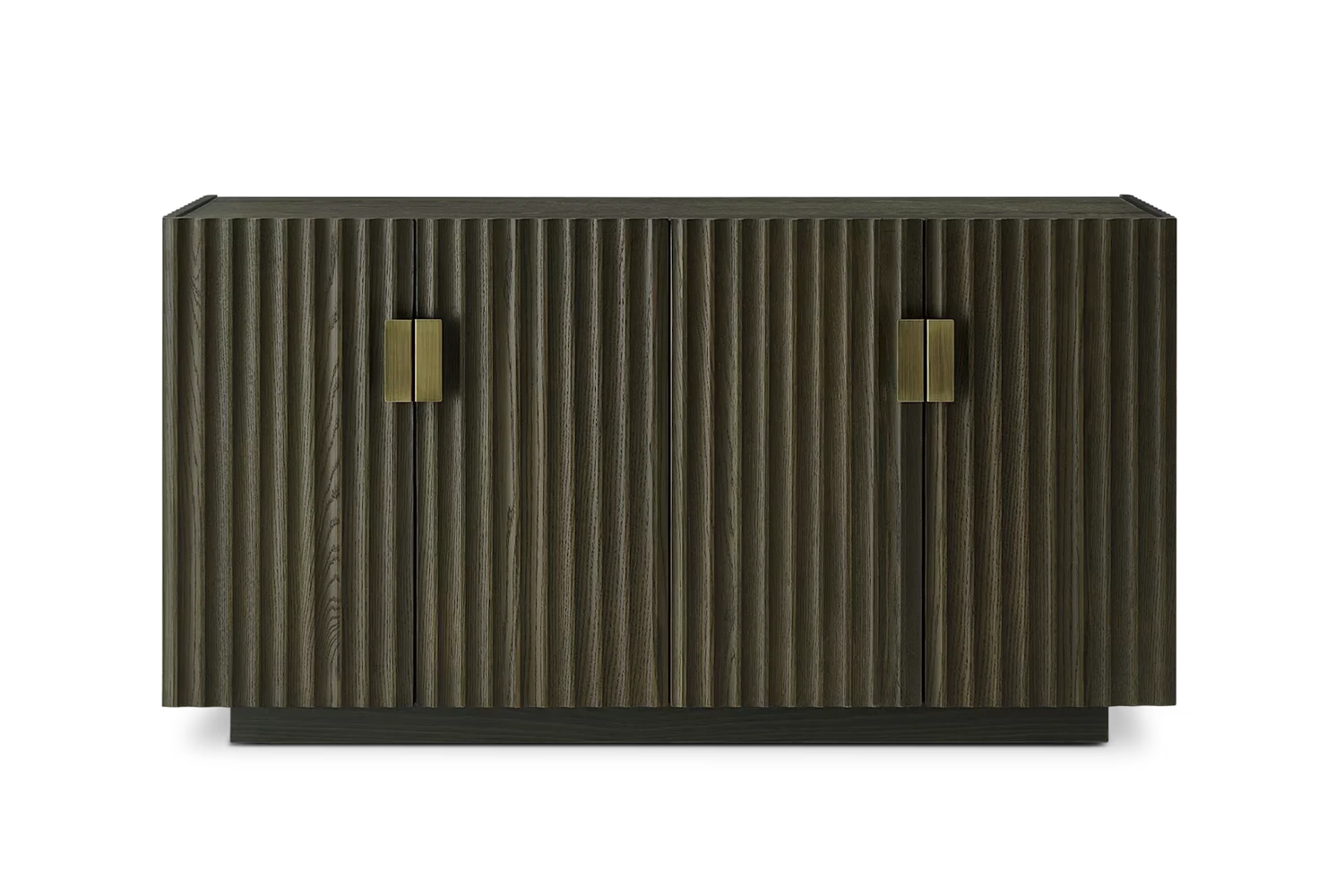
Broader category, but typically means clean geometry, mixed materials, and neutral colours. The Castlery Sloane in grey oak veneer with steel legs (£1,049) is a good example — restrained enough to let artwork or accessories on top do the talking.
Rustic and Bohemian
Textured timbers, woven cane inserts, and visible wood grain. The Tikamoon Luis combines solid elm with woven cane panels (£999) — a piece with genuine warmth that would anchor a room with layered textiles and earthy colours.
How Much Should You Spend on a Sideboard?
Across our collection of 56 sideboards from boutique UK retailers, the median price sits around £1,200. That gets you a solid wood piece from a specialist maker — not a flat-pack or veneered alternative.
Price Breakdown
Budget Tier | Price Range | What You Get | Count in Our Collection |
|---|---|---|---|
Entry | £649-£899 | Solid pine, acacia, or teak from specialist makers | 12 |
Mid-range | £900-£1,299 | Oak, teak, or mixed-material designs with refined detailing | 20 |
Upper mid | £1,300-£1,799 | Walnut, marble-topped, or design-led pieces | 16 |
Premium | £1,800-£2,909 | Large solid oak or walnut, handmade UK production | 8 |
The best value sits in the £900-£1,299 range. At this price, the Castlery Harper (£1,099) offers an oak-veneer sideboard at 180cm wide with clean mid-century proportions — generous storage without the weight or cost of solid timber throughout.
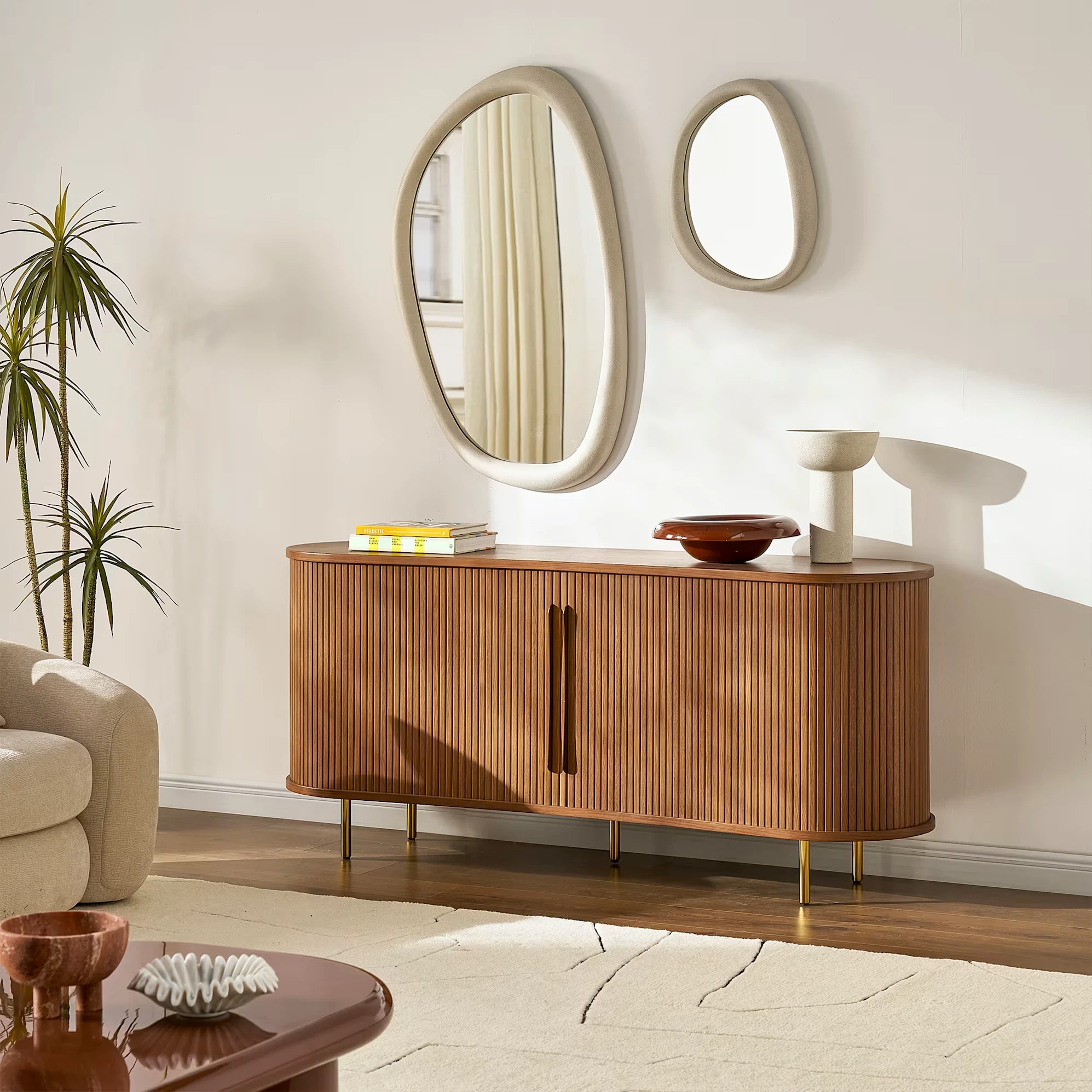
If budget is the primary concern, the Tikamoon Roma in solid pine starts at £649 for 110cm — real wood, proper joinery, and a Scandinavian feel that works in most settings.
At the premium end, the Konk Chamfered Edge Sideboard (£2,295) is handmade in Sheffield from character-grade oak with steel accents. You are paying for UK craftsmanship and materials you can trace to source.
What to Check Before You Buy
Before ordering, check three things: storage configuration (drawers vs cupboards vs open shelving), build quality indicators (dovetail joints, soft-close hinges, solid wood construction), and delivery access — a 180cm sideboard will not fit through a standard 76cm doorway without careful manoeuvring. Getting these right first time saves the hassle and cost of returns.
Storage Configuration
Think about what is going inside. Sideboards typically offer some combination of:
Drawers — for cutlery, candles, stationery, or smaller items
Cupboard doors — for bottles, board games, larger items
Open shelving — for display, books, or frequently accessed items
A two-door, three-drawer layout is the most versatile. It handles dining storage (linens, crockery, candles) and living room storage (remotes, cables, books) equally well.
Build Quality Indicators
Dovetail joints on drawers — sign of proper construction
Soft-close hinges — worth having, especially in an open-plan room
Solid wood vs veneer — both can be well made, but solid wood handles scratches and refinishing better over decades
Leg construction — turned or tapered legs should be securely bolted, not just glued
Delivery and Assembly
Most sideboards in our collection ship fully assembled or require minimal assembly (attaching legs). Check the delivery access — a 180cm sideboard is difficult to navigate through a narrow doorway or up a tight staircase. Measure your route, not just the final position.
Browse Sideboards on MeetFelix
MeetFelix brings together sideboards from boutique UK furniture makers — Tikamoon, Castlery, Loaf, Konk, and Nkuku — so you can compare across retailers in one place. Browse all sideboards, filter by oak sideboards, or explore modern sideboards to find the right piece for your room.
Frequently Asked Questions
What is the standard depth of a sideboard?
Most sideboards measure between 40cm and 50cm deep. This provides enough internal storage for plates, bottles, or folded linens without protruding too far into the room. For hallways or narrow spaces, look for pieces under 42cm deep — several in our collection, including models from Tikamoon, sit at 40-42cm.
Should a sideboard be the same height as a dining table?
Not necessarily. A sideboard between 70-80cm high sits level with or just below standard dining table height (around 75cm), which creates a cohesive sightline. Taller sideboards (85-100cm) work well in living rooms where you want more prominent display and storage. The key is proportion relative to the wall and furniture around it.
How do I choose between oak and walnut for a sideboard?
Oak ages to a warm honey colour and handles daily wear without complaint — it is the more forgiving timber. Walnut is darker and more dramatic, with a richer grain pattern, but it shows scratches more readily and costs more. In our collection, oak sideboards start at £949 while walnut begins at £1,499. Choose oak for a relaxed, enduring look; choose walnut when the sideboard is the centrepiece.
Can you use a sideboard in a hallway?
Yes, and it is one of the more practical uses. A narrow sideboard (under 42cm deep and 100-130cm wide) works well in a hallway for keys, post, and shoes. Look for models with drawers rather than cupboard doors — they are easier to access in a tight space. The Tikamoon Isaure at 80cm wide and 45cm deep is proportioned for exactly this kind of spot.
How do I style the top of a sideboard?
The simplest approach: one statement piece (a large lamp, mirror, or artwork leaned against the wall), one organic element (a vase with branches or a plant), and one stack of books or a tray for smaller objects. Leave at least a third of the surface clear — a sideboard that is too cluttered loses its visual purpose. The surface should feel edited, not empty.
Is it worth paying more for solid wood over veneer?
Solid wood costs more but ages better, can be sanded and refinished, and has a warmth that veneer struggles to match. A well-made veneer sideboard (like the Castlery Harper in oak veneer at £1,099) can still last decades with care, and it is lighter — a practical advantage if you move frequently. If you are buying a piece to keep for 20 years or more, solid wood is the stronger investment.
