

Rustic Furniture UK: The Complete Style and Buying Guide
Rustic furniture brings warmth, texture, and character to a home in a way few other styles can match. Defined by natural materials, visible grain, and handcrafted details, it suits everything from a country cottage to a city flat. In our current collection, MeetFelix lists over 600 rustic furniture pieces across 10 UK retailers — spanning dining tables, sideboards, lighting, and seating — with prices starting under £5 and reaching above £5,000 for statement investment pieces.
What Makes Furniture "Rustic" — and Why It Works in Modern Homes
Rustic furniture is built around three qualities: natural materials, visible craftsmanship, and a sense of age or lived-in warmth. Oak, teak, mango wood, and reclaimed timber are the most common materials, often left with natural grain, knots, and imperfections that mass-produced furniture sands away. Steel, iron, and brass hardware add structural contrast without competing for attention.
The reason rustic works so well in modern interiors is precisely this rawness. Where contemporary furniture tends toward smooth, uniform surfaces, rustic pieces introduce texture and irregularity — a waney-edge oak bench, a teak sideboard with a hand-rubbed finish, a mango wood lamp with visible woodturning marks. These details break up the flatness of clean-lined rooms and make spaces feel less curated, more lived in.
Modern rustic is not the same as farmhouse or country cottage. The distinction matters. Modern rustic keeps the natural materials but pairs them with minimal ornamentation, industrial metal, and neutral palettes — think raw steel legs on an oak table rather than painted pine with decorative carvings.
Key Materials: What to Look For and What to Avoid
Across our catalogue of 601 rustic pieces, oak is the most popular material (68 products), followed by teak (44), character-grade oak (43), wool (38 — mostly rugs), and mango wood (34). Each brings something different to a room.
Solid Oak
The workhorse of rustic furniture. Dense, durable, and develops a deeper tone with age. Character-grade oak — with its natural knots and figuring — is more rustic than prime-grade, and typically costs 10-20% less. Look for kiln-dried boards (moisture content below 12%) to avoid warping. For a deeper look at grades, finishes, and what to check before buying, see our oak furniture buying guide.
Teak
Naturally oily, which makes it weather-resistant without treatment. Ideal for pieces that move between indoors and outdoors. Browse teak furniture on MeetFelix to see the range.
Mango Wood
A sustainable hardwood (harvested from trees past fruit-bearing age) with a warm, golden tone and distinctive grain. Lighter than oak but surprisingly durable. It takes stain well, which is why you'll find it in everything from natural finishes to dark walnut stains. Our mango wood furniture guide covers sourcing, care, and what to look for in detail.
Reclaimed and Recycled Materials
Reclaimed timber and recycled materials appear across 49 products in our rustic collection. These pieces carry genuine history — old floorboards repurposed as tabletops, salvaged steel shaped into shelving frames. The trade-off is less consistency in colour and grain, which for rustic style is the entire point.
Material | Best For | Durability | Price Range |
|---|---|---|---|
Solid oak | Dining tables, sideboards, benches | Excellent — lasts generations | £350–£5,295 |
Character-grade oak | Statement tables, shelving | Excellent with more natural character | £500–£3,275 |
Teak | Indoor/outdoor, bedroom | Excellent — naturally weather-resistant | £40–£2,000 |
Mango wood | Side tables, lighting, decor | Good — moderate hardness | £40–£1,500 |
Reclaimed wood | Coffee tables, shelving, decor | Variable — depends on source | £150–£1,250 |
Room-by-Room Guide: How to Use Rustic Furniture
In our current collection, rustic furniture is most popular in living rooms (434 products tagged), followed by bedrooms (304), kitchens (288), and dining rooms (252). Here is how to approach each space.
Living Room
The living room is where rustic style has the strongest presence. Start with a solid wood coffee table as your anchor piece — it grounds the room and sets the material tone. The Castlery Seb Round Coffee Table (£349) in solid acacia wood is a good mid-range starting point, while the Seb Round Marble Coffee Table (£549) combines acacia with Carrara marble for a material mix that keeps things interesting.
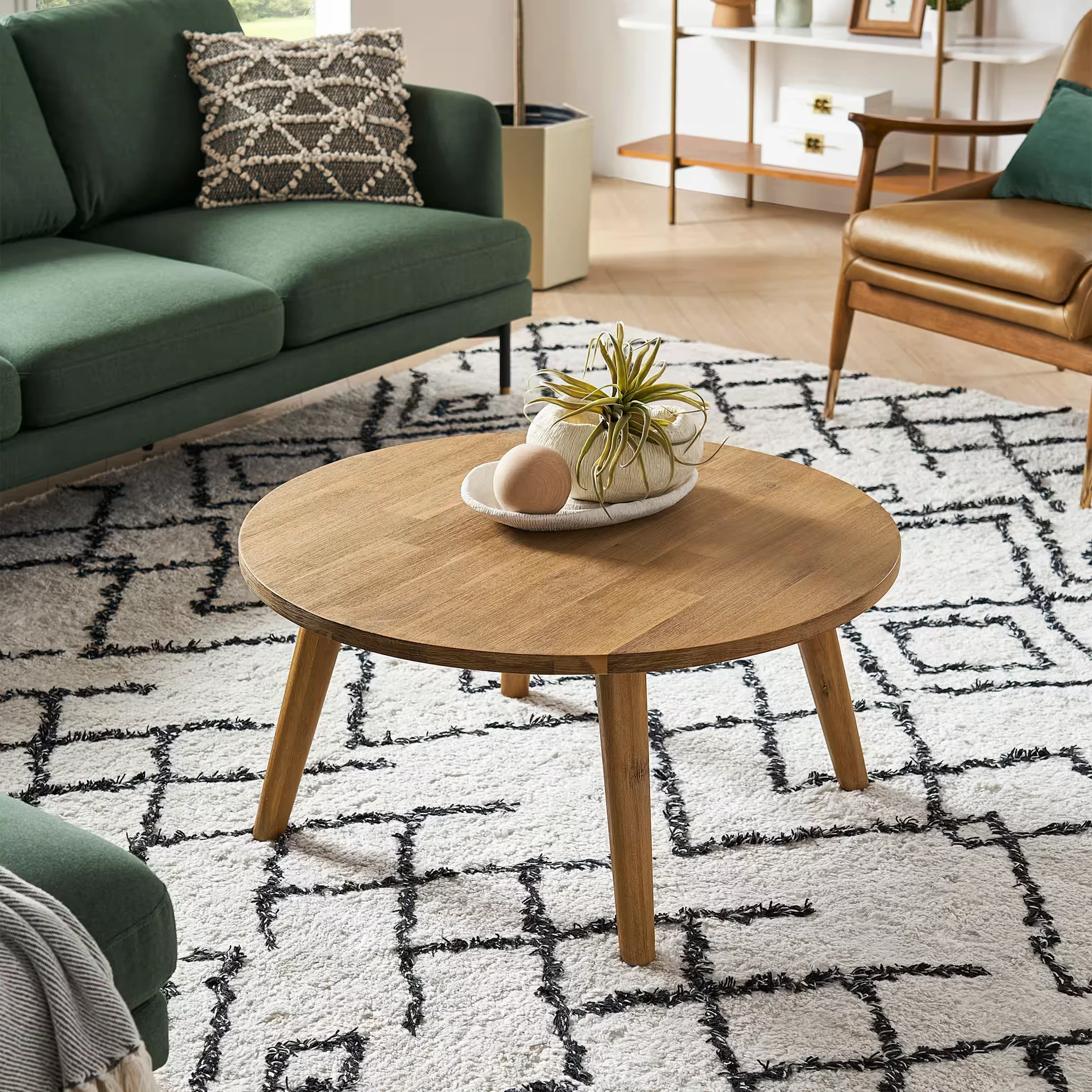
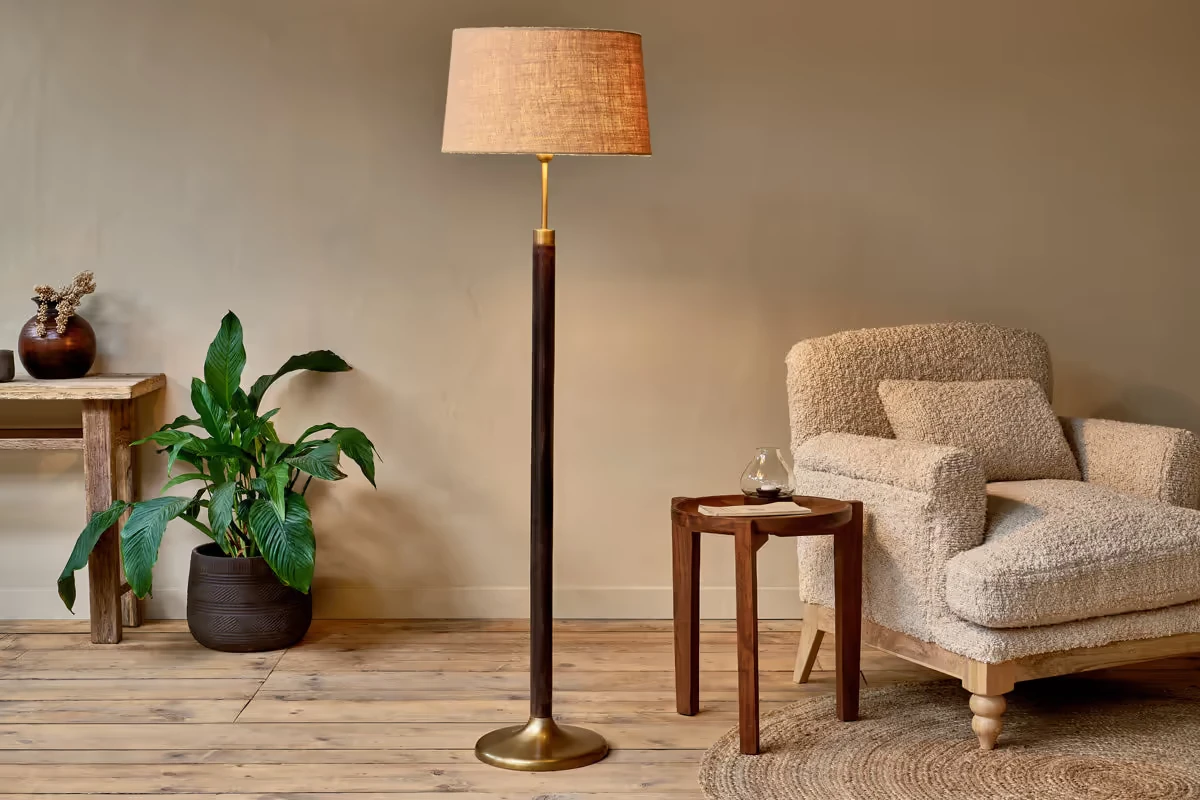
Layer from there: a jute or wool rug underneath, a sideboard or shelving unit against one wall, and a floor lamp with a mango wood base for warm, directional lighting. Avoid matching everything to the same wood tone. A teak side table next to an oak bookshelf creates more visual interest than a fully coordinated oak set.
Dining Room
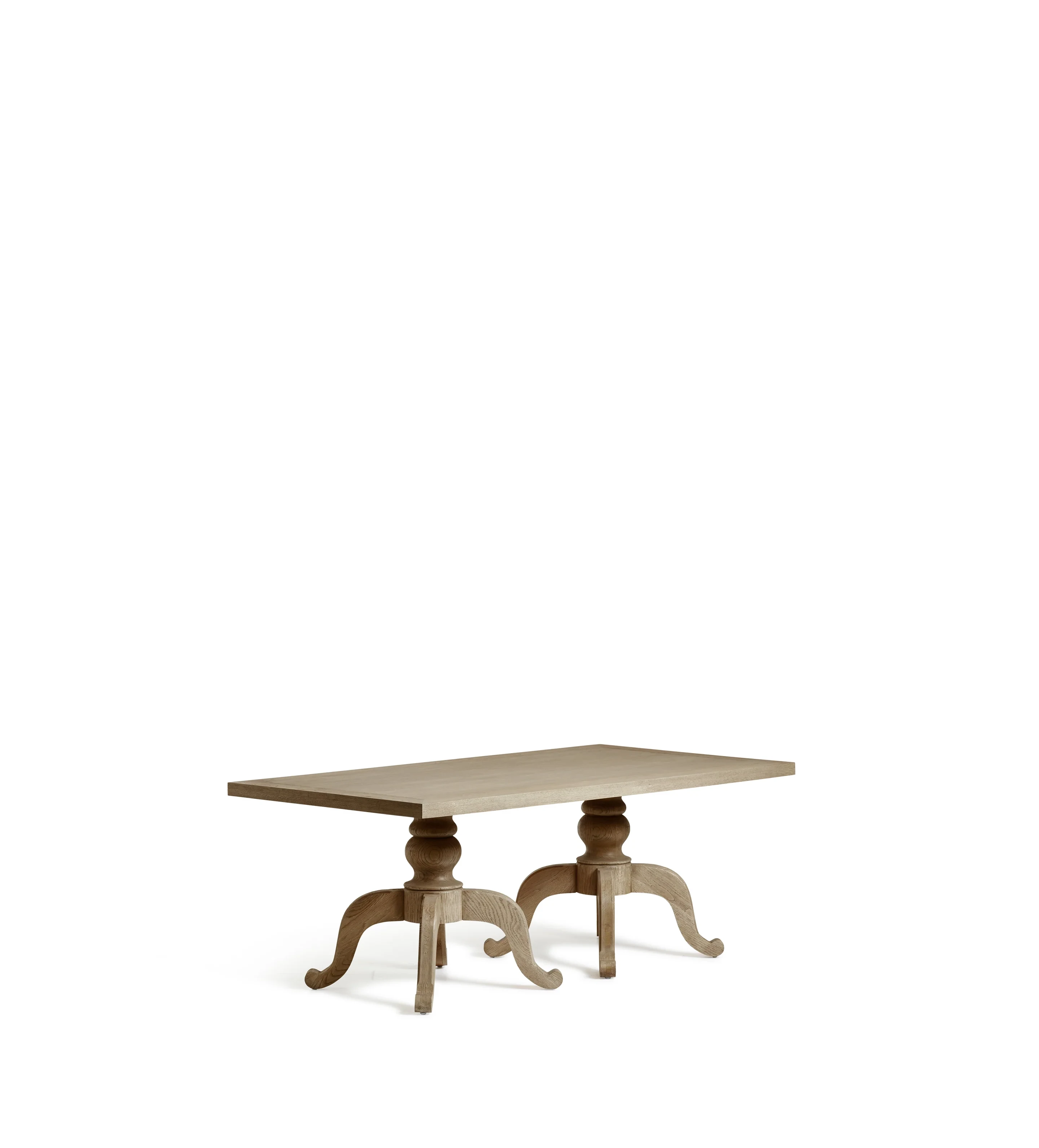
The dining table is the centrepiece. For rustic dining, look for tables with visible grain and either a natural or lightly oiled finish — heavily lacquered surfaces kill the tactile quality that defines the style. The Castlery Seb Dining Table (£549) in solid acacia offers clean lines with natural warmth, while the OKA Arthur Rectangular Dining Table (£2,147) in weathered oak makes a more serious investment.
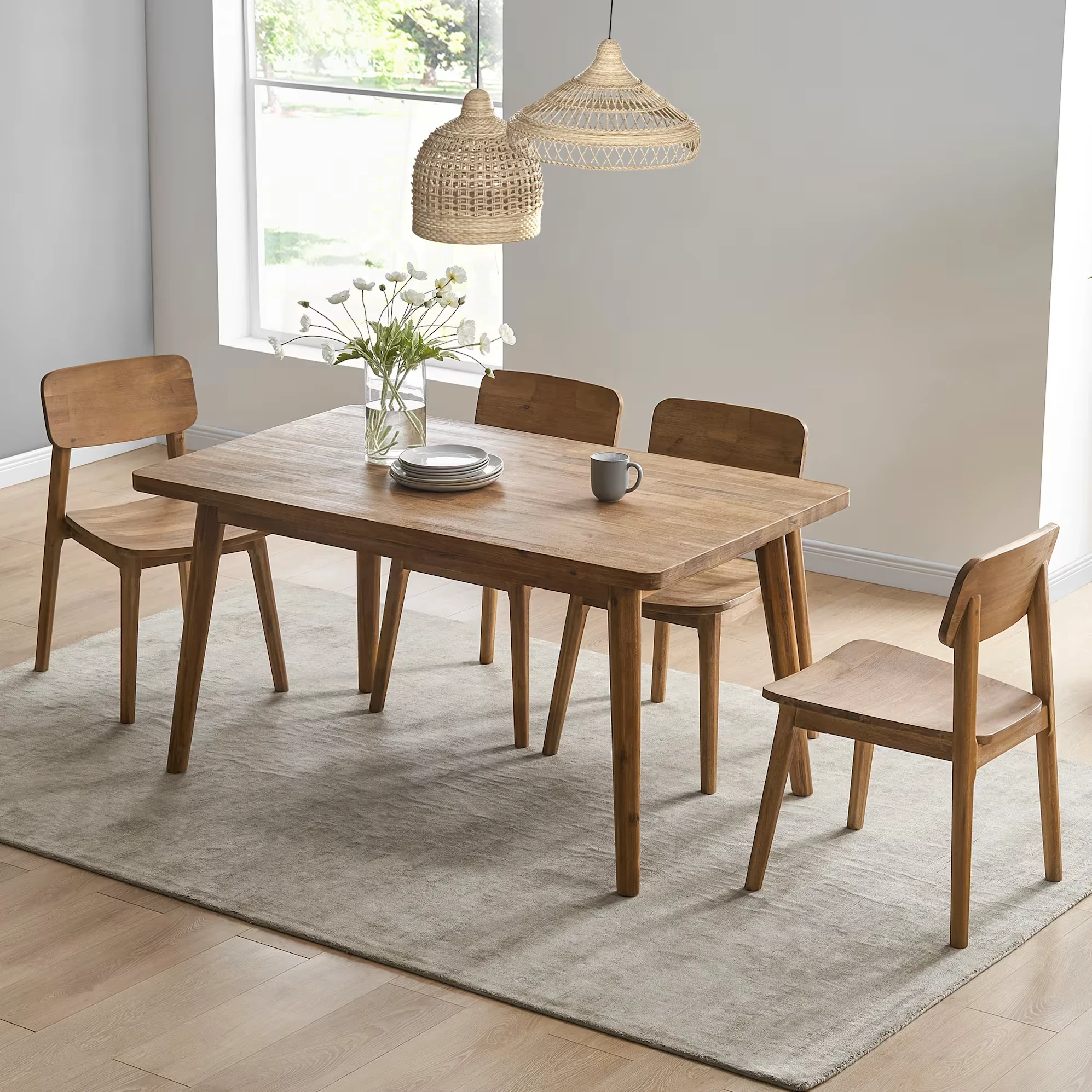
Pair your table with a bench on one side — it is more rustic than chairs all round and seats more people. The Konk Waney-Stong Bench (£605) in oak with steel legs bridges rustic and industrial with a live-edge seat that shows the natural contour of the timber.
Home Office and Hallway
Rustic style works particularly well in transitional spaces. An oak console table in a hallway sets the tone the moment you walk in. In a home office, a solid wood desk with steel legs signals substance without formality. At time of writing, MeetFelix lists 260 rustic products suitable for offices and 176 for entryways.
Bedroom
For bedrooms, rustic pieces are best used as accents rather than full suites. A mango wood bedside table, a reclaimed wood mirror, or a handwoven wool rug beside the bed introduces warmth without overwhelming the room. Keep bedframes and wardrobes simpler so the rustic textures have space to breathe.
Colour Palettes That Work With Rustic Furniture
The right wall colour and soft furnishings make or break a rustic scheme. Across our rustic collection, the most common product colours are natural tones (100 products), green (54), beige (44), and natural wood tone (42) — which tells you where the palette naturally sits.
Warm Neutrals (Safest Choice)
Cream, oatmeal, soft taupe, and warm white walls let the wood do the talking. This works in any room and makes smaller spaces feel open while the furniture provides all the visual weight. Add texture through linen cushions, wool throws, and woven baskets rather than more colour.
Earth Tones (More Character)
Sage green, terracotta, clay, and ochre create a richer, more grounded space. These are the colours that appear most often in nature alongside wood, which is why they feel instinctively right. Use them on a feature wall or in soft furnishings rather than painting an entire room.
Dark and Moody (Confident Choice)
Deep navy, charcoal, and forest green can be striking with rustic furniture — the contrast between dark walls and pale oak or warm teak creates genuine drama. This works best in larger rooms with good natural light, and demands fewer pieces so each one reads clearly against the dark backdrop.
Colours to approach with caution: Cool greys and stark whites can make rustic furniture look out of place, as if it arrived in the wrong room. If you prefer a cooler palette, warm it up with brass hardware and warm-toned textiles.
Price Guide: What to Expect at Every Budget
Rustic furniture spans a wide price range. In our current collection, the split is roughly even: 184 budget pieces (under £100), 179 mid-range (£100–£500), 145 premium (£500–£1,500), and 78 luxury pieces (above £1,500).
Budget | What You Get | Examples |
|---|---|---|
Under £100 | Rugs, doormats, small decor, candle holders | Hug Rug doormats from £4.99, jute rugs from £30 |
£100–£500 | Side tables, table lamps, smaller sideboards, cushions | Nkuku mango wood lamps from £150, Castlery coffee tables from £349 |
£500–£1,500 | Dining tables, shelving units, floor lamps, benches | Konk industrial sideboards from £1,529, Nkuku floor lamps at £350 |
£1,500+ | Statement dining tables, large sideboards, bespoke shelving | OKA weathered oak tables from £2,147, Konk drawer chests to £5,175 |
The sweet spot for most rooms is the £300–£800 range. This gets you solid hardwood construction from brands like Castlery, Tikamoon, and Nkuku without paying the premium that comes with fully bespoke or heritage-brand pieces.
Where to Start If You Are on a Budget
Begin with a rug — it covers the most visual ground for the least money. A jute or wool rug in a natural tone immediately shifts a room toward rustic territory. Then add a single statement piece: a solid wood coffee table or a mango wood table lamp. Two or three well-chosen rustic pieces in a room have more impact than filling every corner with the style.
How to Mix Rustic With Other Styles
The most effective rustic interiors pair natural wood and raw textures with one contrasting style — Scandinavian, industrial, or contemporary — rather than committing fully to rustic from floor to ceiling. Pure rustic can feel heavy, especially in smaller UK homes, so mixing in lighter elements creates contrast and breathing room.
Rustic + Scandinavian
The most natural pairing. Both styles prize natural materials and craftsmanship, but Scandinavian design adds lightness and clean lines that prevent a room from feeling dark or cluttered. Pair a raw oak dining table with white-painted walls and simple, curved chairs.
Rustic + Industrial
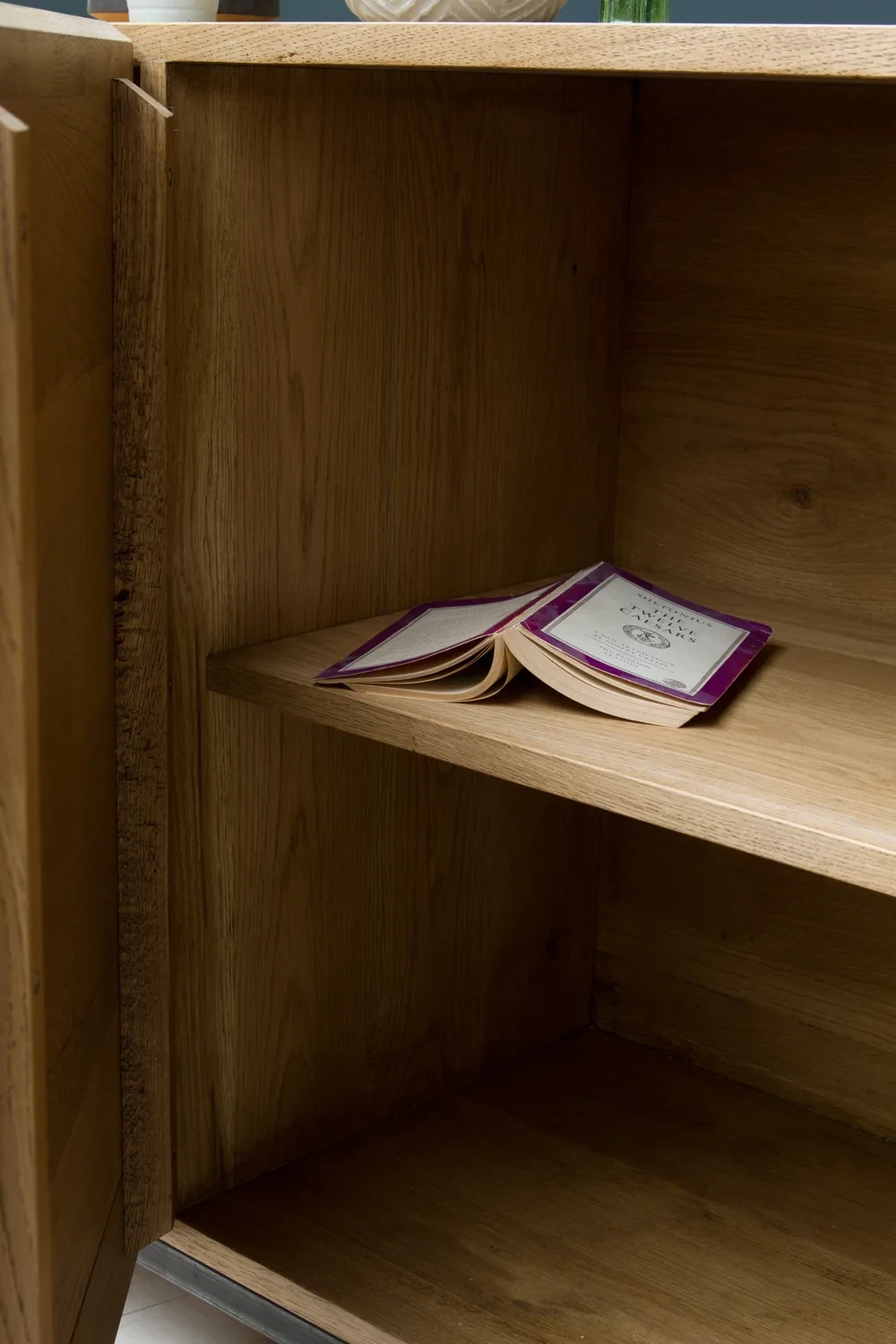
Already built into many pieces — Konk's shelving and sideboards combine character-grade oak with raw steel, which is essentially rustic-meets-industrial in a single item. Extend this with exposed metalwork, concrete, and matte black accents. Our industrial furniture guide covers this crossover in more depth.
Rustic + Contemporary
The modern rustic approach. Keep walls minimal and neutral, furniture low-profile, and let one or two rustic pieces (a statement dining table, a hand-carved mirror frame) do all the textural work. Everything else stays simple.
What to Avoid
Mixing rustic with overtly glamorous or high-gloss styles rarely works. Mirrored surfaces, high-shine lacquer, and chrome detailing fight against the matte, tactile quality of rustic materials. If you want metallic accents, stick to brass and aged bronze — they patina over time, which aligns with the rustic philosophy.
Caring for Rustic Furniture
Rustic furniture is forgiving by nature — minor scratches and wear marks add character rather than diminishing it. That said, basic maintenance extends its life significantly.
Solid wood: Dust regularly with a soft cloth. Apply a natural furniture oil or wax (Danish oil, beeswax, or tung oil) once or twice a year to prevent drying and cracking. Wipe spills immediately — wood is porous, especially untreated surfaces.
Teak: Needs almost no maintenance indoors. Outdoors, it will silver naturally if untreated, which many people prefer. To maintain the original warm tone, apply teak oil annually.
Steel and iron hardware: Wipe with a dry cloth. Raw steel legs on industrial-rustic pieces may develop a light patina over time — this is intentional and adds to the aesthetic.
Mango wood: Treat similarly to oak but note it is softer, so use coasters and avoid dragging objects across the surface. A light coat of linseed or Danish oil keeps the grain looking rich.
Discover Rustic Furniture on MeetFelix
If you take one thing from this guide: start with the material, not the style label. A well-made piece in solid oak or teak will outlast trends and develop character over decades. Choose the £300-£800 sweet spot for your anchor piece, mix in one contrasting style to keep things current, and let the natural grain and texture do the rest.
MeetFelix brings together rustic furniture from boutique UK retailers including Konk, Nkuku, Tikamoon, OKA, Castlery, and Loaf — so you can compare materials, prices, and styles in one place rather than browsing ten separate websites. Browse all rustic furniture, explore rustic dining tables, or discover rustic lighting to find pieces that bring warmth and character to your home.
Frequently Asked Questions
What is the difference between rustic and farmhouse furniture?
Rustic is the broader category — it refers to any furniture that emphasises natural materials, visible grain, and a handcrafted quality. Farmhouse is a subset that leans toward a specific aesthetic: painted finishes, turned legs, and pastoral motifs. Modern rustic drops the decorative elements of farmhouse and pairs raw wood with clean lines and industrial metal, making it a better fit for contemporary UK interiors.
Is rustic furniture suitable for small rooms?
Yes, with restraint. In smaller spaces, choose one or two rustic pieces as focal points rather than furnishing the entire room in the style. A single live-edge shelf or a compact mango wood side table introduces the warmth of rustic design without visual bulk. Lighter woods like mango and acacia feel less heavy than dark oak in tight spaces.
What wood is best for rustic dining tables?
Oak is the most durable and widely available choice in the UK. Character-grade oak, with its natural knots and figuring, looks more authentically rustic than prime-grade. Teak is excellent if the table might also be used outdoors. Acacia offers a similar warmth to oak at a lower price point — the Castlery Seb range demonstrates this well, with dining tables starting at £549.
How do I stop rustic furniture looking dated?
Keep the surrounding decor modern. Rustic furniture looks dated when it is surrounded by matching rustic accessories, creating a theme-park effect. Instead, place rustic wood pieces against clean walls, pair them with contemporary lighting, and use modern textiles. The material contrast keeps the look current.
How often should I oil rustic wood furniture?
For indoor pieces, once or twice a year is sufficient. Apply a thin coat of Danish oil, tung oil, or beeswax with a soft cloth, let it absorb for 15-20 minutes, then buff off the excess. Outdoor teak furniture benefits from annual oiling if you want to maintain its original colour, though leaving it untreated to silver naturally is equally valid.
Where can I find rustic furniture from independent UK makers?
MeetFelix aggregates products from specialist makers like Konk (handmade oak and steel pieces from their UK workshop), Nkuku (ethically sourced mango wood and reclaimed materials), and Tikamoon (solid wood furniture with visible craftsmanship). Search for rustic furniture on MeetFelix to discover pieces from these and other independent retailers, with prices and specifications compared side by side.


