

Bohemian Furniture UK: The Complete Style and Buying Guide
Bohemian style is one of the most forgiving ways to furnish a home -- layered, textured, and personal in a way that rigid design rules rarely allow. But "boho" covers a wide spectrum, from maximalist pattern clashes to restrained natural-material curation. In our current collection of 330+ bohemian-style pieces from UK retailers like OKA, Nkuku, Tikamoon, and Loaf, the common thread is warmth: natural materials, handcrafted details, and colours drawn from the earth rather than a paint chart.
This guide breaks down what makes bohemian furniture work, which materials and pieces to prioritise, and how to build a boho-inflected room that feels collected rather than contrived.
What Defines Bohemian Furniture (and What It Isn't)
Bohemian furniture is characterised by natural materials, artisan craftsmanship, and a deliberate mix of textures and origins -- pieces that look like they were gathered over years of travel rather than ordered in one delivery. The key materials are rattan, mango wood, jute, brass, and reclaimed teak, often combined in single pieces like a mango wood cabinet with rattan-cane door panels or a brass-framed mirror with a hand-woven surround.
What bohemian style is not: cluttered maximalism with no editorial eye. The best boho interiors have a clear material palette -- typically two or three natural materials repeated across the room -- with colour introduced through textiles rather than furniture frames.
Across our collection, the most common materials in bohemian-tagged pieces are wool, cotton, mango wood, jute, and rattan. That tells you where the style's centre of gravity sits: woven fibres and warm-toned hardwoods, not painted finishes or high-gloss lacquer.
How Bohemian Differs from Adjacent Styles
Bohemian shares DNA with several other styles, which can make sourcing confusing. Here's how to tell them apart:
Style | Material Focus | Colour Palette | Key Difference |
|---|---|---|---|
Bohemian | Rattan, mango wood, jute, brass | Warm neutrals + earthy accents | Layered, textural, global influences |
Scandinavian | Oak, birch, linen | Cool neutrals, white | Minimal, functional, restrained |
Mid-Century Modern | Walnut, teak, leather | Warm neutrals + mustard/teal | Clean lines, tapered legs, retro |
Rustic | Reclaimed wood, iron | Brown, cream, grey | Weathered, heavy, countryside |
Coastal | Rattan, whitewashed wood | Blue, white, sand | Beach-inspired, lighter palette |
The practical difference when shopping: bohemian pieces tend to feature visible handcraft -- woven elements, turned details, hammered metal -- where Scandinavian and mid-century rely on machined precision.
The Essential Materials: What to Look For
Rattan, mango wood, brass, jute, and cotton form the material backbone of bohemian furniture available in the UK. In our current catalogue, these five materials account for the majority of boho-tagged pieces. Knowing what to expect from each helps you buy well.
Rattan and Cane
Rattan is a climbing palm, not bamboo (a common confusion). It's naturally flexible, lightweight, and surprisingly strong. In furniture, you'll find it woven into chair seats, lamp shades, cabinet doors, and headboards. Cane -- the outer skin of the rattan palm -- is used for finer weaving in chair backs and table details.
At time of writing, we list over 20 rattan pieces from retailers including Nkuku and Tikamoon, with prices starting from around £79 for a bedside table up to £239 for a mango wood and rattan storage unit.
What to check: Look for hand-tied joints rather than glued connections. Natural rattan ages to a deeper honey tone; synthetic rattan (PE rattan) is better for outdoor use but lacks the patina that makes indoor boho pieces characterful.
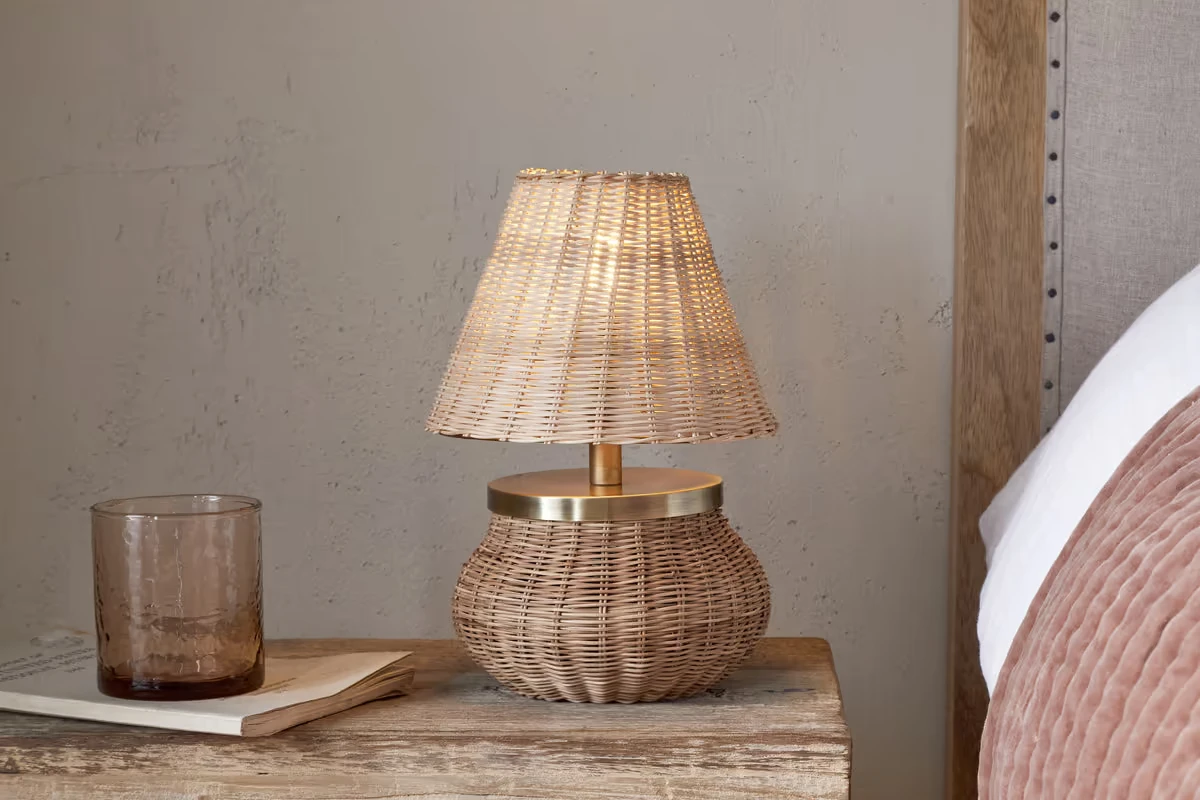
The Cija Rattan Table Lamp from Nkuku is a good example of how rattan translates into lighting -- the woven shade casts patterned shadows that change through the day, adding texture without weight.
Mango Wood
Mango wood is the workhorse of bohemian furniture. It's a sustainable hardwood (harvested from fruit-bearing trees at the end of their productive life), with a distinctive grain that varies from pale gold to deep brown. We've written a full mango wood furniture guide if you want the deep dive, but the short version: it's durable, affordable, and takes carved detail well.
In our bohemian collection, mango wood appears in 38 pieces -- predominantly tables, storage, and lighting bases. It pairs naturally with rattan, brass, and iron.
Brass and Antique Brass
Brass brings warmth and a sense of age to bohemian interiors without the heaviness of iron. You'll find it in lamp bases, mirror frames, cabinet handles, and decorative accessories. Antique brass finishes -- slightly dulled and patinated -- suit the boho aesthetic better than polished brass, which reads more Art Deco or Hollywood Regency.
Across our catalogue, brass features in 19 bohemian-tagged pieces, mostly lighting and decor. Nkuku and OKA are particularly strong here.
Jute, Wool, and Cotton
These are the textile trio of bohemian interiors, appearing in rugs, cushions, poufs, and throws. Jute provides coarse, earthy texture underfoot; wool adds warmth and pattern through rugs and woven wall hangings; cotton anchors everything with soft, breathable comfort.
In our collection, wool (50 pieces) and cotton (49 pieces) are the two most common materials in boho-style products, with jute following at 22 pieces. Prices range widely: a jute doormat from Nkuku starts at £48, while an OKA wool rug can reach upwards of £4,000 for a large format piece.
Room-by-Room: How to Build a Bohemian Interior
Bohemian style works room by room, but the layering principle stays constant: start with natural-material furniture, add texture through textiles, and let colour come from accessories. Here's how to approach each space, with the specific pieces that anchor it.
Living Room
The living room is where boho style has the most room to breathe. Start with a neutral sofa in linen or cotton (you can find options in our sofas collection), then build around it with layered rugs, a characterful coffee table, and statement lighting.
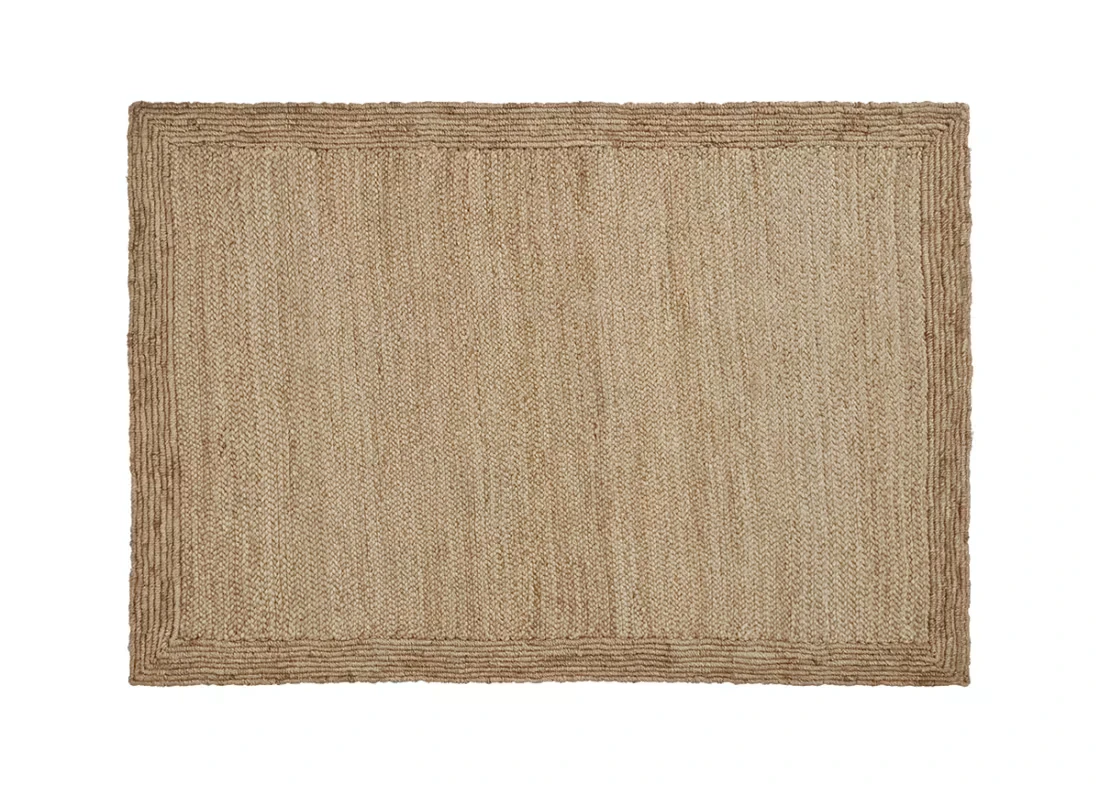
A chunky jute rug grounds the space and introduces texture at floor level. Layer a smaller patterned rug on top for depth -- the "rug on rug" technique is a boho signature that also lets you mix price points.
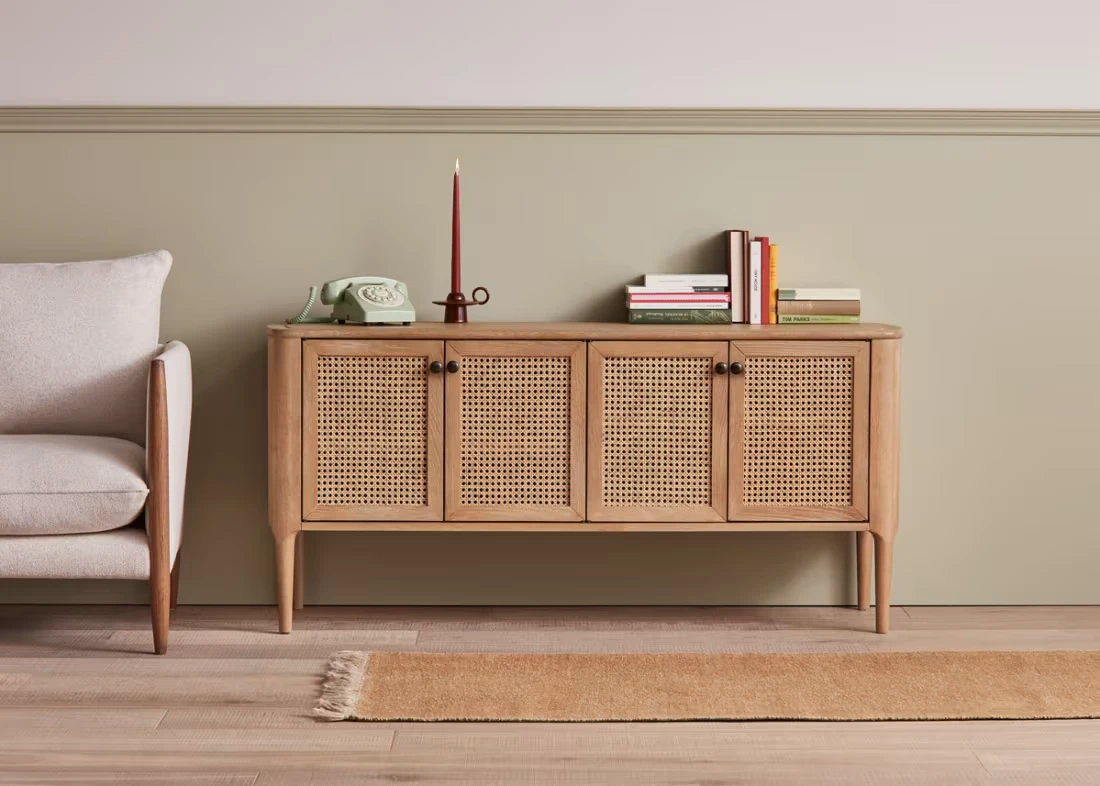
For storage that doubles as a statement, a whitewashed or natural wood sideboard keeps the room feeling open while hiding the everyday clutter that undermines any carefully styled space.
Dining Room
Bohemian dining rooms work best when the chairs do the talking. Mismatched chairs -- or at least chairs with visible handcraft -- give the space an informal, gathered-over-time feel that suits long, unhurried meals.
The Finials Dining Chair from Six The Residence, with its teak frame and hand-woven synthetic rope seat, captures this approach well: natural materials, visible craft, and enough durability for daily use.
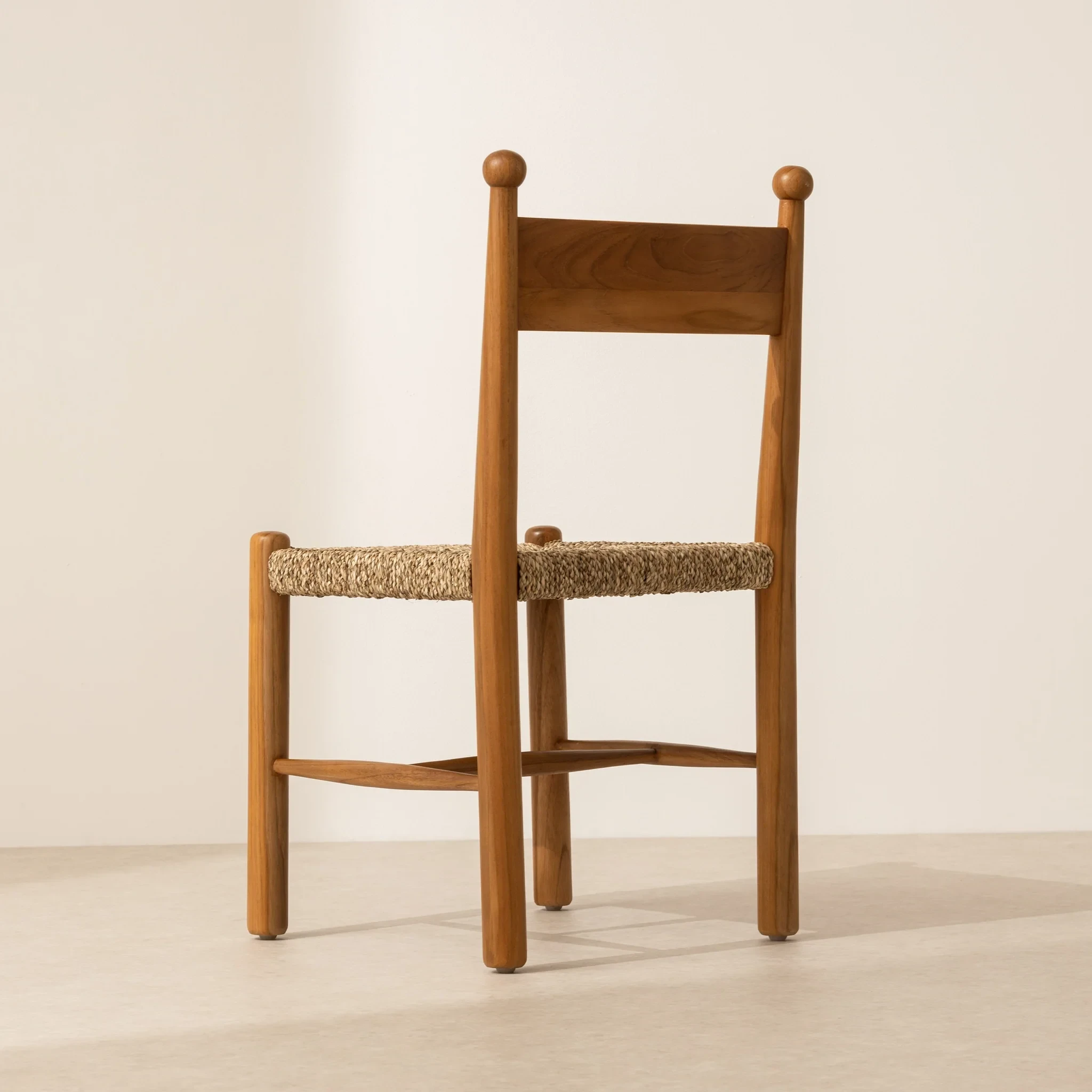
Pair characterful chairs with a simpler table in solid wood -- mango wood, reclaimed teak, or oak all work. The table provides the visual anchor; the chairs provide the personality.
A pendant lamp overhead completes the scene. Look for woven or textured shades that cast interesting shadows rather than clinical downlighting.
Bedroom
Bohemian bedrooms are about soft layering: linens, throws, and cushions in natural fibres, with one or two characterful furniture pieces. A rattan or cane headboard is the most impactful single addition if your bed frame is plain.
For bedside storage, a mango wood and rattan piece bridges the gap between the textured bed and the rest of the room.
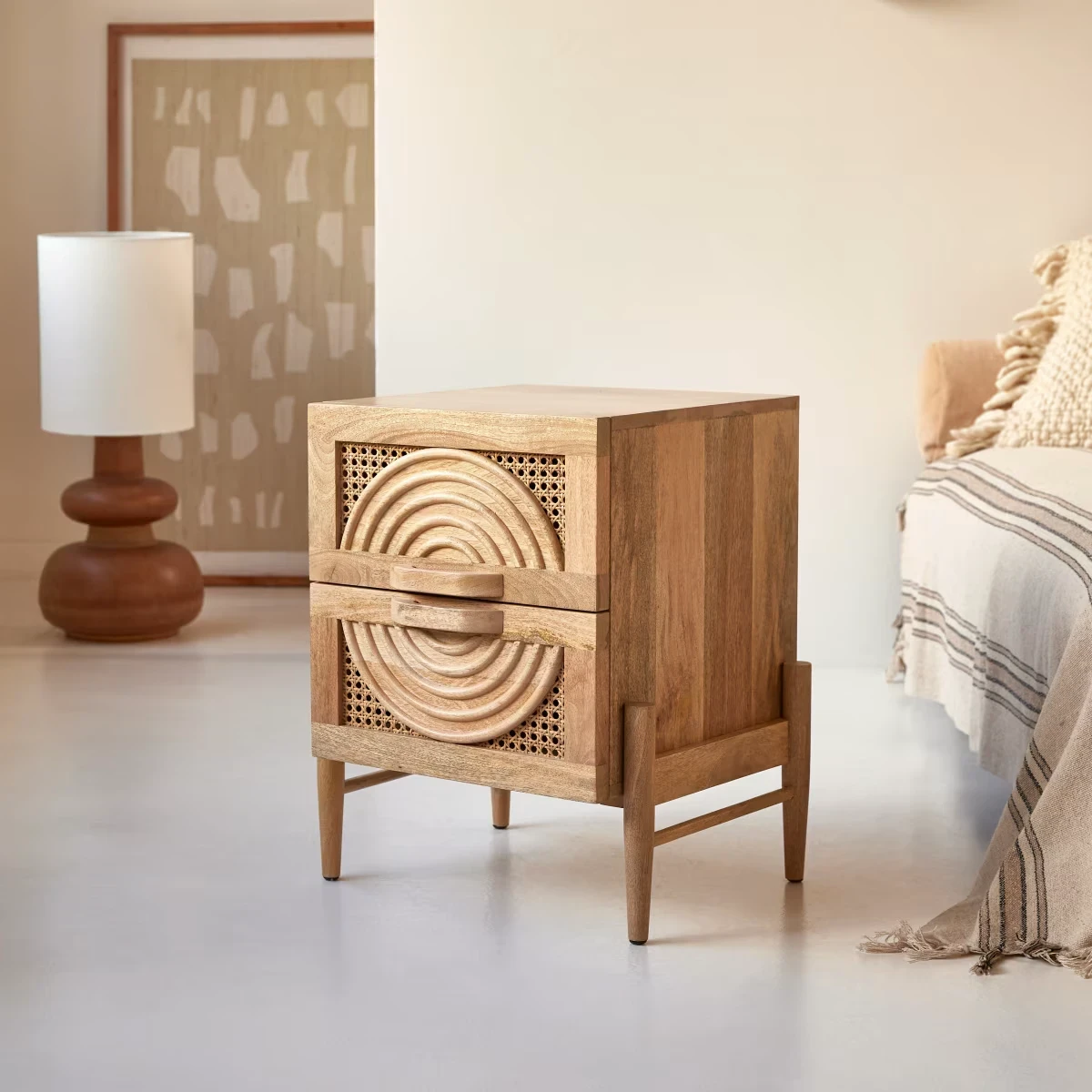
In our collection, 16 bohemian-tagged pieces are specifically suited to bedrooms, including bedside tables, bedding, and storage. Keep the colour palette warm and muted -- the texture does the work.
Lighting
Lighting is arguably the most underrated category for bohemian style. A single woven pendant or rattan table lamp can shift the entire mood of a room. In our current catalogue, 76 bohemian-tagged pieces are lighting -- making it the single largest category, ahead of tables and decor.
For a pendant that works as a centrepiece, the OKA Twyla in cotton-jute and antique brass combines two core boho materials in a form that casts warm, diffused light. At £295, it sits in the mid-range for statement pendants.
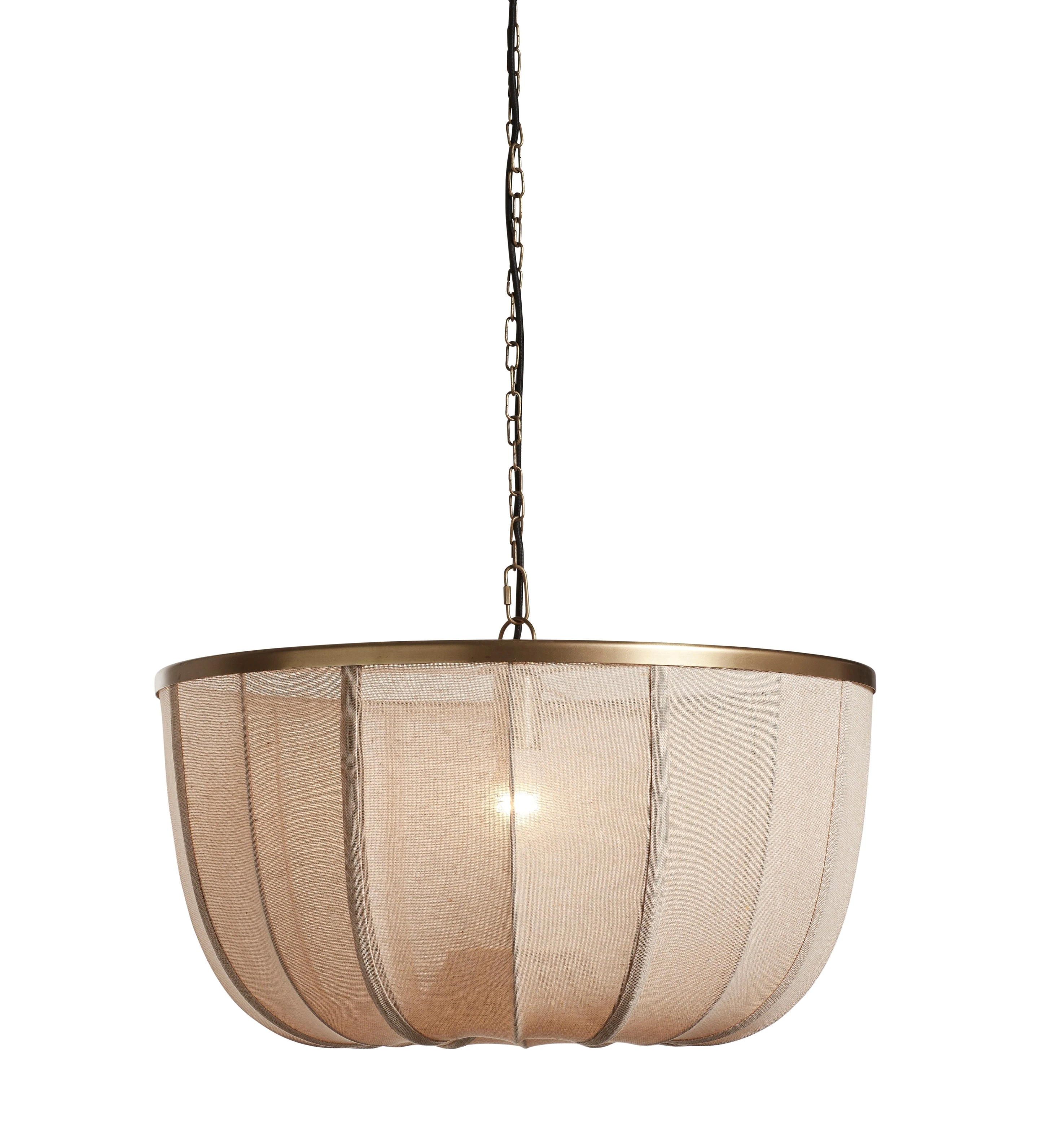
Layering light matters in boho spaces. Aim for three types: ambient (pendant or ceiling), task (table lamp), and accent (candles, lanterns). This creates the warm, varied atmosphere that flat overhead lighting never achieves.
Price Guide: What to Expect at Each Budget
Bohemian furniture spans a wide price range, which actually works in the style's favour -- mixing investment pieces with more accessible finds is part of the aesthetic. Here's what our current collection tells you about pricing.
Category | Entry Price | Mid-Range | Premium |
|---|---|---|---|
Rugs | £48 (jute doormat) | £245-£598 (wool/jute area rugs) | £995-£4,295 (handwoven wool) |
Lighting | £38 (tealight holder) | £120-£295 (table/pendant lamps) | £295+ (statement pendants) |
Tables | £79 (rattan bedside) | £99-£239 (side/bedside tables) | £500+ (dining tables) |
Storage | £60 (jute basket) | £119-£239 (shelves/bedside units) | £1,295+ (sideboards) |
Seating | £79 (stool/pouf) | £295-£595 (dining chairs/poufs) | £895+ (statement seating) |
Where to invest: Lighting and one anchor storage piece (sideboard or bookcase). These set the room's character. Where to save: Textiles, baskets, and decorative accessories -- these can be swapped seasonally and benefit from the handmade-market aesthetic.
How to Avoid Common Boho Mistakes
Bohemian interiors look effortless when done well, but they can tip into visual noise quickly. Three principles keep things on track.
Stick to a material palette. Choose two or three core materials (e.g., rattan + mango wood + brass) and repeat them across the room. This creates cohesion even when textures and patterns vary. Our furniture materials guide goes deeper on this principle.
Edit by subtraction. Add everything you think the room needs, then remove 20%. Bohemian style isn't about having more things -- it's about having more interesting things. Each piece should contribute texture, warmth, or function.
Ground with neutrals. Let your larger furniture pieces (sofa, sideboard, bed frame) stay in natural wood tones or muted fabrics. Save colour for smaller items you can rotate: cushion covers, throws, rugs, and ceramics. In our bohemian collection, "natural" is the dominant colour tag by a wide margin (72 pieces), which confirms this is how most retailers and designers approach the style.
Browse Bohemian Furniture on MeetFelix
MeetFelix brings together bohemian-style furniture, lighting, and decor from boutique UK retailers -- so you can compare across brands without opening 15 tabs. At time of writing, our collection includes over 330 pieces tagged as bohemian, with new additions regularly.
Browse bohemian furniture, explore rattan pieces, or discover bohemian lighting to start building your space.
Frequently Asked Questions
What is the difference between boho and bohemian furniture?
Nothing -- "boho" is simply the shortened, informal version of "bohemian." In furniture retail, the two terms are used interchangeably. If you see a product tagged "boho style," it follows the same material and design language as "bohemian": natural materials, artisan detail, and warm, layered textures. Some retailers use "boho" for a more casual, modern take and "bohemian" for a richer, more maximalist approach, but this distinction isn't standardised.
Is bohemian furniture durable enough for everyday use?
Yes, when you buy the right materials. Rattan, mango wood, and teak are all hardwearing enough for daily use in living rooms, dining rooms, and bedrooms. The key is checking construction quality: hand-tied rattan joints, solid wood frames (not veneered MDF), and properly finished brass that won't flake. In our collection, the majority of bohemian pieces come from established UK retailers like OKA, Nkuku, Tikamoon, and Loaf -- brands that stake their reputation on material quality.
How do I mix bohemian furniture with a modern interior?
Start with a modern base -- clean-lined sofa, simple shelving, neutral walls -- and introduce boho elements through materials rather than pattern. A rattan pendant lamp, a jute rug, or a mango wood side table adds warmth without overwhelming a contemporary room. Limit yourself to two or three boho pieces per room if the rest of your furniture is modern. The contrast between clean lines and natural texture is what makes the mix work.
What colours work best with bohemian furniture?
Warm neutrals form the foundation: cream, sand, terracotta, olive, and ochre. These complement the natural wood tones and woven textures that define the style. For accent colours, look to earthy or jewel tones -- deep teal, burnt orange, dusty rose, or indigo -- rather than primary brights. In our bohemian collection, "natural" is the most common colour by far, followed by blue, antique brass tones, and red.
Where can I buy bohemian furniture in the UK?
The strongest UK retailers for bohemian-style furniture include OKA (the largest selection in our catalogue, with 150+ pieces spanning rugs, lighting, and decor), Nkuku (specialising in handcrafted brass, rattan, and mango wood pieces), Tikamoon (solid wood and rattan furniture with a boho-Scandinavian crossover), and Loaf (relaxed, textural pieces with a coastal-boho feel). You can browse and compare all of these on MeetFelix without visiting each site individually.
Is bohemian style going out of fashion?
Bohemian furniture endures because it's rooted in materials and craft rather than trend-driven colours or shapes. While the maximalist pattern-heavy version of boho has become less dominant, the core elements -- natural materials, handmade textures, warm tones -- continue to appear across contemporary interiors. The current direction leans toward a more edited, restrained boho that overlaps with Scandinavian and japandi influences. If you invest in quality natural-material pieces, they'll work across style shifts.

