

Mid-Century Modern Furniture UK: The Complete Style and Buying Guide
Mid-century modern remains the most searched-for furniture style in the UK for good reason: clean lines, warm woods, and a timeless quality that works in both period properties and new builds. In our current collection of over 650 mid-century modern pieces from 7 UK retailers, walnut is the dominant material, brass hardware runs through everything from table legs to lamp bases, and prices start from under £50. This guide covers how to identify genuine mid-century design, where to source it, and what to look for at every price point.
What Makes Furniture Mid-Century Modern
Mid-century modern describes furniture designed between roughly 1945 and 1969, though the term now encompasses contemporary pieces inspired by that era. The style emerged from post-war optimism and new manufacturing techniques that made well-designed furniture accessible to ordinary households for the first time.
The defining features are unmistakable: tapered legs (usually angled outward at 10-15 degrees), organic curves balanced by straight lines, and a preference for natural materials left visible rather than concealed. Where Victorian furniture hid its structure behind upholstery and ornamentation, mid-century pieces celebrate it.
The Key Materials
Walnut is the signature wood of mid-century design. Its rich, warm grain photographs well and darkens with age in a way that adds character. Teak was the workhorse of British mid-century makers like G-Plan and Ercol. Oak appears in Scandinavian-influenced pieces, and you will find it paired with brass, steel, or raw iron for table bases and shelving supports.
Across the mid-century modern furniture on MeetFelix, walnut leads the material count at 84 products, followed by brass at 55 and oak at 54. That material palette -- warm wood, warm metal -- is the thread that ties the style together.
Feature | Mid-Century Modern | Contemporary | Traditional |
|---|---|---|---|
Legs | Tapered, splayed | Minimal or hidden | Turned, ornate |
Wood | Walnut, teak, oak | Mixed, often painted | Mahogany, cherry |
Hardware | Brass, steel | Chrome, matte black | Brass, antique finishes |
Silhouette | Low-slung, horizontal | Varied | Tall, vertical |
Upholstery | Flat woven, leather | Performance fabrics | Tufted, patterned |
How to Spot Quality in Mid-Century Pieces
A well-made mid-century piece should last decades. The difference between a £349 coffee table and a £1,500 one often comes down to joinery, wood grade, and finishing -- not just the brand label.
Joinery to look for: Dovetail joints on drawers signal hand-cut or high-quality construction. Mortise-and-tenon joints on chair and table legs are far stronger than dowels or screws alone. Turn a piece upside down -- if you see corner blocks reinforcing the frame, that is a good sign.
Wood grade matters: "Solid walnut" and "walnut veneer" are different propositions. Solid wood develops a richer patina and can be refinished. Veneer over engineered wood is lighter, more stable in central-heated homes, and typically costs less. Neither is inherently better -- it depends on your priorities.
The weight test: Pick it up. Mid-century pieces built from solid hardwood have a reassuring heft. If a sideboard feels hollow or a chair flexes when you lean on it, the materials are likely thinner than they should be.
British makers to look for include Konk Furniture, who build to order in solid oak and American black walnut, and Castlery, whose mid-century range starts from £109 and uses solid acacia and rubber wood frames. Tikamoon specialises in teak and mango wood pieces with a European mid-century sensibility.
Room-by-Room Guide: Mid-Century Furniture That Works
At time of writing, our mid-century modern collection splits roughly as follows: tables make up the largest share at 206 products, followed by seating at 201, lighting at 91, and storage at 81. Here is how to deploy them room by room.
Living Room
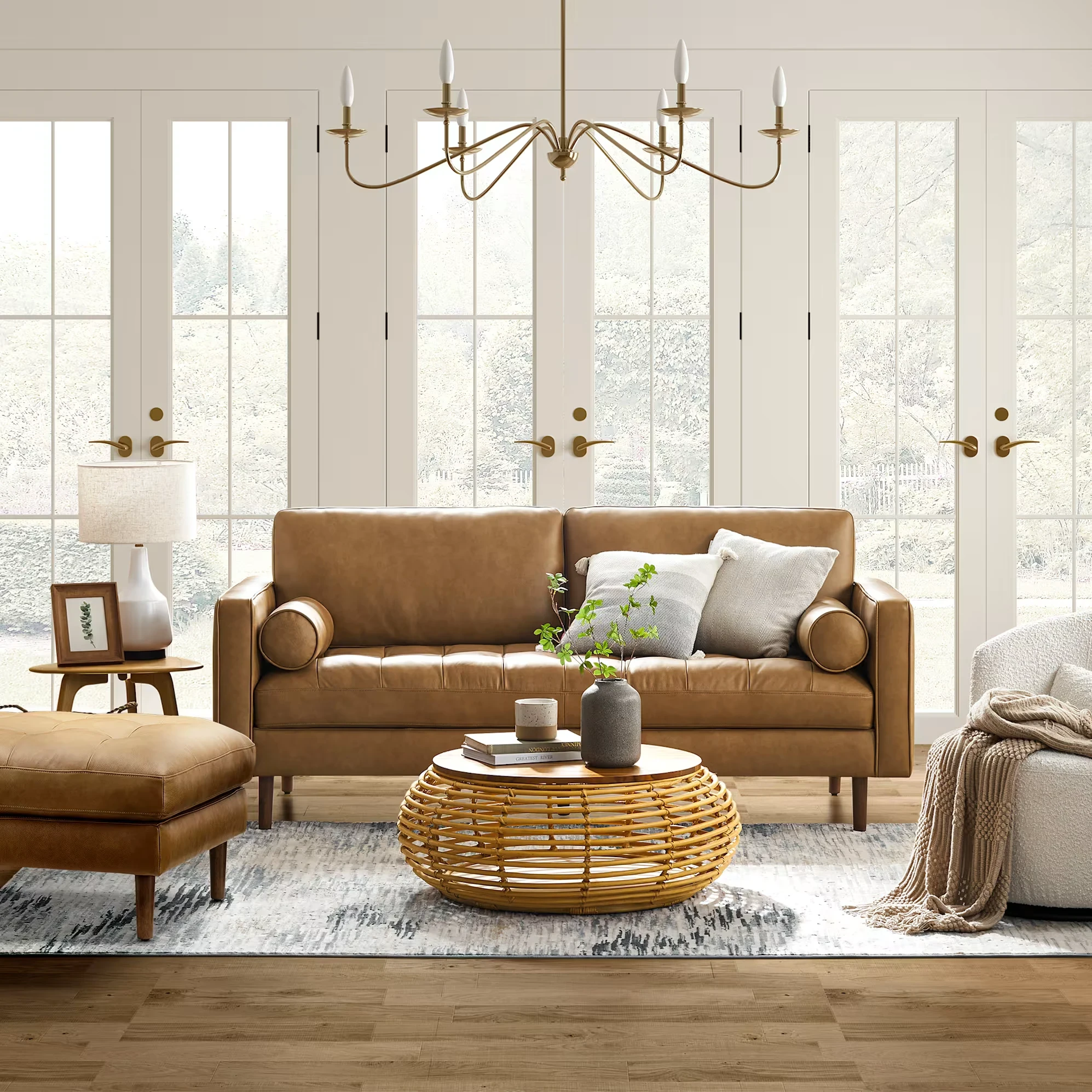
The living room is where mid-century design makes its strongest statement. A low-slung sofa with tapered wooden legs, a walnut coffee table, and a brass floor lamp is the classic combination -- and it works because each piece shares the same visual DNA without being matchy.
For the sofa, look for exposed timber frames and cushions that sit low to the ground. The Castlery Madison in caramel leather captures the mid-century silhouette with top-grain leather and a solid rubber wood frame.
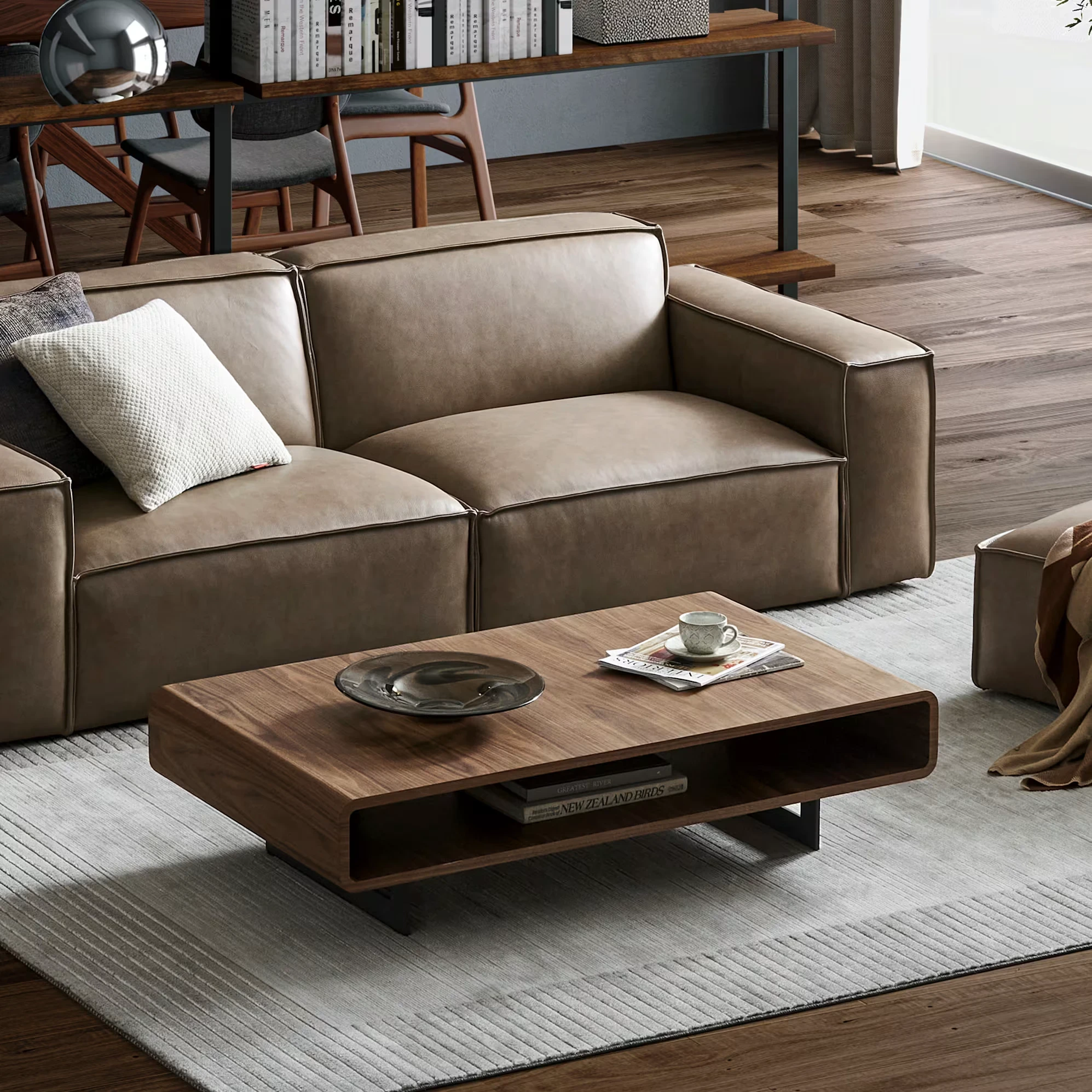
For the coffee table, the mix of materials is what gives mid-century design its warmth. The Konk 'Kross' combines solid oak, American black walnut, and raw steel in a single piece -- three materials, one coherent look.
!['Kross' Coffee Table [Mix]](https://zpeqbrudpqjbpfhmntcb.supabase.co/storage/v1/object/public/product-images/konk-furniture/konk-furniture-krosscoffe-mjc0fm7z/original/e0af3f74959a.webp)
Dining Room
A mid-century dining table typically sits lower than a traditional one (around 72-75cm rather than 76-78cm) and favours rounded edges. Oval and rounded-rectangular shapes are more characteristic of the period than sharp corners.
Pair a walnut or oak table with dining chairs in a contrasting material -- woven cord seats, moulded plywood, or upholstered fabric. The slight mismatch between table and chair materials is intentional: mid-century designers wanted each piece to hold its own.
Browse mid-century dining furniture to see how different retailers interpret the style across price points.
Home Office
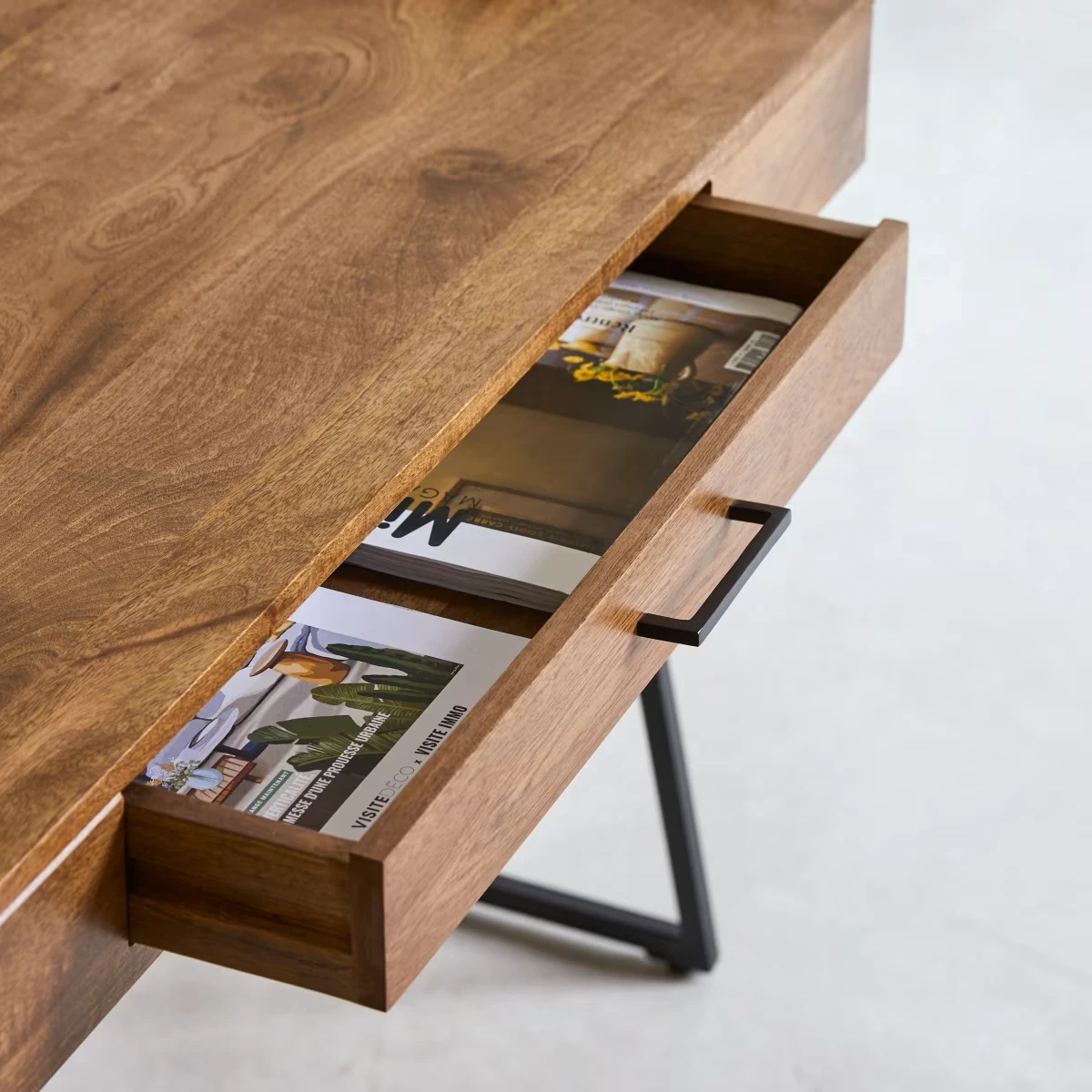
The mid-century desk is having a revival as remote work becomes permanent. The style suits home offices particularly well because its compact proportions were designed for smaller post-war rooms -- precisely the same constraint that most UK spare bedrooms face today.
Look for desks with integrated drawers and clean cable management. Mango wood and metal combinations offer the mid-century silhouette at accessible prices.
Bedroom
Mid-century beds tend to have low-profile headboards, often in upholstered fabric or timber slats. The bedroom is also where mid-century storage earns its keep: sideboards double as dressing tables, wall-mounted shelves replace bulky bedside units, and wardrobes favour sliding doors to save floor space.
Where to Source Mid-Century Modern Furniture in the UK
The UK market for mid-century furniture falls into three tiers, each with different trade-offs between price, authenticity, and convenience.
New Production (Contemporary Mid-Century)
These are newly manufactured pieces designed in the mid-century style. Brands like Castlery, West Elm, and Swoon produce accessible ranges with solid wood frames, walnut veneers, and brass hardware. In our collection, at time of writing, Castlery alone accounts for 105 mid-century pieces starting from £109.
Pros: Consistent quality, warranty, immediate availability, returnable. Cons: Lacks the patina and collectability of originals. Some use engineered wood rather than solid timber.
Best for: Furnishing a whole room in a cohesive style without hunting for individual vintage pieces.
Artisan and Made-to-Order
British makers like Konk Furniture build mid-century-inspired pieces to order in solid hardwoods. The Konk range uses American black walnut and character-grade oak, with raw steel accents -- materials that develop genuine character over years of use. Prices start around £225 for shelving and rise to £2,825 for extending dining tables.
Pros: Built to your specification, solid wood construction, unique character. Cons: Lead times of 4-12 weeks. Higher price point.
Best for: Anchor pieces you want to keep for 20+ years -- a dining table, a desk, a bookshelf.
Vintage and Original
Original mid-century pieces from G-Plan, Ercol, and Stag can still be found at auction houses, specialist dealers, and platforms like Vinterior. British mid-century originals from the 1950s-1960s typically cost less than their Danish or American counterparts -- a genuine G-Plan sideboard can start from £300-500.
Pros: Authentic character, collectability, solid construction (they have already survived 60+ years). Cons: Condition varies, no warranty, potential restoration costs.
Best for: Statement pieces where the history and patina add to the room's story.
What to Buy First: Building a Mid-Century Room
If you are starting from scratch, the order in which you buy matters. Mid-century design is forgiving when it comes to mixing pieces from different makers, but the materials need to rhyme.
Step 1: Choose your anchor piece. This is usually the largest item -- a sofa, dining table, or bed frame. It sets the material tone for everything else.
Step 2: Match your wood tone. Walnut pairs with walnut. Oak pairs with oak. Mixing the two can work, but keep them in separate zones of the room. A walnut coffee table next to an oak sideboard creates visual confusion.
Step 3: Add your metal accent. Brass is the classic mid-century metal, but raw steel and black iron are equally period-appropriate. Pick one metal finish and repeat it -- in table legs, lamp bases, and cabinet handles.
Step 4: Layer with texture. Mid-century interiors used textiles to soften all that wood and metal. Think boucle cushions, woven wool throws, and a textured rug to anchor the seating area.
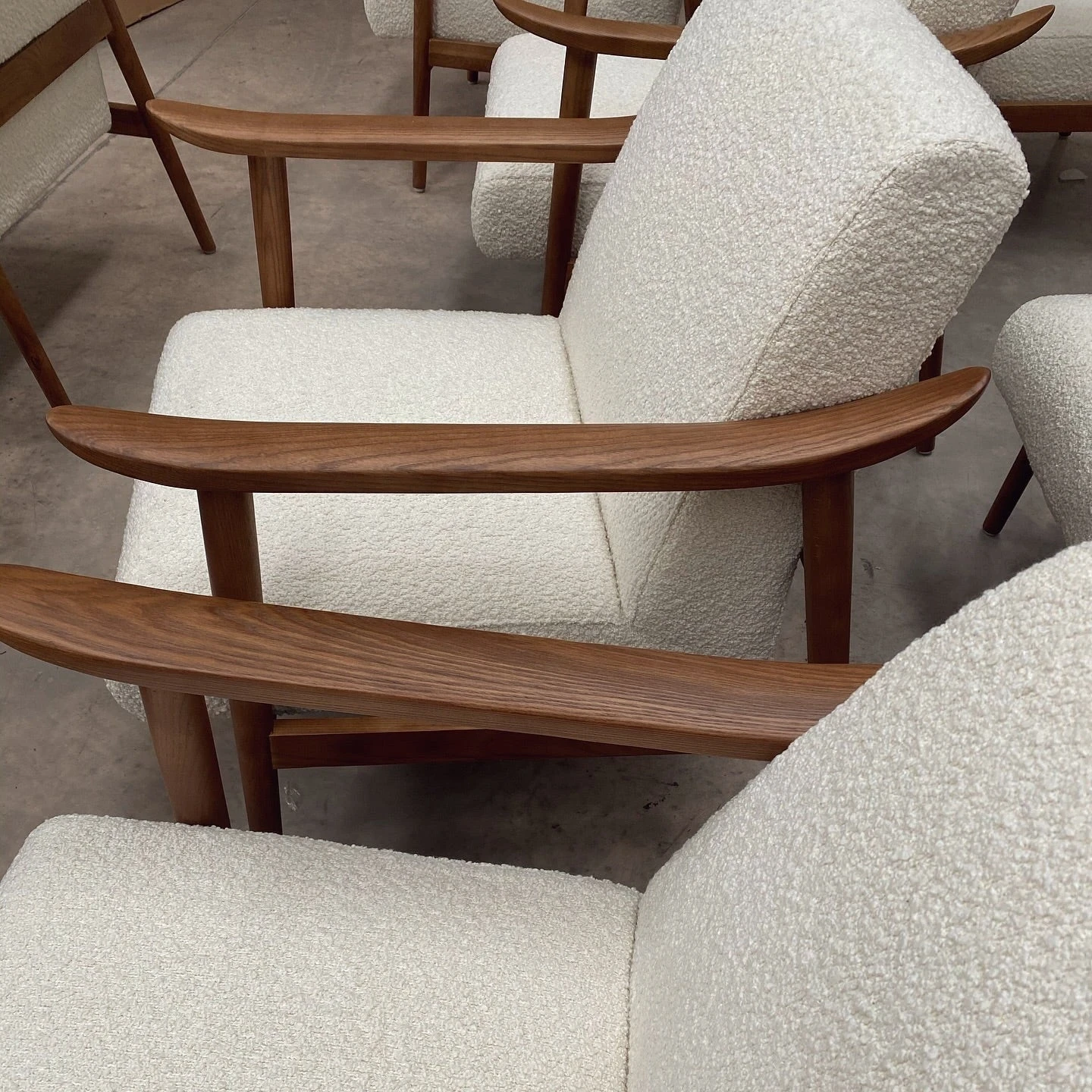
For a statement accent chair that captures the mid-century look without a sofa-sized commitment, the Six The Residence armchair pairs boucle fabric with a walnut-toned ash frame.
Price Guide: What to Expect at Every Budget
Mid-century modern furniture spans a wide range. In our current collection, prices run from £39 for accessories to over £8,000 for handmade statement pieces. Here is what each tier gets you.
Budget | What You Get | Example Pieces |
|---|---|---|
Under £500 | Coffee tables, side tables, shelving, desk, accent lighting | Castlery Peri Coffee Table (£499), Tikamoon Hedda Desk (£359), Konk Koku Shelf (£225) |
£500-1,000 | Sideboards, dining chairs, armchairs, smaller dining tables | Tikamoon Eva Sideboard (£879), Konk Wallark Side Table (£759) |
£1,000-2,000 | Sofas, dining tables, bookshelves, larger sideboards | Castlery Madison Sofa (£1,899), Konk Kross Coffee Table (£1,065) |
Over £2,000 | Extending dining tables, leather sofas, made-to-order statement pieces | Konk Kross Extending Table (£2,825), Castlery Madison Leather Chaise (£2,749) |
The Castlery Peri Coffee Table in walnut is a solid entry point -- clean proportions, proper walnut veneer, and a price that leaves room in the budget for the rest of the room.
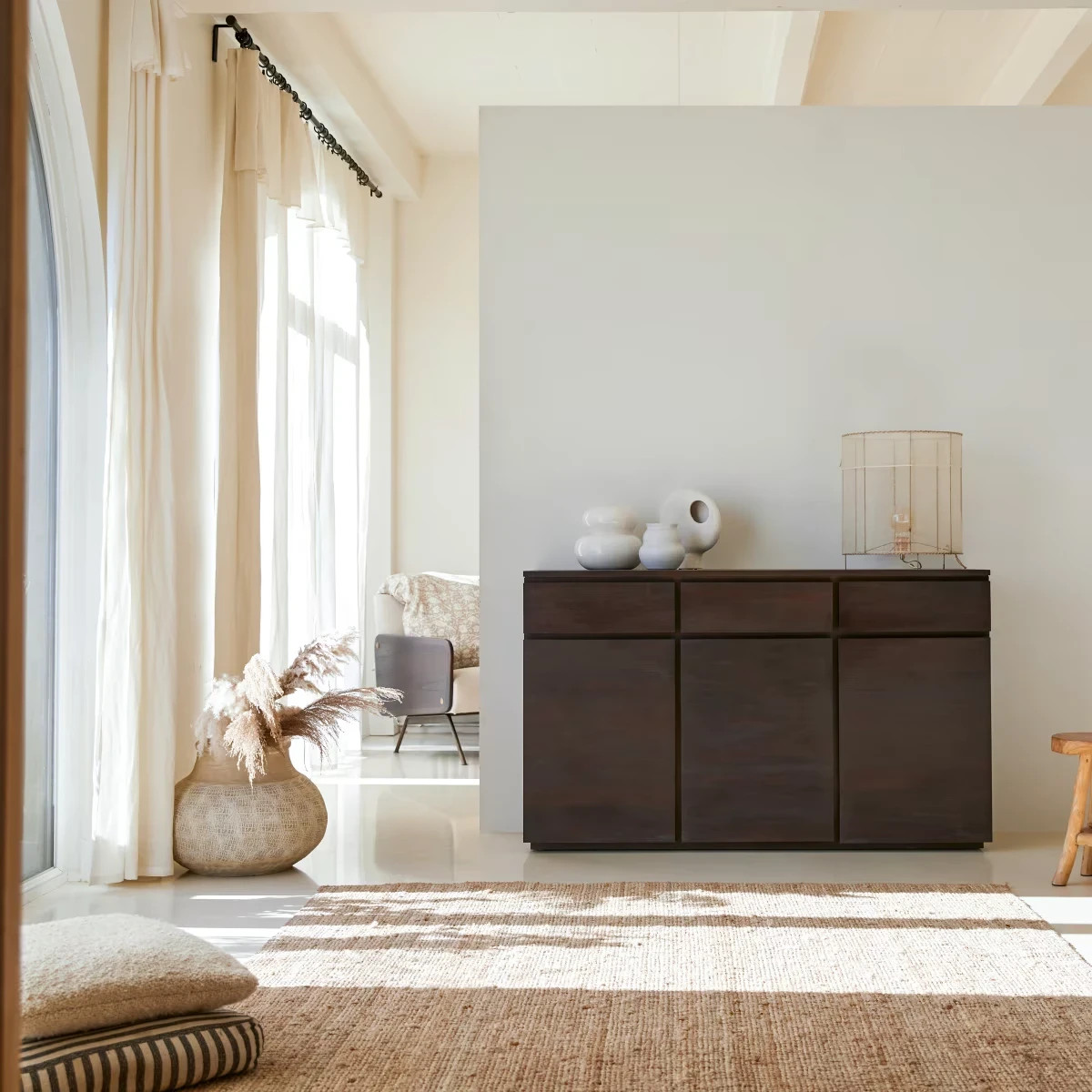
For storage that does more than store, the Tikamoon Eva sideboard in solid mahogany brings the warm wood tones and tapered legs that define the style, at a price point below most competitors in the category.
Caring for Mid-Century Furniture
Mid-century furniture in solid walnut or teak needs oiling twice a year, protection from direct sunlight, and a stable humidity level to prevent cracking. The three main enemies are UV light (which bleaches walnut and teak over time), central heating (which dries wood and causes splits), and water rings from drinks without coasters.
For walnut and teak: Apply Danish oil or teak oil twice a year. This feeds the wood and maintains its warm colour. Wipe with a barely damp cloth for routine cleaning -- never soak.
For brass hardware: Unlacquered brass develops a natural patina that many people prefer. If you want to maintain the shine, a brass polish every few months will do it. Lacquered brass stays bright but can chip over time.
For upholstery: Mid-century fabrics tend to be flat-woven (boucle, linen, wool) rather than pile fabrics. These are more durable than they look. Vacuum regularly and address spills immediately -- most flat weaves are harder to deep clean than velvet or chenille.
Ready to Start Browsing
MeetFelix brings together mid-century modern furniture from boutique UK retailers in one place. Browse all mid-century modern furniture, explore mid-century tables and desks, or narrow it down to walnut furniture to find pieces that match your material palette.
Frequently Asked Questions
What is the difference between mid-century modern and mid-century?
Mid-century refers to original furniture produced between approximately 1945 and 1969. Mid-century modern is a broader term that includes both original pieces and contemporary furniture designed in the same style. When shopping new, you are almost always buying mid-century modern -- new production inspired by the original design language of tapered legs, organic forms, and natural materials.
Is mid-century modern furniture going out of style?
Mid-century modern has remained consistently popular in the UK for over a decade, and the search data suggests demand is still growing. The style's longevity comes from its restraint: clean lines and warm materials adapt to changing trends more easily than ornate or highly decorative furniture. A walnut sideboard bought today will look as considered in ten years as it does now.
How can I tell if mid-century furniture is genuine vintage?
Check the construction: original mid-century pieces use dovetail joints, solid hardwood, and minimal use of screws or staples. Look for maker's marks on the underside -- G-Plan, Ercol, and Stag all stamped their furniture. The wood should show genuine patina (subtle colour variations, minor wear on edges) rather than uniform factory finish. Weight is another clue: solid teak and walnut are noticeably heavier than modern engineered alternatives.
What colours go with mid-century modern furniture?
The mid-century palette centres on warm neutrals: mustard yellow, olive green, burnt orange, and teal blue. These work because they complement the warm wood tones (walnut, teak, oak) that define the style. For walls, soft whites and warm greys provide contrast without competing. Avoid cool greys and bright whites, which make mid-century wood tones look out of place.
Can I mix mid-century furniture with other styles?
Mid-century modern mixes well with Scandinavian, japandi, and contemporary styles because they share an emphasis on clean lines and natural materials. It can also work alongside industrial pieces (both use raw metal) and even traditional elements if you are deliberate about it. The key is maintaining consistent material tones -- if your mid-century pieces are walnut and brass, any additions should rhyme with those materials rather than introduce competing wood tones or metal finishes.
Where is the best place to buy mid-century modern furniture in the UK?
For new production, Castlery, West Elm, and Swoon offer the widest ranges with delivery across the UK. For artisan and made-to-order pieces in solid hardwood, Konk Furniture and Tikamoon specialise in mid-century-inspired designs. For vintage originals, Vinterior, The Old Cinema in London, and regional auction houses are reliable sources. MeetFelix lets you compare mid-century pieces across multiple UK retailers in one search.


