

Industrial Furniture UK: The Complete Style and Buying Guide
Industrial furniture combines raw materials, honest construction, and factory-inspired design into pieces that feel both rugged and refined. It is one of the most enduring interior styles in the UK, and for good reason: the combination of steel, reclaimed timber, and exposed metalwork adds character to everything from a Victorian terrace to a new-build flat. In our current collection of over 325 industrial-style pieces from 12 UK brands, raw steel and solid oak are the dominant material pairing, with prices starting from under £40 and reaching over £4,400 for handcrafted statement pieces. This guide covers what defines the style, which materials hold up, and how to build a room around industrial furniture without it feeling like a warehouse.
What Makes Furniture Industrial Style
Industrial design borrows from the architecture of factories, workshops, and warehouses built between the 1850s and 1950s. The defining features are exposed structural elements, raw or lightly finished metals, and solid timber that shows its grain and character rather than hiding it under lacquer.
The hallmarks to look for:
Metal frameworks -- steel, iron, or aluminium used structurally, not just decoratively. Legs, frames, and shelf supports in raw, brushed, or blackened finishes.
Solid wood surfaces -- oak, walnut, and reclaimed timber with visible grain, knots, and natural imperfections left intentional.
Minimal ornamentation -- clean lines and functional shapes. Nothing exists purely for decoration.
Mixed materials -- the contrast between warm wood and cool metal is the signature. The best pieces make this pairing feel inevitable rather than forced.
Visible construction -- bolts, rivets, welded joints, and exposed hardware are features, not flaws.
This differs from rustic or farmhouse style in one important way: industrial furniture celebrates precision and engineering as much as natural materials. A farmhouse dining table might feature chunky turned legs and distressed paint. An industrial dining table pairs a straight-edged timber top with angular steel legs and clean welded joints.
Choosing the Right Materials
In our current collection, metal and steel account for the most common materials across industrial-tagged products, followed by oak, iron, and American black walnut. The material combination you choose determines how the piece ages, what maintenance it needs, and whether it suits your room's existing palette.
Metal Frames and Bases
Metal Type | Appearance | Durability | Maintenance | Best For |
|---|---|---|---|---|
Raw steel | Dark grey, matte | Very high | Wax every 6-12 months to prevent rust | Dining tables, desks, shelving |
Powder-coated steel | Smooth, matt black or colour | High | Wipe clean, scratch-resistant | Side tables, bar stools, chairs |
Brass/antique brass | Warm gold tone | High | Develops patina naturally | Lighting, hardware, accent tables |
Iron | Dark, slightly rough | Very high | Minimal -- naturally resistant | Bookcases, console tables, outdoor |
Aluminium | Silver, lightweight | Moderate | Low -- does not rust | Decorative accents, lightweight furniture |
Raw steel is the most authentic choice for an industrial look. Konk, one of the most prominent makers in our collection with over 130 industrial pieces, uses raw steel legs and frames across their dining tables, desks, and bookcases. The steel develops a subtle patina over time -- a feature, not a flaw -- and a coat of clear wax every six to twelve months keeps it protected without hiding the finish.
Wood Surfaces
The wood you pair with metal defines the warmth of the piece. In our collection, character grade oak is one of the most popular timber choices for industrial furniture, followed by American black walnut.
Oak -- the most versatile option. Light enough to keep a room feeling open, hard enough to resist daily wear. Pairs well with both raw steel and brass. Browse oak industrial furniture.
American black walnut -- darker, richer grain with chocolate and honey tones. Creates a more refined industrial look. Common in higher-end pieces from makers like Konk and Tikamoon.
Reclaimed wood -- the most characterful option. Timber salvaged from old buildings, boats, or railway sleepers carries marks of its previous life. We list reclaimed wood pieces across dining tables, coffee tables, and shelving. Expect more variation between pieces, which is part of the appeal.
Mango wood -- a sustainable hardwood with a warm, honey tone. Less traditional for industrial style but increasingly used by brands like Nkuku and Tikamoon for lighter takes on the look.
The grain should be visible. If the wood surface is painted, heavily lacquered, or hidden under veneer, the piece loses the honest materiality that defines industrial design.
Key Pieces for Every Room
Dining tables and desks are the strongest categories for industrial furniture, with the deepest choice and the clearest design identity. But the style also works well in shelving, lighting, and seating -- any piece where metal and timber can share the load. Here is where to start, room by room.
Dining Tables and Benches
The industrial dining table is the category's flagship. A thick timber top on a steel A-frame or hairpin base is the most recognisable silhouette, and it is where you will find the most choice. We list 29 industrial dining tables and 21 benches from UK makers.
The best industrial dining tables prioritise the timber-to-metal ratio. Too much steel and the piece feels cold; too little and you just have a wooden table. Look for a top at least 30mm thick -- anything thinner looks insubstantial against angular metal legs.
![Worker's Table [Metal Legs]](https://zpeqbrudpqjbpfhmntcb.supabase.co/storage/v1/object/public/product-images/konk-furniture/konk-furniture-workerstab-mjbzn3bb/original/1004a4e516ba.webp)
Pairing a dining table with a bench on one side is a classic industrial move. It keeps the visual weight lower, makes it easier to slide in and out, and adds an informal edge that suits the style. The Konk Waney-Sage bench in oak and steel is a strong example of how raw-edge timber and angular metalwork can work together.
![Waney-'Sage' Bench [Metal Legs]](https://zpeqbrudpqjbpfhmntcb.supabase.co/storage/v1/object/public/product-images/konk-furniture/konk-furniture-waneysageb-mjc0qtew/original/a27f772e51f7.webp)
Desks and Home Offices
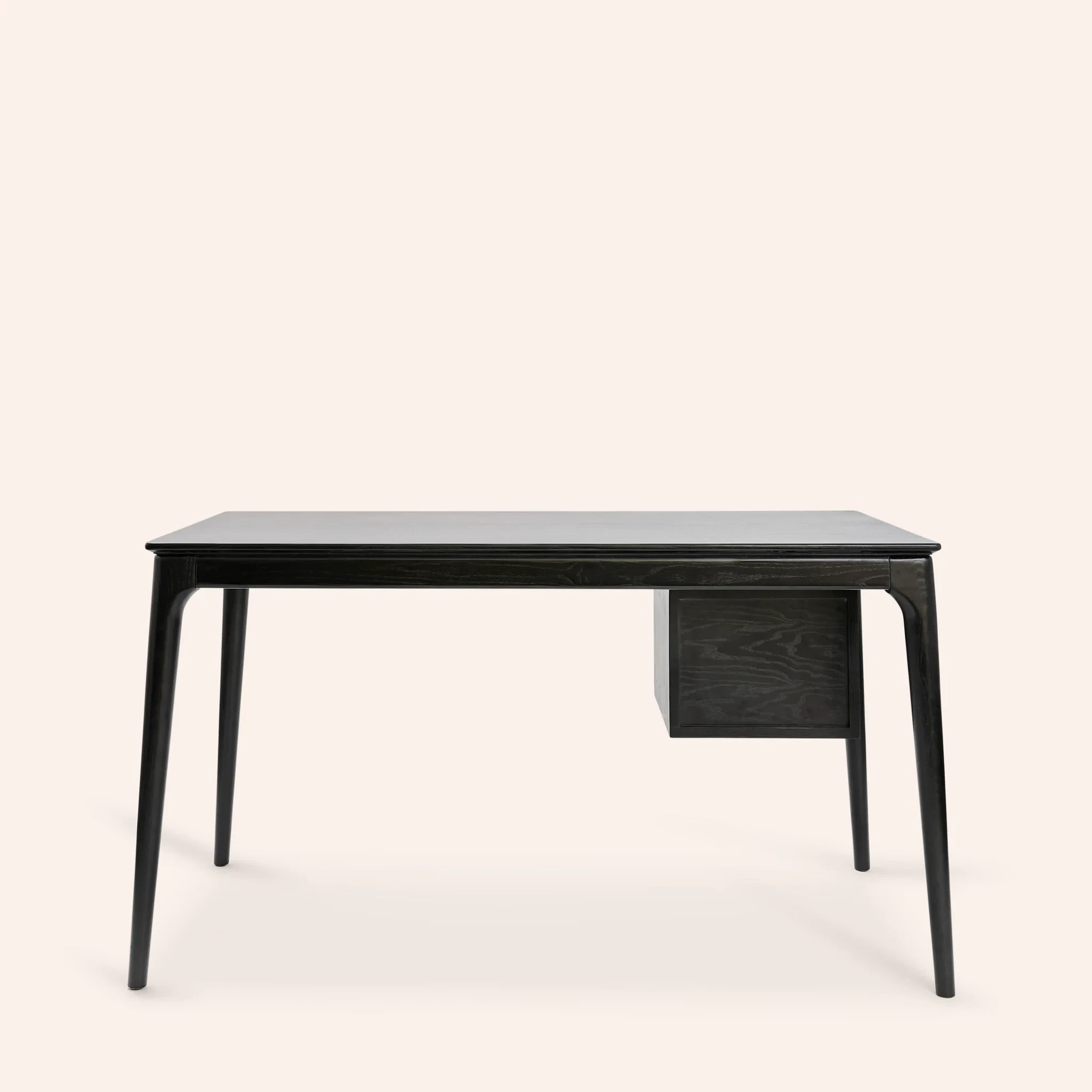
Industrial desks suit home offices particularly well because the style handles cable clutter and technology better than more formal furniture. A desk with a steel frame and open underside gives you room to route cables, mount power strips, and add under-desk storage without compromising the design.
We list 18 industrial-style desks, from compact writing desks to larger workstations with drawers. For a dedicated home office, look for a desk at least 120cm wide with a depth of 60cm or more -- enough space for a monitor and keyboard without crowding.
Shelving and Bookcases
Industrial shelving is one of the most functional applications of the style. The combination of steel uprights and solid timber shelves creates units that handle heavy books, records, and decorative objects without flexing.
We list 8 industrial bookcases, with Konk offering the widest range. Their Classic Industrial Bookcase uses solid oak boards on box-section steel frames -- a design that looks right whether you load it with hardbacks or use it to display ceramics and plants.
!['Classic' Industrial Bookcase [Five Shelf]](https://zpeqbrudpqjbpfhmntcb.supabase.co/storage/v1/object/public/product-images/konk-furniture/konk-furniture-classicind-mjbzetmj/original/65717a239974.webp)
Lighting
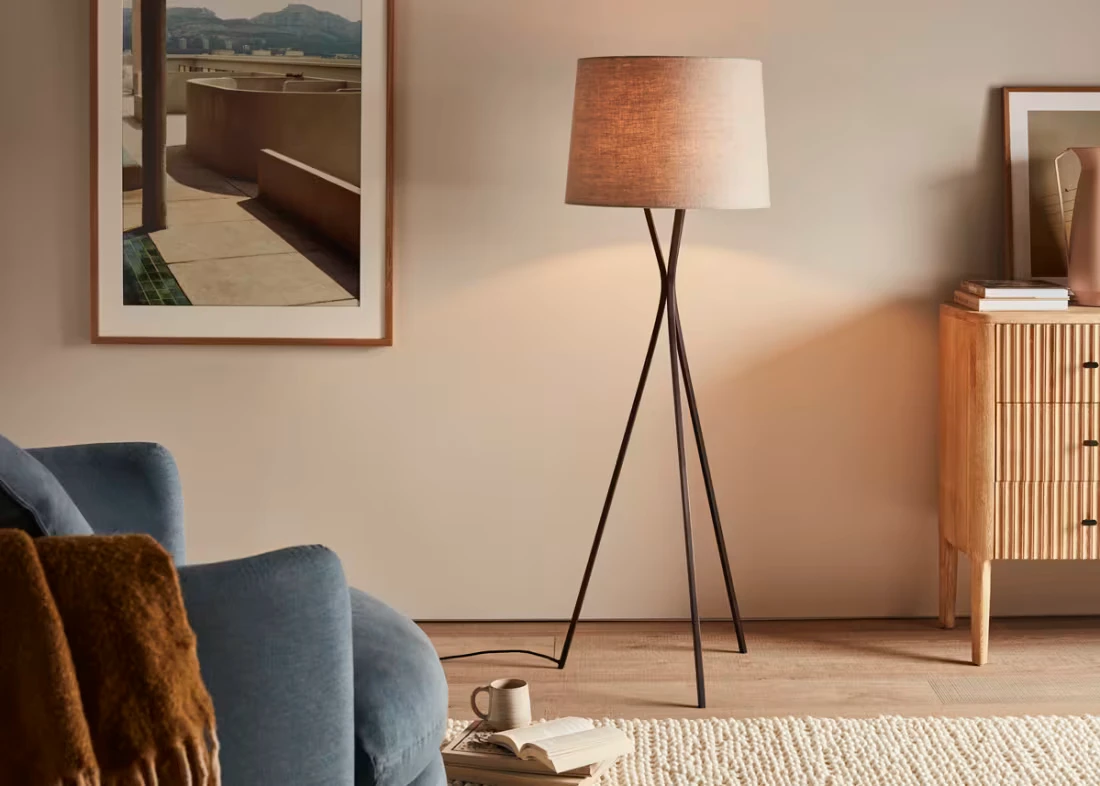
Industrial lighting brings the style into a room without committing to a full furniture overhaul. Blackened bronze, raw brass, and matt black metal fixtures with exposed bulbs or simple drum shades are the defining shapes. We list 11 industrial floor lamps and 23 table lamps.
Loaf's range of blackened bronze floor lights -- including the Treble, Trombone, and Angler -- are well-judged examples: the finishes feel authentically aged rather than artificially distressed, and the price point at £395 sits comfortably between mass-market and bespoke.
Bar Stools and Seating
If you have a kitchen island or breakfast bar, industrial bar stools are one of the simplest ways to introduce the style. Steel frames with minimal profiles keep sightlines open and pair well with almost any kitchen finish.
The noo.ma Doon bar stools, available in 65cm and 75cm heights from £159, are a clean example -- powder-coated steel in a slim silhouette that works in both compact and larger kitchens. Browse industrial bar stools to compare heights and finishes.
How to Mix Industrial With Other Styles
Industrial furniture rarely works best in isolation. A room furnished entirely in steel and timber risks feeling cold or staged. The most successful industrial interiors use the style as a structural backbone and layer warmth on top.
Industrial + Scandinavian
Pair steel-framed shelving or a metal-legged dining table with light oak, linen upholstery, and muted tones. The Scandinavian palette softens the rawness of industrial metal while the industrial frames add visual weight that minimal Scandi furniture sometimes lacks. Browse Scandinavian-style furniture to find complementary pieces.
Industrial + Mid-Century
American black walnut and brass are the bridge between these two styles. A walnut-topped industrial desk next to a mid-century armchair in leather or bouclé creates a space that feels both functional and characterful. The wood tones overlap naturally, and brass hardware connects the two eras.
Industrial + Rustic
Reclaimed wood is where industrial and rustic meet. A reclaimed timber dining table on steel legs reads as both industrial and country depending on what you pair it with. Add woven textiles, ceramics, and plants to push it rustic; keep accessories minimal and metallic to keep it industrial.
What to Avoid
Too much black metal -- an all-black palette of steel furniture, dark frames, and black accessories creates a room that absorbs light. Mix in brass, natural timber, and lighter textiles.
Fake distressing -- furniture that has been deliberately bashed, chipped, or painted to look worn reads as costume rather than character. Authentic industrial pieces develop patina through use.
Ignoring comfort -- industrial-style dining chairs and benches without cushions or upholstery become furniture you avoid sitting in. Look for options with seat pads or add your own.
Price Guide: What to Expect at Each Budget
Industrial furniture spans a wide price range. In our current collection of 325+ pieces, the split across price tiers gives a clear picture of where value sits:
Budget | Price Range | What You Get | Examples |
|---|---|---|---|
Budget | Under £200 | Bar stools, side tables, table lamps, small accessories | noo.ma bar stools from £159, steel bookends from £39 |
Mid-range | £200-£800 | Coffee tables, smaller dining tables, benches, desks, floor lamps | Loaf floor lamps at £395, steel-and-oak benches from £495 |
Premium | £800-£2,000 | Dining tables, larger desks, bookcases, cabinets | Konk Worker's Table from £1,089, industrial bookcases from £989 |
Luxury | £2,000+ | Large extending dining tables, bespoke commissions, display cabinets | Konk A-Frame extending table from £2,289, compartment bookcases at £3,275 |
With 129 pieces in the mid-range bracket, that is where the widest choice sits. For a first industrial piece, a coffee table or side table in the £200-£400 range is a low-commitment way to test the style in your space. If you are furnishing a room from scratch, budget around £2,000-£4,000 for a dining table, bench, and lighting combination that holds together.
How to Spot Quality in Industrial Furniture
Not all industrial furniture is built to the same standard. The style's popularity has led to a wave of flat-pack pieces that use thin metal tubes and MDF boards printed with a wood-grain effect. Here is what separates well-made industrial furniture from the imitations.
Check the metal thickness. Steel legs should feel heavy and solid, not hollow or tinny when tapped. Box-section steel (square or rectangular tubing) in 40mm or thicker is the standard for dining tables and desks. Round tube legs should be at least 25mm diameter.
Look at the welds. On raw steel pieces, the welds should be clean and ground smooth. Visible but tidy weld seams are part of the aesthetic; messy, globular welds indicate poor craftsmanship.
Assess the timber. The top should be solid wood, not veneer over MDF or particleboard. Run your hand across the surface -- you should feel the grain. Edges that show the end-grain of real timber are a good sign. Character grade oak will have natural knots and colour variation; reject pieces where the surface is uniform and plastic-looking.
Test stability. Industrial furniture should not wobble. The metal framework is structural, and a well-engineered base on a flat surface should feel immovable. Adjustable feet are a sign of thoughtful construction.
Ask about finishing. Raw steel should be sealed with oil or wax. Powder-coated metal should have an even finish without bubbles or thin spots. Wood surfaces should have a clear oil or hard wax oil finish that lets you feel the grain -- not a thick polyurethane coating.
Discover Industrial Furniture on MeetFelix
MeetFelix brings together industrial-style furniture from boutique UK makers and retailers, so you can compare solid wood, steel, and mixed-material pieces side by side. Browse all industrial furniture to see the full collection, explore industrial dining tables if you are starting with the centrepiece, or discover industrial desks for a home office with character.
Frequently Asked Questions
What is industrial style furniture?
Industrial style furniture draws its design language from factories, workshops, and warehouses of the 19th and early 20th centuries. It features raw or minimally finished metals -- steel, iron, brass -- combined with solid timber in functional, unfussy shapes. The emphasis is on honest materials, visible construction, and a lack of decorative ornamentation. It differs from rustic or farmhouse styles by celebrating precision engineering alongside natural materials.
Is industrial furniture durable?
Industrial furniture is among the most durable styles available. The steel and iron frames that define the look are inherently strong -- a well-welded steel base will outlast most timber joints. Solid oak and walnut tops resist scratches and dents better than softer woods or veneered surfaces. The main maintenance concern is raw steel, which needs a wax or oil coating every six to twelve months to prevent surface rust. Powder-coated metal requires almost no upkeep beyond regular cleaning.
Does industrial furniture work in small rooms?
It can, with the right choices. Steel-framed furniture often has slimmer profiles than solid wood equivalents, which helps in tight spaces. Open-sided shelving and glass-topped tables keep sightlines clear. Avoid oversized pieces with heavy timber tops in rooms under 12 square metres -- the visual weight can make the space feel smaller. Stick to lighter metals like brushed steel or brass and pair with light-coloured walls.
How do I stop an industrial room looking cold?
Layer warmth through textiles and organic materials. Add a rug under the dining table, cushions on metal chairs, and throws over seating. Introduce warm-toned woods like walnut or reclaimed timber alongside cooler steel. Brass and copper accents add warmth without disrupting the industrial palette. Plants are particularly effective -- the contrast between green foliage and raw metal creates visual balance.
What wood goes best with metal furniture?
Oak and walnut are the most common and versatile pairings. Light oak with raw or matt black steel creates a Scandinavian-industrial crossover. Dark walnut with brass or antique bronze leans more refined and mid-century. Reclaimed timber with raw steel gives the most authentic, heritage-industrial feel. Mango wood offers a budget-friendly alternative with a warm honey tone that suits lighter industrial schemes.
How much should I spend on industrial furniture?
Budget depends on the piece and materials. Expect to pay £150-£300 for a well-made bar stool or side table, £400-£800 for a coffee table or desk, and £1,000-£2,500 for a dining table in solid wood and steel. Handcrafted pieces from specialist UK makers like Konk typically cost 30-50% more than mass-produced alternatives, but the material quality and construction justify the difference for pieces you plan to keep for decades.

