

Best Side Tables UK: How to Choose the Right One for Your Living Room
A side table earns its place by doing three things well: holding a lamp, keeping your drink within reach, and tying the room together visually. Get the wrong one and it either disappears or gets in the way. In our current collection, we compared over 190 side tables from 9 UK boutique retailers, priced from £39 to over £3,000 -- covering oak, mango wood, marble, rattan, and metal designs in contemporary, mid-century, and industrial styles. This guide covers what to look for so you end up with a side table that works as hard as it looks.
What Size Side Table Do You Need?
The right side table height sits within 5cm of your sofa's armrest -- typically 50-60cm for most UK sofas. A table that is too low forces you to lean down for your drink; too high and it looks like it belongs in a different room. Width matters just as much: aim for a top surface between 35-55cm so it holds a lamp and a mug without crowding the seating area.
The Proportion Rule
Match your side table to your sofa's scale. A chunky three-seater with deep cushions calls for a substantial table -- think solid oak or a drum shape with visual weight. A slim two-seater or a compact sofa for small spaces works better with a lighter profile: a C-shaped metal frame, a slender tripod, or a nest of tables you can spread out when needed.
For rooms under 15 square metres, consider a C-shaped or cantilever design that slides under the sofa arm. These save 15-20cm of floor space compared to a standard four-legged table, which makes a real difference in tight layouts.
Clearance and Placement
Leave at least 5-10cm between the side table and the sofa arm. Too close and it looks cramped; too far and you cannot reach it comfortably. If your side table sits beside an armchair rather than a sofa, keep it on the side where you naturally rest your arm -- usually the side nearest a lamp or the room's natural light source.
Best Materials for Side Tables: What Holds Up and What Does Not
Mango wood, marble, and oak account for the most popular choices in our current collection of over 190 side tables, but each suits a different lifestyle and room.
Material | Best For | Watch Out For | Price Range |
|---|---|---|---|
Solid oak | Families, high traffic | Watermarks if unsealed | £250 - £1,300 |
Mango wood | Warm, characterful rooms | Grain variation (feature, not flaw) | £150 - £600 |
Marble / stone | Statement pieces, low traffic | Heavy, chips at edges, ring marks | £350 - £1,500 |
Metal / steel | Modern, industrial schemes | Scratches show on powder-coat | £150 - £500 |
Rattan / cane | Boho, coastal, Scandi rooms | Not suited to damp rooms | £100 - £350 |
Glass | Small rooms (visual lightness) | Shows fingerprints, dust | £150 - £600 |
Wood Side Tables
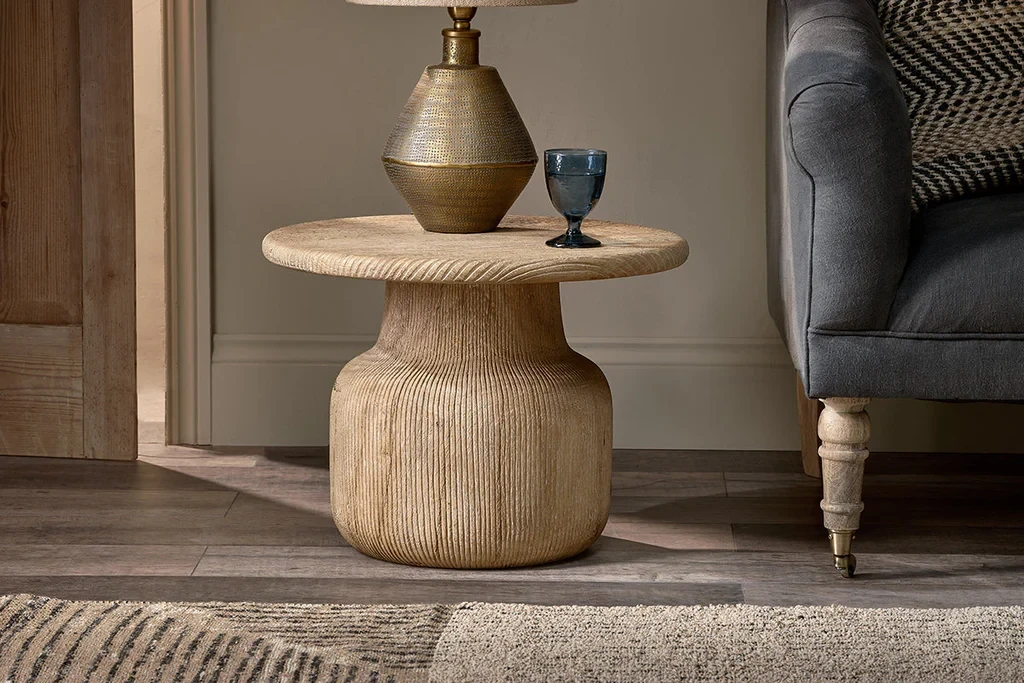
Wood remains the most versatile choice. Mango wood and oak together appear in around 30 of the side tables across our catalogue, and both age well with minimal care. Mango wood brings warmth and grain character at a lower price point -- typically £150-600 -- while solid oak commands a premium but lasts decades with proper care.
If you are mixing wood tones in a living room, pick no more than two and connect them with a shared undertone -- warm (oak, mango, teak) or cool (walnut, ash). Our materials guide covers this in more detail.
For a side table that brings warmth and texture without overwhelming the room, mango wood in a contemporary shape hits the mark.
Metal and Industrial Side Tables
Metal frames -- raw steel, iron, brass -- account for over 30 side tables in our collection. They suit industrial and modern living rooms particularly well, and their slim profiles make them a practical choice for smaller spaces where visual weight matters.
A cantilever design in oak and raw steel bridges the gap between warmth and edge.
!['Cantilever' Side Table [Oak]](https://zpeqbrudpqjbpfhmntcb.supabase.co/storage/v1/object/public/product-images/konk-furniture/konk-furniture-cantilever-mjc1sath/original/7e7629bfc14a.webp)
Marble and Stone Side Tables
Marble and stone side tables work best as standalone accents rather than matching pairs. At time of writing, we list around 10 marble side tables across our retailers, mostly in the £350-1,500 range. They are heavier than they look -- a small marble drum table can weigh 15-20kg -- so factor that in if you rearrange furniture often.

Best Side Table Styles for Every Living Room
The most versatile side table style for UK living rooms right now is contemporary -- clean lines, mixed materials, and a neutral profile that works with almost any sofa. In our current collection, contemporary designs account for over 130 of the 190-plus side tables, followed by mid-century modern (58) and Scandinavian (63), making all three easy to find across multiple retailers.
Contemporary and Minimalist
Clean lines, mixed materials, and restrained proportions. These work in nearly any room because they do not compete with bolder furniture. Look for simple silhouettes in neutral tones -- a round wooden top on a metal base, or a streamlined cube in painted wood. In our current collection, over 130 side tables carry a contemporary tag.
Mid-Century Modern
Tapered legs, organic shapes, and warm wood tones define this style. Around 58 side tables in our catalogue fall into the mid-century modern category. They pair naturally with mid-century sofas and work well as accent pieces in more eclectic schemes. Expect to pay £200-800 for a well-made mid-century side table.
Scandinavian
Light woods, functional shapes, and nothing superfluous. Scandinavian side tables tend to be compact and light -- both visually and physically -- which makes them a natural fit for smaller living rooms. Our guide to Scandinavian furniture covers how to build a cohesive Nordic-inspired room.
Industrial and Rustic
Raw steel, reclaimed wood, exposed joints. Around 34 side tables in our current catalogue lean industrial, often combining metal frames with timber tops. These work best alongside substantial leather sofas or in rooms with exposed brick or concrete elements.
How to Choose a Side Table for a Small Living Room
For living rooms under 18 square metres, the side table needs to earn its floor space. Three design approaches work consistently in tight layouts.
C-shaped and cantilever tables slide under the sofa arm, giving you a usable surface without claiming extra floor area. They work particularly well next to corner sofas where space between seating and walls is tight.
Nesting tables offer flexibility. Use one day to day and pull the second out when hosting. At time of writing, nest of tables is one of the most searched furniture terms in the UK (around 2,900 searches per month), and for good reason -- they solve the space-versus-function trade-off better than almost any other design.
Wall-mounted shelves as side table alternatives free up floor space entirely. A floating shelf at armrest height, 30-40cm wide, holds a lamp and a drink just as well as a freestanding table. Worth considering if your floor plan is particularly tight.
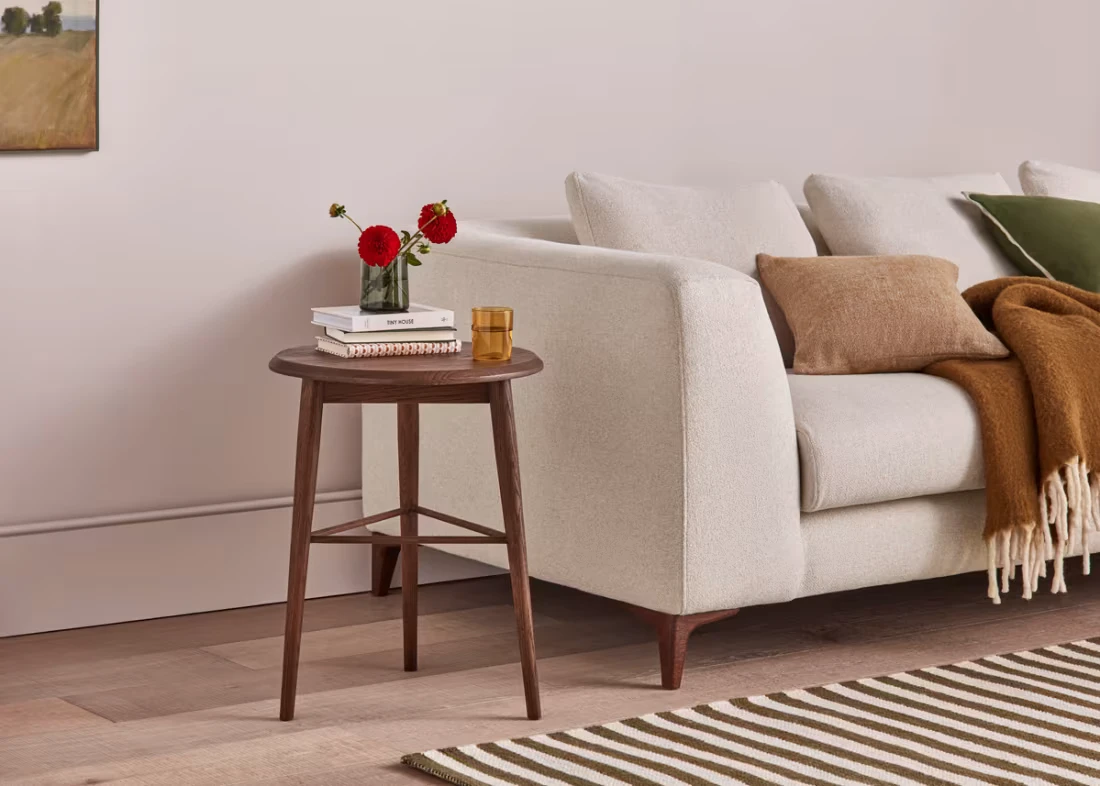
The Loaf Sidekick is purpose-built for small spaces -- its slim profile and gentle curves keep the room feeling open even when space is at a premium.
Side Tables at Every Budget
Side tables span a wider price range than most people expect. In our current collection, 31 side tables sit under £200, while 18 are priced above £1,000. Here is what your budget realistically gets you.
Budget | What to Expect | Best Materials at This Price |
|---|---|---|
Under £200 | Painted wood, simple metal frames, compact sizes | Mango wood, painted engineered board, steel |
£200 - £500 | Solid wood, mixed materials, more design variety | Oak, mango wood, marble, brass accents |
£500 - £1,000 | Designer pieces, premium finishes, statement shapes | Walnut, solid marble, hand-finished metal |
Over £1,000 | Boutique and designer labels, rare materials, heirloom quality | Travertine, burl wood, solid oak, artisan craftsmanship |
The median price in our collection sits around £395, which is where you start to see solid wood construction, considered design, and materials that age well rather than wear out.
Best Value Pick
At under £200, you can find well-designed side tables from Loaf and Nkuku that avoid the flat-pack feel of high street alternatives. Mango wood and painted wood options at this price point offer warmth and character that mass-produced MDF simply cannot match.
Investment Piece
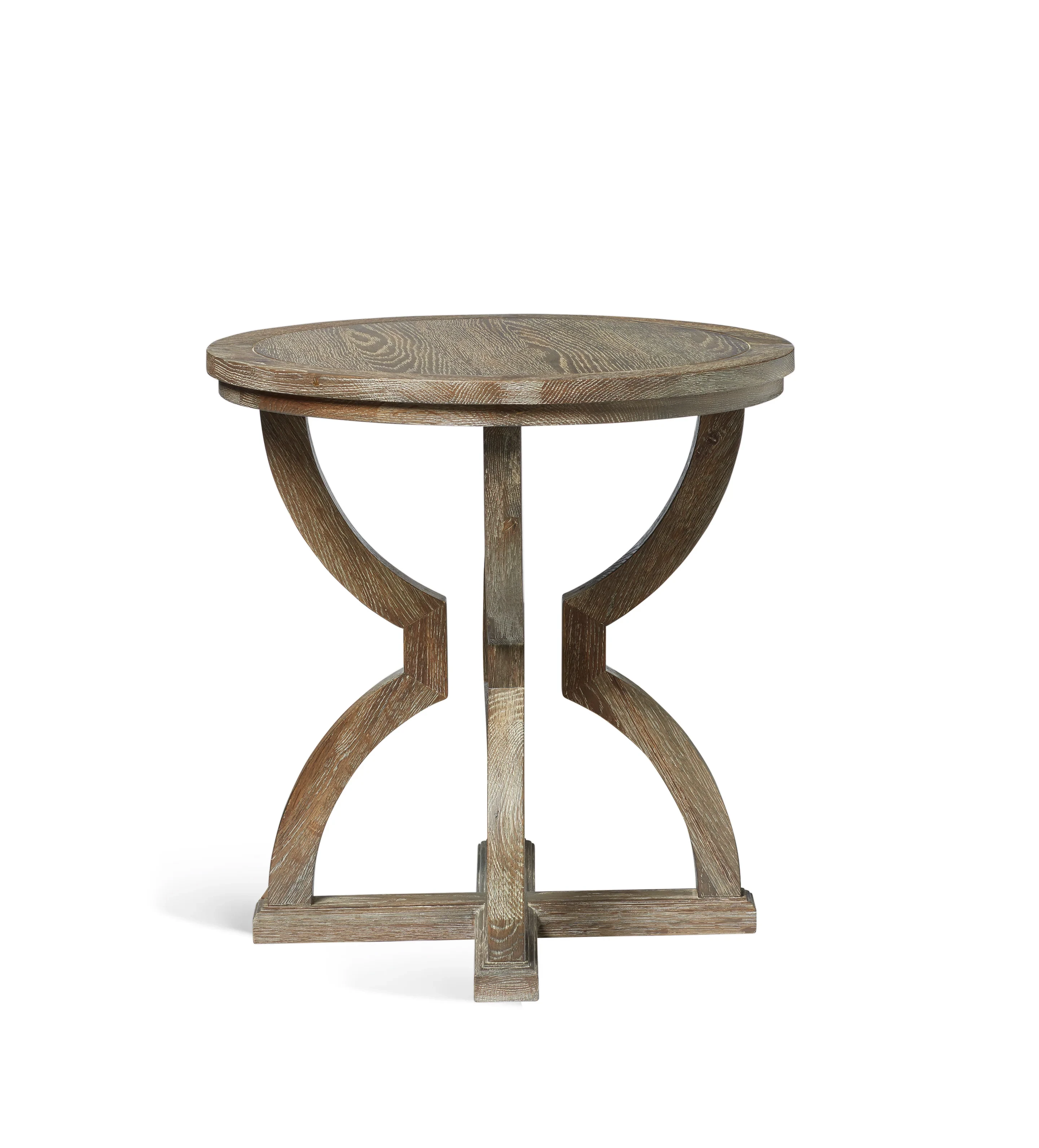
For a side table you will keep for decades, solid oak and walnut options from OKA and Tikamoon justify the premium. These are the pieces that become part of the room's identity rather than just filling a gap.
How to Style a Side Table
The simplest rule for styling a side table: three objects at three different heights -- a lamp, something decorative (a plant or candle), and a tray at surface level. This creates visual rhythm without cluttering the only surface that matters, the one where you need to put your mug down.
The Three-Object Rule
Keep no more than three items on a side table surface. More than that and it stops being functional -- you cannot put a mug down without moving things aside, which defeats the purpose. A table lamp, a small plant, and an empty tray (for keys, remotes, glasses) covers most needs.
Pairing Side Tables with Other Furniture
Your side table does not need to match your coffee table exactly, but they should share a visual through-line. That might be the same wood species, a consistent metal finish (both brass, or both matte black), or a shared design era. Matching side tables on either end of a sofa create symmetry. Mismatched tables at different heights create a more relaxed, collected-over-time look.
The Bottom Line
Start with height -- measure your sofa armrest and look for a table within 5cm of that number. Then pick a material that suits your household (wood for families, marble for statement impact, metal for compact spaces). Everything else -- style, shape, finish -- is personal preference, and there are no wrong answers if the proportions work. A side table that is the right height and the right material will earn its place in the room for years.
Discover Your Side Table on MeetFelix
MeetFelix brings together over 190 side tables from the UK's best boutique retailers, so you can compare styles, materials, and prices in one place. Browse all side tables, explore oak side tables, or discover marble side tables to find the right piece for your living room.
Frequently Asked Questions
What height should a side table be?
A side table should sit within 5cm of your sofa's armrest height, typically 50-60cm for most UK sofas. If the table is too low, you will strain to reach your drink or lamp switch; too high and it creates an awkward visual step. Measure your armrest before you buy -- it takes 30 seconds and prevents the most common side table sizing mistake.
Can you use a side table as a bedside table?
Yes, provided the height works with your mattress. A bedside table typically sits level with the top of the mattress (55-65cm), which overlaps with standard side table heights. The main consideration is whether the surface is large enough to hold a lamp, phone, and a glass of water. Most side tables with a 40cm+ top work well as bedside alternatives.
How many side tables do you need in a living room?
One side table beside each main seating position is the standard guideline -- typically two for a sofa arrangement with armchairs. But this depends on your room layout and coffee table setup. If you have a generous coffee table within reach of all seating, you may only need one side table beside the furthest armchair.
What is the difference between a side table, an end table, and a lamp table?
In practice, very little. The terms are used interchangeably in most UK furniture retail. Strictly speaking, an end table sits at the end of a sofa, a side table can go anywhere beside seating, and a lamp table is sized specifically to hold a table lamp (usually taller and narrower). When shopping, focus on dimensions and style rather than the label.
Do side tables need to match?
No. In fact, deliberately mismatched side tables can look more considered than an identical pair. The key is a visual connection -- shared material, complementary colour, or consistent design era. Two completely unrelated tables can look accidental rather than intentional. Two tables in the same wood with different shapes, or the same metal finish with different heights, strikes the right balance.
What is a good price for a side table in the UK?
Expect to pay £150-500 for a well-made side table from a boutique retailer, which gets you solid wood or quality mixed materials. Under £150, you are mostly looking at painted engineered board or basic metal frames. Above £500, you enter designer and artisan territory with premium woods, marble, and hand-finished metals. In our current collection of over 190 side tables, the median price sits around £395.


