

Rug Size Guide: How to Choose the Right Rug for Every Room
Choosing the right rug size can feel overwhelming. Too small and your room looks disjointed; too large and it overwhelms the space. But here's the good news: there are simple rules that work every time.
The right rug size depends on your room and furniture layout. For dining rooms, add 120cm to your table dimensions (60cm per side) so chairs remain on the rug when pulled out. For living rooms, all front furniture legs should sit on the rug. For bedrooms, extend the rug at least 60cm beyond each side of the bed.
In this guide, you'll learn the five named rules that interior designers use to get rug sizing right first time.
Key Takeaways
The 120cm Rule for dining tables: add 60cm to each side for chair pull-out space
The Front Legs Rule for living rooms: front legs of all seating on the rug
The 60cm Rule for bedrooms: extend the rug at least 60cm beyond each side of the bed
The 20cm Gap Rule for hallways: leave 20cm of floor visible on each side
The 45cm Border Rule for all rooms: leave approximately 45cm of floor around rug edges
---
Dining Room Rug Sizes: The 120cm Rule
The dining room is where rug sizing matters most. Get it wrong and you'll hear chairs scraping off the edge every mealtime.
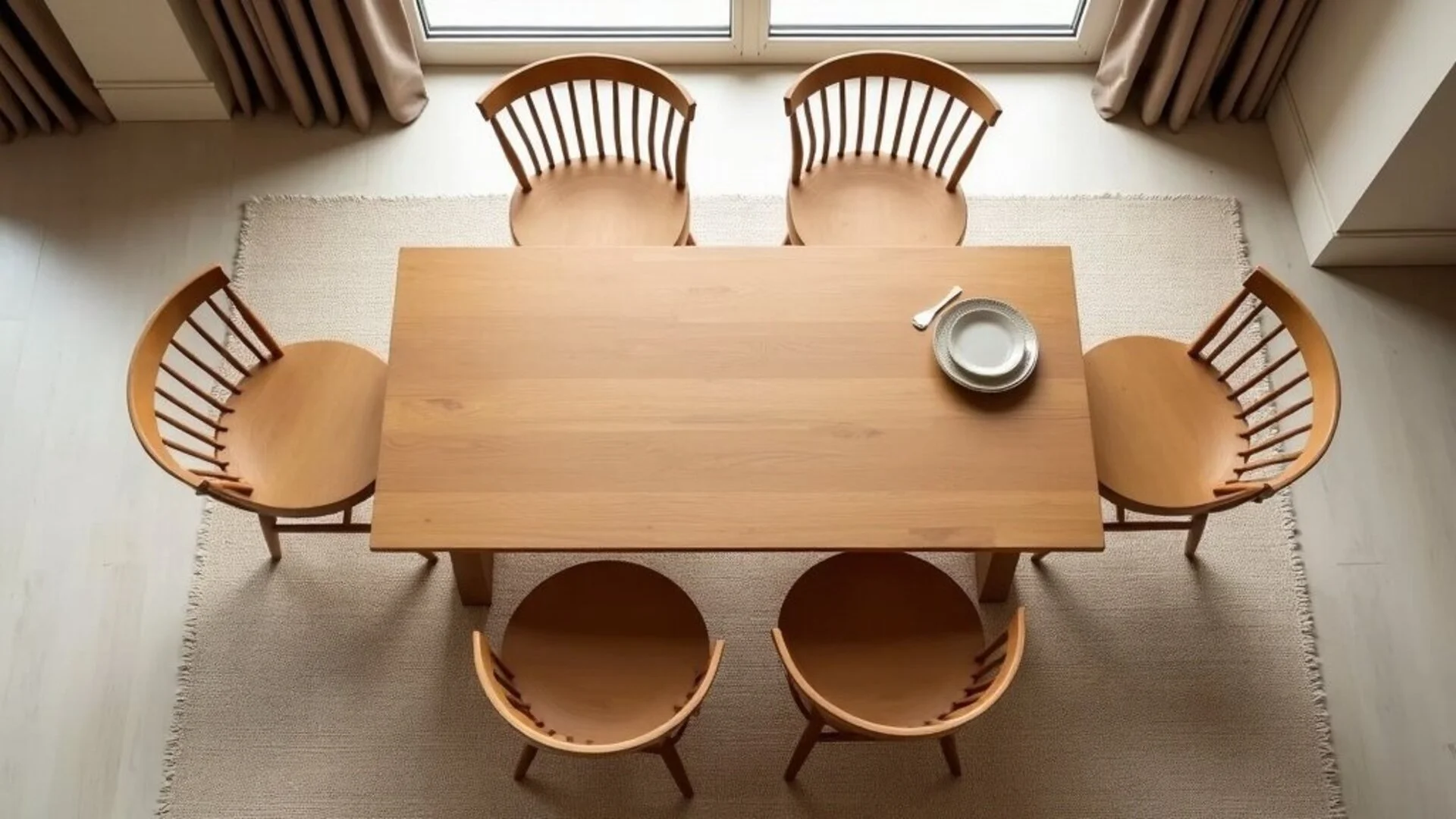
Why 120cm? The Maths Behind the Rule
When someone sits at a dining table, they pull their chair back approximately 60-70cm. The 120cm Rule accounts for this on both sides:
Formula: `Table Length + (60cm x 2) = Minimum Rug Length`
For example, if your dining table is 180cm long:
180cm + 120cm = 300cm minimum rug length
The same calculation applies to width. A 90cm wide table needs at least a 210cm wide rug.
Dining Room Rug Size Chart
Table Size | Seats | Minimum Rug | Recommended Rug |
|---|---|---|---|
120 x 80cm | 4 | 180 x 240cm | 200 x 290cm |
180 x 90cm | 6 | 240 x 300cm | 270 x 360cm |
240 x 100cm | 8 | 300 x 360cm | 330 x 430cm |
Standard Sizes vs Ideal Measurements
Ideally, you want 60-70cm of rug behind each chair. However, standard UK rug sizes (often 180cm or 200cm wide) don't always hit this ideal. If you can't find the perfect size, 50cm per side is your absolute minimum – anything less and chairs will catch on the edge when pushed back.
The chart above shows "minimum" sizes based on practical reality. When shopping, you'll find 200x290cm and 240x340cm are the most common sizes that work for dining rooms.
Common Dining Room Mistakes
The most frequent error is buying a rug that only fits under the table. When chairs are pulled out, their back legs end up on bare floor. This creates an annoying lip that catches chair legs and makes the rug bunch up.
Always measure with chairs pulled out to their natural position, not tucked under the table.
Rugs That Work Under Dining Tables
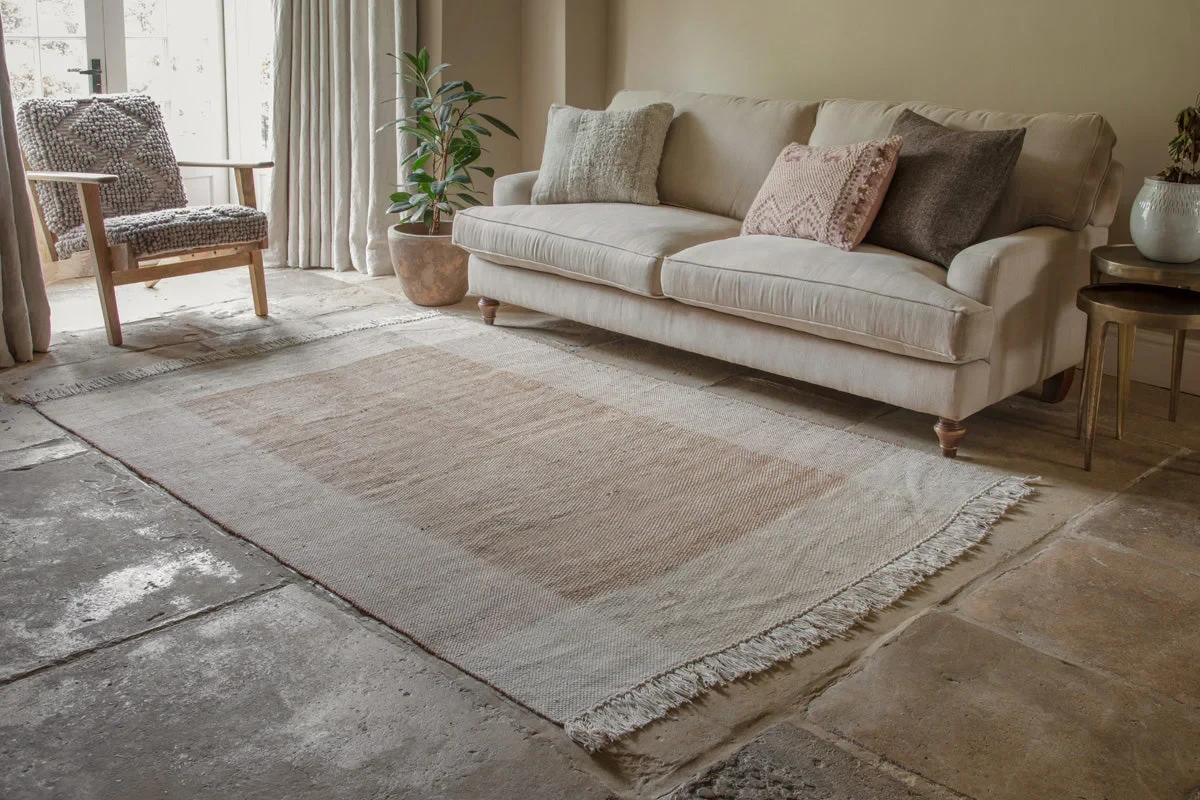
For dining rooms, you need large rugs big enough to accommodate the 120cm Rule. Natural fibres like wool and jute are ideal here – they're durable enough to withstand chair movement and easy to clean.
---
Living Room Rug Sizes: The Front Legs Rule
Living room rugs serve a different purpose than dining rooms. Here, the rug defines your conversation area and anchors the furniture arrangement.
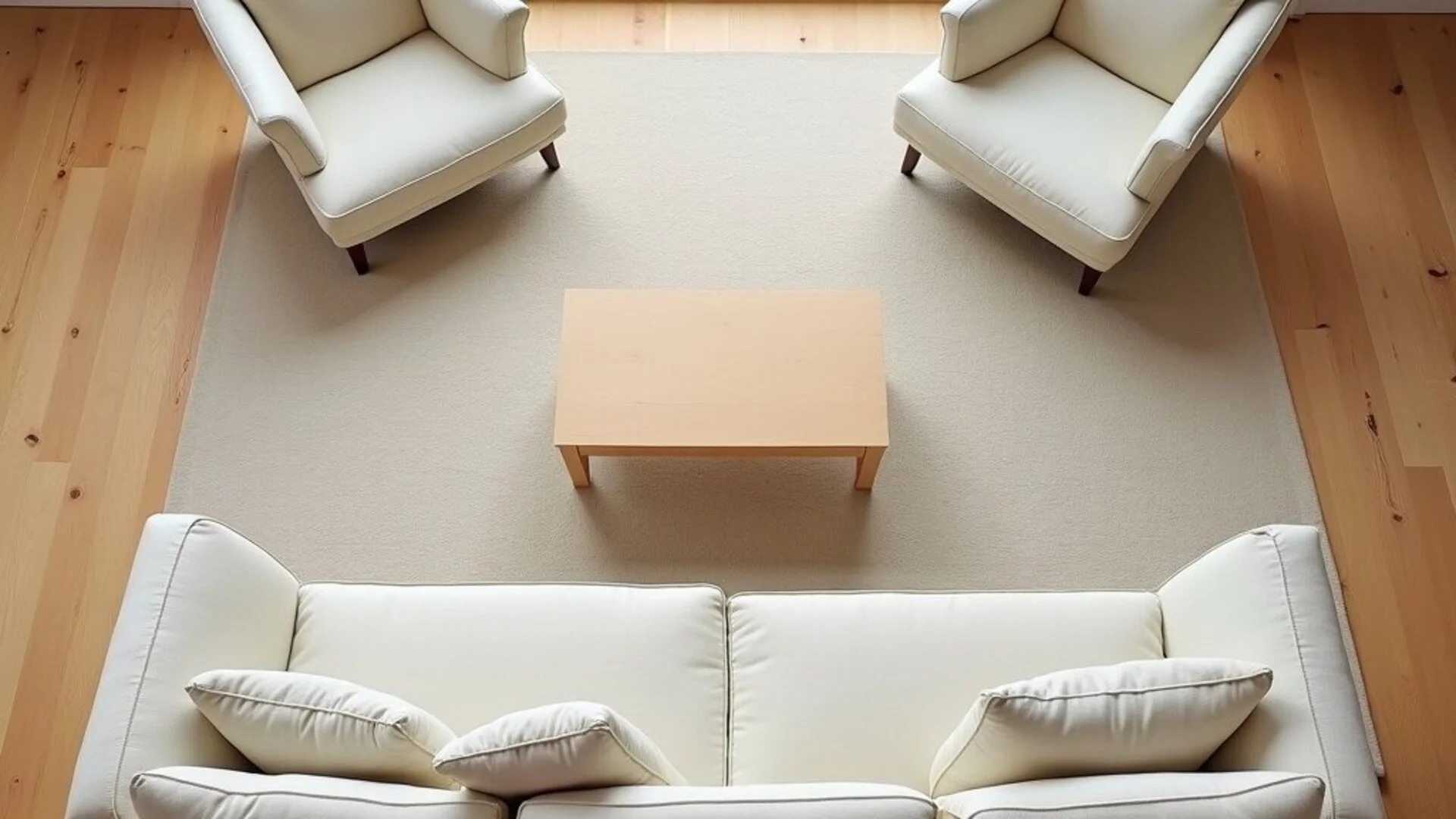
Understanding The Front Legs Rule
The Front Legs Rule is simple: the front legs of all your seating furniture should sit on the rug. This creates visual cohesion and makes the seating area feel intentional rather than randomly placed.
There are three common layouts:
1. Front legs only (the UK standard) Place only the front legs of sofas and armchairs on the rug. This works for the majority of British living rooms – even medium-sized ones. UK homes typically have smaller footprints than American ones, plus features like fireplace hearths and radiators that limit rug placement. A 160x230cm or 200x290cm rug often works perfectly here.
2. All furniture on (larger rooms only) The entire sofa and chairs sit fully on the rug. This requires a 270x360cm+ rug minimum, which typically only works in open-plan spaces or larger Victorian rooms with generous proportions.
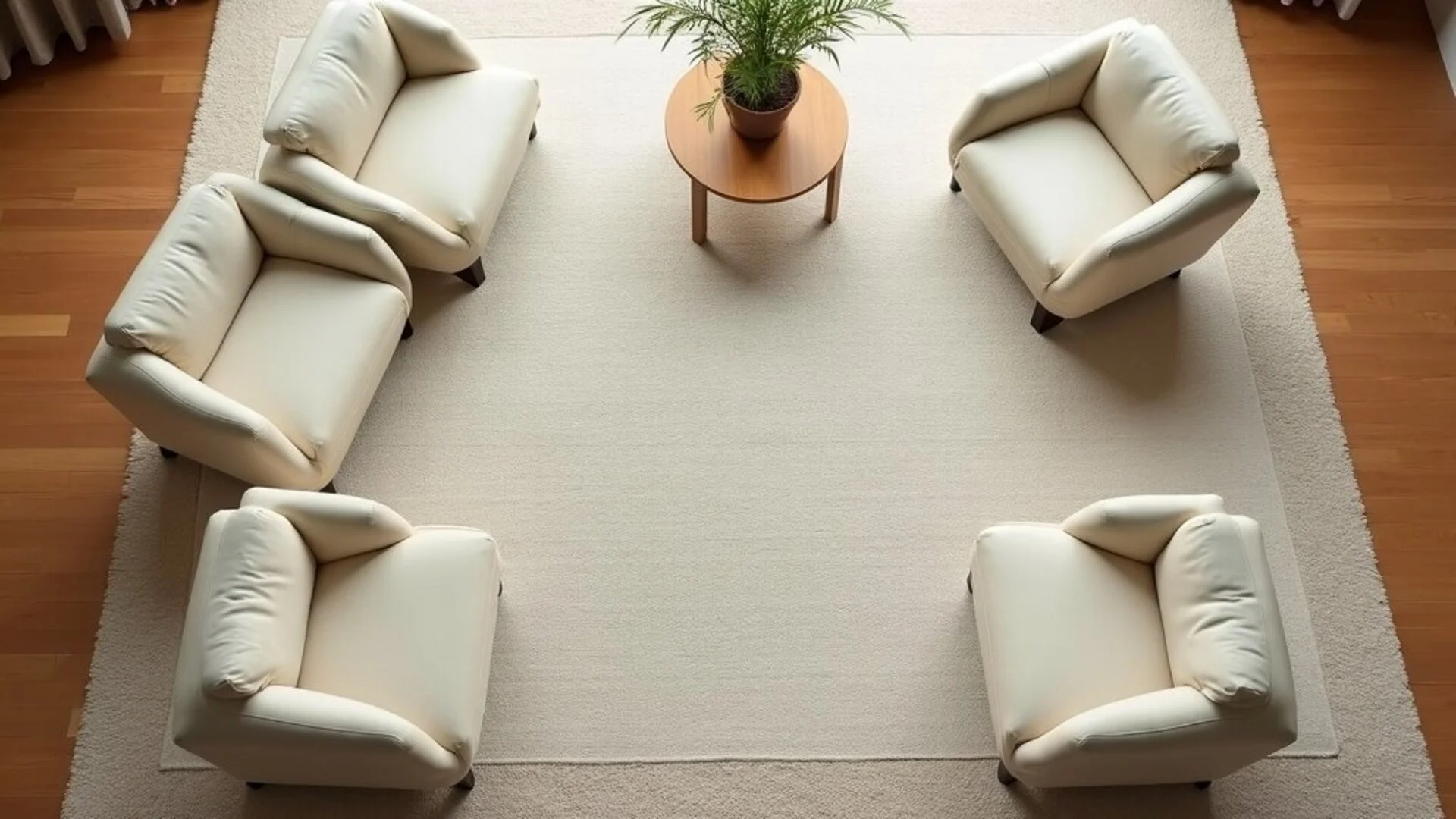
3. Furniture frame the rug (very large rooms) In expansive rooms, furniture can frame the rug completely, with all legs off. This is less common and typically only suits formal sitting areas in period properties.
Living Room Rug Size Guide
Room Size | Rug Size | Layout Style |
|---|---|---|
Small (3 x 4m) | 160 x 230cm | Front legs only |
Medium (4 x 5m) | 200 x 290cm | All legs on |
Large (5 x 6m+) | 270 x 360cm | Full seating area |
The Coffee Table Test
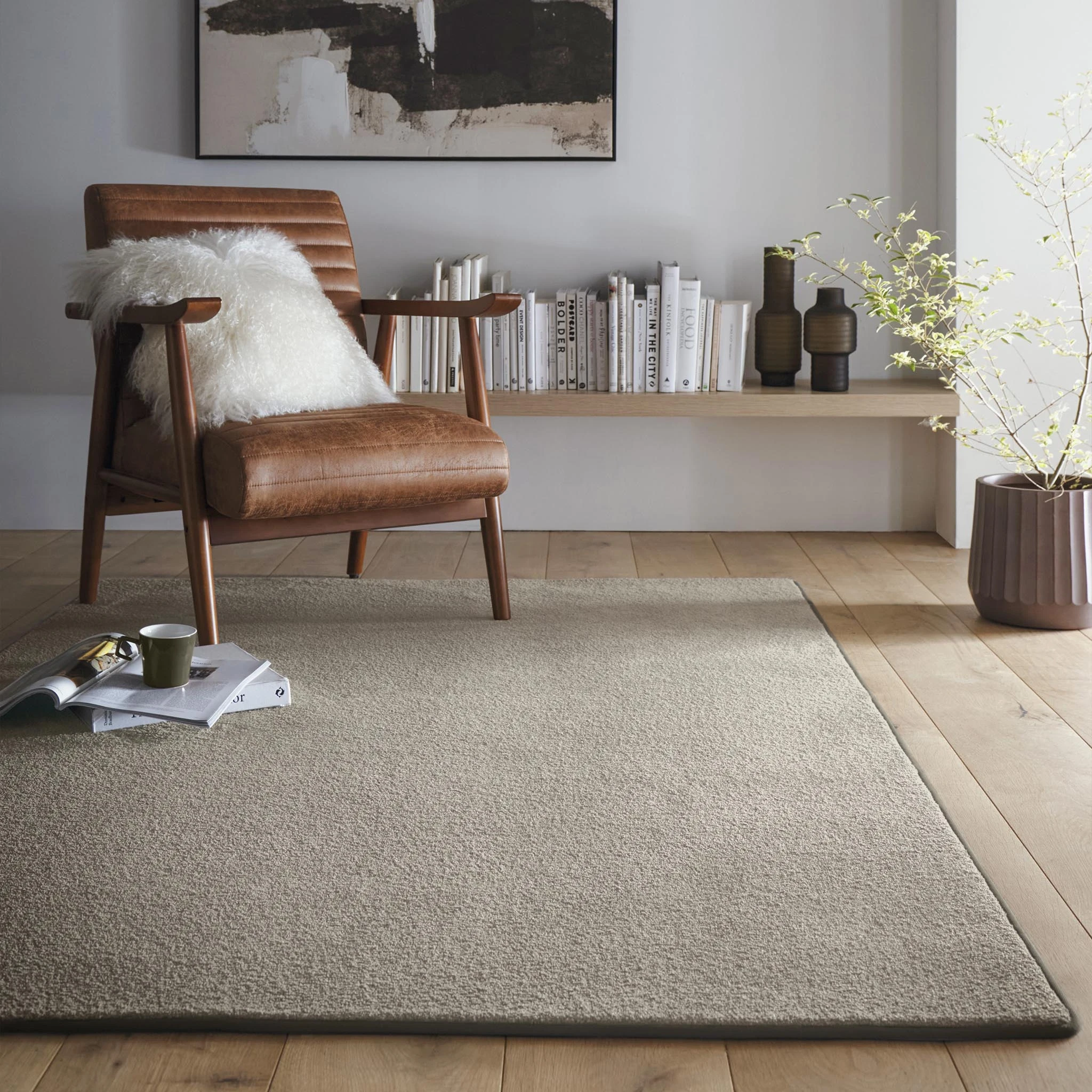
A useful check: your coffee table should sit entirely on the rug with at least 45cm of rug visible beyond each edge. If your coffee table hangs off the edge, the rug is too small.
Living Room Rug Picks
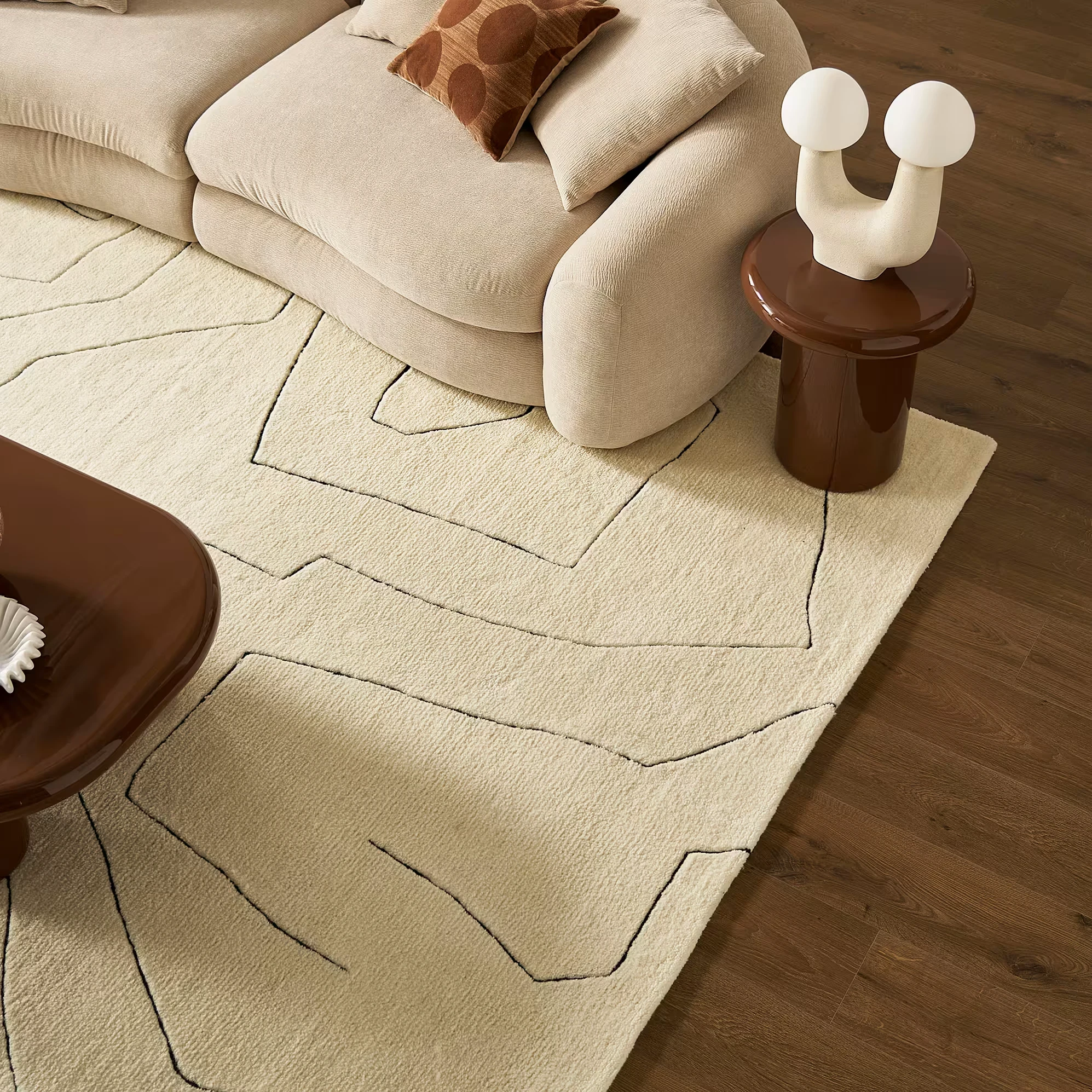
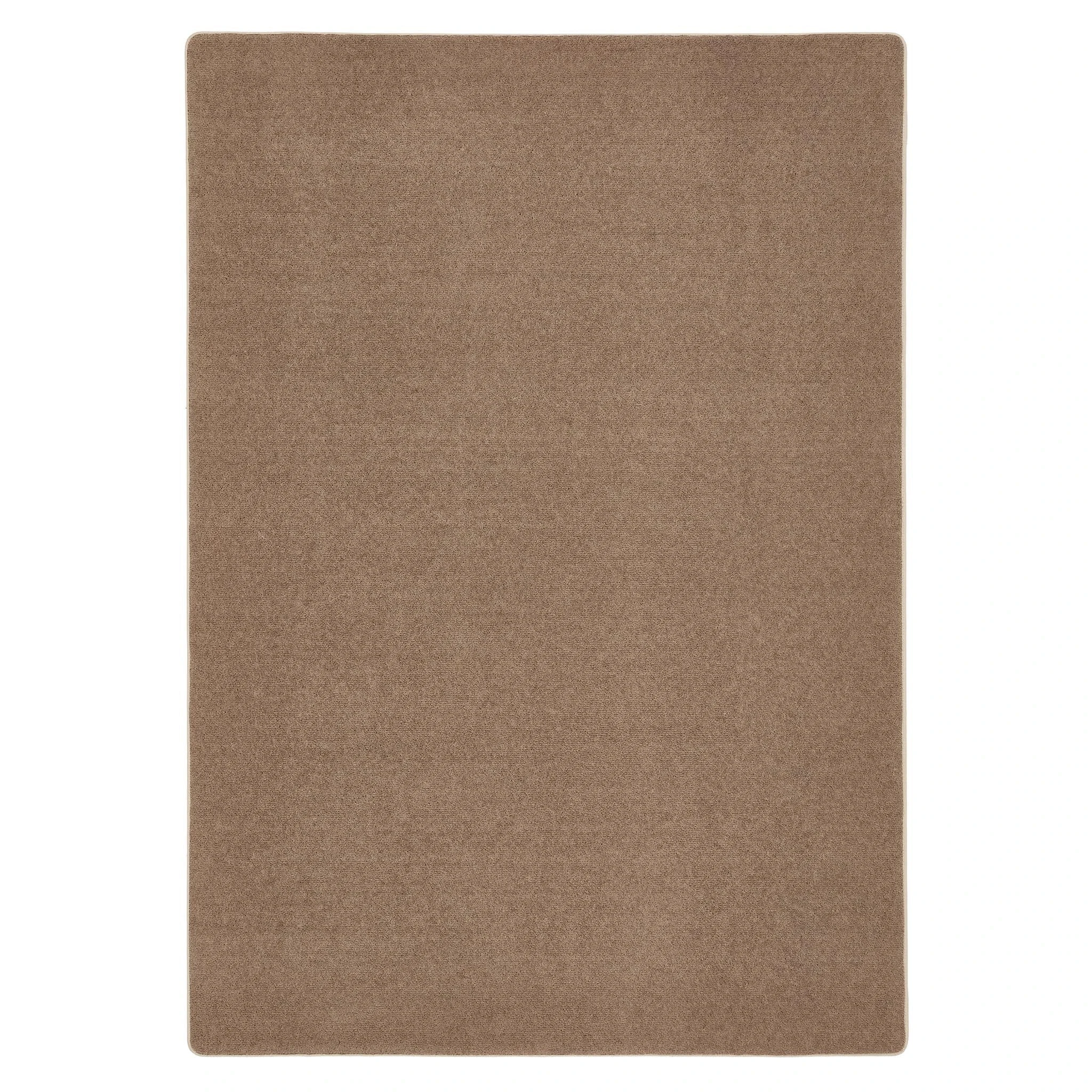
Look for living room rugs in the 200x290cm range for medium rooms, or 160x230cm if you're working with a smaller space. Wool rugs offer durability and softness, while washable rugs make sense for households with children or pets.
---
Bedroom Rug Sizes: The 60cm Rule
Bedroom rugs are all about that warm landing when you get out of bed. No one wants to step onto cold floorboards first thing in the morning.

The 60cm Rule Explained
The 60cm Rule ensures comfort: the rug should extend at least 60cm beyond each side of the bed. This gives you a soft landing zone on both sides and at the foot of the bed.
For a king-size bed (150cm wide), this means:
150cm + (60cm x 2) = 270cm minimum width
Plus 60-90cm at the foot of the bed for length
Three Bedroom Rug Placement Options
1. Large rug under the entire bed (most luxurious) A single large rug extends from beneath the headboard to well beyond the foot of the bed. This is the most cohesive look and works brilliantly in master bedrooms.
2. Rug at the foot of the bed (practical compromise) A medium rug placed horizontally at the foot of the bed. This works well when you have fitted wardrobes or limited space on the sides.
3. [Runners](#hallway-runner-sizes-the-20cm-gap-rule) on each side (narrow Victorian bedrooms) Two matching runners flanking the bed. This is ideal for UK Victorian and Edwardian bedrooms where space is tight but the room is long – see the hallway section below for sizing guidance.
Bedroom Rug Size Chart
Bed Size | Bed Width | Large Rug | Runner Option |
|---|---|---|---|
Double | 135cm | 200 x 290cm | 60 x 240cm x 2 |
King | 150cm | 240 x 300cm | 70 x 270cm x 2 |
Super King | 180cm | 270 x 360cm | 80 x 300cm x 2 |
Standard Sizes vs The 60cm Rule
Here's the catch: a standard King bed is 150cm wide. A standard 200x290cm rug – if placed lengthways under the bed – leaves only 25cm on each side. That breaks the 60cm Rule.
The solutions:
Size up: Choose a 240x340cm rug if your room allows
Position it lower: Place the rug from mid-bed to foot, maximising visible rug at the foot where it matters most for that morning step
Go perpendicular: A 200x290cm rug placed sideways (with the 290cm dimension running across the bed) gives you proper coverage on the sleeping sides
The chart above reflects realistic sizing based on what actually fits UK bedrooms – which is why the "Large Rug" column shows sizes slightly smaller than the pure 60cm Rule would suggest.
Bedroom Rug Positioning Tips
Position a large rug so approximately one-third sits under the bed and two-thirds extend outward. This ensures the rug is visible and functional without wasting material hidden under the bed frame.
Bedroom Rug Picks
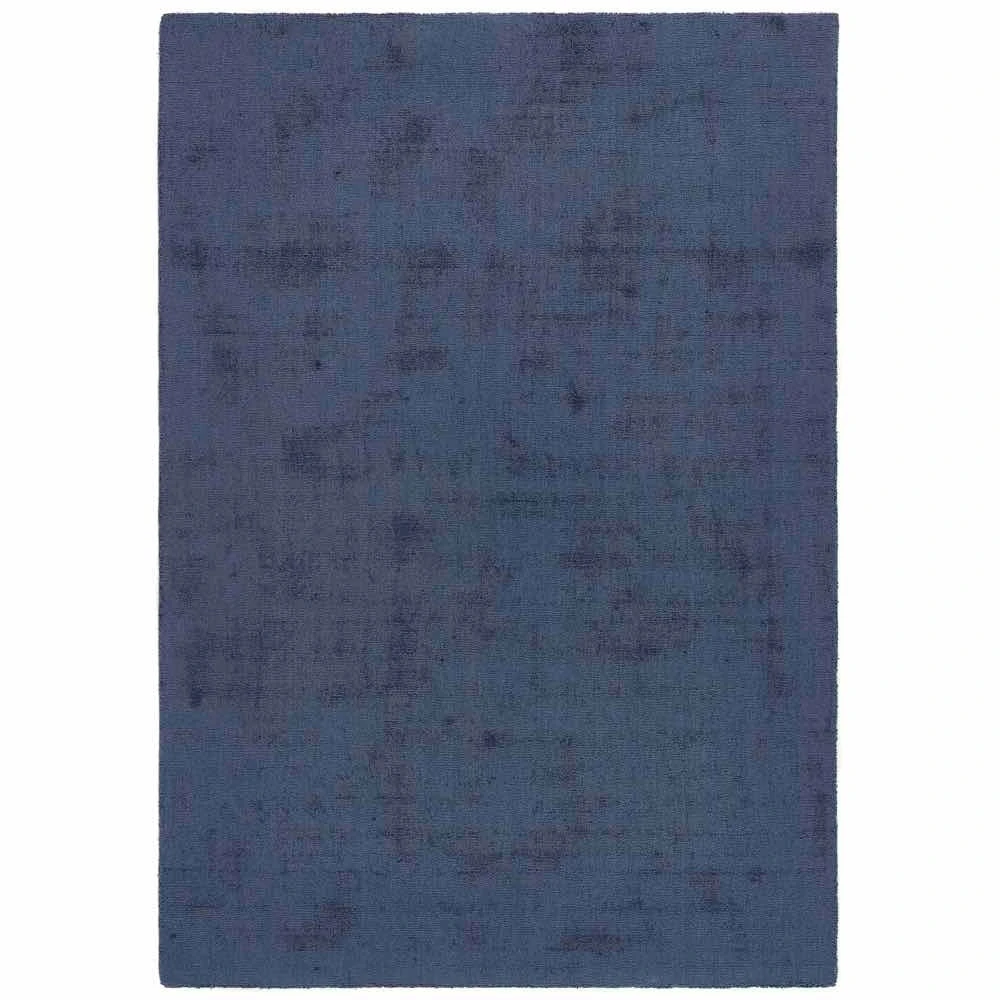
Comfort underfoot is the priority here. Soft pile rugs feel luxurious when you step out of bed, while washable rugs are practical for allergy sufferers or anyone who wants easy maintenance.
---
Hallway Runner Sizes: The 20cm Gap Rule
UK homes, especially Victorian and Edwardian terraces, are famous for their long, narrow hallways. A well-chosen runner can transform these spaces.
Why The 20cm Gap Rule Matters
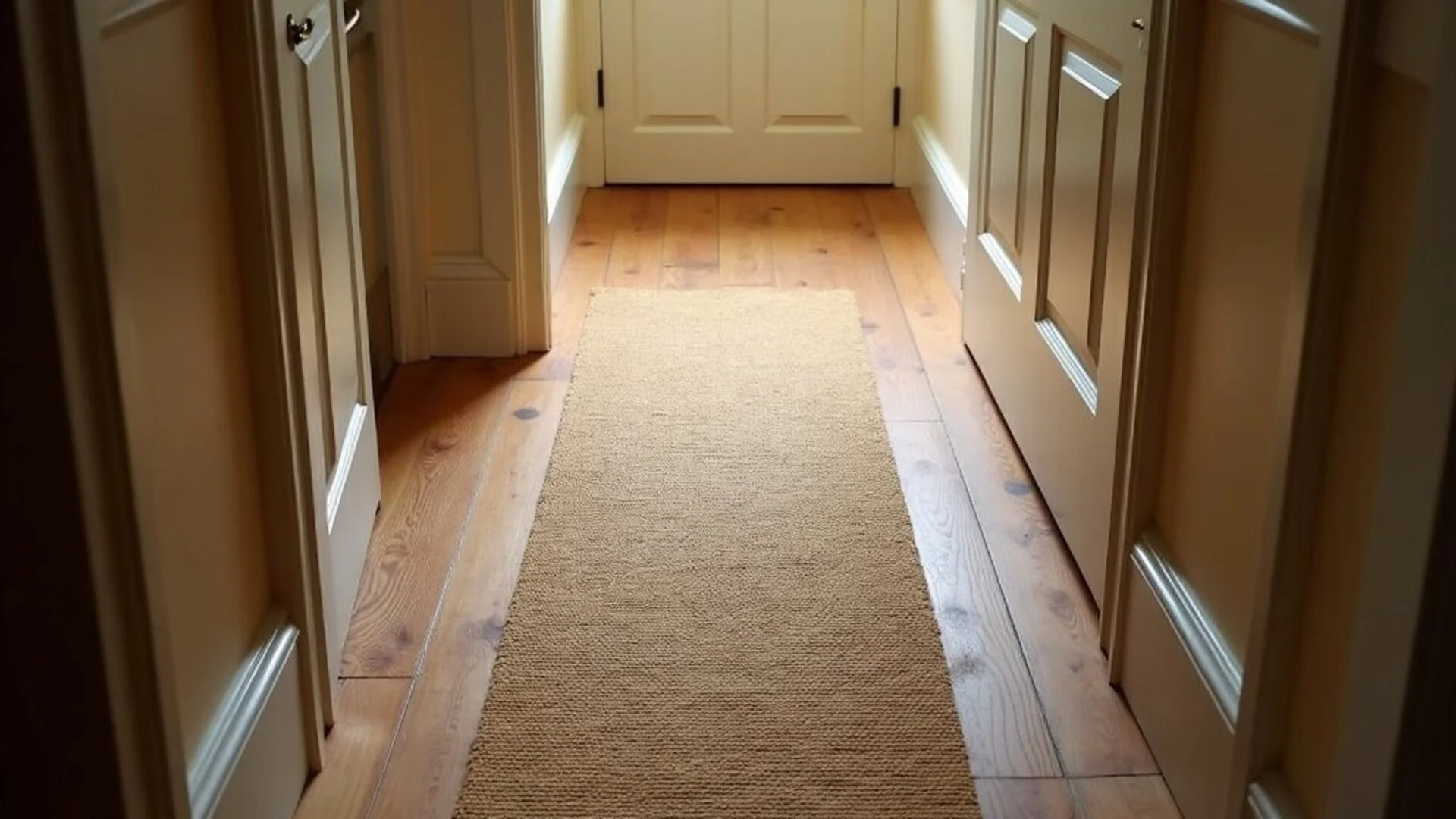
The 20cm Gap Rule recommends leaving approximately 20cm of floor visible on each side of a hallway runner. This serves multiple purposes:
Shows off original floorboards (a feature in period properties)
Creates visual symmetry in narrow spaces
Prevents the hallway feeling cramped with wall-to-wall coverage
Makes cleaning easier around the edges
Hallway Runner Size Guide
Hallway Width | Runner Width | Common Lengths |
|---|---|---|
90cm | 60cm | 200cm, 300cm |
100cm | 70cm | 250cm, 350cm |
120cm | 80cm | 300cm, 400cm |
Measuring for a Hallway Runner
Measure your hallway length, then subtract 30cm from each end. This ensures the runner doesn't butt up against doorways or skirting boards, giving it room to breathe.
For length, consider any doors that open into the hallway. The runner should end before any door swing, typically 10-15cm clearance.
Kitchen Runners: The Growing Trend
The same principles apply to kitchen runners, increasingly popular in UK galley kitchens. They provide comfort underfoot while cooking and protect high-traffic areas.
For kitchens, choose:
Washable materials (kitchen spills are inevitable)
Low pile options (easier to clean, won't trap crumbs)
Durable fibres (kitchens see heavy foot traffic)
Hallway Runner Picks
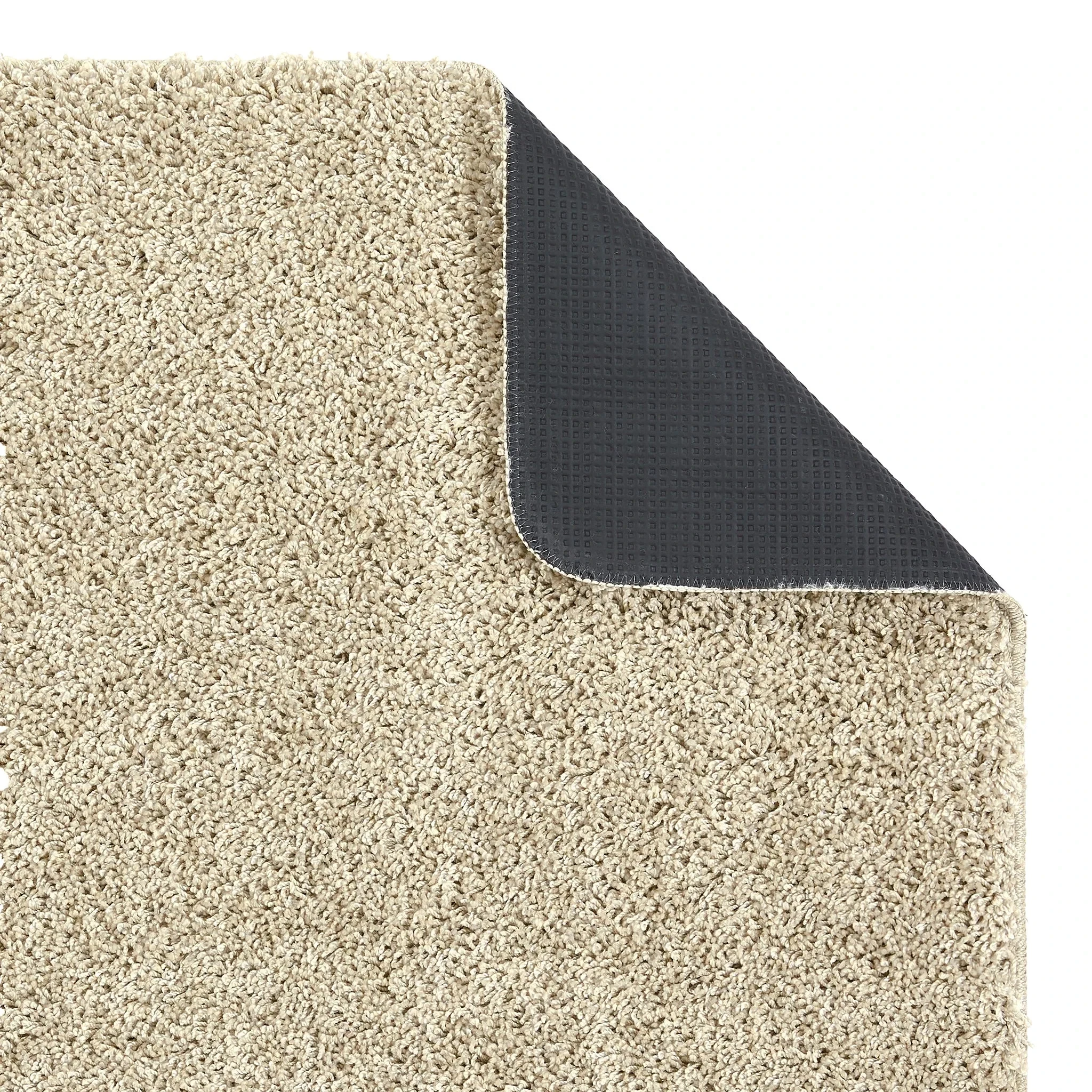
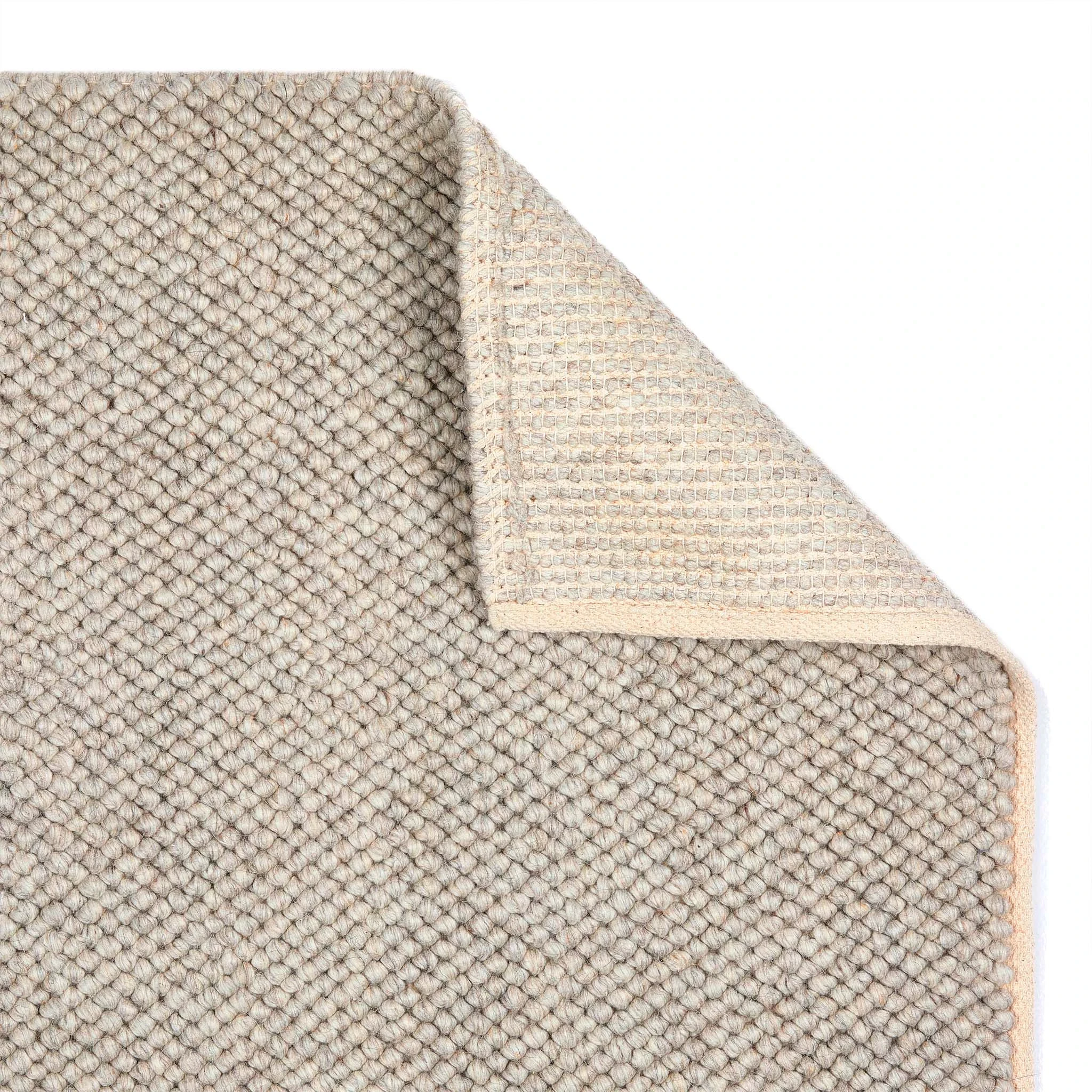
A machine-washable runner is practical for high-traffic hallways – you can simply pop it in the wash when muddy boots take their toll. Natural jute runners work beautifully in period homes where you want to showcase original floorboards.
---
How to Measure for a Rug: Step-by-Step
Before buying, take accurate measurements. This prevents expensive returns and ensures your rug fits perfectly.
Step 1: Measure Your Furniture Footprint
For dining rooms, measure your table and add 120cm to both length and width for the 120cm Rule.
For living rooms, measure the seating area including all furniture you want anchored by the rug.
For bedrooms, measure your bed width and add 120cm (60cm each side).
Step 2: Apply the Named Rules
Use the appropriate rule for your room:
Dining room: 120cm Rule (60cm per side)
Living room: Front Legs Rule
Bedroom: 60cm Rule
Hallway: 20cm Gap Rule
Step 3: Mark It Out With Masking Tape
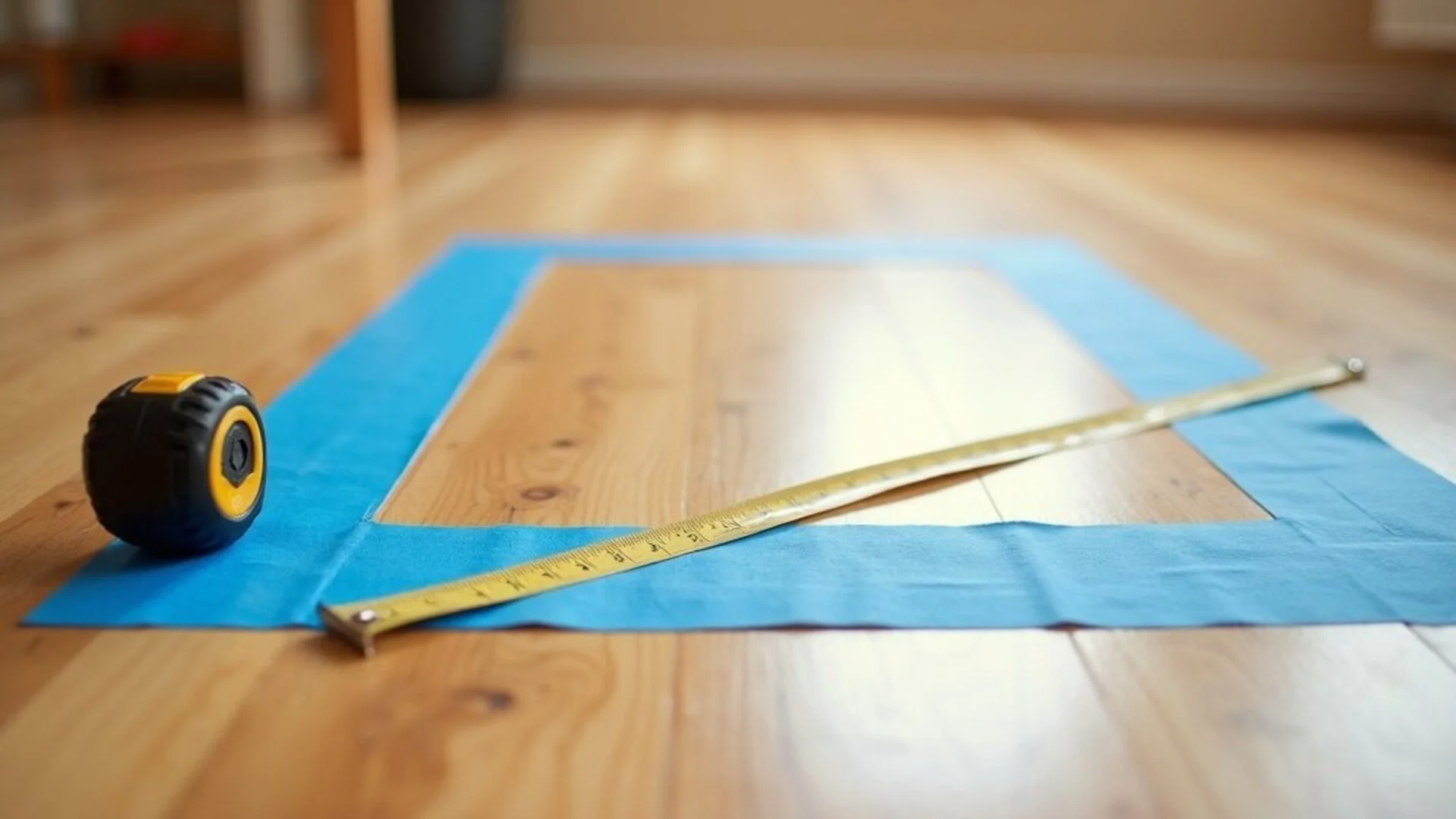
This step is crucial. Use masking tape on your floor to outline the rug dimensions before buying. Live with it for a day or two. Walk around it. Sit on your furniture. Does the size feel right?
Step 4: Check Door Swing and Traffic Flow
Ensure doors can open freely over the rug (or clear it entirely). Map your usual walking paths through the room. The rug shouldn't create awkward stepping patterns.
Step 5: Apply The 45cm Border Rule
The 45cm Border Rule is your final check. In most rooms, leave approximately 45cm of visible floor between the rug edge and the walls. This creates visual breathing room and makes the room feel balanced.
In very small rooms, 30cm may suffice. In large rooms, you might extend to 60cm.
---
Common Rug Sizing Mistakes to Avoid
Even with the rules, these errors trip people up:
1. Buying a Rug That's Too Small
The "floating island" effect happens when a rug sits in the middle of the room, disconnected from all furniture. It looks like an afterthought rather than an intentional design choice.
Fix: Follow the Front Legs Rule minimum. When in doubt, size up.
2. Not Accounting for Chair Pull-Out
Dining tables fool people because they look compact when not in use. But chairs need 60-70cm clearance behind them.
Fix: Always apply the 120cm Rule for dining areas.
3. Blocking Doorways
A rug that bunches against doors or prevents them opening fully creates daily frustration.
Fix: Measure door swing radius and ensure 10-15cm clearance.
4. Ignoring Furniture Arrangement
A rug should unite furniture, not divide it. Avoid placing a rug so that some seating is on it and some isn't (unless intentionally following the Front Legs Rule).
Fix: Sketch your furniture layout first, then calculate rug dimensions.
5. Mixing Metric and Imperial
UK retailers use centimetres, but some international brands list sizes in feet or inches. This causes confusion and mis-orders.
Fix: Convert everything to centimetres before comparing. A 5x8ft rug is approximately 150x240cm.
---
Quick Reference: Standard Rug Sizes in the UK
UK retailers typically stock these standard sizes:
Size Name | Dimensions (cm) | Best For |
|---|---|---|
Small | 120 x 170 | Bedside, small hallways |
Medium | 160 x 230 | Small living rooms, bedrooms |
Large | 200 x 290 | Medium living rooms, dining |
Extra Large | 240 x 340 | Large living rooms, 6-seat dining |
Room Size | 270 x 360+ | Open plan spaces, 8-seat dining |
[Runners](https://www.meetfelix.ai/search?q=runner+rug): Typically 60-80cm wide, available in 150cm, 200cm, 250cm, and 300cm lengths.
---
Frequently Asked Questions
What size rug do I need under a dining table?
Apply the 120cm Rule: add 60cm to each dimension of your table. For a 180x90cm table seating six, you need at least a 240x210cm rug. Round up to the nearest standard size: 240x300cm works perfectly.
Should a rug go under the sofa or in front of it?
Ideally, the front legs of your sofa should sit on the rug. This follows the Front Legs Rule and creates visual cohesion. Placing a rug entirely in front of the sofa can work in small spaces but often looks disconnected.
How much bigger should a rug be than a bed?
A bedroom rug should extend at least 60cm beyond each side of the bed (the 60cm Rule). For a king-size bed (150cm wide), aim for a rug at least 270cm wide. Add 60-90cm to the bed length for coverage at the foot.
What is the 120cm rule for rugs?
The 120cm Rule is a dining room guideline: add 120cm to your table dimensions (60cm per side) to ensure chairs remain on the rug when pulled out. This prevents the annoying scrape of chair legs hitting rug edges.
How wide should a hallway runner be?
Follow the 20cm Gap Rule: leave approximately 20cm of floor visible on each side. For a 100cm wide hallway, choose a 60-70cm wide runner. This showcases original floorboards and prevents narrow halls feeling cramped.
Can a rug be too big for a room?
Yes. A rug that extends wall-to-wall can make a room feel smaller and carpet-like. The 45cm Border Rule recommends leaving at least 45cm of visible floor around the edges for visual breathing room.
---
Summary: The Five Named Rules
The 120cm Rule (Dining): Table size + 60cm each side
The Front Legs Rule (Living): Front furniture legs on rug
The 60cm Rule (Bedroom): Extend 60cm beyond bed sides
The 20cm Gap Rule (Hallway): Leave 20cm floor on each side
The 45cm Border Rule (General): Leave 45cm floor around edges
Use these rules as starting points, then adjust for your specific room and furniture. When in doubt, use the masking tape test before buying.


