

Best Velvet Sofas UK: How to Choose the Right One for Your Living Room
Velvet sofas add warmth and texture that flat-weave fabrics simply cannot match. The pile catches light differently depending on the angle, giving a single colour real depth across the day. In our current collection, we found 82 velvet pieces across 4 UK boutique retailers -- sofas, armchairs, and dining chairs in over 15 colours, from deep sapphire to burnt terracotta. This guide covers what actually matters when choosing a velvet sofa: the fabric types that hold up, the colours that work in real UK light, and how to care for velvet so it lasts.
Whether you are replacing a tired linen sofa or adding a statement piece to a room that needs more character, velvet rewards careful selection. The wrong velvet creases permanently, fades in sunlight, or shows every mark from the dog. The right one becomes the piece you build the room around -- the anchor piece worth buying first.
What Makes a Good Velvet Sofa
A well-made velvet sofa uses a high rub count fabric (at least 25,000 Martindale cycles), a kiln-dried hardwood or engineered frame, and high-resilience foam or pocket-sprung cushions. These three elements together determine whether the sofa still looks good in five years or starts sagging and wearing within eighteen months.
Velvet itself comes in three main types, and the distinction matters more than most retailers let on:
Velvet Type | Feel | Durability (Martindale) | Best For | Price Impact |
|---|---|---|---|---|
Cotton velvet | Soft, natural sheen | 15,000-25,000 | Low-traffic rooms, bedrooms | Mid-range |
Polyester velvet | Uniform sheen, stain-resistant | 30,000-50,000+ | Family rooms, everyday use | Budget to mid |
Viscose/silk blend | Rich lustre, drapes well | 10,000-15,000 | Formal sitting rooms | Premium |
For most households, polyester velvet hits the best balance of look, feel, and practicality. It resists staining better than cotton, holds its shape longer, and costs less. Cotton velvet has a more natural hand feel and develops a pleasing patina over time, but it marks more easily. Viscose blends look exquisite but belong in rooms that see lighter use.
Frame and Cushion Construction
The frame matters as much as the fabric. Kiln-dried hardwood frames (beech, birch, or solid oak) resist warping far better than pine or engineered board. For cushion fill, pocket springs with foam provide the firmest sit, while feather-wrapped foam offers a softer, sink-in feel. Fibre-filled cushions compress fastest and need regular plumping.
If you are new to evaluating construction quality, our furniture quality buyer's framework covers what to look for in detail.
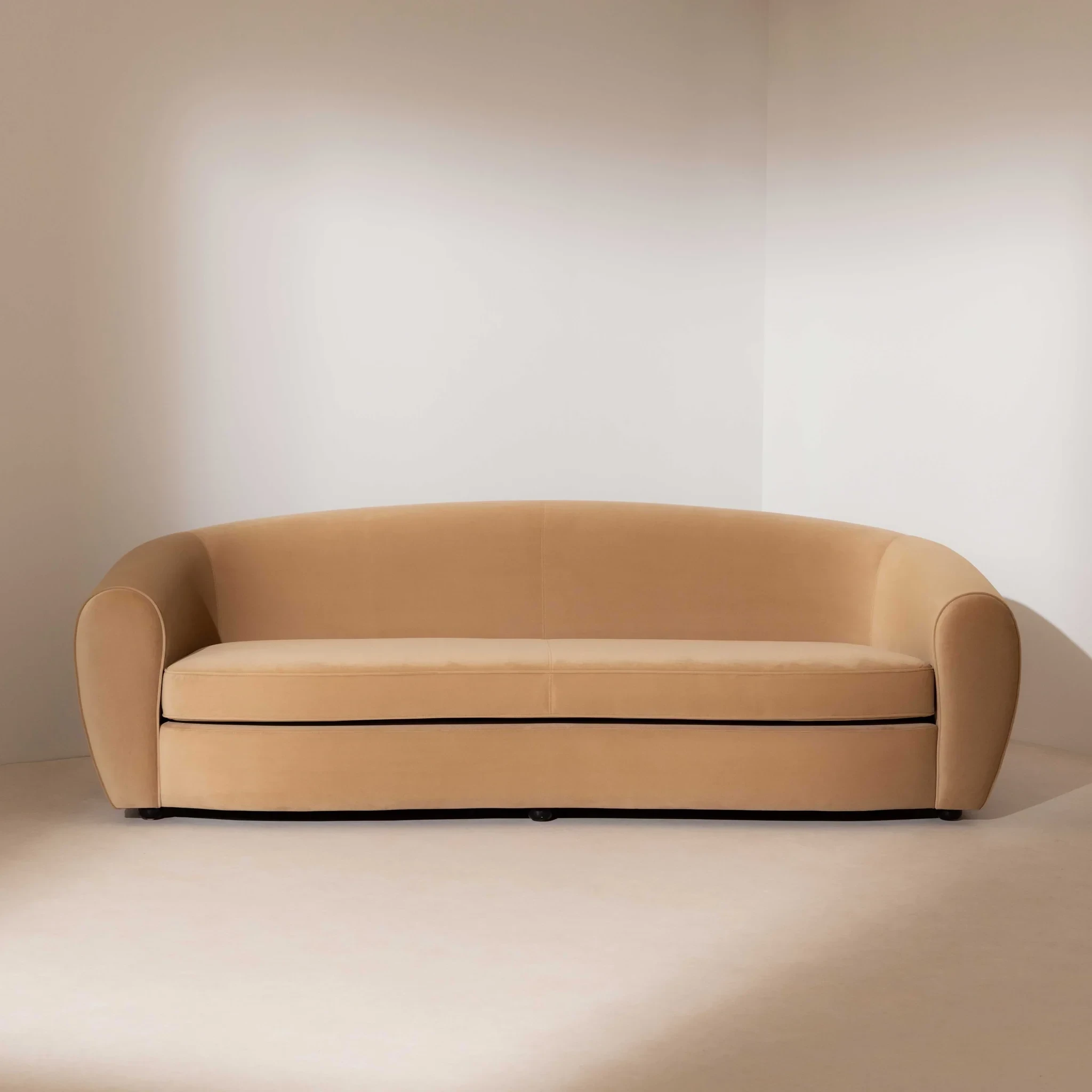
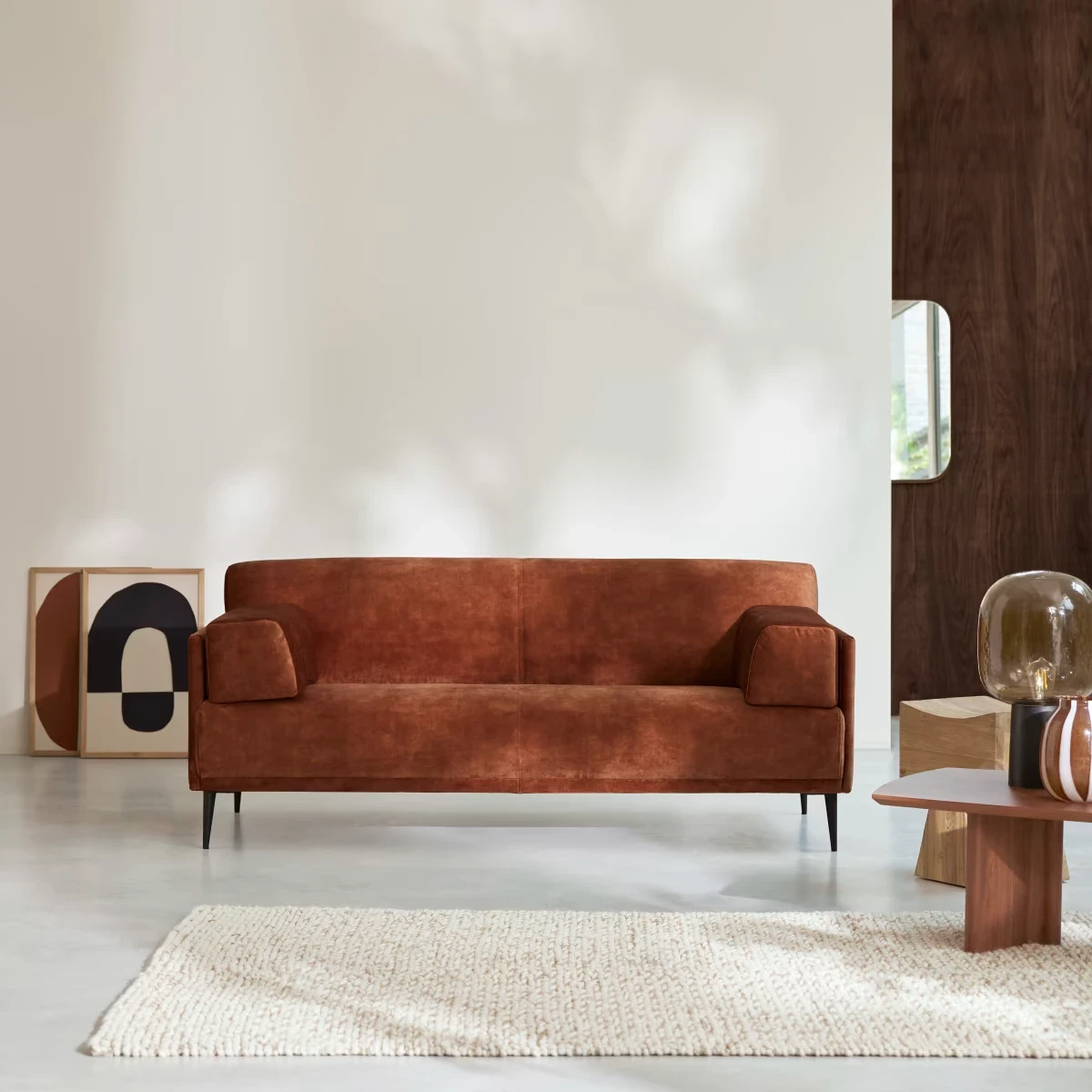
How to Choose the Right Velvet Colour
Green, blue, and warm neutrals dominate velvet sofa sales in the UK -- and for good reason. These colours work with the quality of natural light in British homes, which skews cool and grey for much of the year. In our current collection, the most popular velvet shades are moss, charcoal, air force blue, camel, and sapphire.
Here is how different velvet colours behave in practice:
Colour Family | Works With | Watch Out For | Best Room Aspect |
|---|---|---|---|
Deep green (moss, forest, emerald) | Warm wood, brass, cream walls | Can darken north-facing rooms | South or west-facing |
Blue (sapphire, navy, air force) | White walls, pale wood, silver | Shows dust more than warm tones | Any aspect |
Warm neutral (camel, truffle, chocolate) | Any palette, most forgiving | Can look flat without texture contrast | Any aspect |
Terracotta/rust | Natural materials, green plants | Clashes with cool-toned greys | North or east-facing |
Pink/blush | Marble, gold, warm whites | Reads differently in warm vs cool light | South-facing |
A practical rule: if your room gets fewer than three hours of direct sunlight, lean towards warm colours (camel, terracotta, warm greens). Cool-toned velvets (navy, charcoal) can make dim rooms feel colder. If your room floods with light, you have more freedom -- deep jewel tones like sapphire and emerald will glow rather than absorb.
The pile direction of velvet means the same sofa can look lighter or darker depending on where you stand. Always view samples in your own room, at different times of day, before committing to a colour.
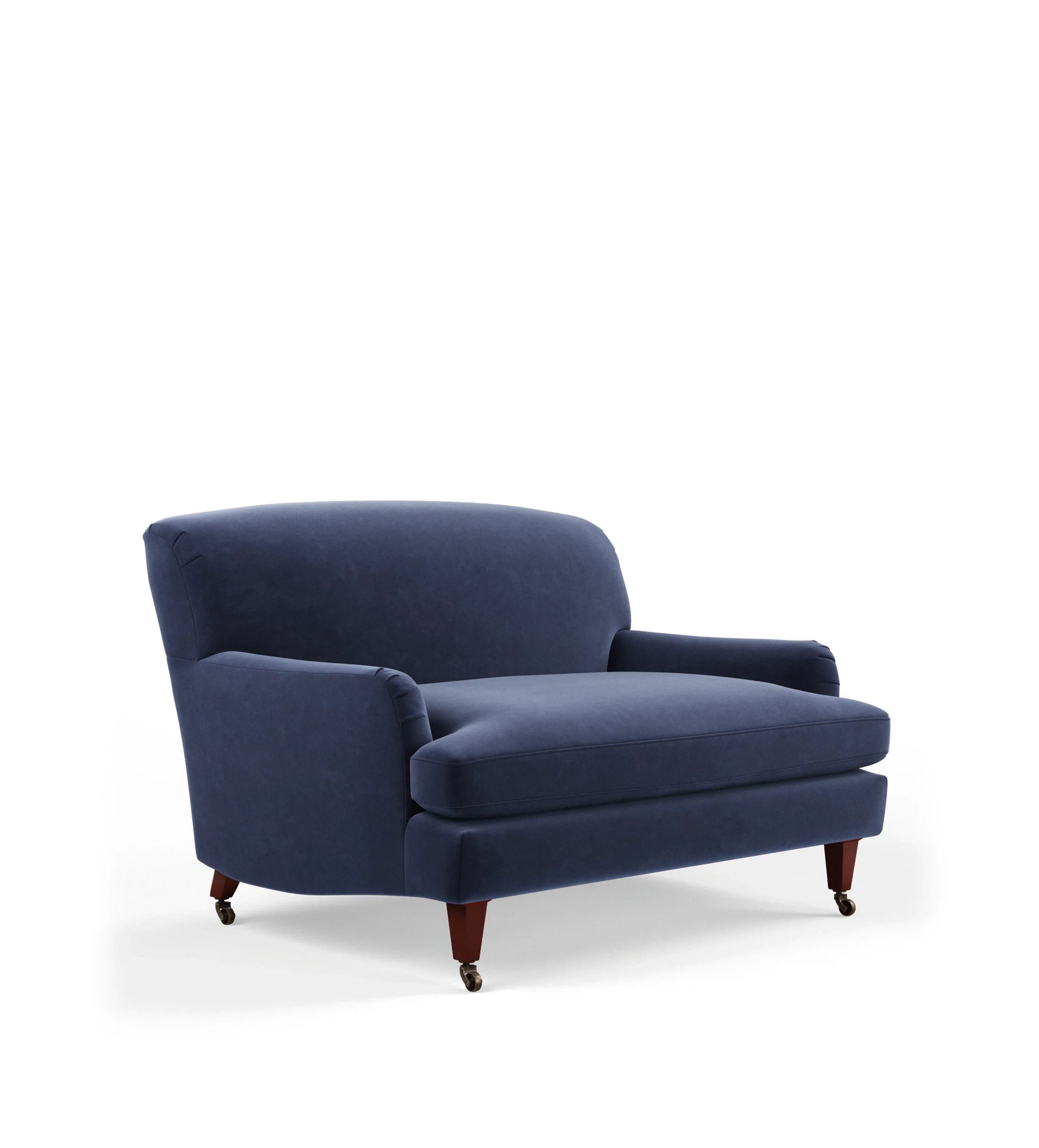
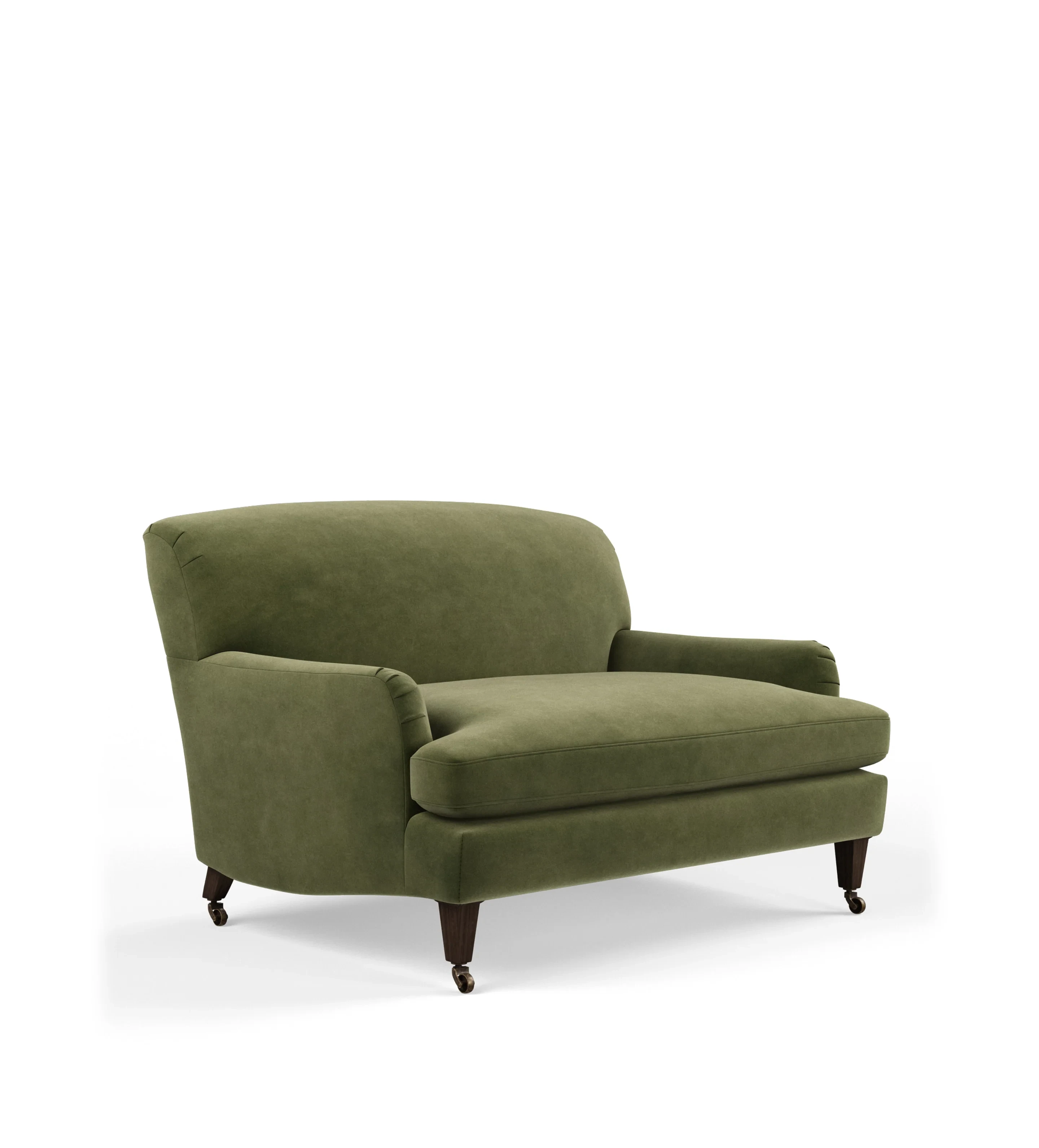
What Size Velvet Sofa Do You Need
A velvet sofa follows the same sizing principles as any upholstered sofa, but the visual weight of the fabric means getting dimensions right matters even more. Velvet's light-catching texture makes furniture appear slightly larger than the same silhouette in a matte fabric.
Standard UK sofa sizes:
Type | Width | Depth | Seats |
|---|---|---|---|
Compact 2-seater | 140-160cm | 85-90cm | 2 snug |
Standard 2-seater | 160-180cm | 85-95cm | 2 comfortable |
3-seater | 190-220cm | 85-95cm | 3 comfortable |
Large 3/4-seater | 220-260cm | 90-100cm | 3-4 comfortable |
Corner/L-shape | 250-300cm+ | 85-100cm | 4-6 comfortable |
The clearance test: Leave at least 45cm between the sofa and any facing furniture for comfortable legroom, and 90cm for walkways. In living rooms under 15 square metres, a compact 2-seater (140-160cm) prevents the room feeling overwhelmed. For open-plan spaces, a larger 3-seater or corner sofa in velvet can anchor the seating zone effectively -- see our guide on how to arrange living room furniture for layout principles.
Measure your doorways and stairwells before ordering. Velvet sofas rarely come with removable arms, so the delivery dimensions matter. Most 3-seaters need a doorway at least 75cm wide.
Velvet Sofa Styles: From Mid-Century to Contemporary
Mid-century modern, contemporary, traditional, and Chesterfield are the four sofa styles that work best in velvet. Each benefits from the fabric's light-catching texture in different ways -- structured mid-century frames gain visual warmth, while traditional rolled-arm silhouettes gain depth. In our current collection, mid-century and contemporary pieces make up the majority of velvet seating.
Mid-Century Modern
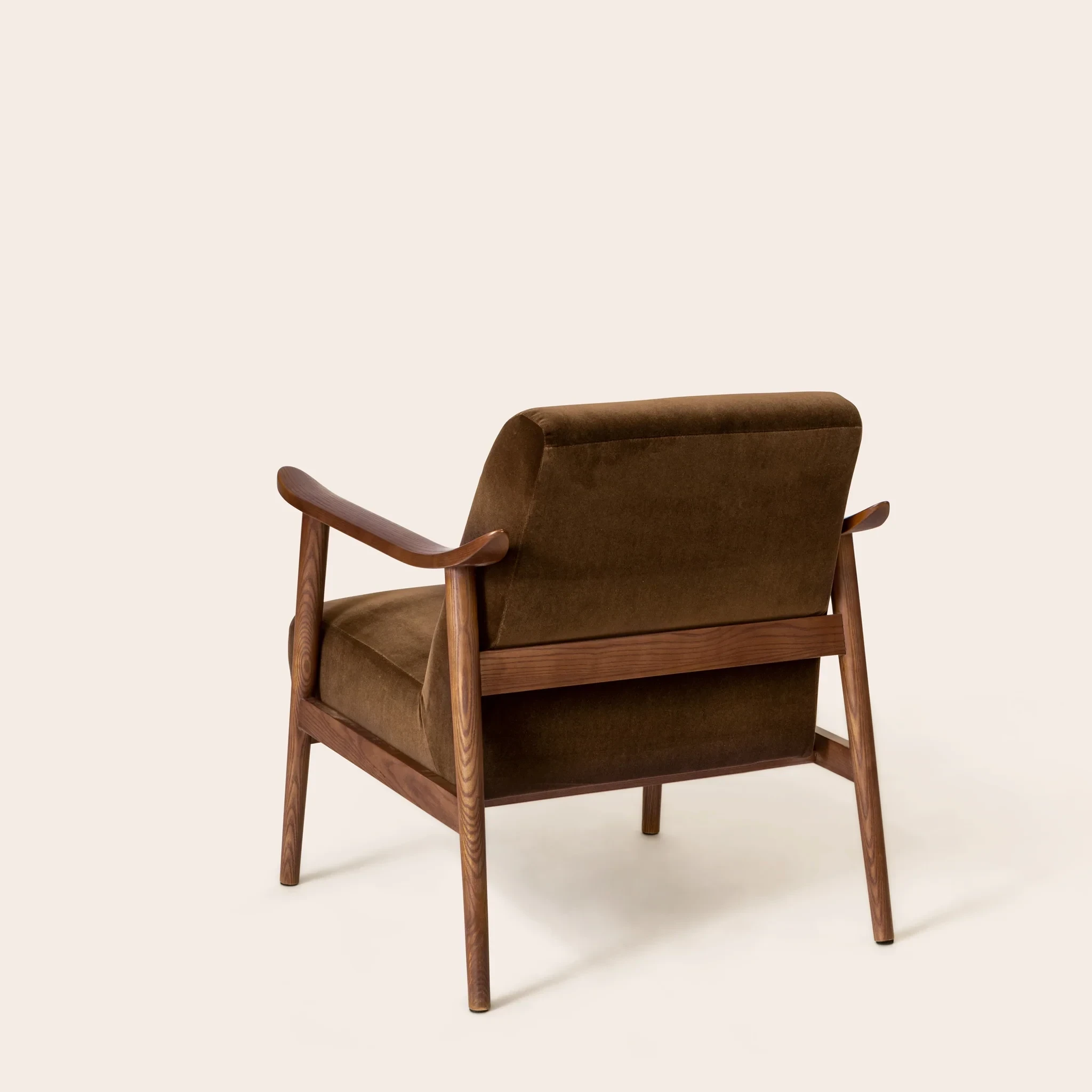
Clean lines, tapered wooden legs, and structured cushions. This is where velvet excels -- the fabric adds visual interest to simple silhouettes without fussiness. Look for frames with exposed walnut or oak legs and tight, piped cushions.
Contemporary
Low-profile frames with wide arms and deep seats. Contemporary velvet sofas tend to use muted tones -- charcoal, soft grey, dusty pink -- and keep the silhouette minimal. Metal legs in brass or black steel are common.
Traditional and Classic
Rolled arms, turned wood legs, and generous proportions. Traditional velvet sofas in deep green or sapphire blue have been a staple of British sitting rooms for decades. Fixed covers (rather than loose) keep the look tailored.
Chesterfield
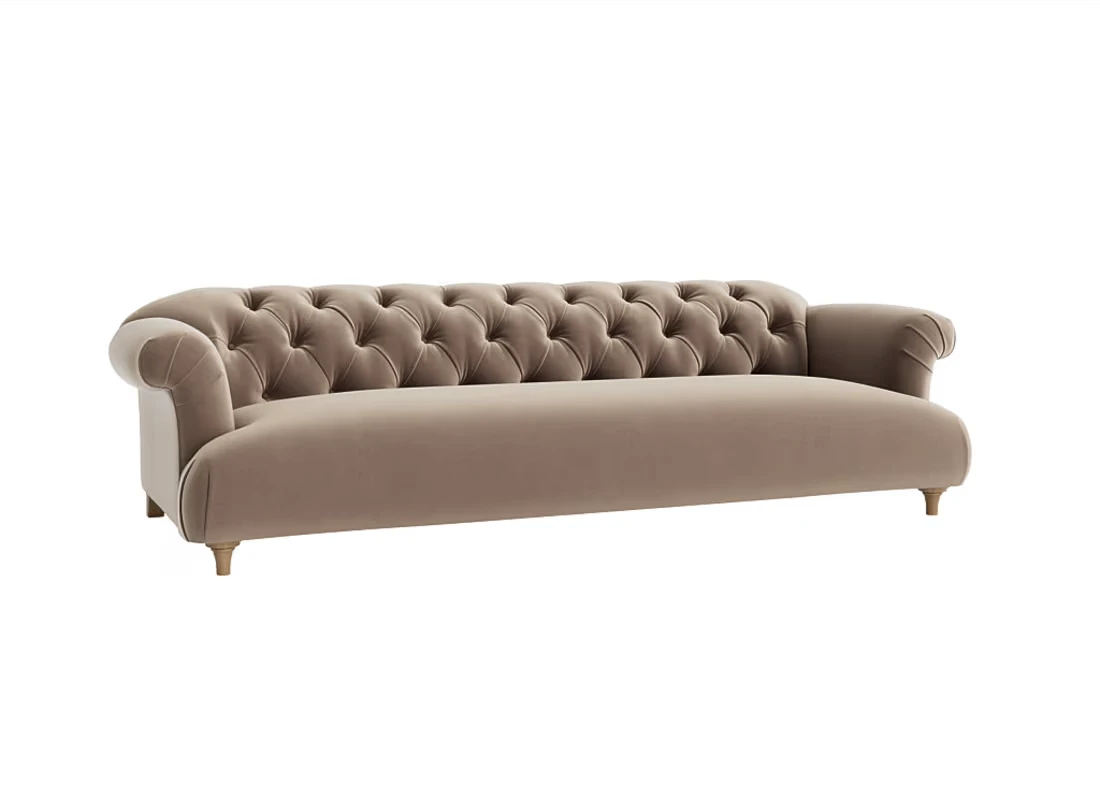
The deeply buttoned, scroll-armed Chesterfield was originally designed for leather, but translates well to velvet. The tufting creates shadow play that changes with the light -- one of velvet's strongest qualities. A velvet Chesterfield works as a statement piece in both period and modern interiors.
In our current collection, mid-century and contemporary styles account for the majority of velvet seating, with traditional pieces from retailers like OKA offering a more classic British aesthetic.
How to Care for a Velvet Sofa
Weekly brushing, low-suction vacuuming, and immediate spill blotting are the three habits that keep a velvet sofa looking new. Most velvet problems -- permanent creasing, pile flattening, watermarks -- come from ignoring small issues early rather than from the fabric being inherently fragile. Polyester velvet is the most forgiving; cotton and viscose need closer attention.
Weekly care:
Brush the pile gently with a soft clothes brush, always in the same direction
Vacuum on a low suction setting using an upholstery attachment (never a hard brush head)
Spill response (act within 30 seconds):
Blot immediately with a clean, dry cloth -- press, do not rub
For water-based spills, dampen a cloth with cold water and blot again
For oily spills, sprinkle bicarbonate of soda, leave 15 minutes, then vacuum
Never use a hairdryer to dry velvet -- it can permanently alter the pile direction
Seasonal maintenance:
Rotate and flip reversible cushions monthly to distribute wear
Steam lightly (held 15cm from the fabric) to revive flattened pile
Keep out of sustained direct sunlight -- UV fades velvet faster than woven fabrics
Pet owners: Polyester velvet is your best choice. It resists claw marks better than cotton, and pet hair brushes off more easily. A lint roller after each sitting session keeps things manageable. Avoid viscose or silk-blend velvets entirely if you have pets.
For more on how different furniture materials age and wear, our materials guide covers the full spectrum from wood to upholstery.
Velvet Sofas at Every Budget
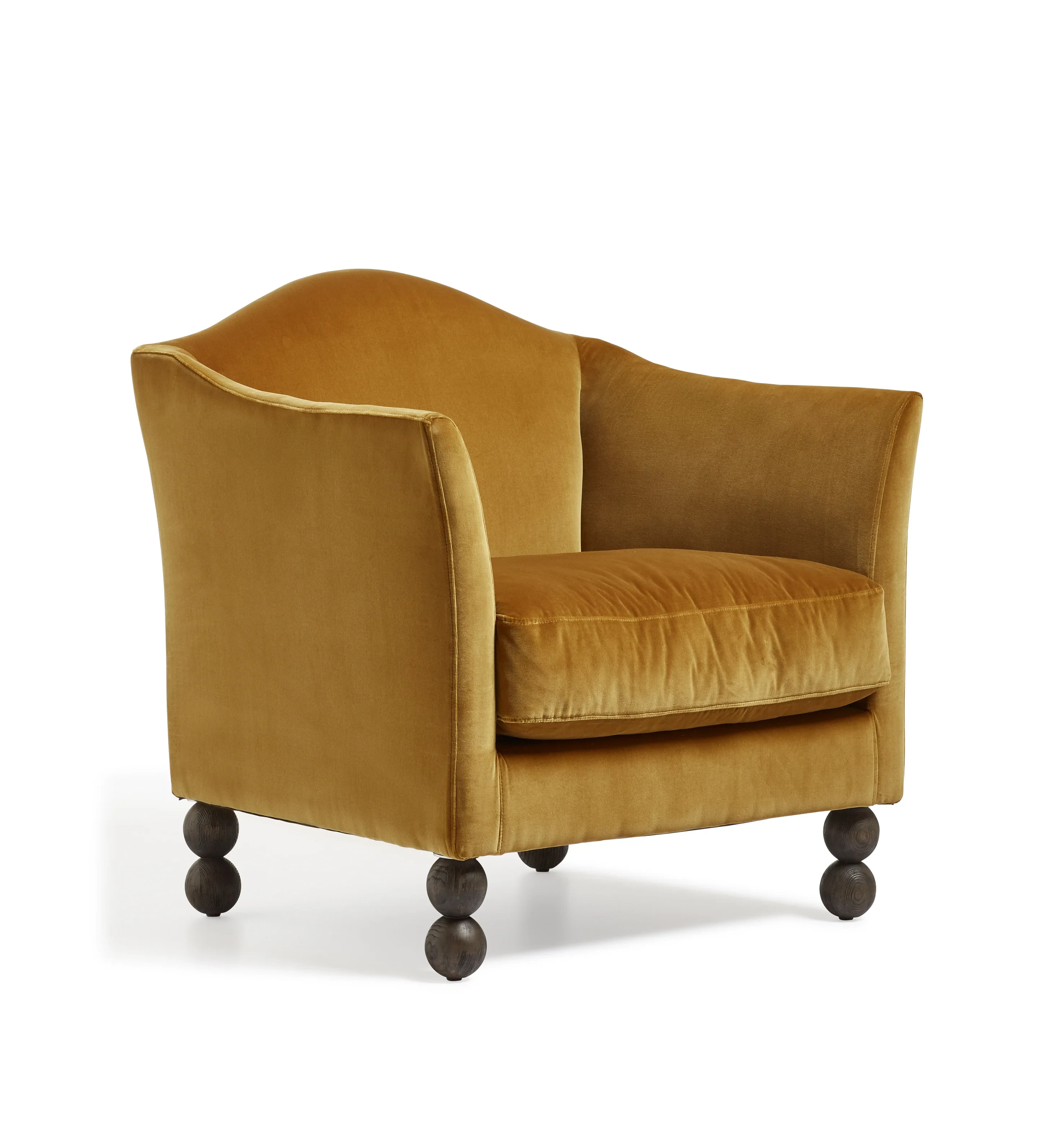
At time of writing, velvet sofas in our collection range from around £1,300 for a well-made 3-seater to over £3,700 for a handcrafted curved design. Velvet armchairs and accent chairs start from around £450, making them a lower-commitment way to introduce velvet into a room.
Budget Tier | Price Range | What to Expect |
|---|---|---|
Entry | £450-£800 | Velvet armchairs, accent chairs, and dining chairs. Polyester velvet, engineered frames. A good starting point if you want to test velvet before committing to a sofa. |
Mid-range | £1,200-£2,000 | Well-made 2 and 3-seater sofas. Polyester or cotton-blend velvet, hardwood frames, pocket-sprung cushions. The sweet spot for quality and value. |
Premium | £2,000-£3,800 | Statement sofas from boutique makers. Cotton or blended velvet, hand-finished details, kiln-dried hardwood frames, feather-wrapped cushions. |
The price difference between a £1,300 and a £3,000 velvet sofa comes down to frame construction, cushion fill quality, and hand-finishing. A mid-range polyester velvet sofa with a hardwood frame will outlast a premium viscose sofa with a pine frame every time. Prioritise construction over fabric prestige.
Our Recommendation
For most UK homes, a polyester velvet 3-seater in the £1,200-£2,000 range offers the strongest balance of comfort, durability, and visual impact. Choose a warm neutral (camel or truffle) if you want versatility across future redecorations, or a deep green if you want a piece with more character that still works long-term. Prioritise frame construction and Martindale count over brand name -- a well-built mid-range sofa will outlast a poorly constructed premium one every time.
Browse Velvet Sofas on MeetFelix
MeetFelix brings together velvet sofas, armchairs, and seating from boutique UK retailers in one place -- so you can compare colours, materials, and prices without visiting a dozen websites. Browse velvet sofas, explore green velvet options, or discover all sofas across our collection.
Frequently Asked Questions
Is velvet a good fabric for an everyday sofa?
Polyester velvet is well-suited to everyday use. It typically achieves 30,000-50,000 Martindale rub cycles -- well above the 20,000 threshold recommended for domestic furniture. Cotton velvet is softer but less stain-resistant, making it better for lower-traffic rooms. The key is matching the velvet type to how the sofa will be used rather than avoiding velvet altogether.
Do velvet sofas show marks and creasing?
All velvet shows some degree of "sitting marks" where the pile compresses under weight. This is normal and part of how the fabric behaves -- it is not a defect. Polyester velvet recovers faster than cotton, and light steaming restores the pile. Permanent creasing usually only occurs with viscose or silk-blend velvets that have been sat on heavily without maintenance.
Are velvet sofas suitable for homes with pets?
Polyester velvet handles pet ownership better than you might expect. Claws are less likely to pull the pile than with a woven fabric, and hair lifts off easily with a lint roller. The main risk is scratching from sharp claws, so keeping nails trimmed helps. Cotton and viscose velvets are more vulnerable and not recommended for pet households.
What colours work best for velvet sofas in UK homes?
Deep greens (moss, forest, emerald), blues (navy, sapphire), and warm neutrals (camel, truffle) work particularly well in UK light, which tends to be cool and indirect for much of the year. Warm-toned velvets like terracotta and camel bring warmth to north-facing rooms, while cooler tones like navy and charcoal suit brighter, south-facing spaces. In our current collection, green and blue are the most represented colours across velvet seating.
How long does a velvet sofa last?
With proper care, a well-made velvet sofa should last 10 to 15 years. The frame and cushion construction matter more than the fabric itself -- a hardwood frame with pocket springs will outlast an engineered board frame regardless of the upholstery. Polyester velvet tends to hold its appearance longer than cotton, which develops more visible wear over time (though some people prefer that aged character).
Can you clean a velvet sofa at home?
For routine maintenance, weekly brushing and low-suction vacuuming keep velvet in good condition. Small spills can be addressed with immediate blotting and cold water. For deeper cleaning, professional upholstery cleaning every 12 to 18 months is recommended -- home steam cleaners can damage velvet if used at too high a temperature or held too close. Always check the manufacturer's care label, as some velvet treatments are dry-clean only.

