

Best Rugs for Living Room UK: How to Choose the Right One for Your Space
The right rug transforms a living room from a collection of furniture into a room that feels finished. It anchors your seating, absorbs sound, and adds texture that hard flooring alone cannot provide. In our current collection, we compared over 800 rugs from UK retailers, priced from under £5 to over £4,000, in wool, recycled materials, cotton, jute, and polypropylene. This guide covers what actually matters when choosing a living room rug: the materials that hold up to daily life, the sizes that work in real UK rooms, and the styles worth investing in.
Which Rug Material Is Best for a Living Room?
Wool is the most durable and forgiving material for a living room rug. It resists stains naturally, bounces back from furniture impressions, and feels warm underfoot year-round. In our current catalogue, wool rugs account for the largest share of mid-range and premium options, with prices starting from around £155 for a wool-blend and reaching over £4,000 for hand-knotted designs.
Here is how the main materials compare for living room use:
Material | Durability | Feel Underfoot | Stain Resistance | Washable? | Price Range |
|---|---|---|---|---|---|
Wool | Excellent | Warm, soft | Naturally high | Spot clean | £155–£4,295 |
Wool blend (wool/viscose) | Very good | Soft, slight sheen | Good | Spot clean | £299–£799 |
Jute | Good | Textured, firm | Low (absorbs spills) | No | £245–£915 |
Recycled PET | Good | Smooth, flat | High | Machine wash some | £30–£460 |
Polypropylene | Good | Firm, practical | High | Machine washable | £28–£80 |
Cotton | Moderate | Soft, thin | Low | Machine washable | £20–£155 |
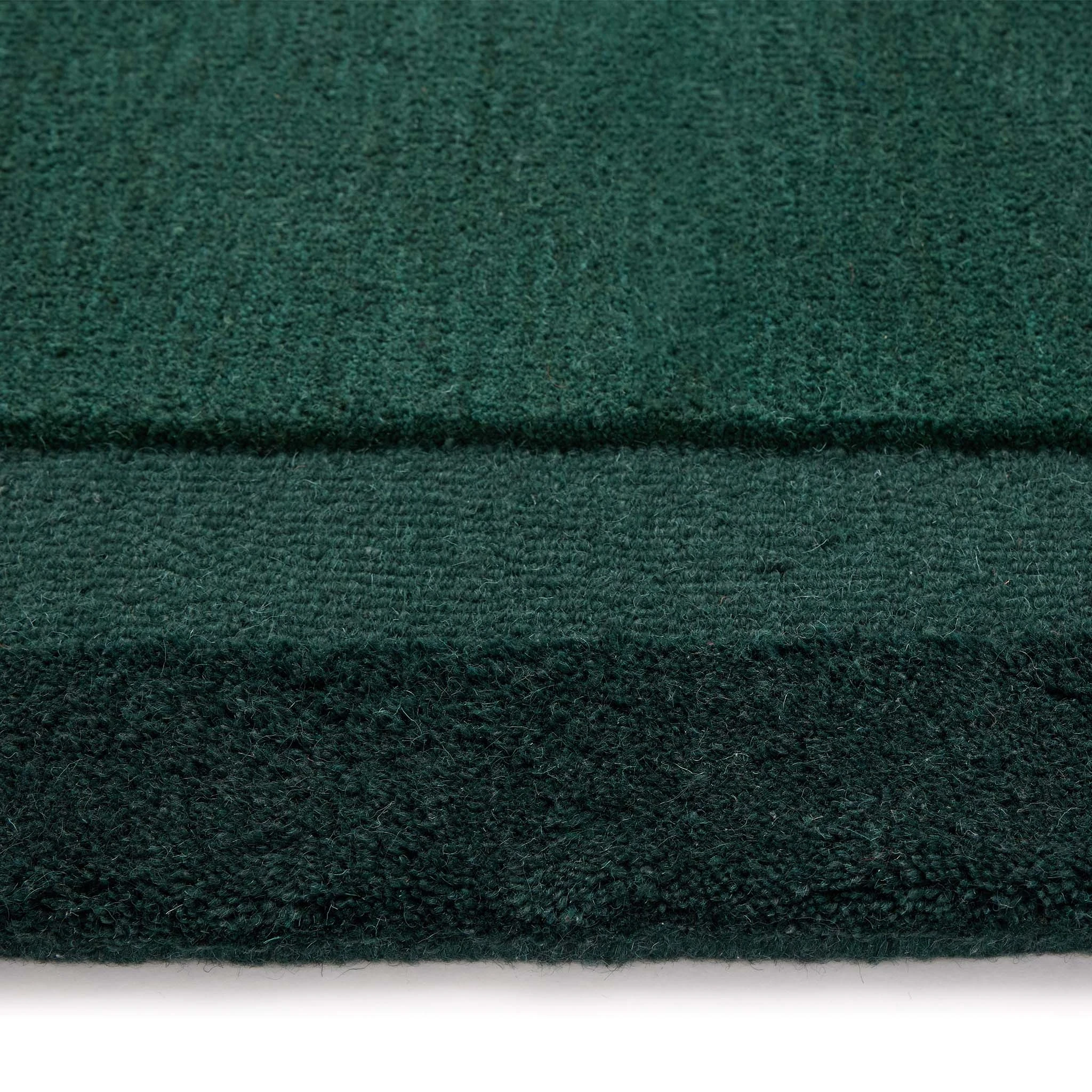
For high-traffic living rooms -- homes with children, pets, or heavy footfall -- wool or recycled PET rugs offer the best balance of comfort and resilience. Wool's natural lanolin repels liquid long enough to blot spills before they set.
For low-traffic or formal spaces, a wool-viscose blend adds subtle sheen and drape. Viscose softens the weave but shows wear faster in busy areas, so it works best under coffee tables or in rooms used mainly for evening entertaining.
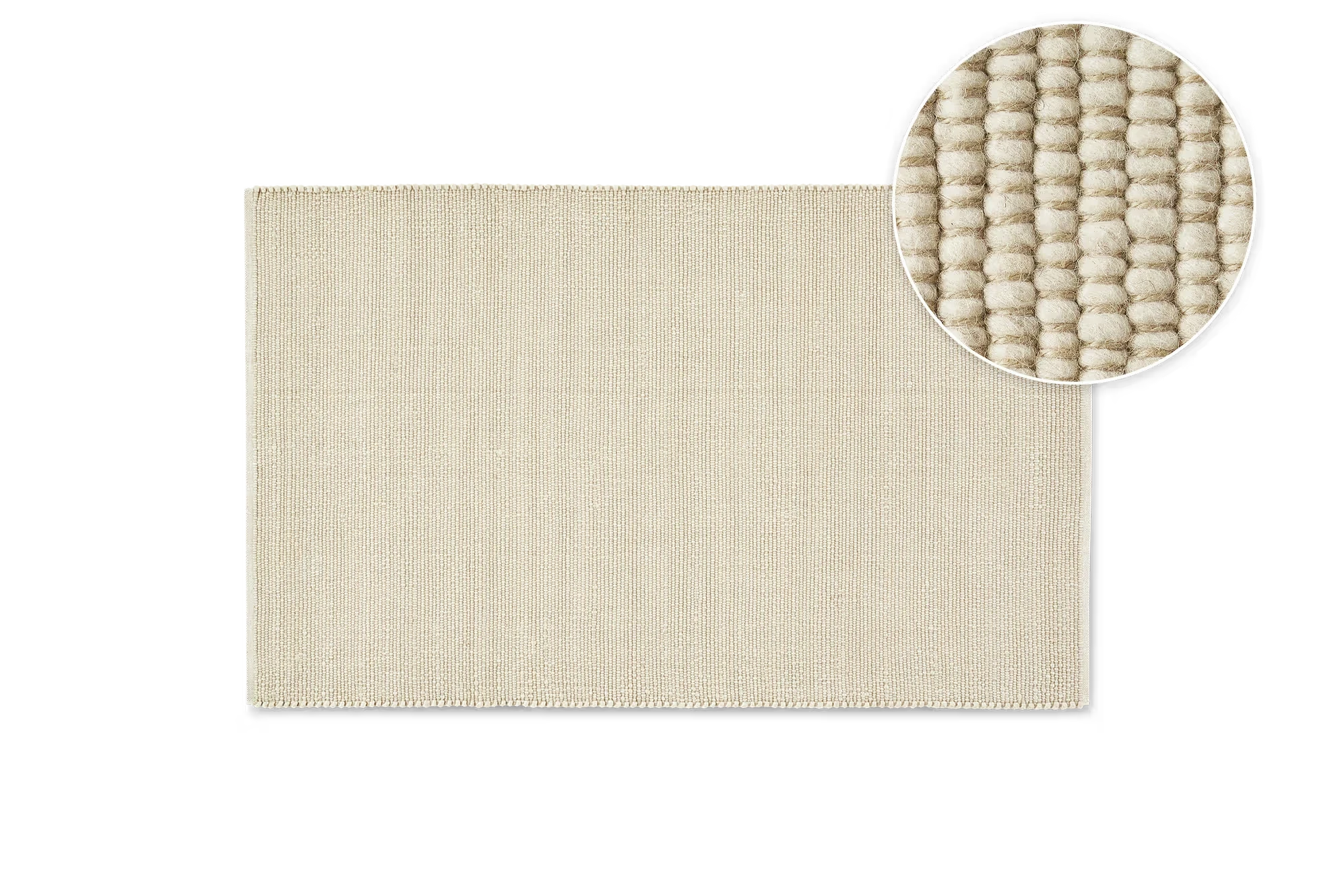
Jute and natural fibre rugs bring a warm, coastal texture that works in relaxed Scandi or bohemian schemes. They feel firmer underfoot than wool, so pair them with a quality sofa that provides the softness your feet miss. Be aware that jute absorbs moisture and stains more readily than wool -- not ideal if you regularly eat in the living room.
What Size Rug Do You Need for a Living Room?
For most UK living rooms, a rug between 160x230cm and 200x300cm strikes the right balance between grounding your furniture and leaving enough bare floor to keep the room feeling spacious. The front legs of your sofa and armchairs should sit on the rug as a minimum -- all legs on is even better if the room allows it.
Three sizing rules that work in practice:
Leave 25-45cm of bare floor between the rug edge and the wall. Less than 25cm looks like the rug doesn't quite fit; more than 45cm and it starts to float.
The rug should extend at least 15cm beyond each side of the sofa. A rug narrower than your sofa looks undersized, no matter what the label says.
Round rugs under coffee tables work best at 150-180cm diameter. They soften angular rooms and create a defined conversation zone without competing with rectangular furniture.
For a deeper dive into sizing by room type -- including dining rooms, bedrooms, and hallways -- see our rug size guide.
Room Size | Recommended Rug Size | Works With |
|---|---|---|
Small (under 15 sqm) | 120x170cm or 160x230cm | 2-seater sofa, single armchair |
Medium (15–25 sqm) | 160x230cm or 200x290cm | 3-seater sofa, armchair, coffee table |
Large (over 25 sqm) | 200x300cm or 240x340cm | Corner sofa, multiple seating zones |
Common mistake: buying a rug that is too small. A 120x170cm rug under a 3-seater sofa creates an awkward island effect. When in doubt, go one size up -- a slightly too-large rug always looks more intentional than one that barely reaches your furniture.
How to Choose a Rug Colour for Your Living Room
Neutral rugs outsell every other colour for good reason -- they adapt as your room evolves. In our current collection, beige, cream, and grey account for over 40% of available living room rugs. But playing it safe does not mean playing it bland.
Start with your sofa. A dark sofa (navy, charcoal, forest green) benefits from a lighter rug to create contrast and lift the room. A light or neutral sofa gives you freedom to go bolder underfoot -- a green velvet sofa paired with a warm ochre or terracotta rug creates depth without clashing.
The 60/40 rule applies to rugs too. If 60% of your room's colour comes from walls and larger furniture, let the rug contribute to the remaining 40% -- either by echoing an accent colour already present or by introducing a new tone that ties smaller accessories together. For more on this principle, see our guide to scale and proportion.
Colours trending in UK living rooms right now:
Earthy neutrals (sand, oatmeal, warm grey) -- the safest long-term investment, especially in wool
Green (sage, olive, forest) -- the most popular non-neutral in our collection, with over 140 green rugs available at time of writing
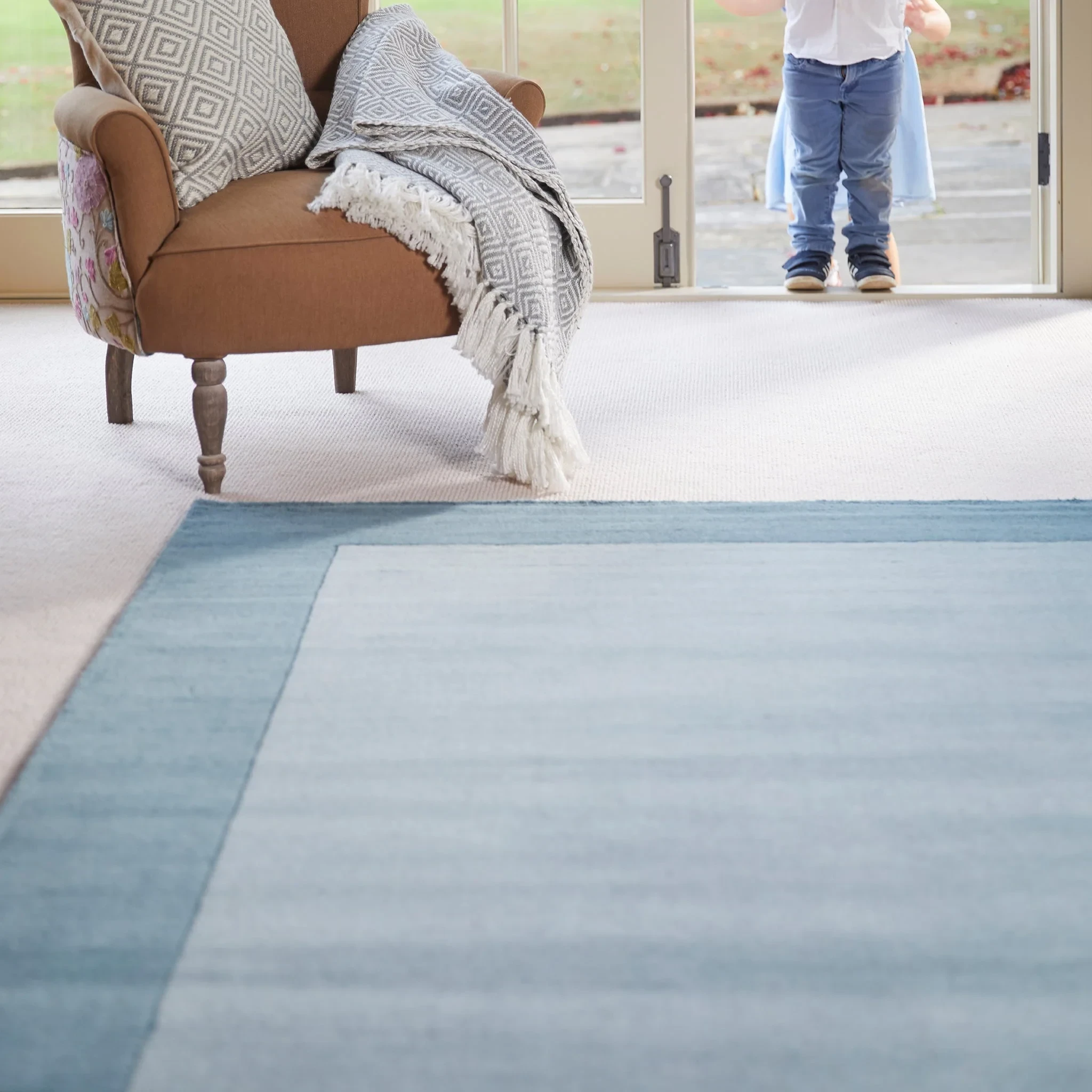
Blue (duck egg, navy, teal) -- 130 options in our catalogue, and a reliable partner for warm wood tones
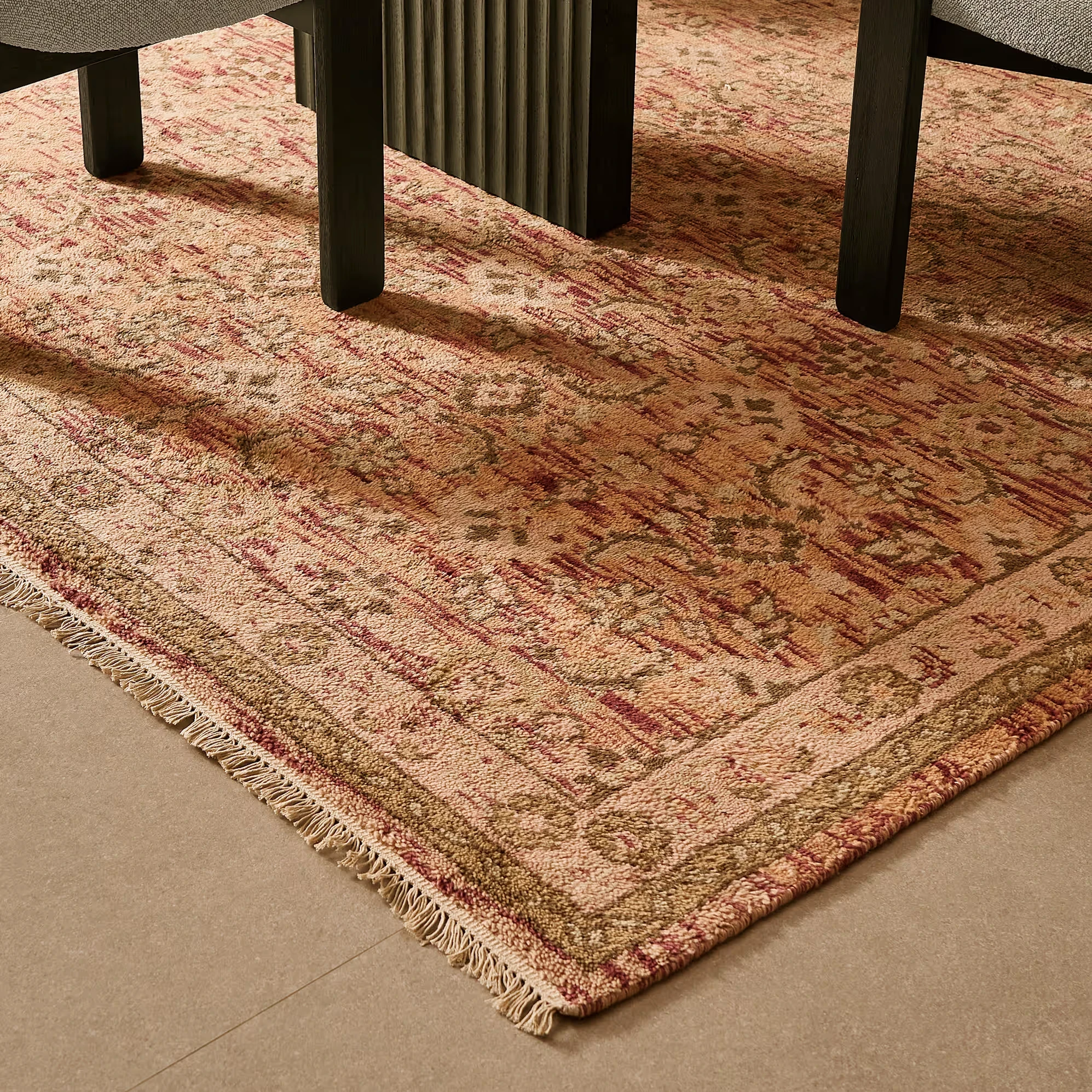
Warm tones (terracotta, rust, ochre) -- bringing organic warmth that pairs well with natural materials like oak and rattan
Wool vs Recycled Rugs: Which Is Worth the Money?
Wool rugs cost more upfront but last significantly longer than synthetic alternatives. A well-made wool rug can serve a living room for 15-20 years with proper care, while polypropylene and recycled PET rugs typically show visible wear after 3-5 years of daily use.
In our current collection, budget rugs (under £50) are almost exclusively polypropylene or recycled materials, while the mid-range (£100-£500) splits between wool blends and premium synthetics. Pure wool dominates the premium tier above £500.
The case for recycled PET rugs. If you have young children, messy pets, or simply prefer a rug you can throw in the washing machine, recycled PET is hard to beat for practicality. These rugs are made from recycled plastic bottles, resist stains and moisture, and cost a fraction of wool. At time of writing, we list over 150 recycled material rugs starting from around £30.
The case for wool. Wool's natural properties -- flame resistance, stain repellence, sound absorption, and temperature regulation -- make it the material of choice for a rug you plan to keep for more than five years. It also ages better, developing a patina rather than looking worn.
Factor | Wool | Recycled PET / Polypropylene |
|---|---|---|
Lifespan | 15-20 years | 3-5 years |
Comfort | Warm, cushioned | Firm, practical |
Maintenance | Spot clean, professional clean yearly | Machine washable |
Environmental impact | Biodegradable, renewable | Made from recycled waste |
Price (typical 160x230cm) | £200-£800 | £28-£160 |
Best for | Longevity, comfort, investment | Practicality, families, budget |
How to Style a Rug in Your Living Room
A rug is only as good as its relationship with the furniture around it. Here are the principles that separate a well-styled room from one where the rug feels like an afterthought.
Layer for depth. Place a smaller, textured rug (sheepskin, Berber, or a bold pattern) on top of a larger neutral base rug. This adds visual interest without committing your entire floor to a single statement. Layering works especially well in open-plan living spaces where you need to define separate zones.
Match pile height to use. Low-pile and flatweave rugs sit cleanly under coffee tables and dining chairs -- legs won't wobble and crumbs won't disappear. High-pile rugs belong in the conversation area where bare feet appreciate the softness.
Consider the furniture arrangement. In an L-shaped sofa setup, the rug should extend under both arms of the L. For a sofa-and-armchair arrangement facing each other, a rectangular rug that reaches all seats unifies the grouping. Our guide to arranging living room furniture covers layout principles in more detail.
Use pattern scale wisely. Small geometric patterns recede and make a room feel larger. Large-scale abstracts or botanicals draw the eye and work best in rooms with simple, solid-colour furniture. If your sofa is already patterned, keep the rug neutral. If your sofa is plain, the rug is your chance to introduce visual interest at floor level.
How to Care for Your Living Room Rug
A living room rug takes more daily wear than any other soft furnishing in the house. Proper maintenance extends its life and keeps it looking as considered as the day you unrolled it.
Weekly: Vacuum on a low suction setting. High suction pulls fibres from wool and loop-pile rugs, causing premature shedding. Avoid the beater bar on delicate weaves.
Monthly: Rotate your rug 180 degrees. This distributes wear and sun exposure evenly, preventing one end from fading or flattening faster than the other.
Immediately on spills: Blot (never rub) with a clean cloth. For wool rugs, cold water and a mild detergent work for most stains. For polypropylene and recycled PET, warm soapy water is usually sufficient.
Annually: Professional cleaning for wool rugs. Machine-washable rugs can be cleaned at home, but check the manufacturer's weight limit for your washing machine -- a wet 160x230cm rug is heavier than you expect.
Underlay matters. A non-slip underlay (around £10-£30) prevents the rug from creeping on hard floors, reduces wear on the rug's backing, and adds an extra layer of cushioning underfoot. It is one of the most cost-effective upgrades you can make.
Browse Rugs on MeetFelix
MeetFelix brings together rugs from boutique UK retailers in one place -- over 800 options at time of writing, from machine-washable everyday rugs to hand-knotted wool investment pieces. Browse living room rugs, explore by material like wool rugs or jute rugs, or start with all rugs and filter from there.
Frequently Asked Questions
What is the best type of rug for a living room?
Wool is the best all-round material for a living room rug. It is naturally stain-resistant, warm underfoot, flame-retardant, and lasts 15-20 years with basic care. For households that need machine-washable options, recycled PET or polypropylene rugs offer good durability at a lower price point, though they will need replacing sooner.
How big should a living room rug be?
A living room rug should be large enough for the front legs of your sofa and chairs to sit on it, with 25-45cm of bare floor visible between the rug edge and the walls. For most UK living rooms, that means a rug between 160x230cm and 200x300cm. A rug that is too small is the most common styling mistake -- when in doubt, size up.
Should a rug be lighter or darker than the sofa?
Contrast generally works better than matching. A dark sofa (charcoal, navy, deep green) pairs well with a lighter rug to lift the room and create visual breathing space. A light or neutral sofa gives you more freedom -- you can go lighter for a calming, tonal scheme or darker for a grounding effect. The key is to avoid the rug and sofa being the exact same shade, which flattens the room.
Are wool rugs worth the money?
Yes, if you plan to keep the rug for more than five years. A 160x230cm wool rug typically costs £200-£800, compared to £28-£160 for a comparable synthetic. But wool lasts three to four times longer, feels warmer underfoot, and ages more gracefully. Over a ten-year period, a single wool rug often costs less than replacing two or three synthetic ones.
Can you put a rug on carpet in a living room?
Yes, but choose a low-pile or flatweave rug rather than a thick shag or high-pile design. A thin rug on top of carpet creates definition and adds pattern without causing a tripping hazard. Use a rug-to-carpet gripper pad underneath to prevent bunching. Avoid rubber-backed rugs on carpet, as the rubber can trap moisture and damage the carpet fibres beneath.
How do you stop a rug from slipping on a wooden floor?
A non-slip underlay is the most reliable solution. These thin pads (typically 2-5mm thick) sit between the rug and the floor, gripping both surfaces without adhesive. They cost £10-£30 depending on size and also protect the floor from scratches. For smaller rugs, anti-slip rug tape applied to the corners works as a budget alternative.

