

Walnut Furniture UK: How to Choose Pieces That Stand the Test of Time
Walnut is the connoisseur's hardwood. Darker and more distinctive than oak, with a grain that ranges from sweeping curves to tight cathedral patterns, it brings warmth and character that few other timbers can match. In our current collection, MeetFelix lists 191 walnut pieces from 7 UK retailers -- spanning dining tables, desks, coffee tables, beds, sideboards, and seating -- priced from £159 to over £4,400. American black walnut accounts for 121 of those pieces, and for good reason: it is the variety that furniture makers consistently reach for when quality matters. This guide covers what separates good walnut furniture from great, how it compares to oak, and what to look for at every price point.
Whether you are building a room around a single statement piece or furnishing an entire home in walnut, the choices you make at the buying stage will determine how the wood looks and performs for decades.
What Makes Walnut Different From Other Hardwoods
Walnut sits in a class of its own among furniture timbers. It is a medium-density hardwood -- softer than oak but harder than pine -- with a Janka hardness rating of around 1,010 for American black walnut compared to roughly 1,360 for European white oak. That makes it easier for craftspeople to shape and join, which is partly why you see such refined detailing on walnut furniture.
The grain is where walnut truly distinguishes itself. Unlike oak's prominent ray flecks or ash's long, straight lines, walnut grain undulates and swirls. Two boards cut from the same log can look entirely different. This means every walnut table, desk, or sideboard has its own visual fingerprint.
Colour is the other defining trait. Fresh-cut walnut heartwood ranges from rich chocolate brown to a warm purplish-black, while the sapwood (the lighter outer wood) runs pale cream. Over time, walnut lightens slightly and develops a golden warmth -- the opposite of oak, which darkens with age.
Property | American Black Walnut | European White Oak | Mango Wood |
|---|---|---|---|
Janka Hardness | ~1,010 | ~1,360 | ~1,070 |
Grain Pattern | Sweeping, irregular | Prominent ray flecks | Varied, sometimes figured |
Heartwood Colour | Chocolate to purple-brown | Honey to golden brown | Golden to dark brown |
Ageing Direction | Lightens over time | Darkens over time | Darkens slightly |
Typical UK Price Range | ££–£££ | ££–£££ | £–££ |
Sustainability | FSC-certified available | Widely available | Fast-growing, sustainable |
If you are weighing walnut against oak, our oak furniture buying guide covers that timber in detail, and our mango wood guide is worth reading if you want a similar warmth at a lower price point.
American Black Walnut vs European Walnut: Which to Choose
In our current collection, 121 out of 191 walnut pieces use American black walnut specifically, making it the dominant variety in UK boutique furniture by a wide margin. Understanding the difference matters because the two are not interchangeable.
American black walnut (Juglans nigra) is the standard for contemporary furniture making. It grows abundantly in the eastern United States, particularly in states like Indiana, Missouri, and Ohio. The heartwood is consistently dark, the grain is workable, and supplies are reliable enough to keep prices stable. Most UK furniture makers who specialise in walnut -- including Konk, who account for 127 of our walnut pieces -- use American black walnut exclusively.
European walnut (Juglans regia), sometimes called English walnut or common walnut, is lighter in colour with more varied figuring. It tends to be more expensive and harder to source in furniture-grade sizes because European walnut trees are typically grown for their nuts rather than their timber. You will encounter it more often in antique furniture and bespoke joinery than in production furniture.
What to ask before buying: If a listing simply says "walnut" without specifying the variety, ask the retailer. Walnut veneer and walnut-effect finishes are also common in the mid-market -- these are different products entirely. Solid American black walnut and walnut veneer on engineered board are both valid choices, but they come with different price points, repairability, and longevity.
!['Signature' Dining Table [Walnut]](https://zpeqbrudpqjbpfhmntcb.supabase.co/storage/v1/object/public/product-images/konk-furniture/konk-furniture-signatured-mjc1mool/original/bccb73b6f5f1.webp)
The Konk Signature dining table in American black walnut is a good example of what solid walnut craftsmanship looks like at the mid-range -- clean lines, visible grain, and a design that lets the timber do the talking.
Walnut Furniture Room by Room: What to Look For
The best room for a walnut investment piece is whichever room you use most -- a dining table you eat at daily will justify its price faster than a sideboard in a spare bedroom. Priorities shift depending on where the piece will live, so here is what to consider for the categories where we see the strongest selection.
Dining Tables
Walnut dining tables are the single largest category in our collection, with 29 options from brands including Konk, Castlery, and Tikamoon. Prices start around £900 for a four-seater and reach over £3,400 for live-edge or extendable designs.
What to check: table thickness (solid walnut tops are typically 25-40mm), leg construction (look for mortise and tenon joints rather than bolted metal brackets), and whether the top is single-piece or book-matched panels. Book-matching -- where two adjacent boards are opened like a book to create a symmetrical grain pattern -- is a hallmark of quality.
For a dining table that will host daily use, solid walnut is worth the investment over veneer. A well-made solid walnut dining table will outlast multiple sets of chairs. Browse walnut dining tables to see the full range.
Desks
We list 15 walnut desks, many combining American black walnut tops with raw steel or matt black metal frames -- a pairing that suits both home offices and open-plan living spaces. Prices range from around £1,300 to £1,500 for solid walnut options.
The mid-century modern aesthetic dominates here, which makes sense: walnut's warm tones and clean grain complement the tapered legs and minimal hardware that define mid-century design. If you are furnishing a home office, our desk buying guide covers sizing and ergonomics in detail.
![Classic Wooden Desk [Walnut]](https://zpeqbrudpqjbpfhmntcb.supabase.co/storage/v1/object/public/product-images/konk-furniture/konk-furniture-classicwoo-mjbzo55q/original/8f9d2ecafcc5.webp)
Coffee Tables
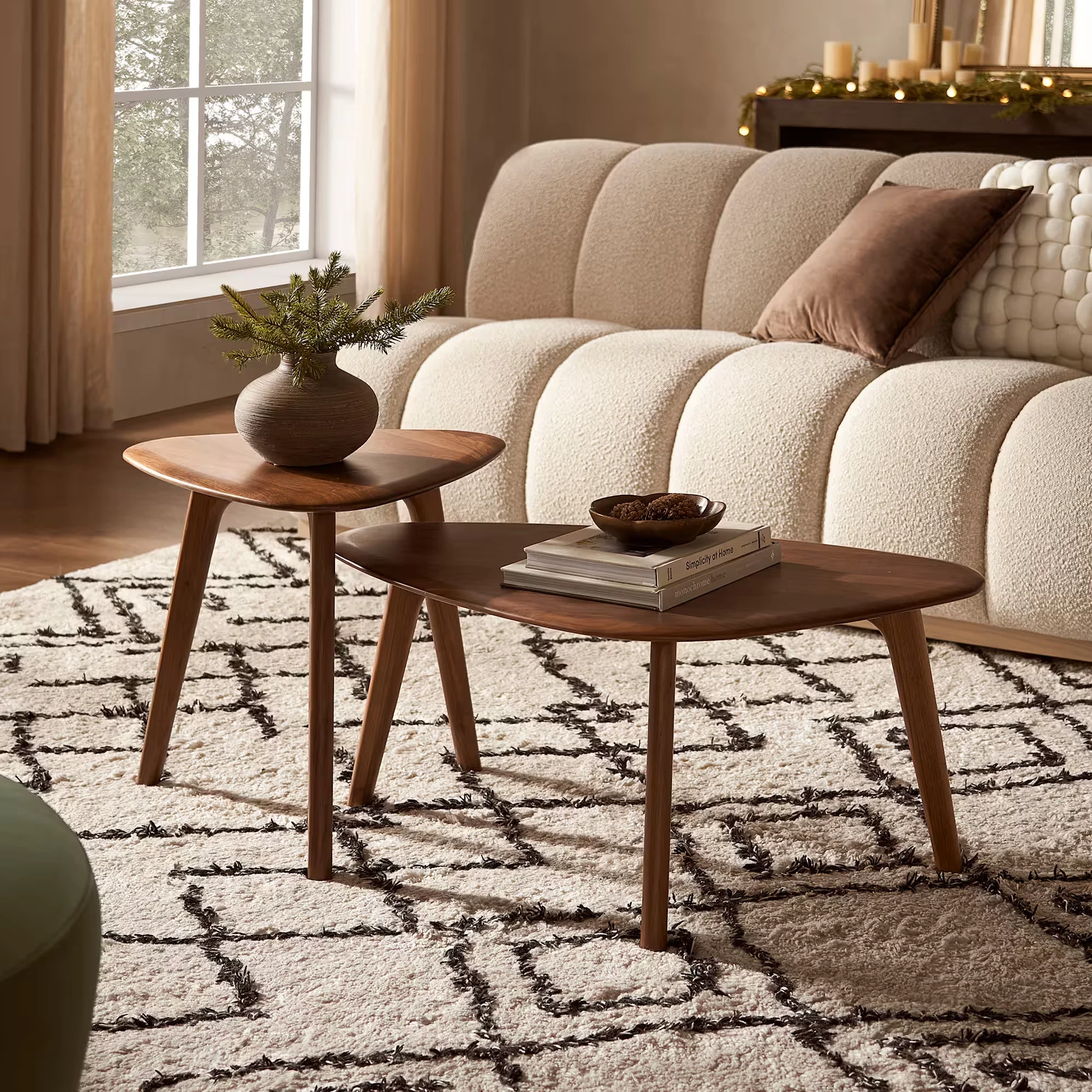
With 17 options in our current collection, walnut coffee tables range from £349 for a Castlery nesting set to £1,599 for a Konk solid walnut and steel design. Nesting tables are particularly useful if you need flexibility -- stack them when the room needs space, spread them when you are entertaining.
For coffee tables, pay attention to the finish. Walnut's open grain means it absorbs liquids quickly if left unsealed. A good oil or lacquer finish protects the surface without masking the grain. Our coffee table buying guide covers shape and sizing for different room layouts.
Beds and Bedroom Furniture
Walnut beds (9 options from £1,899) and chests of drawers (12 options from £800) bring a cocooning warmth to bedrooms that lighter timbers cannot replicate. The dark tones work especially well in rooms with white or neutral walls, creating contrast without needing bold paint colours.
For bedroom pieces, check drawer construction carefully. Dovetail joints on drawers are a reliable quality marker. Also look at the back panel -- if it is a thin sheet of MDF or hardboard, the piece is using walnut as a decorative surface rather than a structural material. That is not necessarily a problem at lower price points, but you should know what you are paying for.
Storage and Sideboards
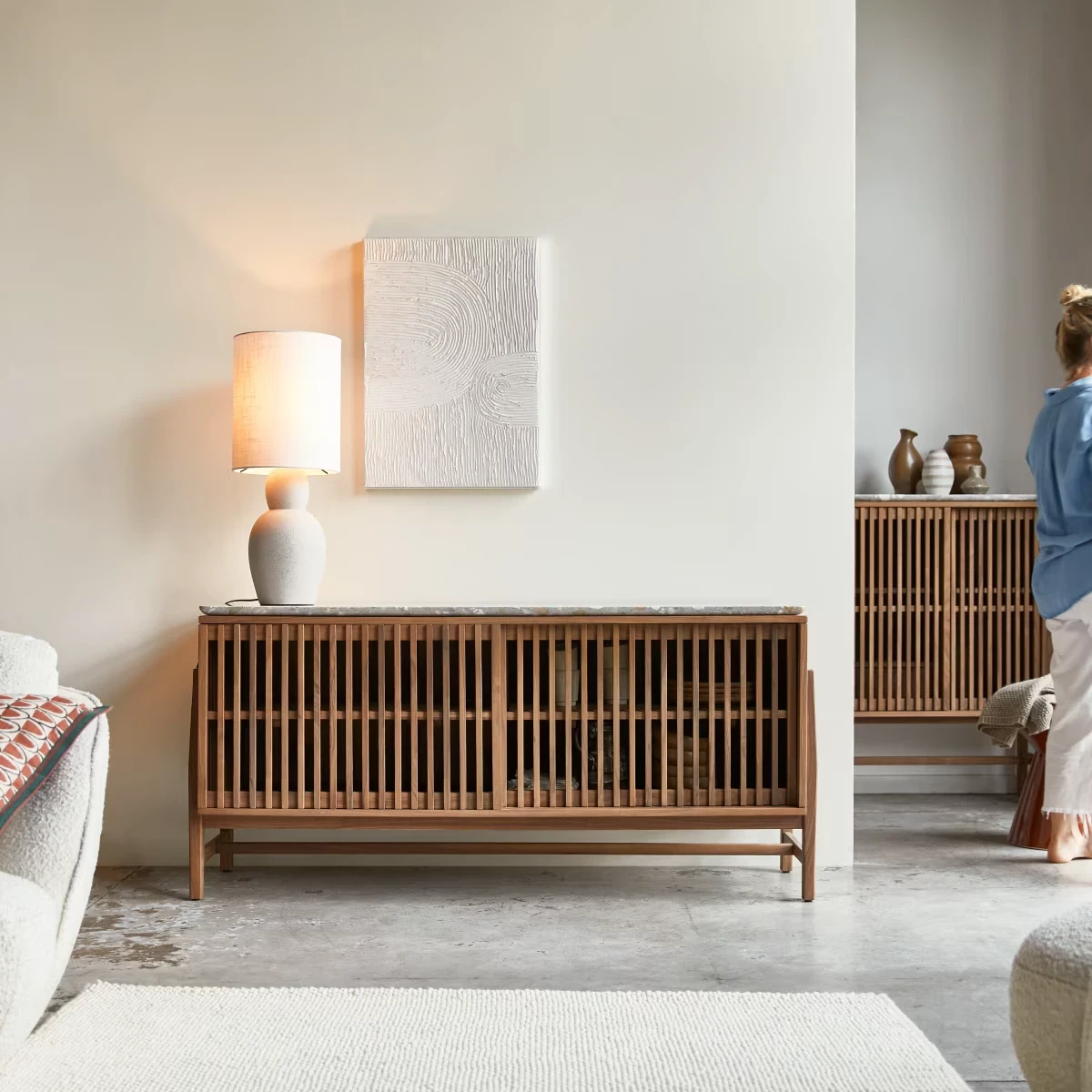
Walnut sideboards from makers like Tikamoon start around £1,600 for solid walnut construction. The Isaure sideboard combines walnut with premium terrazzo for a contemporary look, while more traditional options keep the focus on the timber itself.
At time of writing, we list 41 storage pieces in walnut -- including sideboards, cabinets, TV stands, and shelving units. Browse walnut storage furniture to compare options.
Solid Walnut vs Walnut Veneer: When Each Makes Sense
The price gap between solid walnut and walnut veneer is significant, and it is worth understanding why before deciding which to buy.
Solid walnut means the structural components -- top, legs, frame -- are made from walnut timber throughout. This is what you get from makers like Konk, and it is what commands the highest prices. A solid walnut dining table can be sanded and refinished multiple times over its lifetime, gaining character rather than losing it.
Walnut veneer uses a thin slice of real walnut (typically 0.5-1mm) bonded to an engineered board substrate. Brands like Castlery use walnut veneer on some pieces to keep prices accessible while maintaining the look. Veneer gives you the authentic grain and colour, but it cannot be sanded aggressively and repairs are more limited.
Walnut-effect or walnut-look finishes are printed laminates -- avoid these if you want real wood. They may resemble walnut at a distance but lack the depth, texture, and ageing characteristics of the real thing.
Construction | Price Range (Dining Table) | Repairability | Lifespan | Best For |
|---|---|---|---|---|
Solid American black walnut | £1,200–£3,500+ | Fully repairable, can sand and refinish | 30–50+ years | Investment pieces, daily-use furniture |
Walnut veneer on engineered board | £500–£1,500 | Minor repairs possible, limited sanding | 10–20 years | Bedrooms, guest rooms, lighter use |
Walnut-effect laminate | £150–£500 | Not repairable | 3–10 years | Temporary or budget furnishing |
How to Care for Walnut Furniture
Walnut rewards thoughtful care with decades of service. The wood is naturally resistant to decay, but the finish needs attention.
Daily care. Wipe with a soft, dry cloth. For sticky marks, dampen the cloth slightly -- never soak walnut with water. Avoid silicone-based polishes, which build up and dull the surface over time.
Protecting the finish. Use coasters and placemats religiously. Walnut's open grain absorbs moisture faster than denser woods like oak. If your piece has an oiled finish, it will need re-oiling every 6-12 months with a furniture-grade oil (Danish oil or hard wax oil work well). Lacquered pieces need less maintenance but are harder to repair if damaged.
Dealing with scratches. Light scratches on oiled walnut can often be buffed out with fine steel wool (0000 grade) and a fresh coat of oil. For deeper scratches, a walnut kernel rubbed along the scratch can mask the damage -- the natural oils in the nut darken the exposed wood.
Sunlight. Walnut lightens with UV exposure. If you place a walnut dining table near a window, it will develop uneven colour over time unless you rotate items on the surface or use UV-filtering window treatments. This lightening is natural and considered part of the wood's character, but it is worth knowing about before you position a piece.
Humidity. Solid walnut expands and contracts with seasonal humidity changes. In centrally heated UK homes, winter humidity can drop below 30%, causing potential cracking. A room humidity of 40-60% is ideal. If you notice gaps appearing at joints in winter, they will typically close again in spring.
Where to Buy Walnut Furniture in the UK
In our current collection, seven retailers offer walnut furniture, each with a different focus.
Konk dominates with 127 walnut pieces, specialising in solid American black walnut with clean, contemporary designs. Their range spans dining tables, desks, beds, coffee tables, and storage. Konk is the go-to for anyone wanting solid walnut throughout -- no veneer, no shortcuts.
Castlery offers 21 walnut pieces at more accessible price points, often using walnut veneer on engineered board for the body and solid walnut for visible surfaces. Their Vincent coffee table set at £349 is one of the most affordable walnut-finish options in the collection.
Six The Residence contributes 19 pieces with a focus on seating and upholstered furniture with walnut frames -- benches, dining chairs, and accent chairs.
Nkuku and Tikamoon each offer 10 pieces, with Tikamoon focusing on solid walnut sideboards and storage, and Nkuku blending walnut stains with other timbers like acacia and mango wood for a more eclectic range.

The Nkuku Triveni side table in walnut stain offers the walnut aesthetic at £250 -- a good entry point if you want to test the look before committing to a larger piece.
Start Comparing Walnut Furniture Across UK Retailers
Whether you are after a solid American black walnut dining table or a walnut-veneer desk that fits a tighter budget, MeetFelix lets you compare options from Konk, Castlery, Tikamoon, Nkuku, and more -- side by side, with real prices. Browse all walnut furniture, explore walnut dining tables, or discover walnut desks for your home office.
Frequently Asked Questions
Is walnut furniture worth the price?
Solid walnut furniture typically costs 20-40% more than equivalent oak pieces because the timber is less abundant and takes longer to reach usable sizes. For a piece you will use daily for 20+ years -- a dining table, desk, or bed frame -- the cost per year makes walnut a reasonable investment. In our current collection, solid walnut dining tables start around £1,200 from Konk, while comparable solid oak tables start around £800. The premium buys you a darker, more distinctive grain and a wood that lightens gracefully over time rather than darkening.
How does walnut compare to oak for furniture?
Walnut and oak are both excellent furniture hardwoods with different strengths. Oak is harder (Janka 1,360 vs walnut's 1,010), making it more resistant to dents and scratches -- better for households with young children. Walnut has a richer, darker colour and more varied grain patterns. Oak darkens with age while walnut lightens. Both accept oils and finishes well. The choice often comes down to aesthetic preference: oak for a lighter, more traditional look; walnut for warmth and visual depth.
What is the difference between American black walnut and European walnut?
American black walnut (Juglans nigra) is darker, more consistently grained, and more widely available in furniture-grade sizes. European walnut (Juglans regia) is lighter in colour with more varied figuring, and is less commonly used in production furniture because the trees are typically grown for nuts. In the UK furniture market, "walnut" almost always means American black walnut unless stated otherwise -- 121 of the 191 walnut pieces in our collection specify this variety.
How do you stop walnut furniture from fading?
Walnut lightens with UV exposure rather than fading -- the rich chocolate tones gradually shift towards a warmer golden brown. You can slow this process with UV-filtering window treatments, by keeping pieces away from direct sunlight, and by rotating objects on surfaces so the lightening happens evenly. Some owners embrace the change as part of the wood's natural ageing. If you prefer to maintain the original dark colour, a quality UV-resistant furniture oil can help.
Can you mix walnut furniture with oak?
Mixing walnut and oak works well when done intentionally. The contrast between walnut's dark tones and oak's lighter honey colour creates visual interest. The key is committing to the contrast rather than trying to match -- pair a walnut dining table with oak chairs, or use walnut side tables alongside an oak sideboard. Keep the room's undertones consistent (both woods are warm-toned) and avoid mixing too many additional wood species, which can look uncoordinated. Our materials guide covers how to mix timbers effectively.
How long does walnut furniture last?
A well-made solid walnut piece will last 30-50 years with proper care, and many antique walnut pieces are still in daily use after centuries. The main variables are construction quality (look for dovetail joints, mortise and tenon joinery, and solid timber throughout) and maintenance (regular oiling for oiled finishes, coasters on dining and coffee tables, and stable humidity levels). Walnut veneer pieces on engineered board have a shorter functional lifespan of 10-20 years, after which the veneer may wear through at high-contact points.

