

Best Modular Sofas UK: How to Choose the Right One for Your Living Room
A modular sofa lets you build exactly the layout your room needs -- and rebuild it when your life changes. Unlike fixed-frame sofas, modular systems use individual sections that clip, bolt, or slot together, so you can start with a two-seater and add a chaise or corner piece later. In our current collection, we compared 62 modular sofas from three UK boutique retailers, priced from £899 to over £5,100, in performance fabric, linen, and top grain leather. This guide covers how modular sofas actually work, what to check before you buy, and which configurations suit different room sizes.
What Makes a Sofa "Modular" and Why It Matters
A modular sofa is built from separate, self-contained units -- typically an armless seat, a corner piece, a chaise, and sometimes an ottoman -- that connect to form a single sofa. The key difference from a standard corner sofa is reconfigurability: you can rearrange, add, or remove sections without replacing the whole piece.
This matters for three practical reasons. First, individual modules fit through narrow doorways and up tight staircases that would block a conventional three-seater. Second, you can start with a smaller configuration and expand as your budget or room allows. Third, if one section wears out or gets damaged, you replace that module rather than the entire sofa.
Most modular systems use one of three connection methods:
Connection Type | How It Works | Stability | Ease of Rearranging |
|---|---|---|---|
Clip/bracket | Metal clips lock modules together underneath | High -- minimal shifting | Moderate -- need to flip sections |
Velcro strip | Industrial-strength hook-and-loop on base | Moderate -- can shift on hard floors | Easy -- pull apart and reposition |
Weighted/friction | Heavy bases sit flush, held by gravity and rubber feet | Lower -- may drift on smooth floors | Very easy -- just slide |
Clip-bracket systems, used by brands like Castlery, offer the firmest hold. Velcro systems are more common in flat-pack designs. Friction-based systems work best on carpet or with a rug underneath.
How to Size a Modular Sofa for Your Room
For rooms under 18 square metres, a two-seat modular with an ottoman or single chaise keeps proportions balanced without overwhelming the space. For rooms between 18 and 25 square metres, a three-seat configuration with a corner or chaise section works well. Above 25 square metres, a full U-shape or L-shape with four or more modules fills the space without looking lost.
Measure your room, then apply these spacing rules:
Walkways: Leave at least 90cm between the sofa and any wall, table, or opposite furniture for comfortable passage.
Coffee table gap: 40-45cm between the sofa edge and a coffee table allows people to sit and stand without awkwardness.
TV distance: Position the sofa at roughly 1.5 times the screen's diagonal measurement from your television.
Module depth: Most modular seats are 90-100cm deep. Factor this into your floor plan -- a corner configuration typically needs at least 240cm along each wall.
One advantage of modular systems: you can order individual units to test proportions in your space before committing to the full configuration.
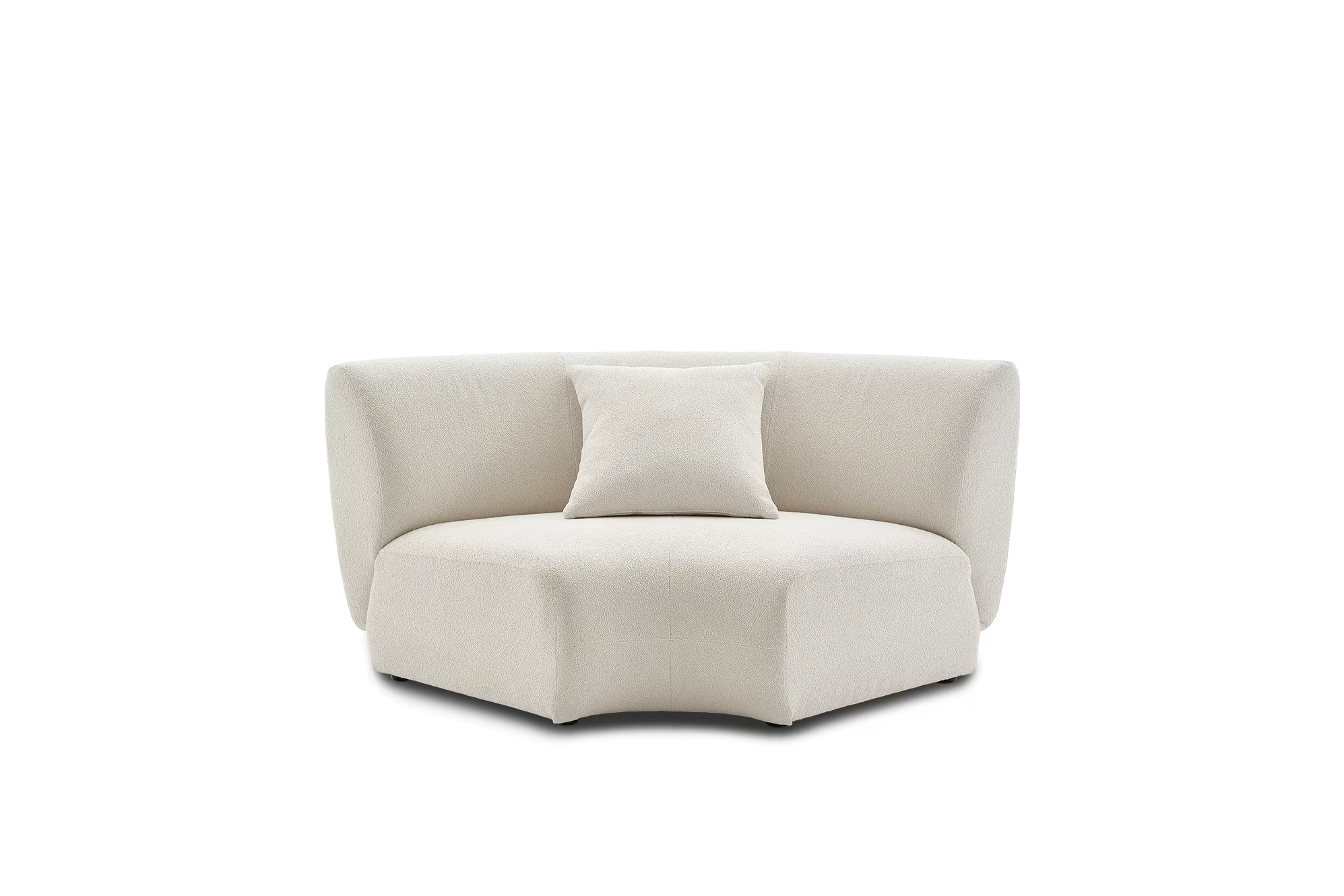
The Castlery Auburn starts at £899 for a curve corner configuration, making it one of the more accessible entry points into modular seating. Its performance fabric is rated for 50,000 rub cycles, and the curved shape works well in smaller living rooms where a sharp L-shape would feel cramped.
Materials and Upholstery: What Holds Up
The fabric or leather you choose determines how a modular sofa ages, cleans, and feels. In our current collection of 62 modular sofas, performance fabric accounts for roughly half the options, with linen blends, cotton, and top grain leather making up the rest.
Performance fabric is the practical choice for family homes. It resists staining, cleans easily with a damp cloth, and typically rates above 40,000 rub cycles on the Martindale abrasion test. Castlery's performance polyester and Loaf's house fabrics both fall into this category. The trade-off is texture -- performance fabrics can feel slightly synthetic compared to natural fibres.
Linen and linen blends offer a softer, more natural hand feel with visible texture. They crease and rumple, which suits relaxed, lived-in interiors. The downside: linen stains more easily and often needs professional cleaning. If you have young children or pets, linen is a considered gamble.
Top grain leather develops a patina over time and is surprisingly easy to maintain -- wipe down with a damp cloth and condition twice a year. Across our catalogue, Castlery's Jaron and Jonathan ranges offer modular leather options from £1,449 to £4,219. Leather modular sofas suit homes without sharp-clawed pets.
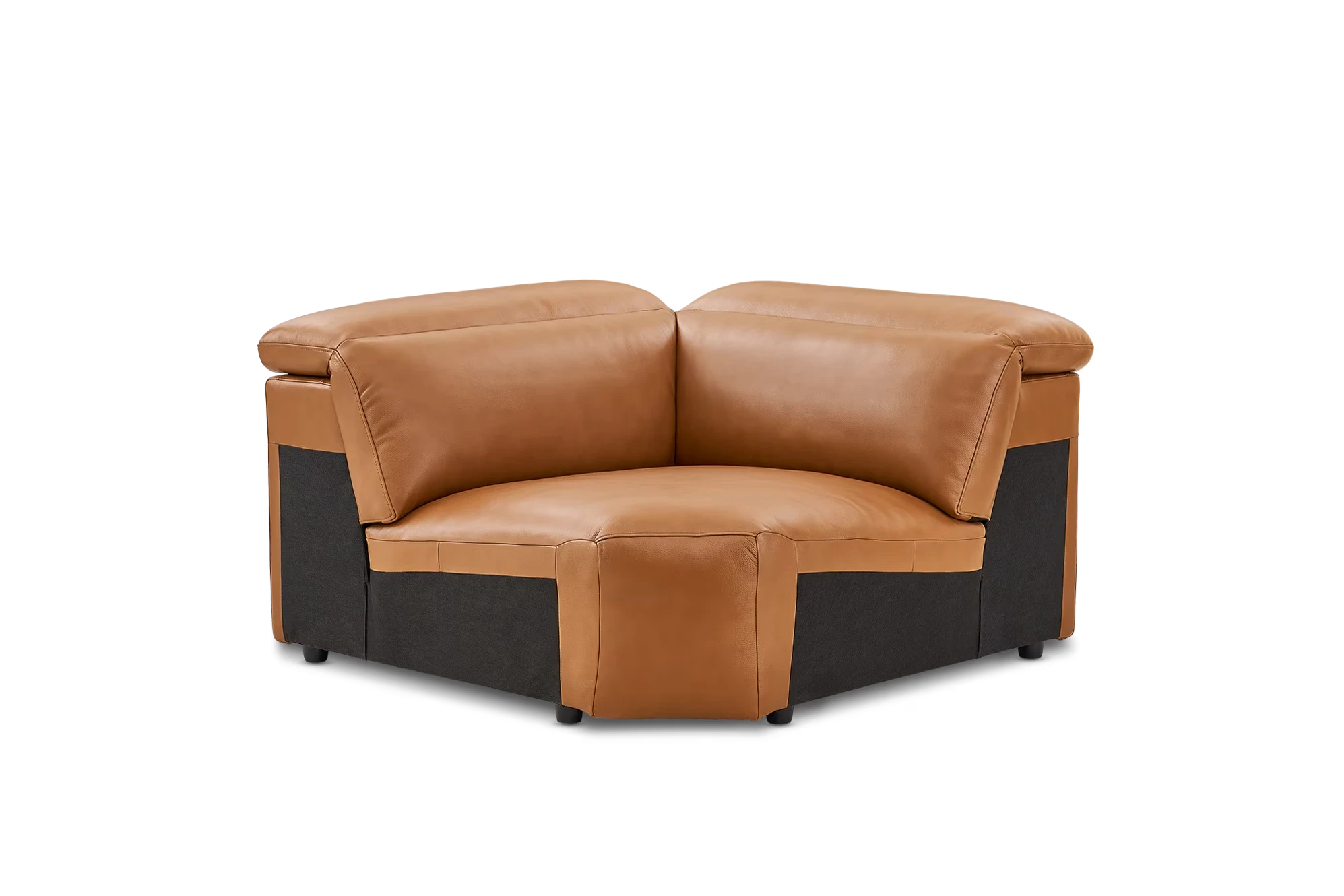
The Castlery Jaron in cocoa top grain leather is one of the few modular corner sofas available in genuine leather under £1,500 from UK boutique retailers. The leather will soften and develop character over two to three years of regular use.
Frame construction matters as much as upholstery. Look for kiln-dried hardwood or engineered wood frames rather than softwood or particleboard. Pocket-sprung seat cushions hold their shape better than foam-only fillings over time. Several Castlery models combine foam with pocket springs, while Loaf uses fibre-wrapped foam in many of their modular ranges.
Configurations Worth Considering
Modular sofas come in more shapes than the standard L. Here are the most common configurations and who they suit:
The L-Shape (Corner Modular)
The most popular configuration, and the one most people picture when they think "modular sofa." One long arm with a perpendicular chaise or corner section. It defines a seating area in open-plan rooms and provides enough space for three to four people.
In our current collection, corner modular sofas range from £899 for the Castlery Auburn to £5,145 for the Loaf Blockbuster with footstool.

The Castlery Mori at £1,099 is a clean-lined corner modular in performance fabric, available in natural and alpine colourways. Its compact footprint (around 230cm along the longer side) makes it a practical choice for medium-sized living rooms.
The U-Shape
Two corner sections create a three-sided seating area. This works in rooms over 25 square metres where you want to create a conversation pit or cinema-style setup. U-shapes seat five to seven people comfortably but need careful placement -- they can dominate a room if the proportions are off.
The Straight (No Corner)
A simple two or three-seat modular without corner pieces. Choose this when your room layout works better with a sofa against one wall rather than wrapping around a corner. Straight modulars still offer the doorway advantage and future expandability.
The Curved
An emerging option that suits rooms with rounded architectural features or central placement away from walls. The Castlery Auburn's curve corner design is a good example -- gentler angles create a more sociable seating arrangement than a sharp 90-degree corner.
What to Spend: A Price Guide by Budget
Modular sofas span a wide price range, and what you get at each level differs meaningfully. Here is how the market breaks down across the retailers in our collection:
Budget Tier | Price Range | What You Get | Example |
|---|---|---|---|
Entry | £895--£1,100 | Individual modules or compact corner configs. Performance fabric, engineered wood frames, foam cushions | OKA Alora chaise unit (£895), Castlery Auburn corner (£899) |
Mid-range | £1,100--£2,500 | Full corner or chaise configurations. Better frame construction, pocket springs, leather options | Castlery Mori corner (£1,099), Castlery Jaron leather (£1,449), Loaf Wodge (£2,445) |
Premium | £2,500--£5,200 | Large corner or U-shape configs. Feather-wrapped cushions, kiln-dried hardwood frames, wider fabric choice | Loaf Cuddlemuffin (£2,845), Loaf Blockbuster corner (£5,145) |
At the entry level, Castlery and OKA offer modular systems where you can buy individual pieces from around £595 per unit, building up over time. At the premium end, Loaf's modular ranges -- the Cuddlemuffin, Blockbuster, Wodge, and Squishblocks -- offer deep comfort with feather or fibre-wrapped cushions and a choice of over 100 fabrics.
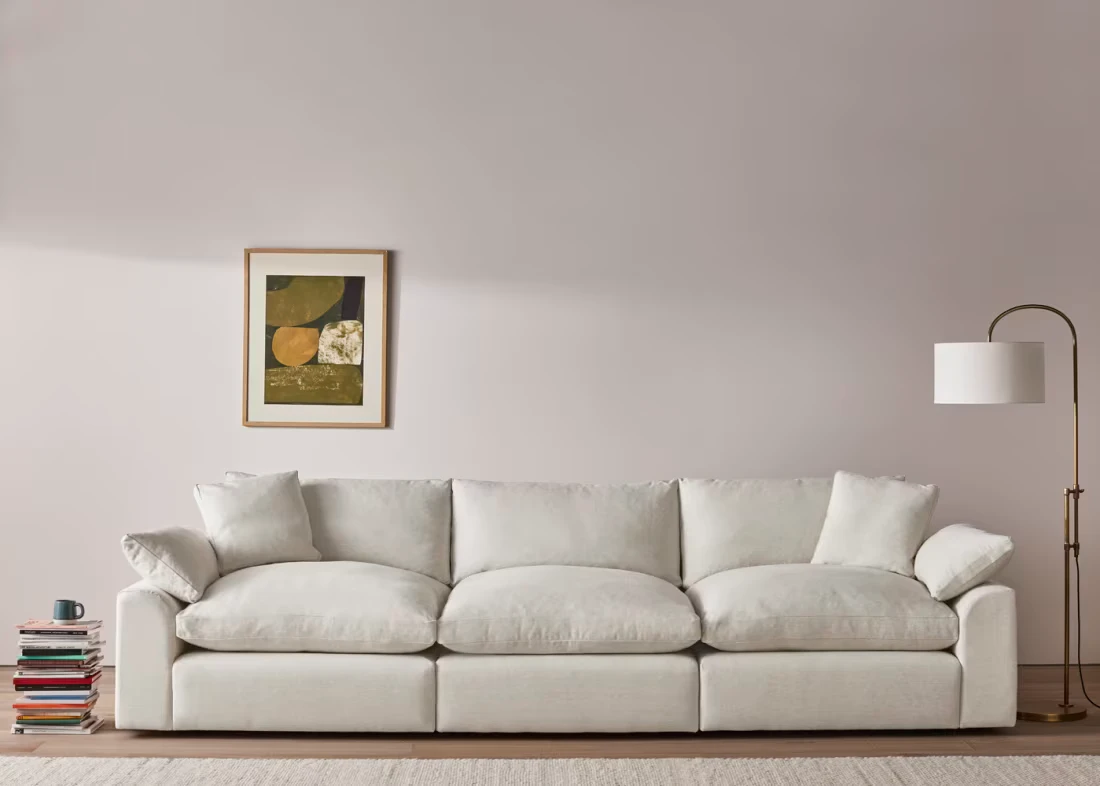
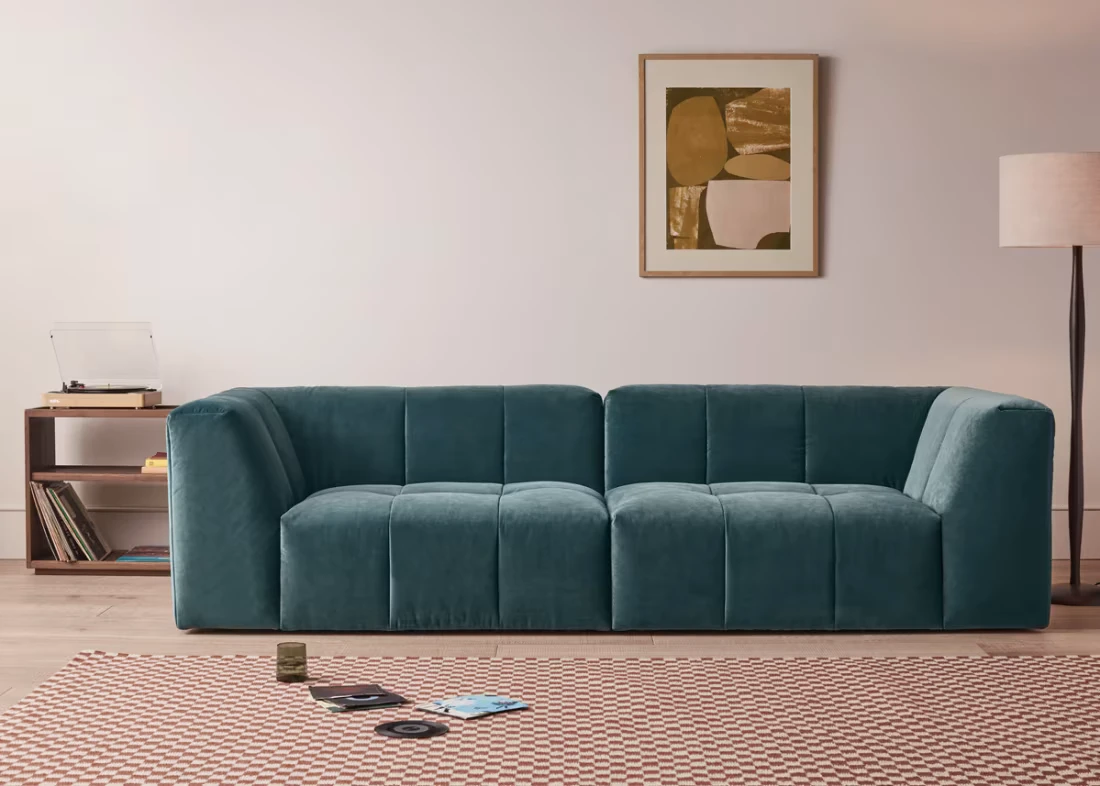
The Loaf Cuddlemuffin (£2,845, left) and Top of the Blocks (£3,095, right) represent two different approaches to premium modular seating. The Cuddlemuffin prioritises deep, sink-in comfort with rounded arms. The Top of the Blocks has a more architectural, block-shaped profile that suits contemporary interiors.
Build-Your-Own Systems: The OKA Approach
Some modular ranges sell each unit individually, letting you design a sofa to your exact room dimensions. In our current collection, OKA's Alora system works this way -- armless units at £595, corner units at £795, and chaise sections at £895.
This buy-by-the-piece approach has two advantages. First, you can create non-standard configurations: a three-seat straight sofa with a chaise at both ends, or an asymmetric L-shape with a longer arm on one side. Second, you spread the cost across multiple purchases rather than committing to one large order.
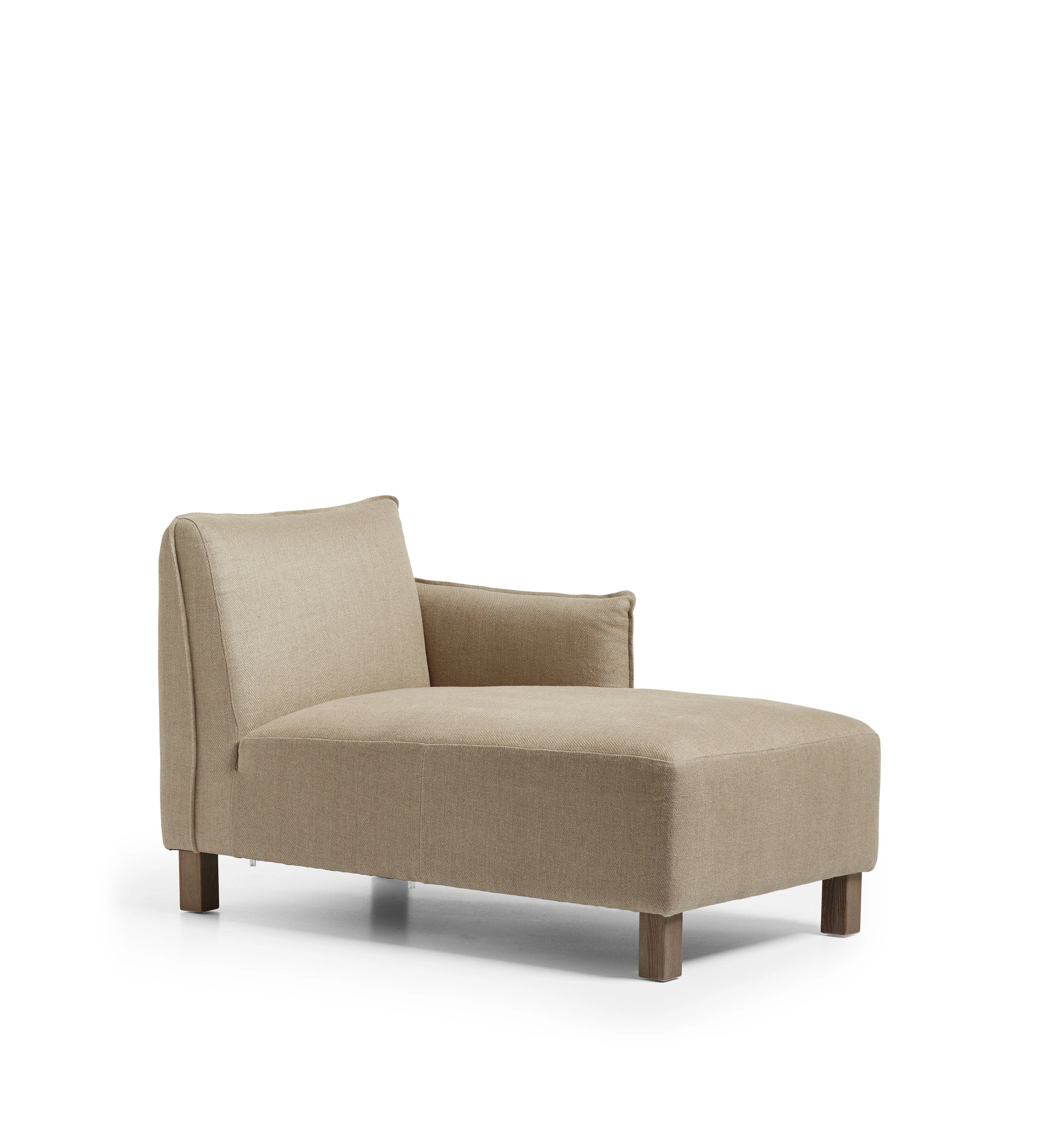
The OKA Alora chaise unit in Wild Oats Wide Herringbone fabric is one piece in a system designed for custom configurations. At £895, it works as a standalone daybed or connects to other Alora modules for a full corner setup.
The drawback: buying units individually can cost more per seat than purchasing a pre-configured set. Work out the total cost of your planned configuration before ordering piece by piece.
Care, Maintenance, and Longevity
A well-maintained modular sofa should last eight to twelve years. The modular format has a built-in longevity advantage: if one section shows wear before others, you can replace that module alone or rotate sections to even out use.
Weekly: Plump and rotate loose cushions. Vacuum upholstery with a soft brush attachment to prevent dust settling into the weave.
Monthly: Check connection points between modules. Clip-bracket systems may need occasional tightening. Velcro strips can collect lint -- press them back firmly after vacuuming.
Seasonally: Rotate modules if one section gets significantly more use (the seat nearest the TV, usually). Condition leather upholstery with a specialist leather balm twice a year.
Stain response: For performance fabrics, blot immediately with a clean damp cloth -- do not rub. For linen, sprinkle bicarbonate of soda on wet stains before they set, then vacuum after 20 minutes. For leather, wipe with a barely damp cloth and dry immediately.
Sunlight: Position modular sofas away from direct, prolonged sunlight. UV exposure fades fabric unevenly, and because modules may receive different amounts of light, colour mismatches can develop over time.
Browse Modular Sofas on MeetFelix
MeetFelix brings together modular sofas from boutique UK retailers so you can compare options, prices, and styles in one place. Browse all modular sofas, explore corner sofa configurations, or discover leather sofas if you want a material that ages well.
FAQ
How many modules do I need for a standard living room?
For a typical UK living room of 18-22 square metres, three to four modules arranged in an L-shape provide comfortable seating for four people without overwhelming the space. Start with a corner unit, two seat units, and a chaise or ottoman -- you can add a fifth module later if the room can handle it.
Can I mix modules from different brands?
No. Module dimensions, seat heights, and connection systems differ between manufacturers. A Castlery armless unit will not connect to a Loaf corner piece. Stick to one brand's system for a cohesive sofa.
Are modular sofas good for small rooms?
Yes, with caveats. A two-module configuration with a single chaise works in rooms as small as 14 square metres, and the ability to fit individual pieces through narrow doorways is a genuine advantage in flats and terraced houses. Avoid U-shapes in rooms under 20 square metres.
Do modular sofas feel as solid as a single-frame sofa?
With clip-bracket connections, the difference is negligible -- most visitors would not notice. Velcro and friction-based systems can shift slightly during heavy use, particularly on hard floors. A rug underneath significantly reduces movement for all connection types.
How long do modular sofas last?
With proper care, expect eight to twelve years from a quality modular sofa. The modular format can actually extend usable life beyond a traditional sofa, because you can replace individual worn sections rather than the entire piece. Frame warranty length is a reasonable proxy for expected lifespan -- look for brands offering five-year or ten-year frame guarantees.
Is a modular sofa worth the higher price?
At comparable quality levels, modular sofas cost 10-20% more than fixed-frame equivalents because of the additional engineering in connection systems and reinforced module frames. The premium is justified if you expect to move house, want to reconfigure your layout over time, or need to navigate tight access routes. If your room layout is settled and access is straightforward, a traditional sofa offers equal comfort for less.

