

Best Coffee Tables UK: A Complete Buying Guide
The right coffee table ties a living room together — anchoring seating, setting proportions, and giving you somewhere to actually put things. The wrong one creates dead space or blocks foot traffic. We compared 92 coffee tables across four UK boutique retailers to help you find a table that earns its place in your room.
This guide covers shape, size, material, and style — with real product data from our current collection, practical sizing rules, and honest advice on what to prioritise at every budget.
How to Choose the Right Coffee Table Size
A coffee table that's too large swallows the room; too small and it looks like an afterthought. The two-thirds rule is the most reliable starting point: your coffee table should measure roughly two-thirds the length of your sofa. For a standard three-seater (200-210cm), that means a table around 120-140cm long.
Height matters just as much. Aim for a table surface within 5cm of your sofa seat height — typically 40-45cm. Any higher and you'll feel like you're reaching up; any lower and the table disappears visually.
Leave at least 40cm between the table edge and the sofa for comfortable leg room, and 80-100cm on walkway sides so people can pass without shuffling.
Sofa Size | Ideal Table Length | Ideal Table Width | Ideal Height |
|---|---|---|---|
2-seater (150-170cm) | 90-110cm | 50-60cm | 38-43cm |
3-seater (200-210cm) | 120-140cm | 55-70cm | 40-45cm |
L-shape/corner | 80-100cm (square or round) | 80-100cm | 40-45cm |
Large sectional (280cm+) | 140-160cm or nesting set | 60-80cm | 40-45cm |
For small living rooms, round tables work harder because they remove sharp corners and improve traffic flow. In our current collection, we list 9 round coffee tables starting from £349.
Coffee Table Materials: What to Expect at Each Price Point
Material determines how a coffee table ages, what it can handle, and how much you'll spend. In our catalogue of 92 coffee tables, solid wood dominates — oak and walnut account for over 40% of options — followed by engineered wood, glass, marble, and metal combinations.
Solid Wood (Oak, Walnut, Acacia, Teak)
Solid wood ages well and can be refinished if scratched. Oak is the most common material in our collection (16 tables), followed by American black walnut (17 tables), and solid acacia (9 tables). Expect ring marks from hot mugs on untreated surfaces — always check whether the finish is oiled, lacquered, or waxed.
Price range in our collection: £299 (Castlery Seb in acacia) to £3,015 (Konk handcrafted oak).
Marble and Stone
Marble and travertine tables make an immediate visual statement. We currently list 8 marble coffee tables, mostly from Castlery, with Carrara marble being the most common stone. Marble is heavy (expect 30-50kg), cold to the touch, and needs sealing to resist stains. It's not the right choice for households with young children.
Price range in our collection: £699 (Castlery Lavine) to £899 (Castlery Harper Marble).
Glass and Metal
Glass opens up sight lines and makes a room feel less cluttered — a useful trick for compact spaces. We list 14 tables with glass elements, often paired with iron or brass frames. Tempered glass is standard and safe, but fingerprints are a daily reality.
Price range in our collection: £223 (OKA Pompidou in glass and metal) to £749 (Castlery Cupid in walnut veneer and tempered glass).
Engineered Wood and Veneer
Engineered wood with a quality veneer offers the look of solid timber at a lower weight and price. It resists warping better than solid wood in centrally heated homes. The trade-off: you can't sand and refinish it if the veneer chips. In our collection, 23 tables use engineered wood, making it the single most common material.
Price range in our collection: £349 (Castlery Vincent nesting set) to £919 (Castlery Hugg nesting set in oak veneer).
Material | Durability | Maintenance | Weight | Best For |
|---|---|---|---|---|
Solid oak | High — refinishable | Oil every 6-12 months | Medium-heavy | Long-term investment, family rooms |
Walnut | High — refinishable | Oil every 6-12 months | Medium | Statement pieces, warm-toned rooms |
Marble | Very high — but stains | Seal annually | Heavy | Adult households, formal living rooms |
Glass | Scratch-resistant | Frequent cleaning | Light-medium | Small rooms, contemporary schemes |
Engineered wood | Medium — not refinishable | Wipe clean | Light | Budget-conscious, rental properties |
Coffee Table Styles: What Works With Your Furniture
Style coherence matters more than following trends. A mid-century coffee table next to a Chesterfield sofa creates tension; the same table with a low-profile linen sofa feels intentional. In our collection of 92 coffee tables, contemporary (89 tables) and modern (81 tables) are the most common style tags, but mid-century modern (63 tables) and Scandinavian (51 tables) are close behind.
Mid-Century Modern
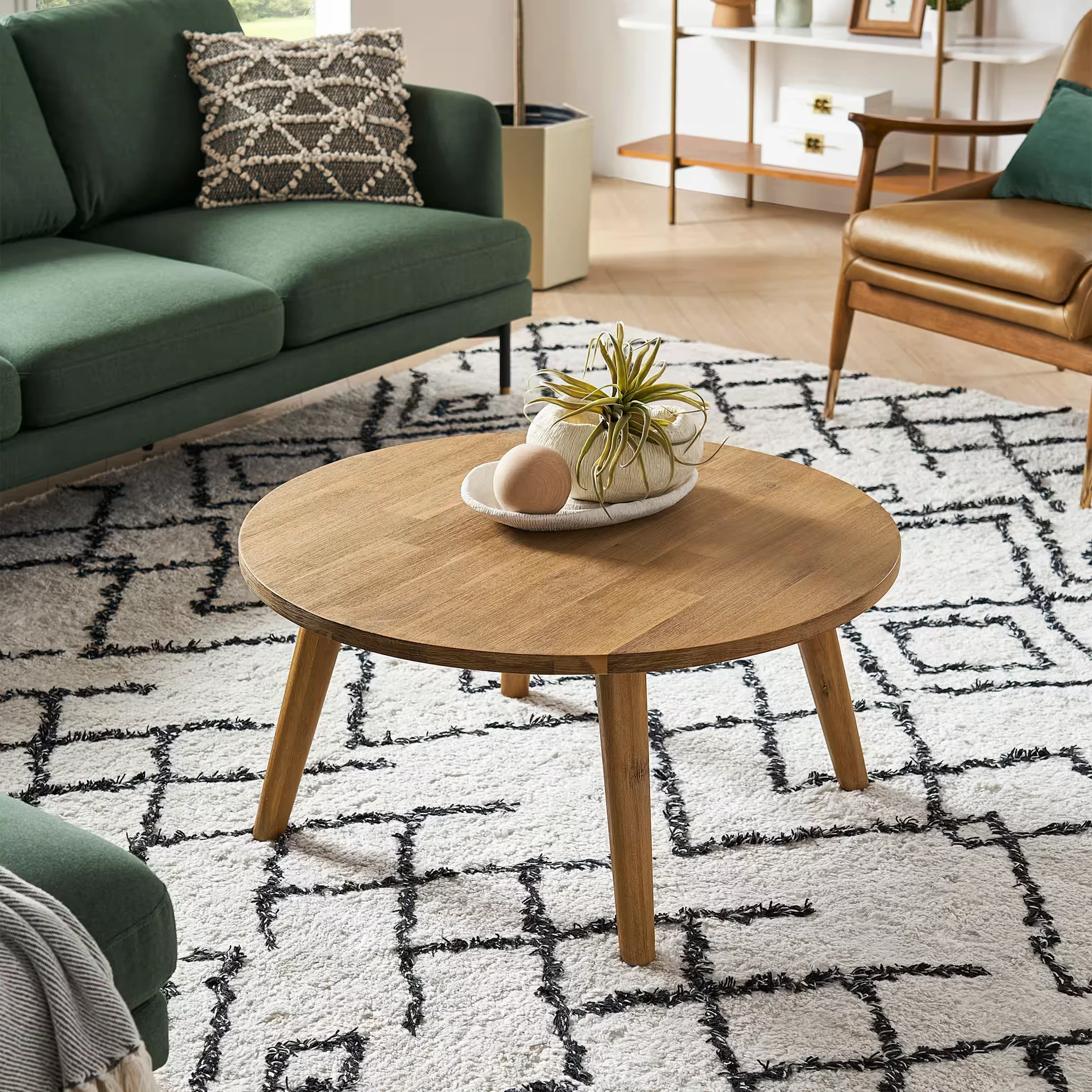
Clean lines, tapered legs, warm wood tones. This is the single most recognisable coffee table style, and our collection reflects the demand — 63 tables carry the mid-century tag. Pairs well with: low-profile sofas, open shelving, statement lighting.
The Castlery Seb range is a strong example at the accessible end: solid acacia wood with splayed legs, available in both round and rectangular shapes, starting at £349.
Scandinavian and Minimalist
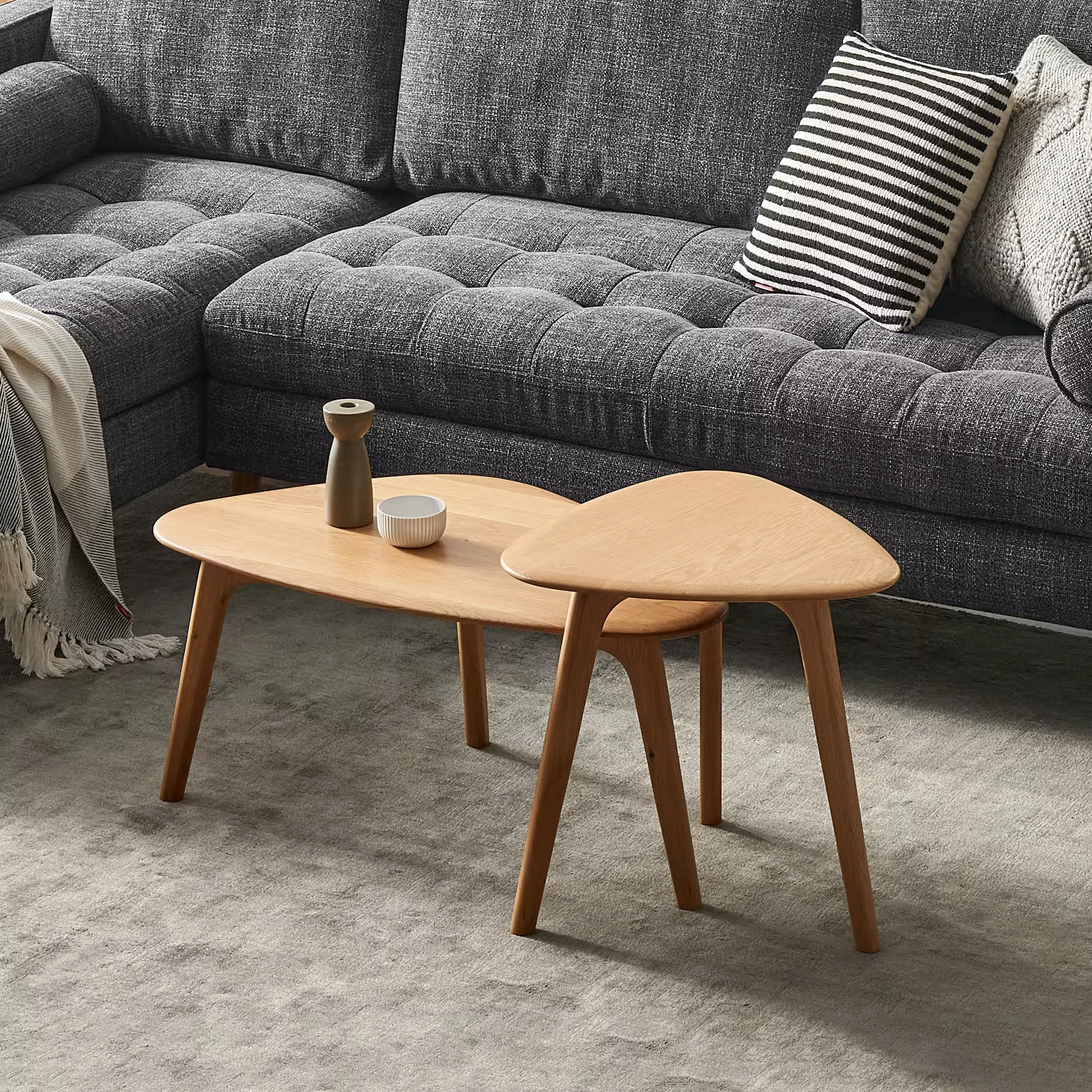
Light wood, simple forms, nothing fussy. Scandinavian-tagged tables (51 in our collection) tend toward oak, pale finishes, and slim proportions that suit smaller rooms. The Castlery Vincent nesting set is a practical example — two oak tables that tuck together when you need floor space, and spread apart for entertaining.
Rustic and Industrial
Chunky timber, metal legs, live-edge slabs. If you lean toward raw textures and imperfect finishes, Konk's handcrafted oak tables are worth considering. Their Waney-Sage in live-edge character oak brings genuine artisan craft — each slab is unique. These tables are statement pieces, not background furniture.
![Waney-'Sage' Coffee Table [Wooden Legs]](https://zpeqbrudpqjbpfhmntcb.supabase.co/storage/v1/object/public/product-images/konk-furniture/konk-furniture-waneysagec-mjc0dppy/original/4e16bd3795b6.webp)
Contemporary and Formal
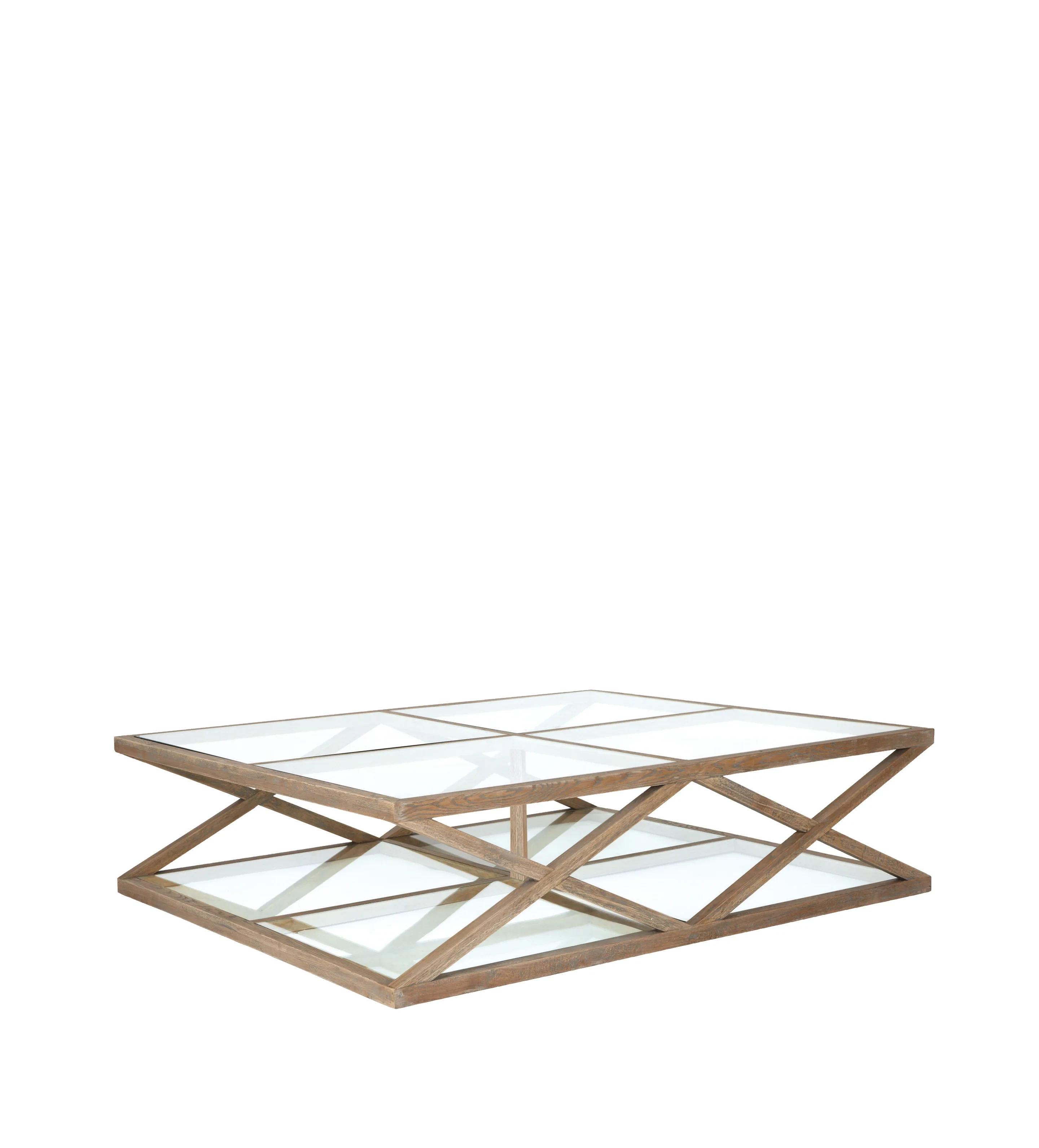
For more refined rooms, marble and glass combinations create a polished look. The OKA Marylebone pairs a solid oak frame with a glass shelf and weathered finish — traditional enough for period homes, clean enough for modern ones.
Round vs Rectangular: Which Shape Suits Your Room
Shape isn't just aesthetic — it changes how the room functions. Rectangular tables work best with standard sofa layouts because they echo the sofa's proportions and create a natural serving surface along its full length.
Round tables suit corner sofas and L-shaped arrangements, where a rectangular table would block one leg of the L. They also work better in rooms where people walk past frequently, since there are no sharp corners to catch a hip on.
Square tables are the compromise: they work with both linear and L-shaped layouts, but offer less surface area than rectangular options of the same footprint.
Shape | Best Sofa Pairing | Room Size | Traffic Flow |
|---|---|---|---|
Rectangular | 3-seater, 4-seater | Medium to large | Moderate — corners can obstruct |
Round | Corner sofa, L-shape, armchair pairs | Any (especially small) | Excellent — no sharp edges |
Square | 2-seater, small L-shape | Small to medium | Good |
Nesting set | Any — flexible | Small (stackable) | Excellent when nested |
Nesting tables deserve a separate mention. In our collection, 8 coffee tables come in nesting sets of two or three. They're the most flexible option for smaller homes — use one for daily life, spread them out when guests visit, and stack them when you need floor space.
Best Coffee Tables Under £500
In our current collection, 21 coffee tables fall in the mid-range price tier, with most under £500. This is where you'll find the strongest value — solid materials, considered design, and enough variety to match most living room schemes.
Here are three standout options at this price point:
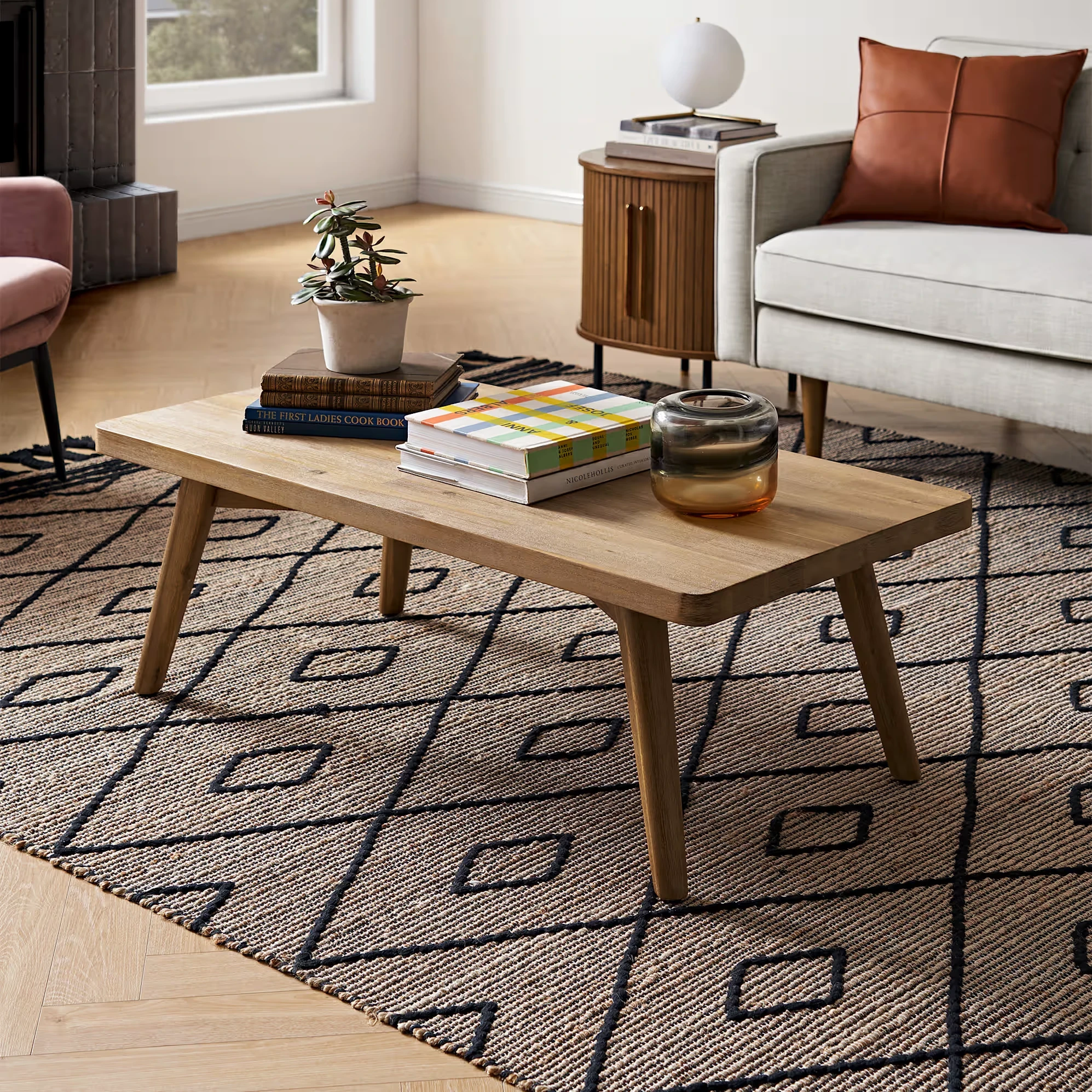
Best for mid-century rooms: The Castlery Seb Rectangular Coffee Table in solid acacia wood. Warm honey tone, splayed legs, and a generous surface at £349. Simple, well-proportioned, and built from solid timber rather than veneer.
Best for small spaces: The Castlery Ripple Coffee Table. Textured tempered glass on a slim metal frame at £299 — it keeps sight lines open and weighs considerably less than wood or marble alternatives. The textured glass hides fingerprints better than smooth glass.
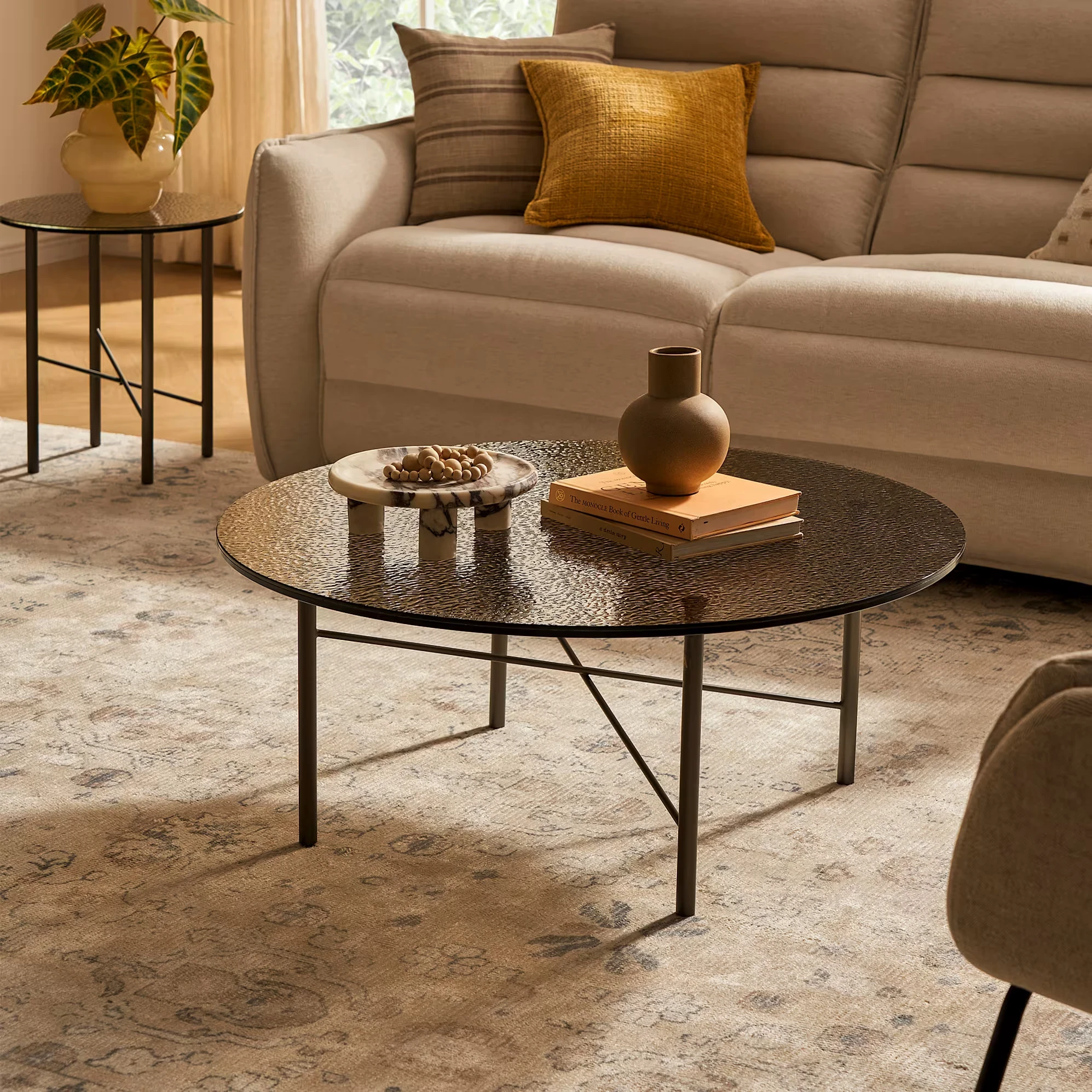
Best for flexibility: The Castlery Vincent Nest of 2 Coffee Tables in oak (£349) or walnut (£349). Two solid wood tables that nest together. Use the larger one daily, pull out the smaller one for entertaining, or separate them either side of a sofa for a less formal arrangement.
For those willing to stretch beyond £500, the Castlery Lavine Marble Coffee Table at £699 offers Carrara marble on a solid wood frame — the look and weight of stone without the four-figure price tag that marble typically commands.
Browse all coffee tables under £500
How to Style a Coffee Table Without Cluttering It
A coffee table should look considered, not decorated. The simplest approach: group items in odd numbers (three or five), vary the heights, and leave at least a third of the surface empty. If you can't set down a mug without moving something, you've overdone it.
The three-layer method:
Something flat — a large book or tray to anchor the arrangement
Something tall — a candle, small vase, or sculptural object for height
Something organic — a small plant, cut stems, or a textured bowl
Trays are particularly useful on round tables, where items tend to migrate toward the centre. A rectangular tray on a round table creates visual contrast and keeps things contained.
For wooden tables, avoid placing items directly on oiled surfaces without coasters or felt pads. Water rings on oak are almost impossible to remove without sanding and re-oiling.
Discover Your Coffee Table on MeetFelix
MeetFelix brings together coffee tables from boutique UK retailers — so you can compare shapes, materials, and prices across multiple brands in one search. In our current collection, we list 92 coffee tables from four retailers, ranging from £223 to £3,015.
Browse all coffee tables, explore marble options, or find round coffee tables to narrow down your shortlist.
Already chosen your sofa? Our complete sofa buying guide covers how to match your coffee table to your seating. And if you're working with a compact room, see our guide to furniture for small spaces for more space-saving ideas.
Frequently Asked Questions
What is the two-thirds rule for coffee tables?
The two-thirds rule states that your coffee table should measure approximately two-thirds the length of your sofa. For a standard 200cm three-seater, aim for a table around 120-140cm long. This proportion creates visual balance without the table overwhelming the sofa or looking undersized. The rule is a guideline, not a law — anything between 50% and 75% of sofa length will work.
Should a coffee table be lower than the sofa?
Yes. A coffee table should sit at or slightly below the height of your sofa seat cushion — typically 40-45cm high. A table that's 2-5cm lower than the seat creates the most comfortable reach for setting down drinks. Higher than the seat feels awkward and looks top-heavy; much lower and items on the table become hard to reach.
What coffee table shape is best for a small living room?
Round or oval coffee tables work best in small living rooms because they eliminate sharp corners, improve foot traffic around the table, and take up less visual space. Nesting tables are another strong option for compact rooms — they tuck together when you need floor space and spread apart for entertaining. In our current collection, we list 9 round and 8 nesting coffee tables.
Is marble a good material for a coffee table?
Marble is durable, heat-resistant, and visually striking, but it comes with trade-offs. It's heavy (30-50kg for a standard coffee table), cold to the touch, and porous — meaning it needs annual sealing to prevent stains from wine, coffee, and acidic liquids. Marble works well in adult households with lower risk of heavy impacts. It's less suitable for families with young children.
How much should you spend on a coffee table?
A well-made coffee table from a UK retailer typically costs between £300 and £1,000. Below £300, you'll mostly find engineered wood or basic glass designs. Between £300 and £700, expect solid wood, quality veneers, or glass-and-metal combinations. Above £700, you'll find marble tops, handcrafted solid timber, and designer pieces. In our current collection of 92 coffee tables, the median price sits around £500-£600.
What are people using instead of coffee tables?
Alternatives to traditional coffee tables include ottoman footstools with flat tops (which double as seating), nesting side tables arranged in a cluster, storage trunks, and large poufs with trays on top. Each alternative trades surface area for a different function — consider what you actually use a coffee table for before replacing it with something less practical.

