

Best Home Office Desks UK: How to Choose the Right One for Your Space
A home office desk shapes how you work, how your room looks, and how long both last. The wrong one wobbles during video calls, eats floor space you cannot spare, or simply fails to match the room it lives in. In our current collection, we compared over 110 home office desks from 8 UK boutique retailers -- in solid oak, walnut, acacia, mango wood, sheesham, teak, and steel -- priced from under £400 to over £4,400. This guide covers what actually matters when choosing a desk: the materials that hold up to daily use, the dimensions that work in real UK rooms, and the styles worth investing in. Browse all home office desks on MeetFelix to see the full range, or read on for our recommendations.
What Size Desk Do You Actually Need?
A desk width of 120cm fits most home offices and comfortably holds a laptop, notebook, and a cup of tea. Go for 140cm or wider if you work with dual monitors or spread papers out regularly. Depth matters just as much -- 60cm is the practical minimum, but 70cm gives your keyboard room to sit at a comfortable distance from your screen.
Standard desk height in the UK is 73-76cm, designed for someone around 175cm tall. If you are significantly shorter or taller, an adjustable-height desk or a keyboard tray can bridge the gap. Your elbows should rest at roughly 90 degrees when typing, and your screen should sit at eye level.
Quick Sizing Guide by Room
Room Size | Recommended Desk Width | Desk Type |
|---|---|---|
Alcove or nook (under 1.5m wide) | 80-100cm | Compact writing desk |
Spare bedroom or box room | 100-120cm | Standard desk with drawer |
Dedicated home office | 120-160cm | Full desk or L-shape |
Shared workspace or studio | 140cm+ | Partner desk or large workstation |
If your room doubles as a guest bedroom or living space, measure the exact corner or wall where the desk will go. Allow at least 70cm of clearance behind the chair for pushing back without hitting anything.
Materials: What Holds Up and What Looks Good
Solid hardwood desks age well and develop character over time. In our current collection, oak and walnut are the most popular desk materials by a wide margin, followed by acacia, mango wood, and teak. Each has a distinct personality.
Oak is the workhorse. Dense, scratch-resistant, and widely available in both natural and fumed finishes, it suits everything from a farmhouse spare room to a modern city flat. We list over 17 oak desks in our collection, starting from around £650 for a solid oak writing desk. If you want a desk that handles a decade of daily use without showing it, oak is the safe choice.
Walnut runs warmer and darker than oak, with a fine grain that reads as more refined. American black walnut is the premium option -- we found 15 walnut desks across our catalogue, often paired with brass or black steel hardware for a mid-century look. Expect to pay more: walnut desks typically start around £800 and climb from there.
Acacia and mango wood offer the warmth of hardwood at a lower price point. Both are sustainably sourced and have a distinctive, characterful grain. Desks in these materials start from £359 in our collection, making them a strong choice if you want solid wood without the solid wood price tag.
Steel frames with wooden tops combine industrial durability with natural warmth. Roughly a third of the desks in our collection use a steel or iron base, which keeps the structure light while adding visual contrast. Look for powder-coated finishes if you want to avoid fingerprints and scuffs.
Material Comparison
Material | Durability | Weight | Starting Price | Best For |
|---|---|---|---|---|
Solid oak | Excellent | Heavy | ~£650 | Long-term investment, traditional or modern rooms |
American black walnut | Excellent | Medium-heavy | ~£800 | Mid-century and contemporary spaces |
Acacia / mango wood | Very good | Medium | ~£359 | Budget-conscious solid wood buyers |
Teak | Excellent | Heavy | ~£440 | Warm, characterful grain; period properties |
Steel frame + wood top | Very good | Varies | ~£400 | Industrial, modern, or compact spaces |
Avoid chipboard or MDF if you plan to keep your desk for more than a few years. Laminated particle board looks adequate in photos but chips at the edges, sags under monitor arms, and cannot be refinished when it wears.
Style: Finding a Desk That Fits Your Room
The dominant desk style in our collection is contemporary, followed by mid-century modern and Scandinavian -- and there is significant overlap between them. All three favour clean lines, tapered legs, and minimal hardware, which means they tend to work in most UK homes regardless of what else is in the room.
Contemporary desks strip things back to essentials. Think slim profiles, straight or gently curved edges, and a focus on the wood grain itself as the decorative element. They pair well with both modern and traditional rooms because they do not compete for attention.
Mid-century modern desks add warmth through angled legs, rounded edges, and often a mix of wood and metal. Walnut is the classic mid-century material, but oak versions work just as well if your room leans lighter. In our catalogue, mid-century desks account for nearly half of all desk listings.
Industrial desks lean on raw steel frames, exposed hardware, and darker wood tones. They suit loft conversions, warehouse-style spaces, and rooms where you want the furniture to feel grounded rather than delicate. We found 35 desks with industrial styling in our collection, often combining reclaimed-look wood with matte black metalwork.
Scandinavian desks share mid-century's love of clean lines but push further toward simplicity -- lighter woods, slimmer profiles, and an almost architectural restraint. If your room already has a lot going on, a Scandinavian desk provides a calm workspace without adding visual noise.
Desks with Drawers vs. Open Desks
Storage changes the character of a desk entirely. A desk with drawers becomes a self-contained workstation -- stationery, notebooks, cables, and chargers all disappear from view. An open desk stays visually light but demands separate storage nearby.
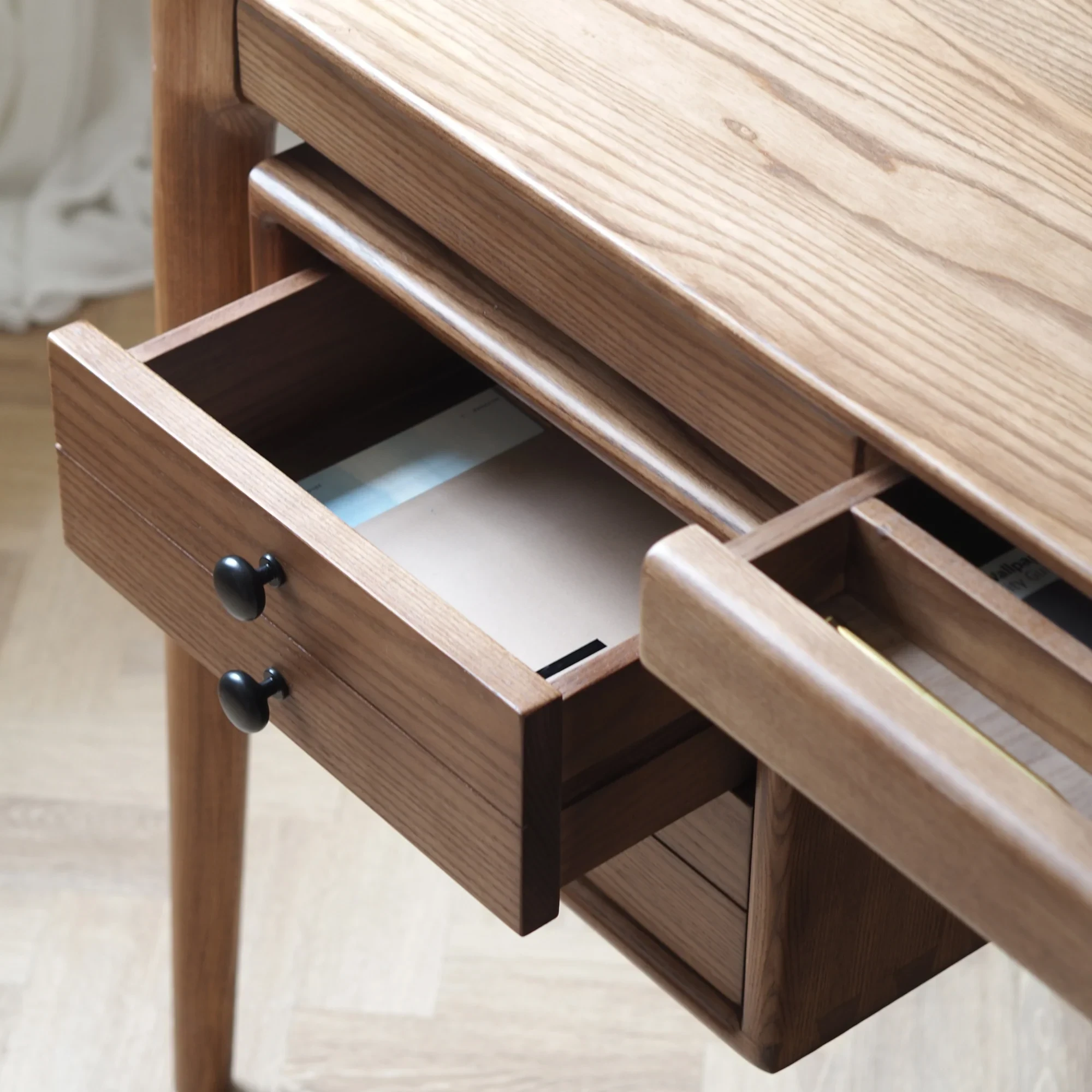
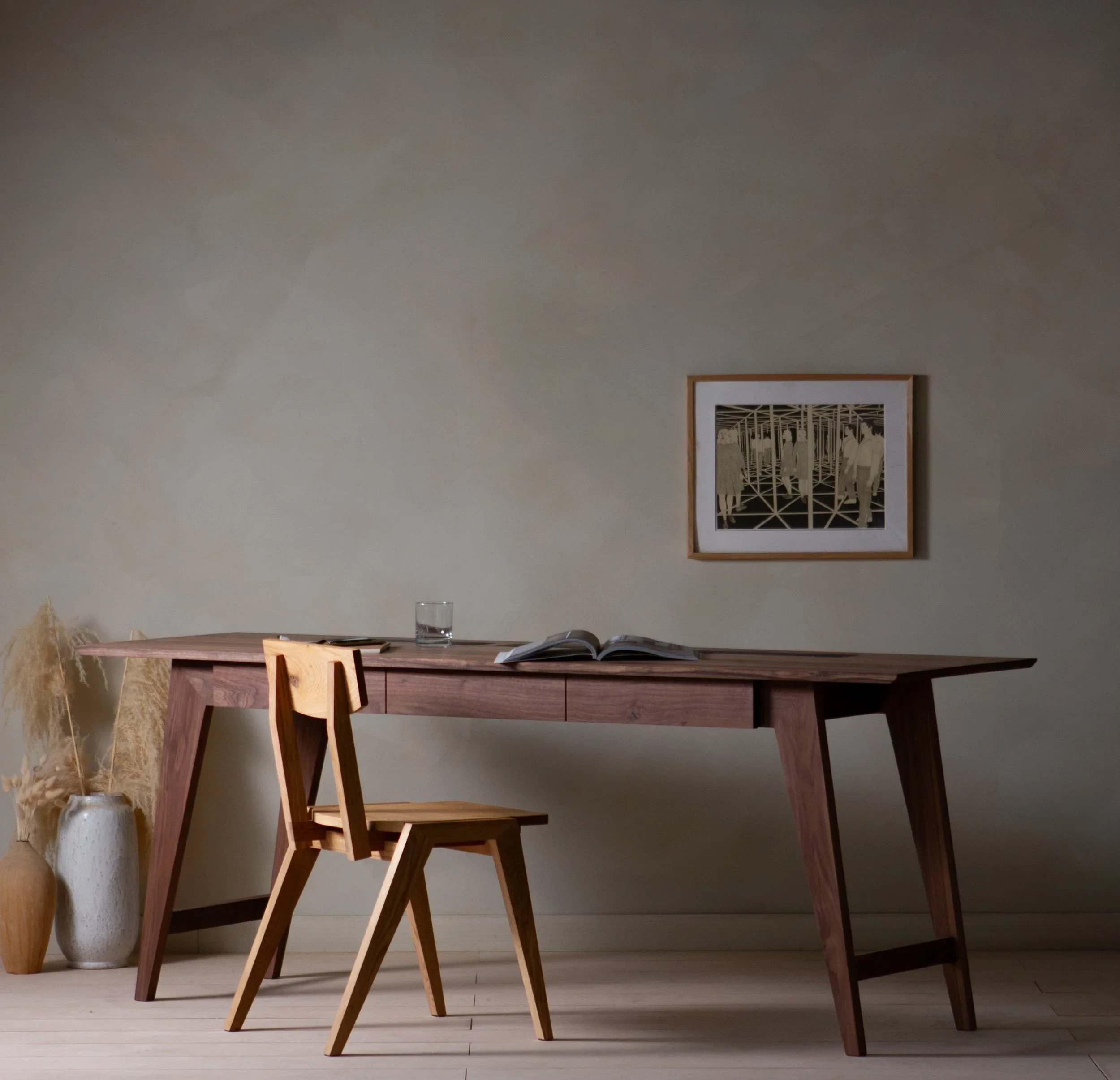
Choose drawers if you work from home full-time, need to store documents, or share a room where desk clutter is visible from the sofa. Look for at least two drawers -- one shallow for pens and cables, one deeper for notebooks and files.
Choose open if your desk sits in a dedicated room, you prefer wall-mounted shelving for storage, or you want the desk to feel like a piece of furniture rather than office equipment. Open desks also tend to cost less and look less imposing in small rooms.
A middle ground: desks with a single drawer or a small cupboard. These give you just enough hidden storage for the essentials without the bulk of a full pedestal.
Standing Desks and Adjustable Options
Adjustable-height desks have moved from niche ergonomic product to mainstream choice. They let you alternate between sitting and standing throughout the day, which most physiotherapists recommend for anyone working eight hours at a desk.
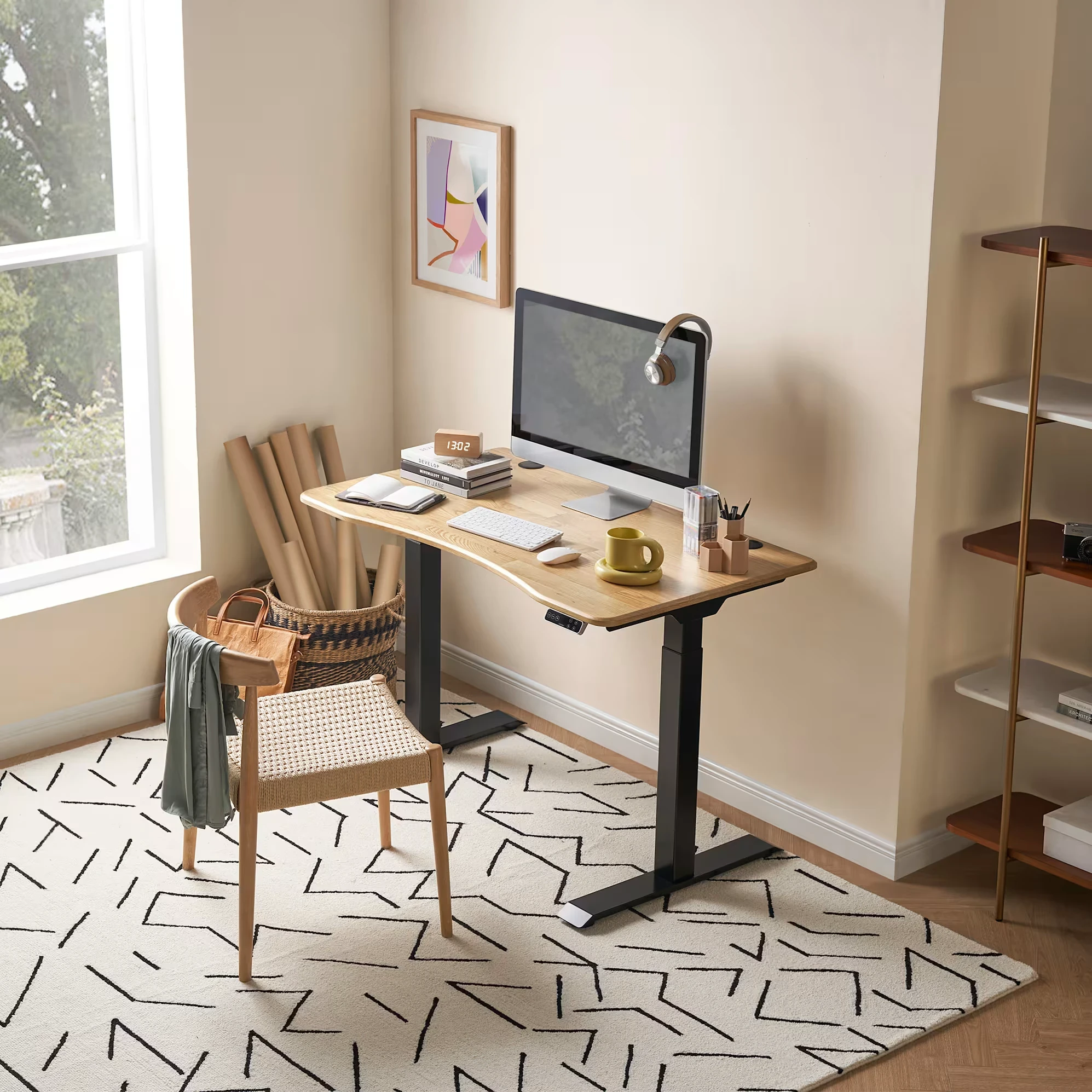
The Castlery Emmerson Adjustable Standing Desk at £649 combines a solid oak top with an electric height-adjustment mechanism -- a good example of how standing desks no longer need to look like office equipment. The solid wood top and clean lines mean it holds its own as furniture, not just a workstation.
When shopping for an adjustable desk, check these details:
Height range: Should cover at least 65-125cm to suit both sitting and standing for most adults
Motor noise: Dual motors are quieter and faster than single motors
Weight capacity: Needs to support your monitor, laptop, and anything else on the surface -- at least 50kg
Memory presets: Electronic presets save your preferred sitting and standing heights so you do not have to fiddle with buttons each time
Best Desks by Budget
Most home workers will find the right desk between £350 and £1,000, with solid hardwood options available at every price point. In our current collection, desks under £500 use acacia, mango wood, and sheesham; the £500-1,000 bracket opens up oak and walnut from established makers; and above £1,000, you enter handmade, heirloom-grade territory.
Under £500: Solid Wood, Sensible Money
At this price, you can find well-made desks in acacia, mango wood, and sheesham from boutique retailers. These are not MDF compromises -- they are genuine hardwoods with character.
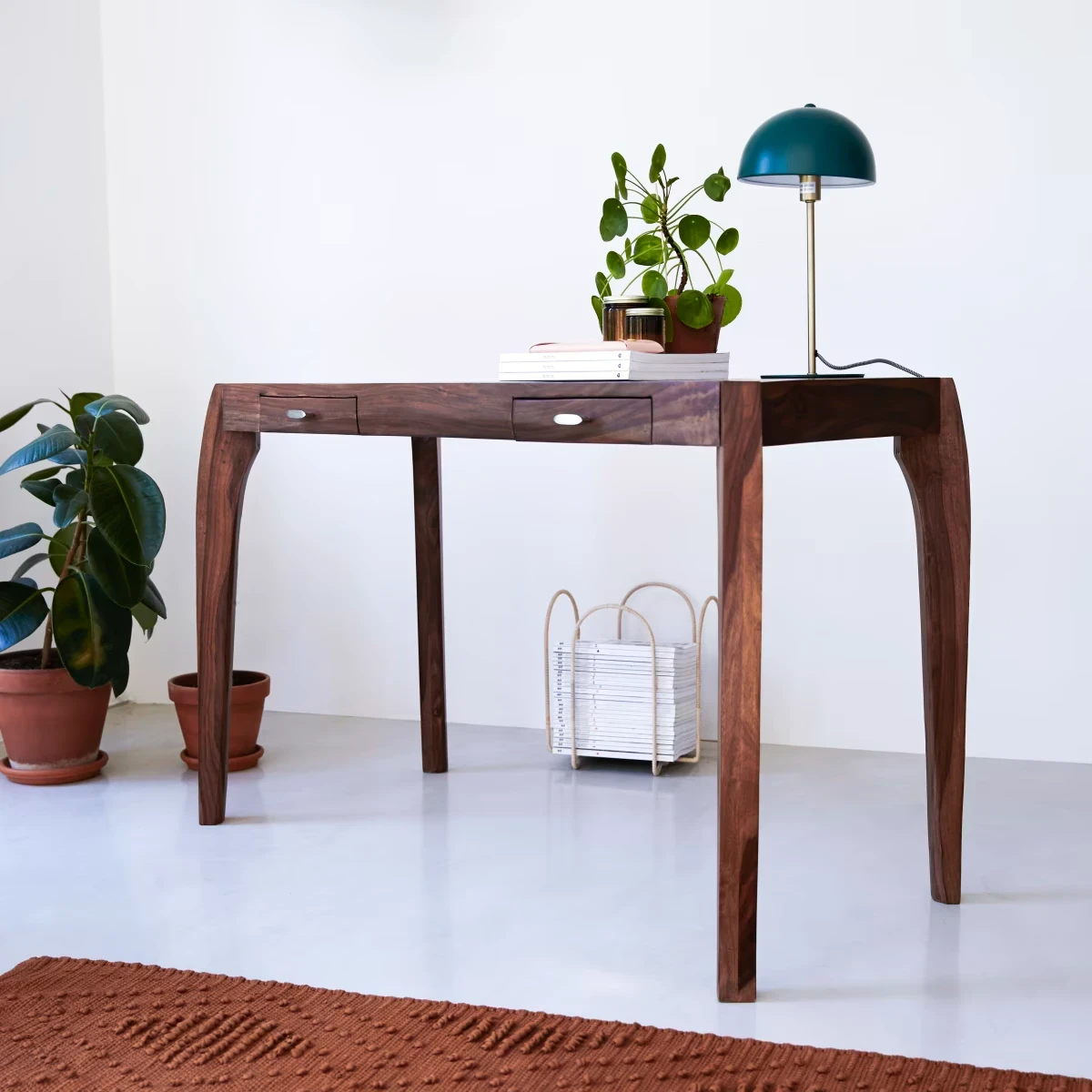
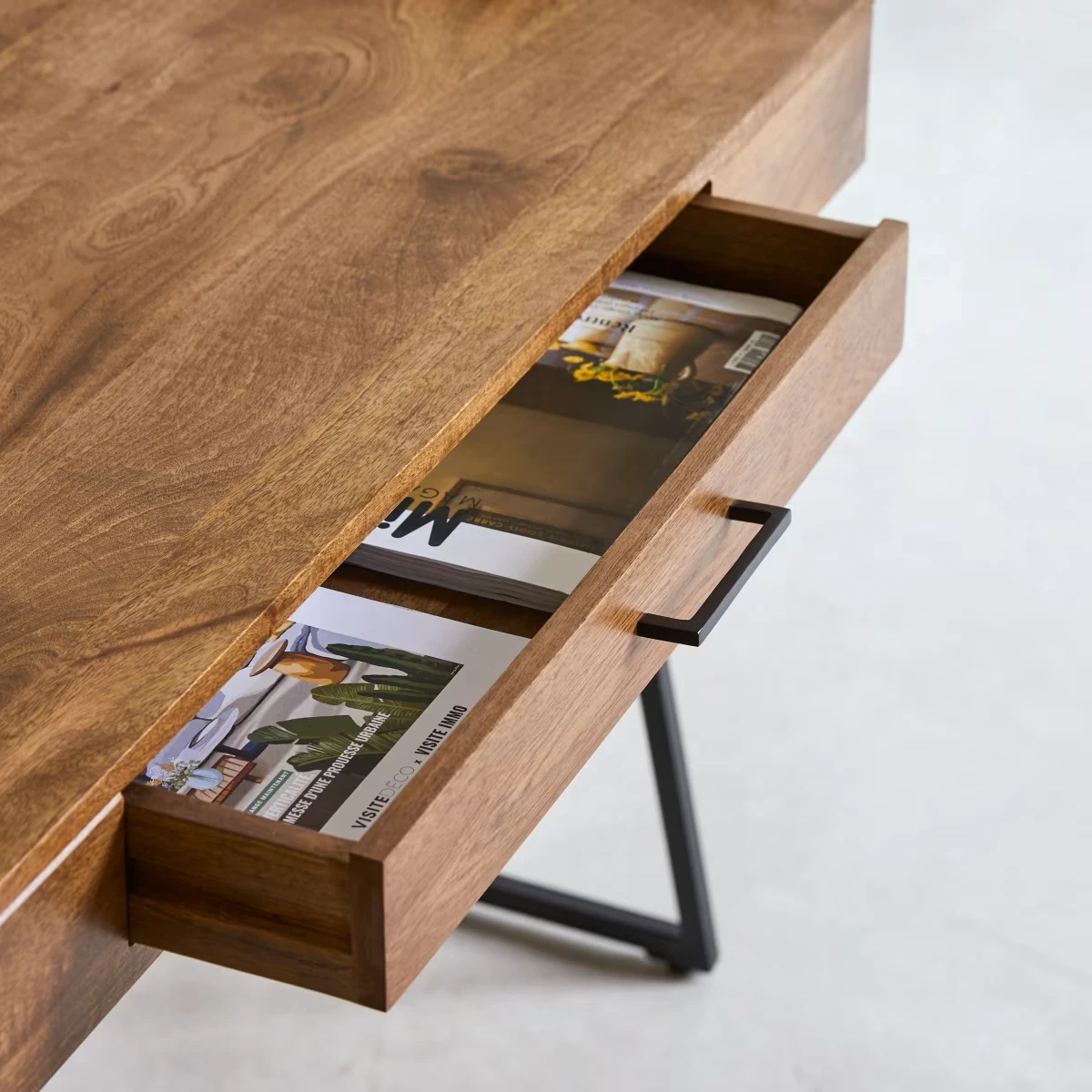
The Tikamoon Luna in solid sheesham at £439 and the Hedda in mango wood and metal at £359 both deliver the warmth and durability of hardwood at prices that compete with high-street MDF options. The key difference: these desks can be sanded and refinished in ten years, while a laminated desk cannot.
£500-£1,000: The Sweet Spot
This is where the choice opens up. Solid oak desks from OKA, teak writing desks from Tikamoon, and the Castlery range all fall here. You get better wood, more refined joinery, and designs that look as good in a living room as they do in a home office.
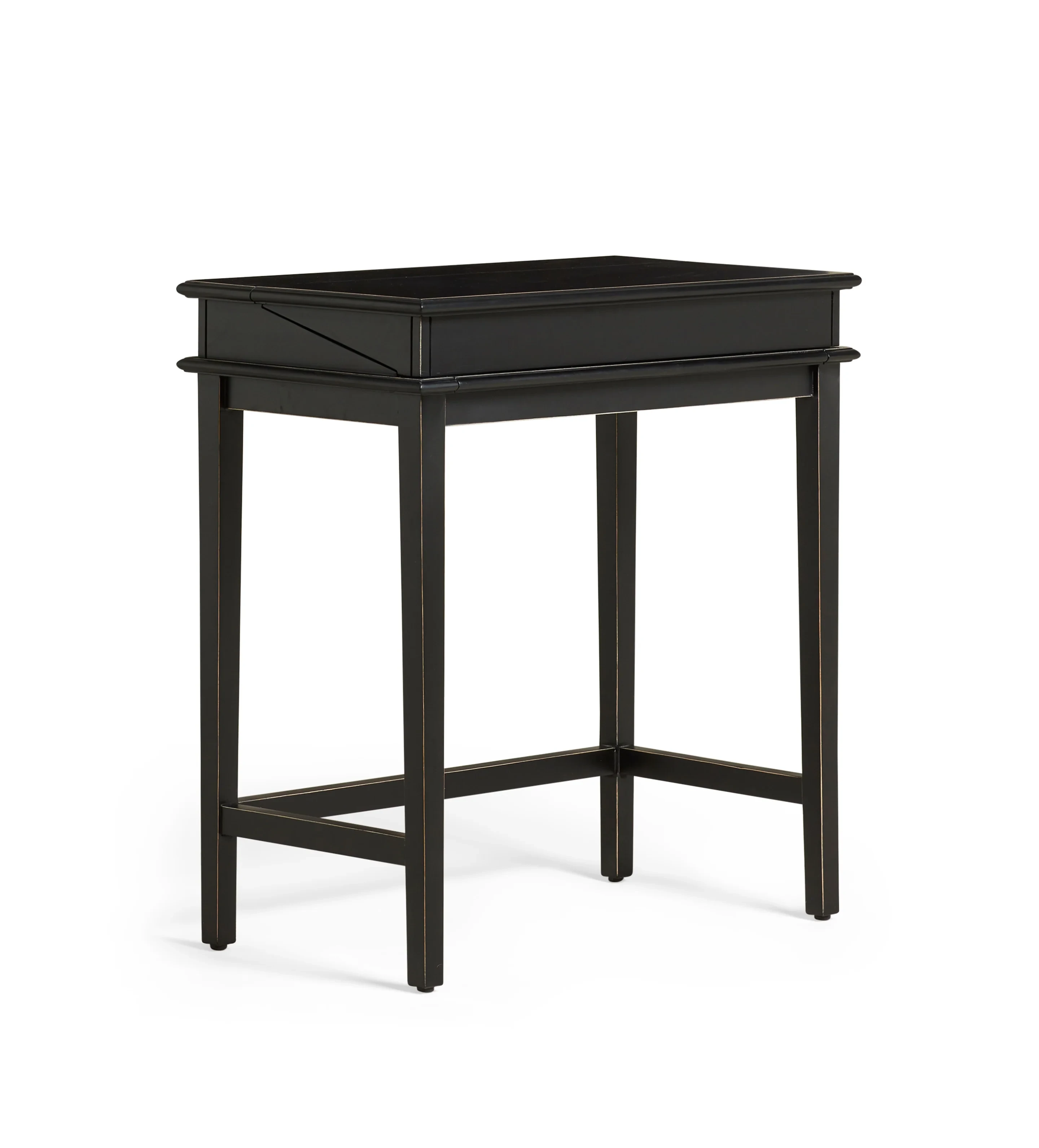
The OKA Yishu Desk at £650 in rubbed black offers a refined look that works as a writing desk in a living room corner or a compact workstation in a dedicated study. OKA's desks tend toward the traditional end of contemporary -- enough detail to feel considered, not so much that they date quickly.
Over £1,000: Investment Pieces
At this level, you are buying a desk you will keep for decades. Solid walnut, hand-finished oak, dovetail joints, and hardware that improves with age. Makers like Konk specialise in handmade desks crafted from American black walnut and character-grade oak, with prices reflecting the materials and craftsmanship.
!['Signature' Desk [Oak]](https://zpeqbrudpqjbpfhmntcb.supabase.co/storage/v1/object/public/product-images/konk-furniture/konk-furniture-signatured-mjbzmmgb/original/125c0fa4a278.webp)
The Konk Signature Desk in oak at £1,185 is a good entry point to this tier -- clean mid-century lines, a solid oak top, and the kind of build quality that means your children might inherit it. At the top end, their three-drawer desks with walnut and raw steel push past £1,900 but deliver furniture-grade craftsmanship you will not find on the high street.
How to Choose: A Decision Framework
If you have read this far and still feel uncertain, work through these three questions:
1. How many hours a day will you use it? Under two hours: a compact writing desk or console table used as a desk is fine. Two to six hours: invest in the right size and a chair that supports you properly. Six hours or more: consider an adjustable-height desk and prioritise ergonomics over aesthetics.
2. Does the room serve another purpose? If your desk shares space with a bedroom, living room, or dining room, choose a design that looks like furniture first and a workstation second. Open desks in lighter woods disappear into rooms more easily than dark, heavy pedestals.
3. What is your realistic budget? At £350-500, you get solid wood from smaller makers. At £650-1,000, you get refined designs in premium materials. Above £1,000, you are buying heirloom quality. All three tiers deliver genuine value if you choose well -- the difference is in finish, material rarity, and longevity.
MeetFelix brings together desks from boutique UK makers you will not find on the high street. Browse all home office desks, explore oak desks, or discover mid-century desks.
Frequently Asked Questions
What width desk do I need for working from home?
A width of 120cm suits most home workers using a single monitor and a laptop. If you use dual monitors or spread documents out regularly, go for 140cm or wider. For an alcove or box room, measure the space first -- 100cm desks exist and work well for focused laptop-only work, but anything under 80cm will feel cramped within a week.
Is solid wood better than MDF for a desk?
Solid wood lasts longer, handles weight better, and can be sanded and refinished when it wears. MDF and laminated particle board chip at edges, sag under monitor arm clamps, and cannot be repaired. If you plan to use your desk for more than three years, solid wood is worth the extra cost. In our collection, solid wood desks start from £359 -- closer to high-street MDF prices than many people expect.
How much should I spend on a home office desk?
Budget between £350 and £1,000 for a desk you will use daily and keep for at least five years. Under £500 gets solid acacia or mango wood from boutique makers. The £650-1,000 range opens up oak and walnut options with refined finishes. Above £1,000 buys handmade, heirloom-quality pieces in premium hardwoods. In our current catalogue of over 110 desks, the median price sits around £800.
What is the best desk material for durability?
Oak and walnut are the most durable desk materials widely available in the UK. Both resist scratches, handle heavy monitors and clamp-on accessories, and develop a richer colour with age. Teak is equally tough but less common. Avoid veneered MDF if durability is your priority -- the veneer peels and the core material underneath cannot support repeated stress.
Do I need a standing desk for working from home?
A standing desk is not essential, but most ergonomic guidelines recommend alternating between sitting and standing if you work more than four hours a day at a desk. Electric adjustable desks let you switch positions in seconds. If a full standing desk is out of budget, a desk converter that sits on top of a standard desk is a lower-cost alternative, though it does take up desk space.
What desk styles work in a living room?
Writing desks and slim-profile contemporary desks integrate most naturally into living rooms. Look for clean lines, lighter wood tones (oak or ash), and designs that read as furniture rather than office equipment. Avoid anything with a bulky hutch, plastic cable trays, or an obviously ergonomic shape -- these look out of place next to a sofa. Browse desks that suit a living room.

