

Best Dining Chairs UK: How to Choose Chairs You'll Actually Want to Sit In
The right dining chair does more than fill a seat at the table. It sets the tone for every meal, every lingering conversation, every Saturday morning with the papers. Get it wrong and you'll notice every time you sit down. Get it right and you won't think about it at all — which is exactly the point.
In our current collection, we compared 190 dining chairs from boutique UK retailers, covering oak, walnut, velvet, leather, and linen options from £100 to over £1,100. This guide breaks down what actually matters when choosing dining chairs: the materials that wear well, the dimensions that fit real dining tables, and the styles worth investing in.
What Makes a Good Dining Chair? The Five Things That Matter
A well-made dining chair balances comfort, durability, and proportion — and none of those qualities is obvious from a product photo. Here's what separates a chair you'll keep for a decade from one that wobbles within a year.
Seat Height and Depth
For a standard 75cm dining table, aim for a seat height between 45cm and 48cm. Too low and you'll hunch; too high and your feet dangle. Seat depth matters equally — look for 40–45cm so you can sit back without the edge cutting into your legs.
Frame Construction
Solid hardwood frames (oak, ash, walnut) with mortise-and-tenon or dowel joints outlast anything held together by staples. Across our dining chair collection, oak is the most common frame material, featured in 35 chairs, followed by metal frames at 27. If you're buying upholstered chairs, check whether the frame is exposed — it tells you what you're actually paying for.
Weight and Stackability
A chair you dread pulling out won't get used. Heavier chairs signal quality, but there's a tipping point — solid oak chairs typically weigh 6–8kg each, which is manageable. If you need to stack or tuck chairs away, look for designs without arms and with a tapered leg profile.
Upholstery That Lasts
Velvet looks striking but shows wear in high-traffic homes. Linen breathes well but stains easily without treatment. Performance fabrics (polyester blends, treated cottons) offer the most practical middle ground for families. In our collection, we found 24 velvet dining chairs, 21 in linen, and a growing number in performance and bouclé fabrics from retailers like Castlery.
The Arms Question
Armed dining chairs feel generous and encourage longer meals. But they need clearance — allow 7–10cm between the armrest top and the underside of the table. Armless chairs are more flexible for tight spaces and easier to tuck away.
Best Dining Chair Materials: Oak, Walnut, Velvet, and More
Choosing the right material is the single biggest decision. It determines how your chairs look in five years, how much maintenance they need, and how well they fit the rest of your dining room.
Material | Best For | Maintenance | Price Range (in our collection) | Durability |
|---|---|---|---|---|
Solid Oak | Traditional and Scandi rooms | Low — oil annually | £223–£1,165 | Excellent — decades |
Walnut | Mid-century and warm modern | Low — oil annually | £475–£1,309 | Excellent |
Velvet | Statement dining rooms | Medium — vacuum, spot clean | £275–£595 | Good with care |
Linen | Relaxed, country-style rooms | High — treat for stains | £295–£598 | Moderate |
Leather | Formal or industrial spaces | Low — wipe down | £395–£675 | Excellent |
Metal Frame | Industrial and modern spaces | Very low | £270–£326 | Excellent |
Solid Wood: The Long Game
Oak and walnut dining chairs represent the highest concentration in our catalogue. Solid oak options from OKA start at £223 for the Rhodri, a clean-lined chair with a natural linen seat that works in both traditional and contemporary settings.
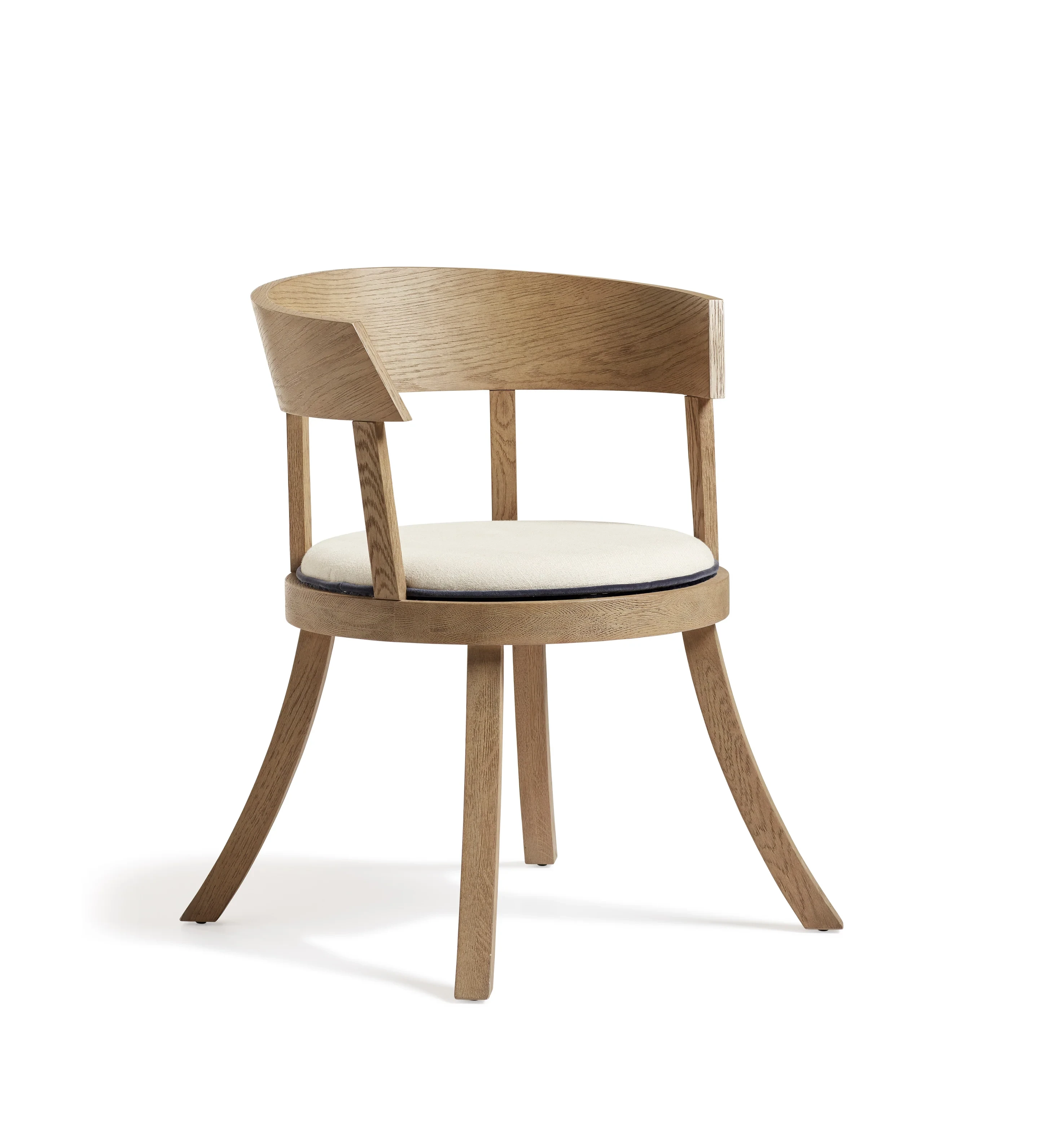
At the investment end, Konk's Pakt Chair in oak at £1,165 is a single piece of craftsmanship — no fabric, no padding, just beautifully shaped timber designed to last a lifetime.
![Pakt Chair [Oak]](https://zpeqbrudpqjbpfhmntcb.supabase.co/storage/v1/object/public/product-images/konk-furniture/konk-furniture-paktchairo-mjbz89q9/original/4b275b29d452.webp)
Upholstered: Comfort Meets Style
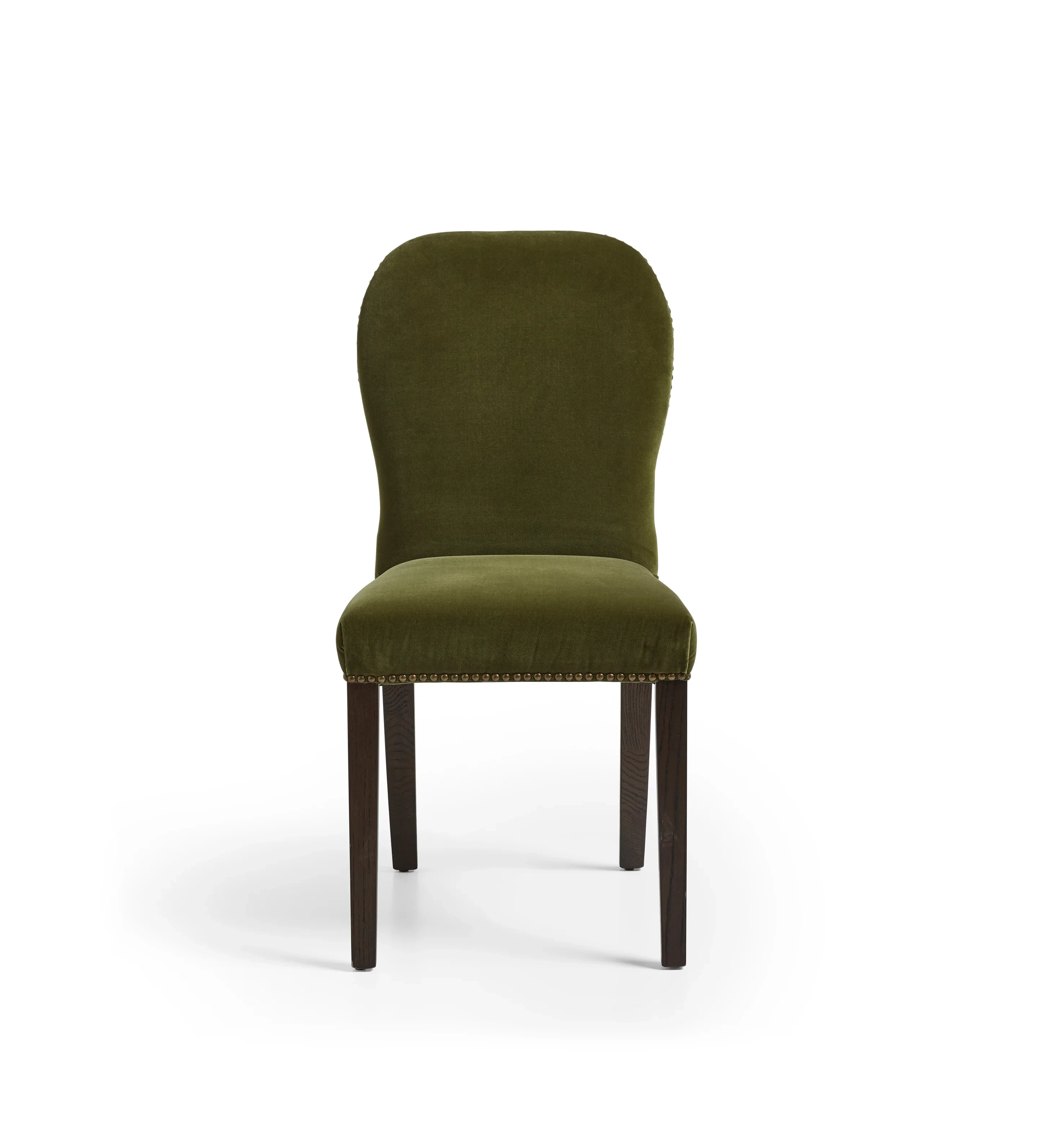
For longer suppers, upholstered seats make a noticeable difference. OKA's Stafford Velvet Dining Chair at £395 comes in spruce, truffle, and blood orange — colours with enough depth to anchor a dining room without overwhelming it.
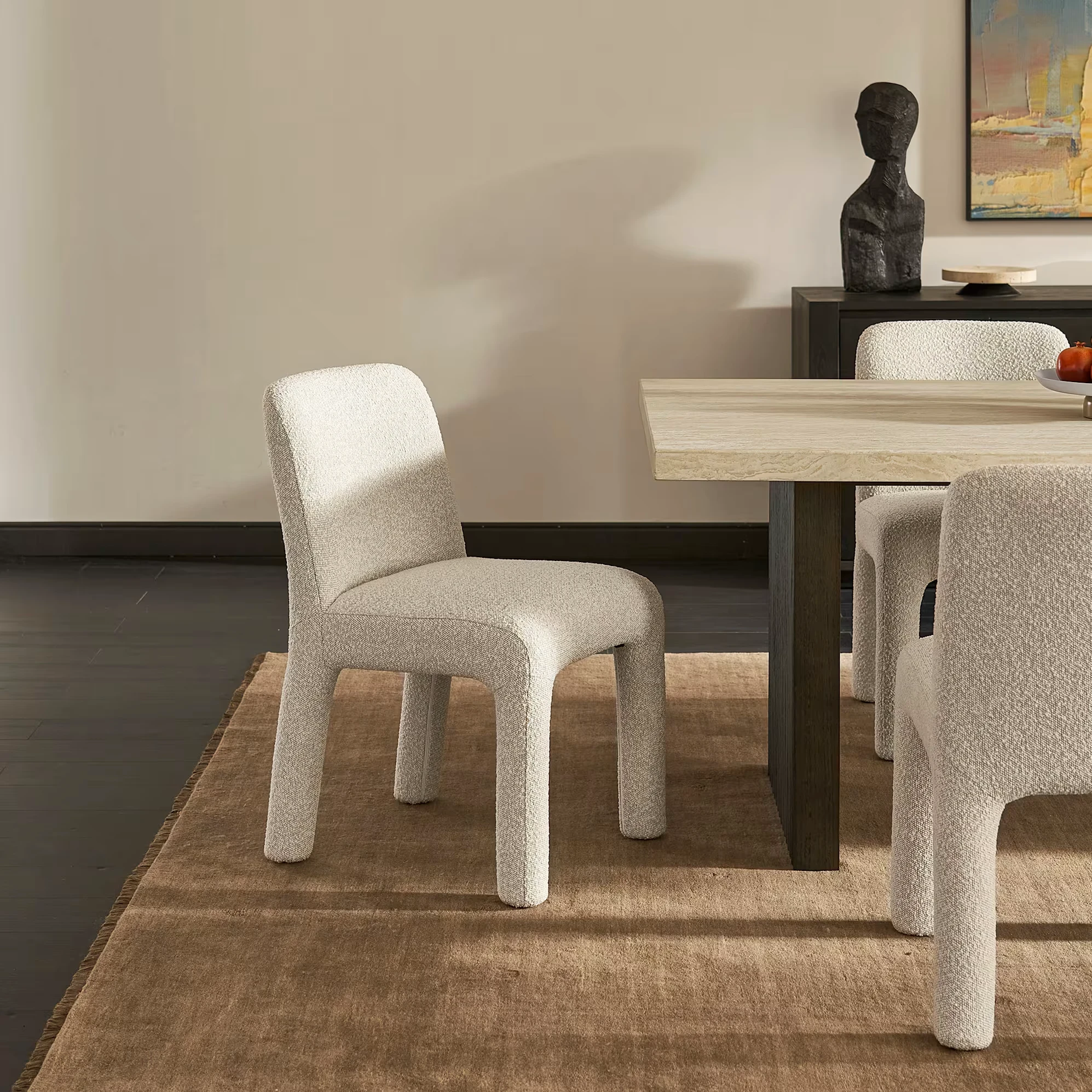
If velvet feels too high-maintenance, Castlery's Sonia Performance Bouclé Dining Chair at £598 uses a textured fabric that hides wear and adds warmth to a modern table setting.
Dining Chairs by Style: Finding Your Match
In our current dining chair collection, contemporary designs account for the largest share — 141 out of 190 chairs carry a contemporary tag. But style labels overlap heavily, so here's how to think about what actually works in your space.
Scandinavian and Minimalist
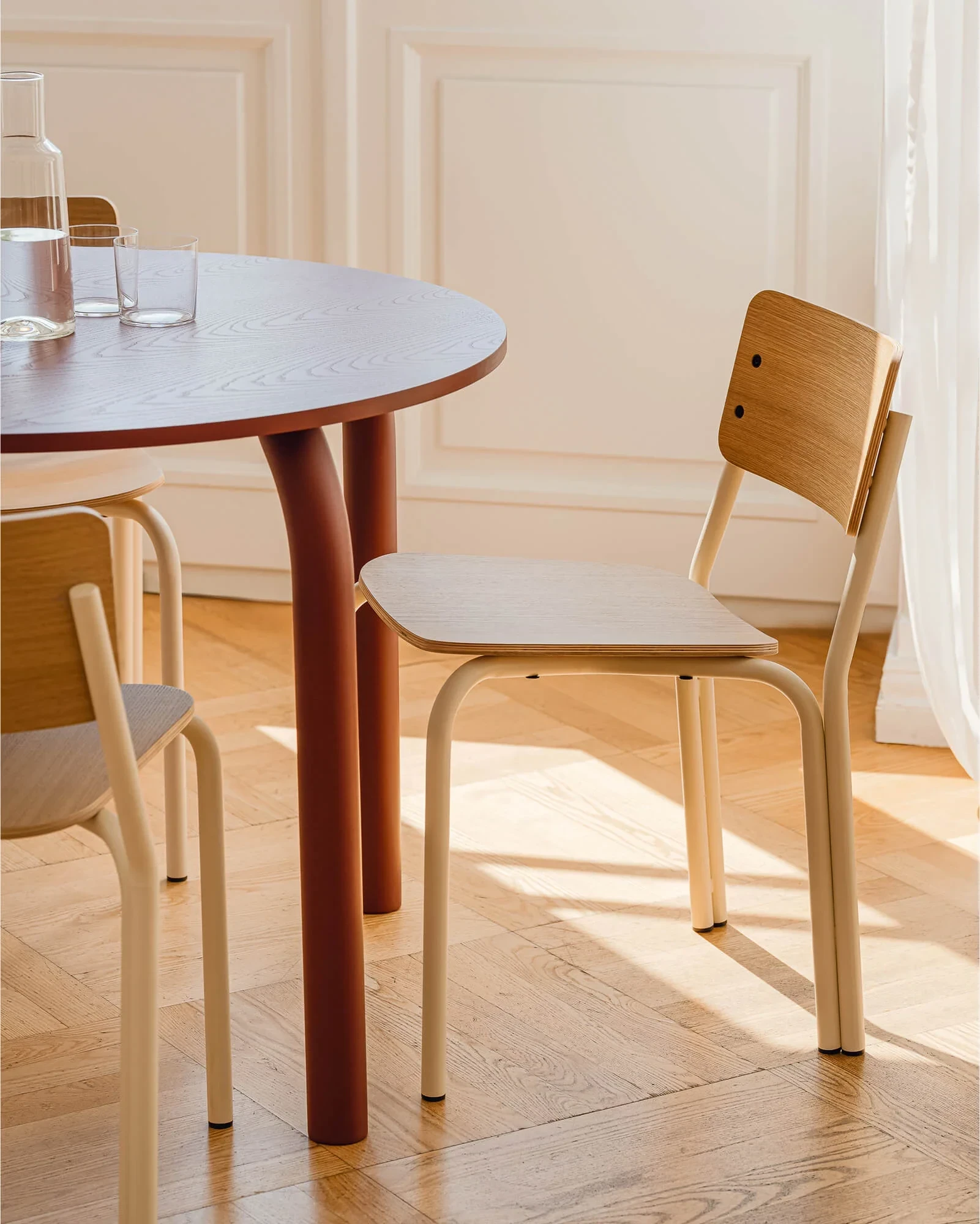
Clean lines, light wood, often stackable. The noo.ma Kei Chair at £326 is a textbook example — oak plywood on a steel frame, equally at home in a city flat or a country kitchen. Across our collection, 59 dining chairs carry a Scandinavian tag, with the majority priced between £300 and £600.
Mid-Century Modern
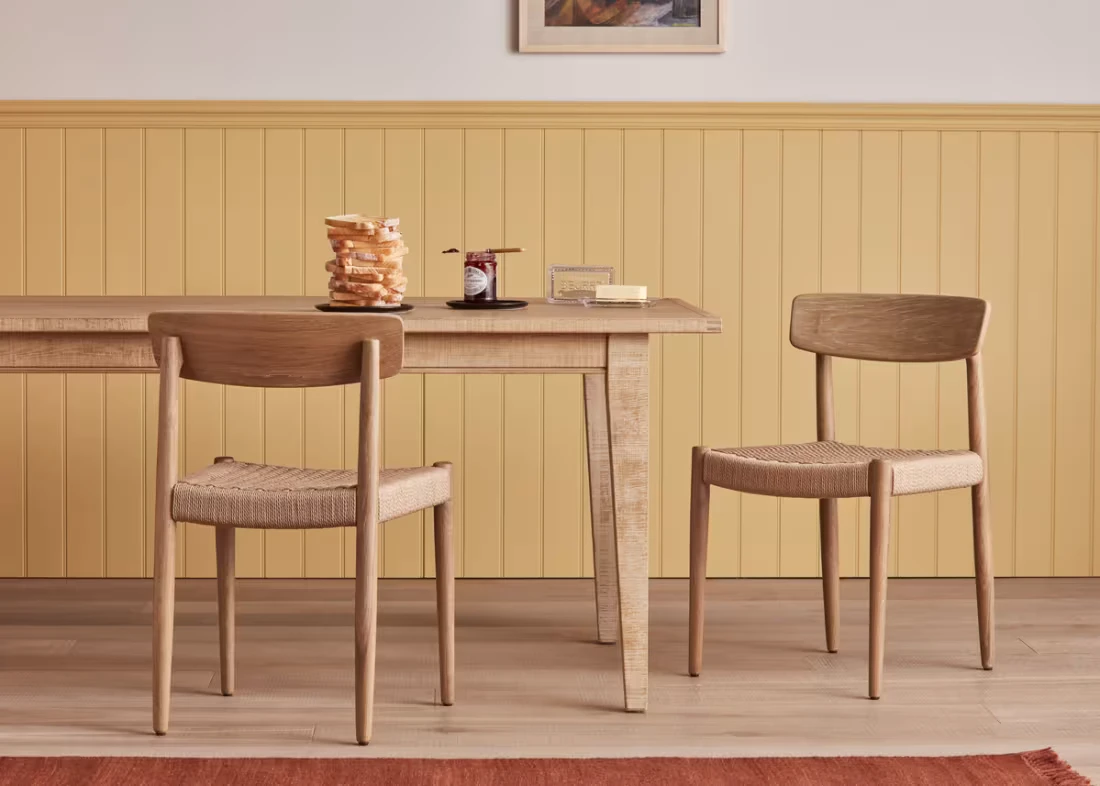
Tapered legs, organic curves, a warmer palette. Mid-century modern is the second most popular style in our dining chairs, tagged on 65 pieces. Loaf's Butter Chairs in whitewashed oak (£590 for a pair) hit the mid-century brief without veering into pastiche.
Traditional and Rustic
Turned legs, carved details, heavier frames. OKA specialises here, with chairs like the Wilbur in recycled elm with a caramel velvet seat at £595 — the kind of piece that works at a farmhouse table or in a period dining room.
Industrial
Metal frames with wood or cane seats. Six The Residence's Chrome & Cane Dining Chair at £270 combines a chrome steel frame with ash wood and natural cane — it reads industrial without feeling cold.
How Many Dining Chairs Do You Need? A Practical Guide
The answer depends on your table and your life, not a formula. But these rules help.
For a rectangular table, allow 60cm of table width per chair — a 180cm table comfortably seats six. For round tables, a 120cm diameter seats four; 150cm seats six.
Buy in even numbers. Pairs and sets of four are the standard configurations. In our collection, many retailers sell dining chairs individually or in pairs, so you can mix two statement chairs at the heads with four simpler seats along the sides.
The host chair trick. Choose two chairs with arms for the table ends and armless chairs for the sides. It adds hierarchy without looking fussy. OKA's Jennie Dining Chair in weathered oak at £495 makes a natural host chair — the slightly wider proportions and padded linen seat set it apart from the rest of the lineup.
Budget planning. A set of six dining chairs typically represents 40–60% of your total dining room furniture spend. At current prices across our boutique retailers, you could furnish a full set of six for anywhere between £600 (simpler wood designs) and £3,500+ (upholstered statement chairs).
How to Mix and Match Dining Chairs Without It Looking Accidental
Mixing dining chairs is one of the most effective ways to add character to a dining room, but it works best with a system rather than improvisation.
The two-and-four rule. Pick two chairs in a different style or colour for the heads of the table, with four matching chairs along the sides. This is the lowest-risk way to mix — it reads as intentional from day one.
Match one element. Keep either the material, the leg style, or the seat height consistent. Two chairs in different colours but the same wood tone work. Two chairs in completely different materials and different heights look like a mistake.
Stick to three finishes maximum. Across our dining chair collection, the most popular finishes are natural wood tone, oak, and walnut — all warm enough to sit together comfortably. Adding a single upholstered piece (velvet or linen) as contrast keeps it grounded.
Caring for Your Dining Chairs: Material-by-Material Guide
Dining chairs take more punishment than any other piece of furniture in your home. Here's how to keep them looking good.
Solid wood (oak, walnut, ash): Wipe with a damp cloth weekly. Oil every 6–12 months with a furniture-specific oil — Danish oil for oak, tung oil for walnut. Avoid placing in direct sunlight, which bleaches wood unevenly over time.
Velvet: Vacuum with an upholstery attachment monthly. Blot spills immediately — never rub. For stubborn marks, a fabric-specific cleaner applied to a cloth (not directly to the velvet) works best. Rotate cushion placement quarterly to even out wear.
Leather: Wipe with a slightly damp cloth. Condition every 3–6 months with a leather-specific product. Leather improves with age if cared for — the patina on a well-maintained leather chair at five years is better than it was new.
Performance fabric and bouclé: The most forgiving option. Most spills wipe away immediately. Machine-wash removable covers according to the care label, typically at 30°C. Castlery's Anya Performance Fabric set is designed specifically for easy maintenance.
Linen: The most demanding upholstery for a dining chair. Treat with a fabric protector before first use. Blot spills within seconds. Professional cleaning is recommended for anything beyond surface marks.
If you're buying one set to keep, solid oak in the £300–£500 range gives you the best balance of durability, style flexibility, and value — it works with almost any table and improves with age. If comfort for long meals matters more than longevity, an upholstered performance fabric chair is the most practical upgrade over bare wood, and easier to maintain than velvet or linen.
Explore Dining Chairs on MeetFelix
MeetFelix brings together dining chairs from the UK's best boutique furniture retailers in one place — so you can compare styles, materials, and prices without opening twenty tabs. In our current collection, we have 190 dining chairs starting from £100, spanning oak, walnut, velvet, leather, and performance fabrics.
Browse all dining chairs, explore oak dining chairs, or discover velvet dining chairs to find the right seat for your table.
Frequently Asked Questions
What is the most comfortable material for dining chairs?
For extended meals, upholstered seats in foam-padded linen or performance fabric offer the most comfort. A seat depth of 40–45cm and a slight backward rake to the backrest (around 5 degrees) make a measurable difference. Solid wood chairs are more durable but benefit from a cushion pad for longer sittings.
How much should I spend on dining chairs in the UK?
In our current collection of 190 dining chairs from boutique UK retailers, prices range from £100 for simple wood designs to over £1,100 for handcrafted solid walnut. A reasonable mid-range budget is £200–£500 per chair. For a set of six, plan for £1,200–£3,000 depending on materials and whether you want upholstered or wood-only.
Can you mix different dining chairs around the same table?
Mixing works well when you keep one element consistent — the same wood tone, similar seat heights, or a shared colour palette. The most reliable approach is two statement chairs at the heads of the table with four matching chairs along the sides. Across our collection, natural wood tone, oak, and walnut finishes combine without clashing.
How do I know if a dining chair will fit my table?
Measure the gap between the floor and the underside of your table. Subtract the seat height of the chair — you want 25–30cm of clearance for your thighs. For armed chairs, check that the armrest top sits at least 2–3cm below the table edge. Most standard UK dining tables are 75cm high, which pairs with a 45–48cm seat height.
Are velvet dining chairs practical for everyday use?
Velvet is more practical than its reputation suggests, provided you choose a high-rub-count fabric (30,000+ Martindale rubs for dining use) and vacuum regularly. In our collection, OKA's Stafford Velvet range at £395 uses a durable velvet that holds up to daily use. The main risk is pet hair and direct sunlight, which can fade colour unevenly.
How often should I replace dining chairs?
A well-made solid wood dining chair should last 15–20 years minimum with basic care. Upholstered chairs may need re-covering after 7–10 years depending on fabric choice and use. The frame itself, if solid hardwood with proper joinery, should outlast the upholstery by decades. Budget for reupholstering rather than replacing — it's more cost-effective and more sustainable.


