

Best Bedside Tables UK: How to Choose the Right One for Your Bedroom
A bedside table works harder than almost any other piece of furniture in your home. It holds your lamp, your book, your phone, your water -- and it does all of this while setting the visual tone for the most personal room in the house. Get it wrong and you will notice every time you reach for something in the dark. In our current collection, we compared 97 bedside tables from boutique UK retailers in oak, mango wood, teak, rattan, and metal, priced from £41 to over £1,000. This guide covers what actually matters when choosing a bedside table: the dimensions that work in real UK bedrooms, the materials that hold up to nightly use, and the styles worth investing in.
What Size Bedside Table Do You Actually Need?
The ideal bedside table sits within 5cm of your mattress height, measures 35-50cm wide, and extends no more than 40cm from the wall. These three measurements matter more than any aesthetic choice because they determine whether you can reach your things comfortably and move around the bed without bruising a shin.
For standard UK double beds (135cm wide), a table between 35-45cm wide leaves enough clearance for a bedside lamp and a book without overwhelming the proportions of the bed. King-size beds (150cm) can handle wider tables up to 50cm, while single beds and small doubles look best with narrow bedside tables under 35cm.
Bed Size | Table Width | Table Height | Depth from Wall |
|---|---|---|---|
Single (90cm) | 25-35cm | 50-60cm | 30-35cm |
Double (135cm) | 35-45cm | 55-65cm | 35-40cm |
King (150cm) | 40-50cm | 55-65cm | 35-45cm |
Super King (180cm) | 40-55cm | 55-65cm | 35-45cm |
Height is the measurement most people get wrong. If your table sits significantly lower than your mattress, reaching for a glass of water becomes an awkward fumble. If it sits too high, your lamp glares across the pillow. Measure from the floor to the top of your mattress (including any topper) and look for a table within 5cm of that number. Most UK mattress-plus-base combinations land between 55cm and 65cm, which is why the majority of bedside tables on MeetFelix fall in that range.
Which Material Lasts Best for a Bedside Table?
Solid hardwoods -- oak, teak, and mango wood -- consistently offer the best combination of durability, warmth, and ageing character for bedroom furniture. They resist the daily knocks that come with half-asleep reaching and they develop a richer patina over time rather than showing wear.
In our current collection of bedside tables, the most common materials are oak (12 options), mango wood (11), teak (7), and rattan (6), with metal-framed designs making up a growing proportion of the contemporary range.
Solid Wood: Oak, Teak, and Mango
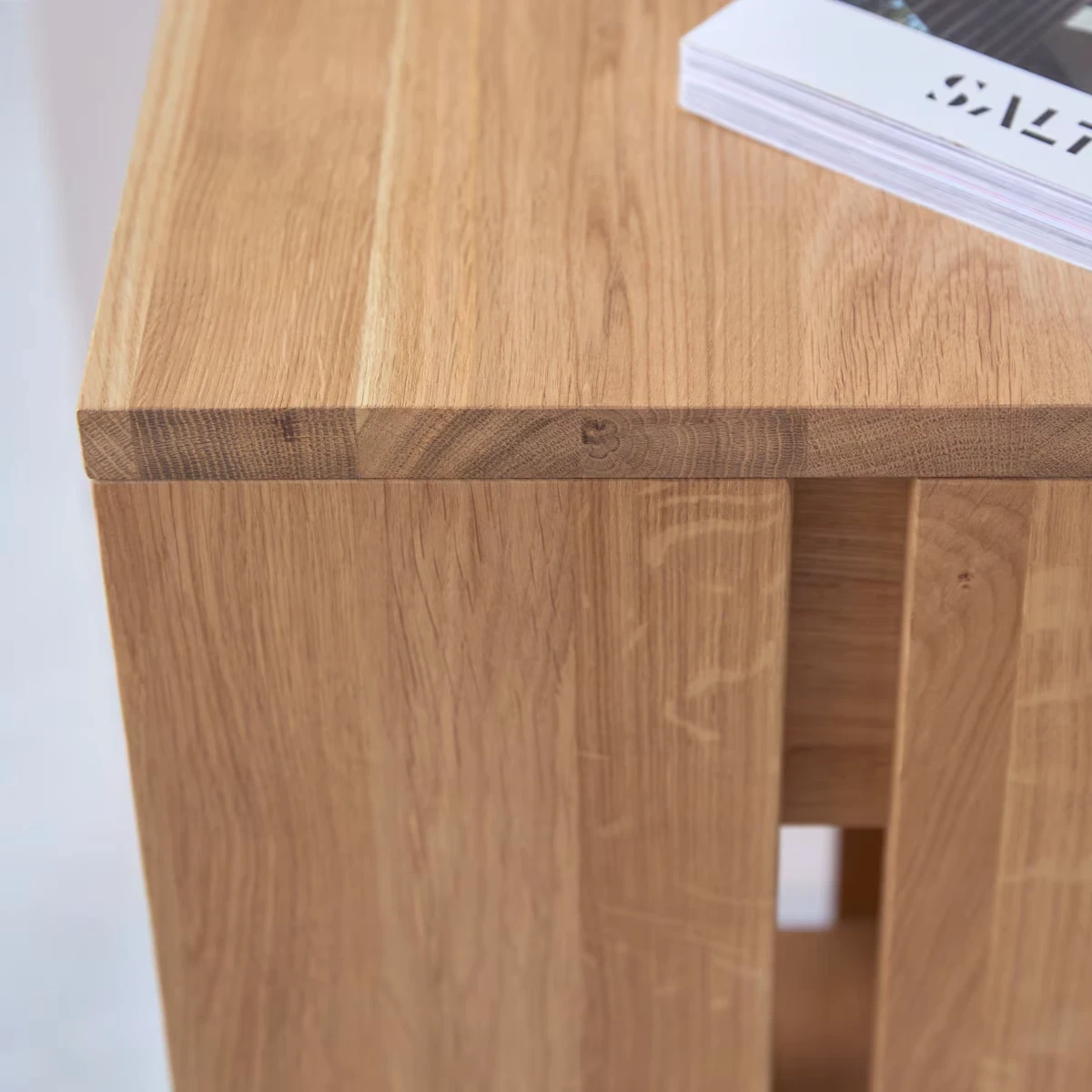
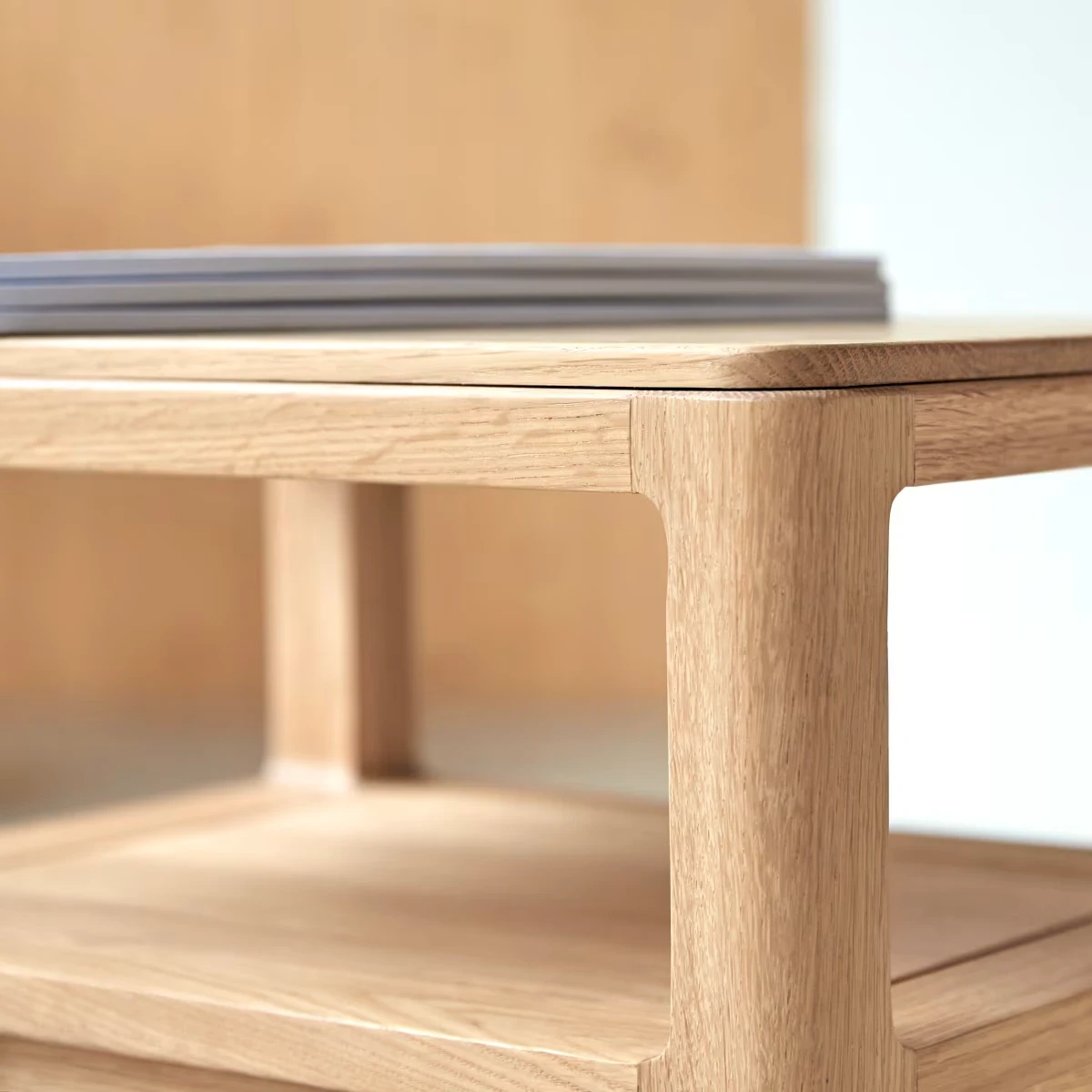
Oak is the traditional choice in UK bedrooms and for good reason. It is dense enough to take daily use without denting easily, accepts a range of finishes from light Scandinavian tones to darker stains, and pairs well with almost any bedroom scheme. The Eden Bedside Table from Tikamoon, in solid oak with a honey finish, shows how a straightforward design in good timber needs very little else.
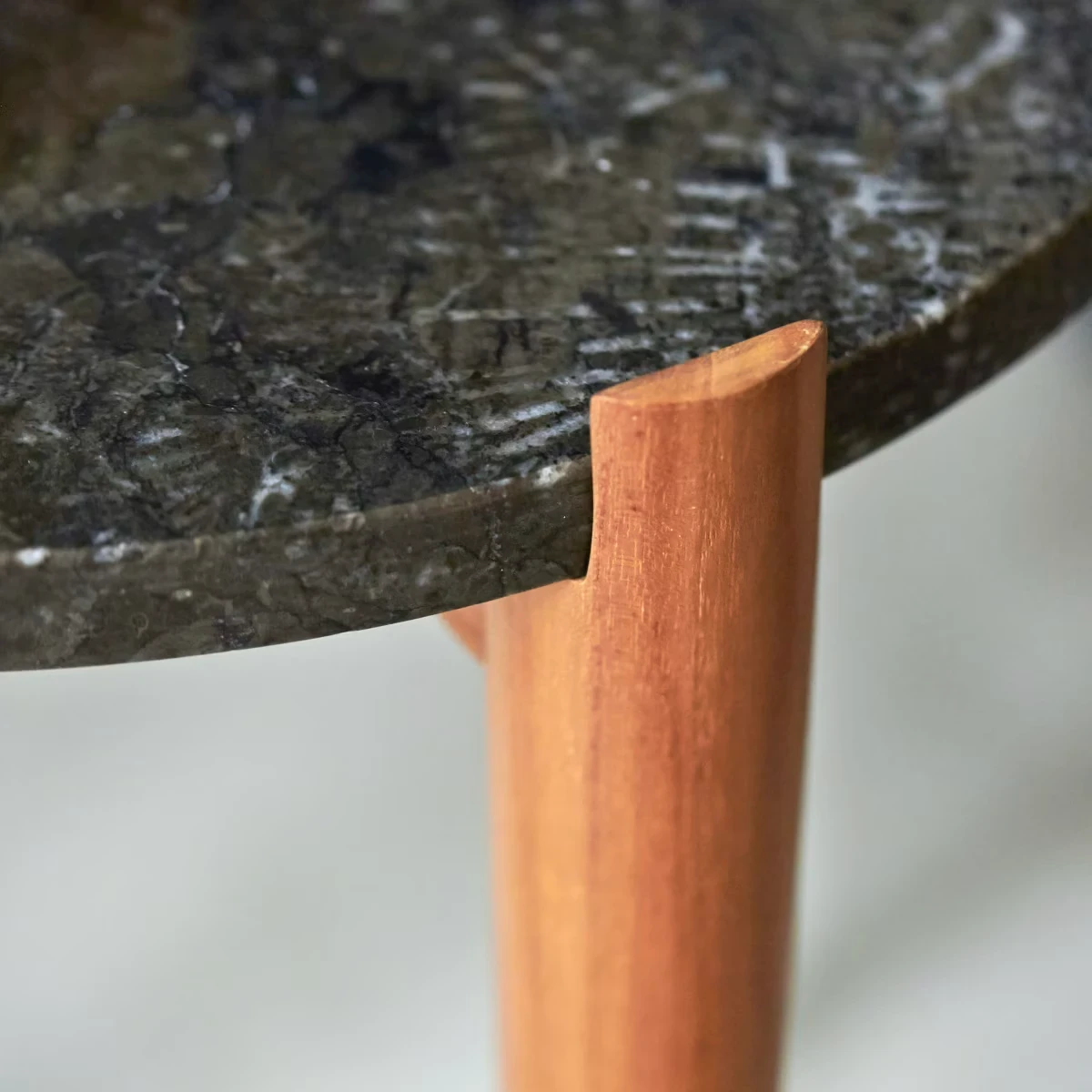
Teak brings a warmer, more golden tone and exceptional moisture resistance -- useful for bedrooms where humidity can be an issue. At the higher end, the Nestor Teak and Black Marble Bedside Table pairs teak with a marble top for a look that reads both warm and refined.
Mango wood is the most characterful of the three. The grain pattern varies dramatically between pieces, so each table genuinely looks different. It is also more sustainable than oak or teak because mango trees are replanted on short rotation cycles. The Arko from Tikamoon at £239 is a solid entry point into mango wood bedside tables.
Rattan, Cane, and Woven Materials
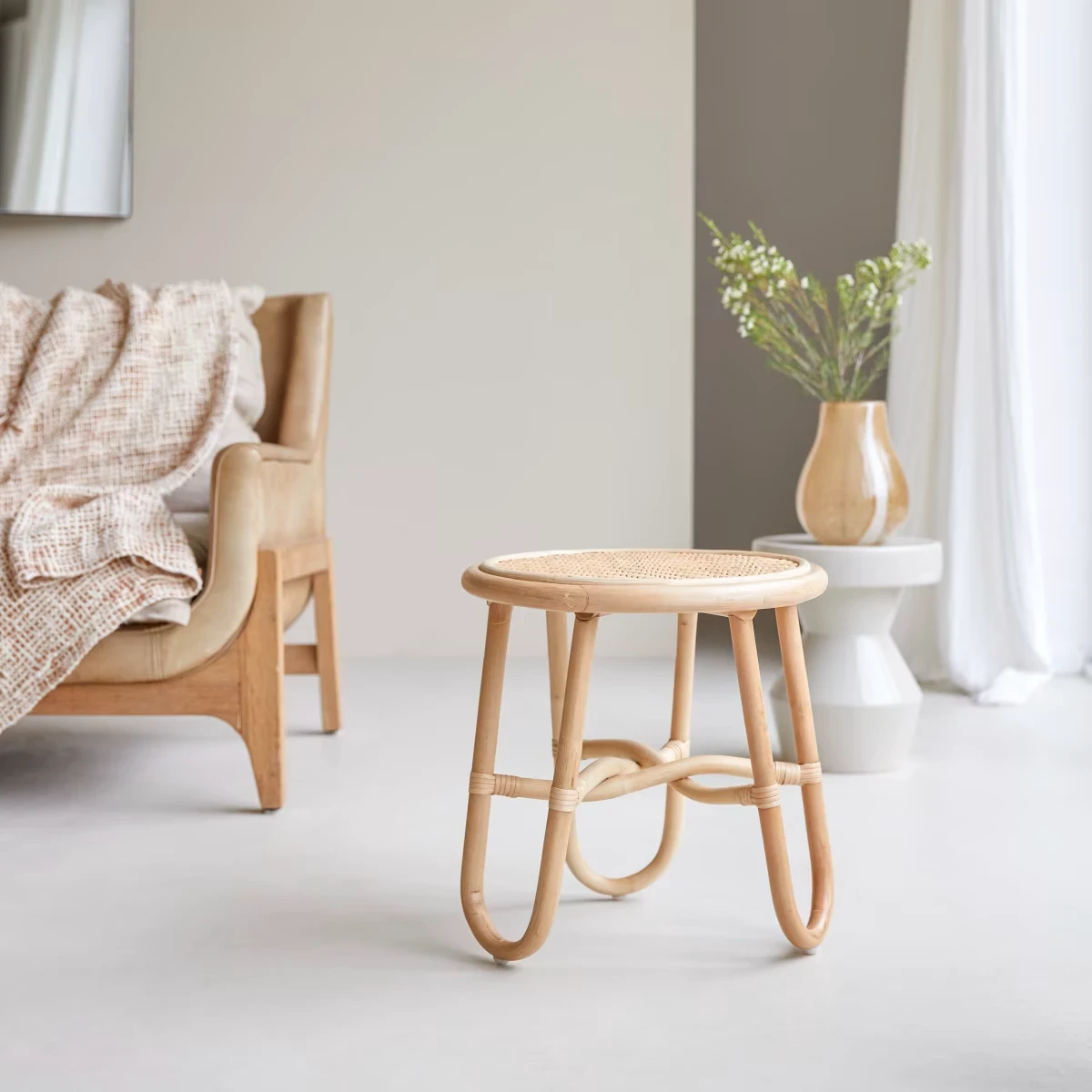
Rattan and cane bedside tables suit bedrooms going for a relaxed, bohemian, or coastal feel. They are lighter than solid wood alternatives and bring textural interest without visual weight. The trade-off is that they are less robust and harder to clean. The Lina Rattan Bedside Table at £99 is one of the most accessible options in this category.
Metal and Industrial
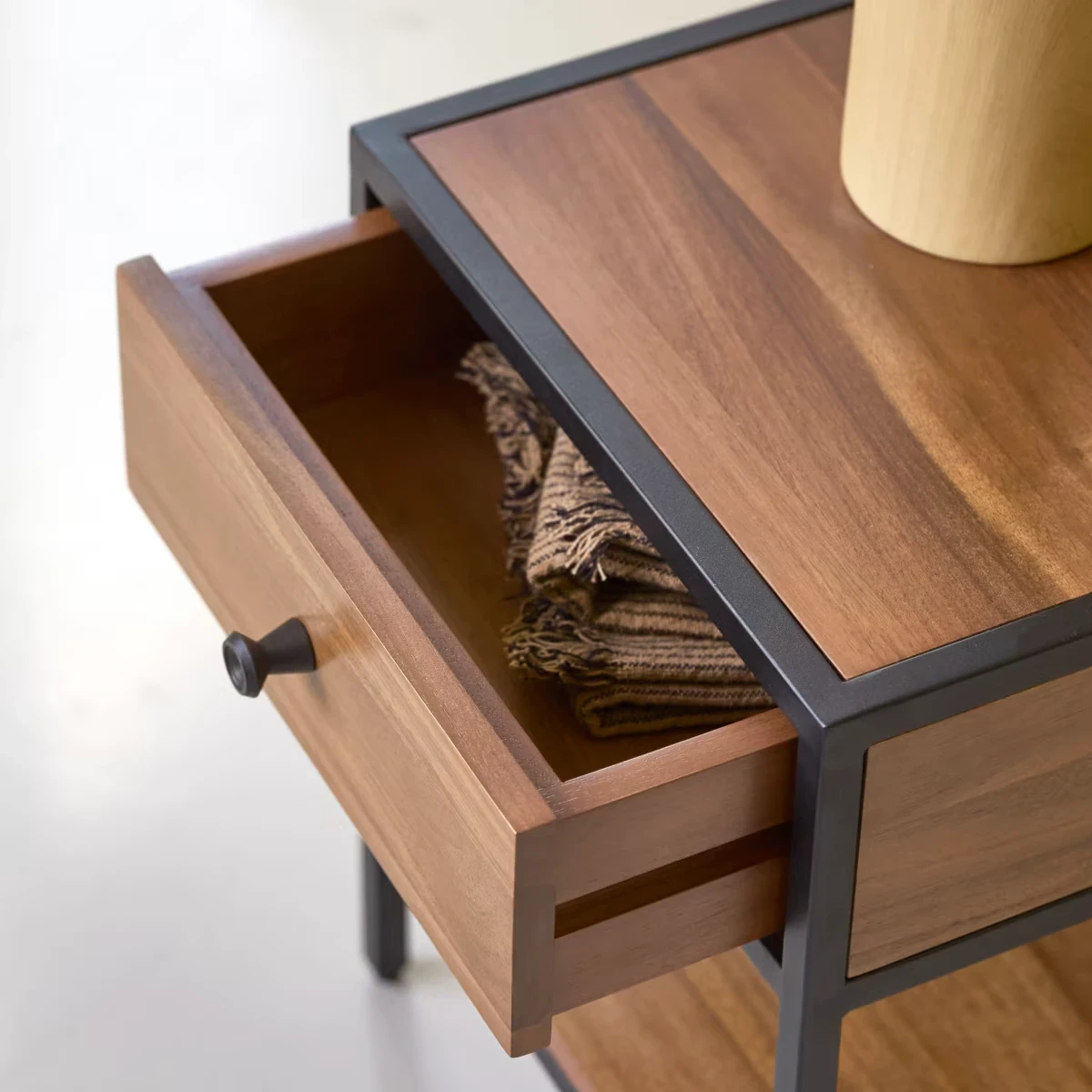
Metal-framed bedside tables -- often in black iron or brushed brass -- suit industrial, modern, and minimalist bedrooms. They are typically lighter, easier to move for cleaning, and visually less imposing than solid wood. The Agra from Tikamoon combines acacia wood with a metal frame at £169, bridging industrial and natural styles in a way that works in most settings.
Material | Durability | Character | Maintenance | Price Range |
|---|---|---|---|---|
Oak | High | Subtle grain, ages well | Oil or wax yearly | £199-£855 |
Teak | Very high | Golden warmth, moisture-proof | Minimal | £41-£299 |
Mango wood | Medium-high | Bold grain, unique per piece | Oil occasionally | £239-£375 |
Rattan/cane | Medium | Light, textural | Dust regularly, avoid damp | £79-£259 |
Metal frame | High | Sleek, minimal visual weight | Wipe clean | £169-£495 |
Storage: Drawers, Shelves, or Open Design?
A bedside table with at least one drawer keeps the things you need close but out of sight -- and that matters more than you might think. Bedrooms look and feel calmer when surfaces are not cluttered with cables, lip balm, and half-read paperbacks.
In our collection, around 60% of bedside tables include drawer storage. The rest split between open shelf designs and minimalist single-surface tables. Here is how to choose:
Choose a drawer design if you keep more than a lamp and a phone on your bedside table. One drawer is usually enough for everyday items; two drawers suit people who use the bedroom for reading, journaling, or storing skincare.
Choose an open shelf design if you want visual lightness in a smaller bedroom. Open shelves make a room feel less boxed-in, and they are useful for books or baskets. Just be honest about whether you will keep the contents tidy.
Choose a minimal open table if your bedroom already has ample storage elsewhere (a chest of drawers, built-in wardrobe) and you simply need a surface at the right height. These work particularly well in Scandinavian-style bedrooms where visual simplicity is the priority.
The Arto from Tikamoon is a good example of a single-drawer design that keeps proportions compact while giving you somewhere to stash essentials.
How to Match a Bedside Table to Your Bedroom Style
The best approach is matching your bedside table to the dominant material and line quality already in the room, rather than trying to match it exactly to your bed frame. Identical matching can look overly coordinated; a considered contrast often reads better.
Contemporary and Scandinavian bedrooms suit clean lines, light oak or pale finishes, and minimal hardware. In our collection, Scandinavian is the third most common style tag across bedside tables (50 products), which reflects how dominant this aesthetic has become in UK bedroom design. The Konk Talja Bedside Table in natural oak is a standout for this look -- clean Scandinavian lines with a quality that will last decades.
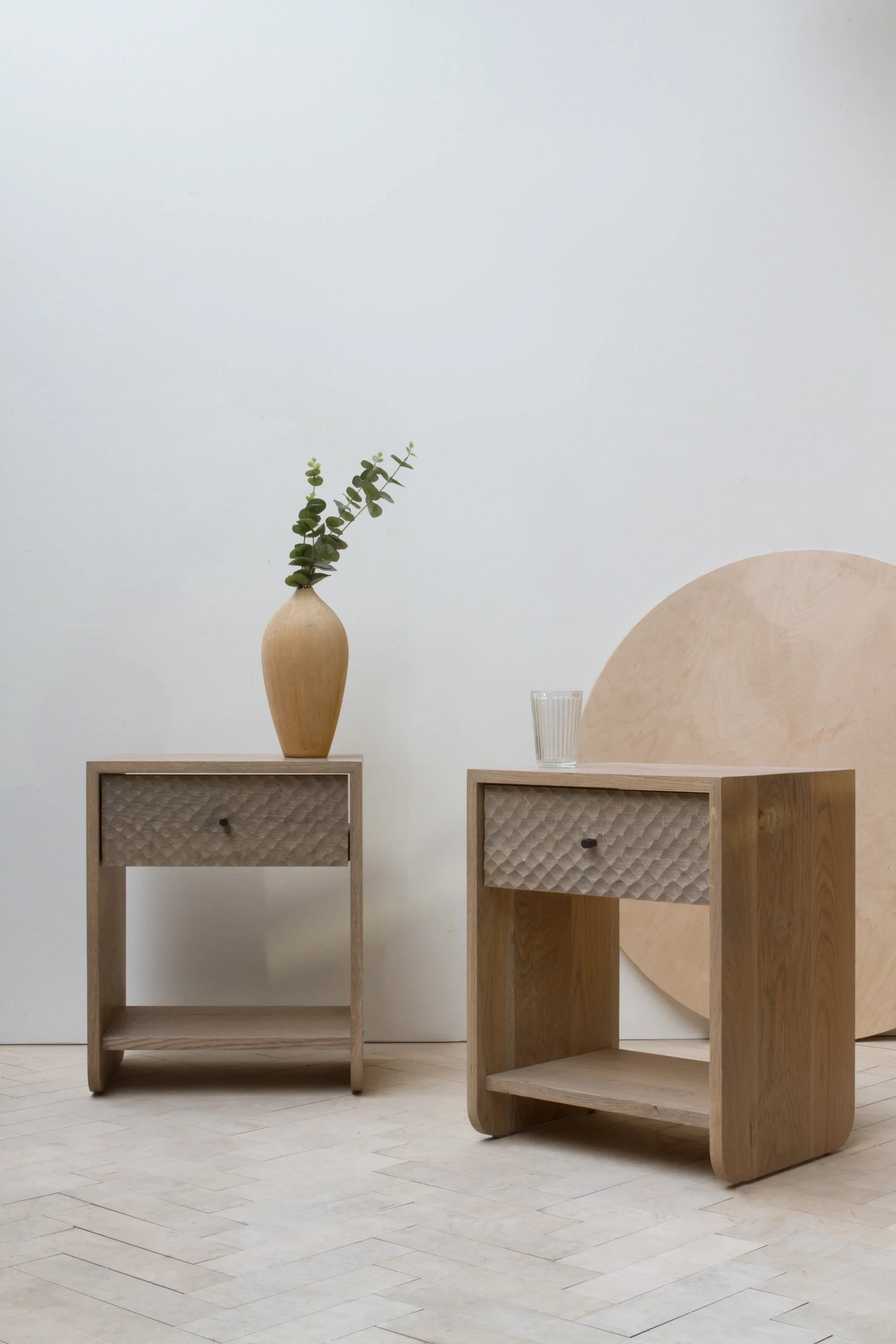
Mid-century modern bedrooms work best with tapered legs, warm walnut or teak tones, and minimal ornamentation. If your bed frame has splayed legs or a low-slung profile, look for a bedside table with similar proportions. The Konk Boonk! in American black walnut at £1,005 is at the investment end, but the craftsmanship and material quality put it in a different category from mass-produced alternatives.
Rustic and bohemian bedrooms suit reclaimed wood, natural rattan, and visible joinery. The Iya Reclaimed Wood Bedside Table from Nkuku at £275 fits this brief -- every piece carries the marks and history of its previous life.
Industrial bedrooms call for metal-and-wood combinations, raw finishes, and exposed hardware. Our collection includes 16 bedside tables tagged as industrial style, mostly combining iron or steel frames with wood surfaces.
Browse modern bedside tables or mid-century bedside tables on MeetFelix to see the full range in each style.
Best Bedside Tables for Small Bedrooms
For bedrooms under 12 square metres -- which includes most UK spare rooms and many London flats -- a narrow bedside table under 35cm wide is the safest choice. Anything wider and you compromise the walkway around the bed, which needs to be at least 60cm for comfortable movement.
Three space-saving strategies that actually work:
Go narrow, not short. A tall, slim table (25-30cm wide, 60cm tall) provides the same surface area and reach height without eating floor space.
Wall-mounted shelves as nightstands. Not technically a table, but a floating shelf at mattress height gives you a surface with zero floor footprint.
Open-frame designs. Metal or rattan tables with visible legs make a small room feel less crowded than solid-sided cabinets.
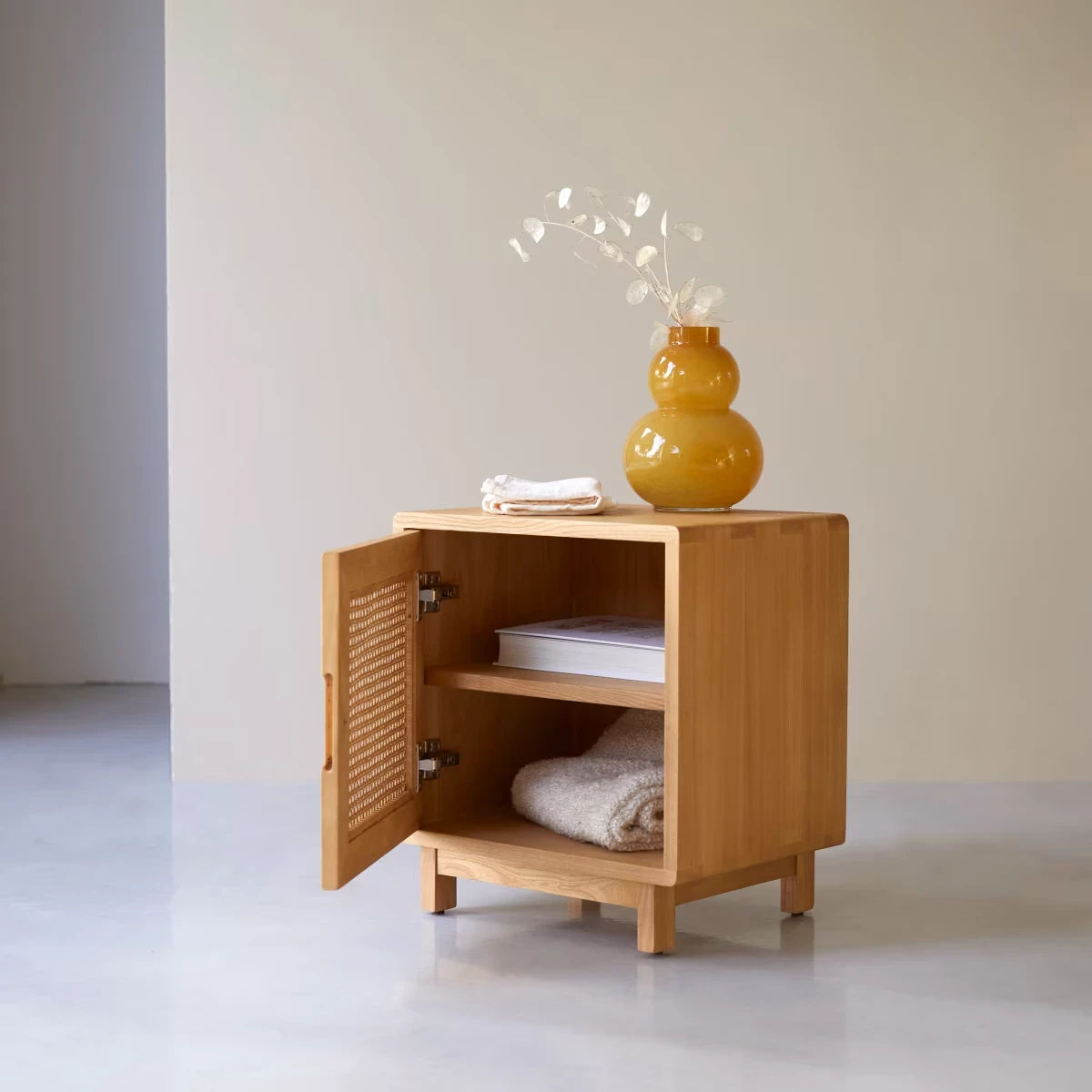
The Luis elm and cane bedside table from Tikamoon at £259 is a good example of a design that combines natural materials with an airy, open profile that will not overwhelm a compact bedroom.
For more ideas on furnishing tight spaces, see our guide to furniture for small spaces.
What to Spend on a Bedside Table
Bedside tables see daily use for years -- possibly decades -- so this is one category where spending a little more on solid construction genuinely pays off. Here is how the price ranges break down in our current collection:
Price Range | What You Get | Count in Collection |
|---|---|---|
Under £100 | Rattan, MDF, children's options | 5 tables |
£100-£300 | Solid teak, mango wood, acacia, entry-level oak | 59 tables |
£300-£600 | Premium oak, reclaimed wood, designer brands | 21 tables |
Over £600 | Handcrafted solid walnut, artisan pieces | 5 tables |
The sweet spot for most buyers is £150-£350. At this price point you can get solid hardwood construction from a reputable retailer, with a drawer or shelf for storage and materials that will age well rather than degrade. The Arko mango wood at £239 and the Dasai from Nkuku at £375 both sit in this range and represent the kind of quality-to-value ratio worth targeting.
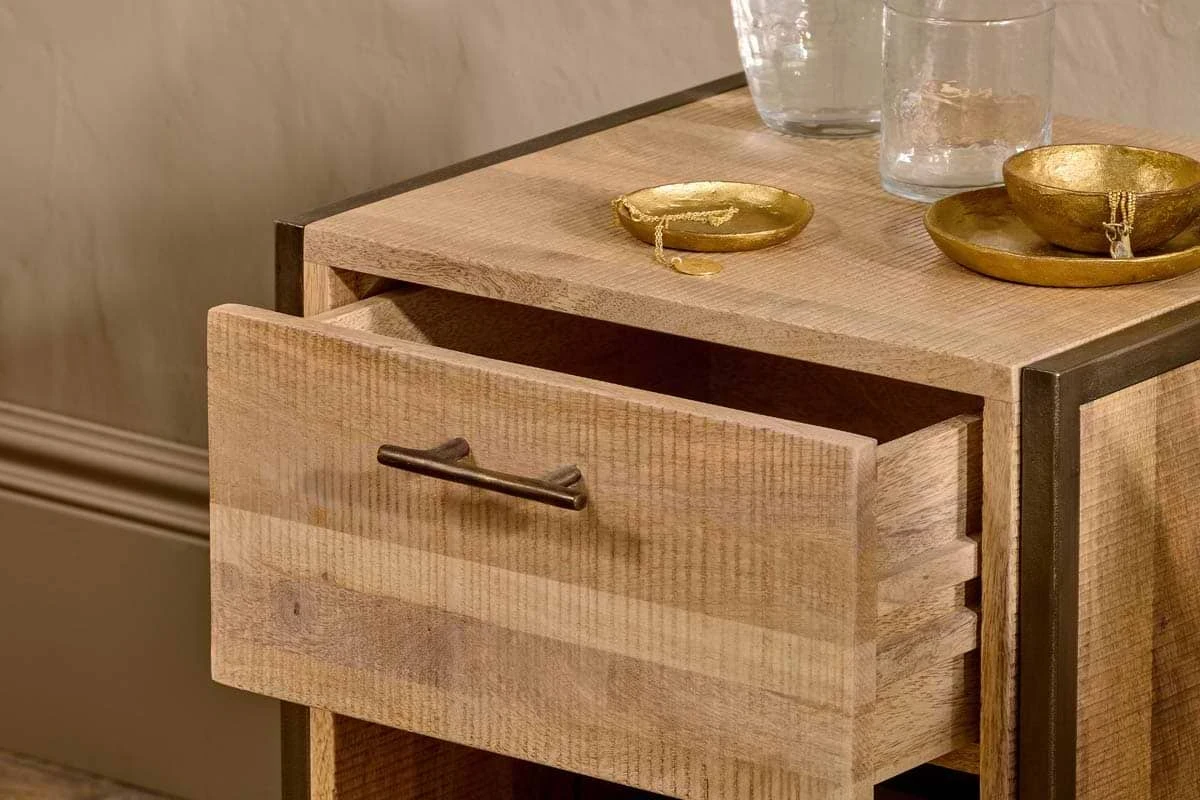
The Dasai pairs mango wood with iron legs for a look that bridges rustic warmth and contemporary structure -- a useful combination if your bedroom style is still evolving.
When spending under £100 makes sense: children's bedrooms, guest rooms, or rental flats where you need a functional surface without long-term commitment.
When spending over £500 makes sense: if you are buying a piece you expect to keep for 15+ years, if the bedside table is the visual focal point of the bedroom, or if you value handcrafted construction and provenance.
Explore Bedside Tables on MeetFelix
The right bedside table comes down to three decisions: height that matches your mattress, a material you will enjoy living with for years, and enough storage (or not) for the way you actually use your bedroom. Start with those and the style tends to follow.
MeetFelix brings together bedside tables from boutique UK retailers so you can compare materials, prices, and styles in one place. Browse all bedside tables to see the full collection, filter by oak bedside tables, mango wood options, or explore Scandinavian bedroom furniture for a complete room scheme.
FAQ
What height should a bedside table be?
A bedside table should sit within 5cm of your mattress top height, which for most UK bed-and-mattress combinations is 55-65cm from the floor. Measure from the floor to the top of your mattress (including any topper) and use that as your target. A table that is too low makes reaching awkward; too high and your lamp will cast light across the pillow rather than downward.
Do bedside tables need to match?
No, and deliberately mismatched bedside tables can add character to a bedroom. The key is to keep them at the same height and in complementary materials or tones. Two tables in different shapes but the same wood finish, for example, looks intentional rather than random. Identical matching is fine but can feel overly staged in less formal bedroom designs.
What is the difference between a bedside table and a nightstand?
In the UK, "bedside table" is the standard term. "Nightstand" is the American English equivalent and means the same thing. "Bedside cabinet" is sometimes used for designs with doors or more substantial storage. All three terms describe a small table placed beside a bed for convenience and lighting.
How wide should a bedside table be for a double bed?
For a standard UK double bed (135cm wide), a bedside table between 35-45cm wide works best. This leaves enough surface for a lamp, a glass of water, and your phone without overwhelming the proportions of the bed or blocking the walkway around it. If your room is particularly tight, a narrow design at 25-30cm can still work well.
Is mango wood a good material for bedroom furniture?
Mango wood is an excellent choice for bedroom furniture. It is a hardwood that resists everyday knocks well, develops a richer colour and character with age, and is more sustainably sourced than many alternatives because mango trees are harvested at the end of their fruit-bearing life and replanted. The grain pattern varies between pieces, which gives furniture a distinctive, non-uniform appearance. Apply wood oil once or twice a year to maintain the finish.
How much should I spend on a bedside table?
For a bedside table you expect to use daily for five or more years, aim for the £150-£350 range. At this price point, you can find solid hardwood construction in oak, teak, or mango wood from boutique UK retailers. Spending under £100 is fine for children's rooms or guest bedrooms. Spending above £500 makes sense for handcrafted or designer pieces you plan to keep for decades.


