

Best Armchairs UK: How to Choose the Right One for Your Living Room
A well-chosen armchair anchors a room in a way no other piece of furniture quite manages. It is the seat you gravitate towards at the end of the day, the one visitors quietly claim. In our current collection we list over 140 armchairs from seven UK retailers, priced from £129 to £1,695 -- and the range of styles, materials, and shapes on offer means the real challenge is narrowing the field. This guide covers what to look for, what to avoid, and which options stand out right now.
What Makes a Good Armchair: The Five Things That Matter Most
The difference between an armchair you use every day and one that collects cushions comes down to five factors: frame construction, seat depth, upholstery material, arm height, and overall proportions relative to your room. A solid hardwood frame (beech, oak, or ash) that is dowelled, glued, and screwed will outlast any metal or softwood alternative by a decade or more.
Seat depth is the most overlooked measurement. For comfortable sitting, you want 50-55 cm from the front edge to the backrest -- deep enough to sit back fully without your feet leaving the floor. Anything over 60 cm becomes a lounger; anything under 45 cm feels perched.
Arm height matters more than you think. If you plan to pull the chair up to a desk or side table, arms at 60-65 cm keep things practical. For pure relaxation, lower arms (or no arms at all) let you curl up sideways.
Across our catalogue, contemporary and modern styles account for over half of all armchairs you can browse on MeetFelix, but mid-century modern (46 listings) and Scandinavian designs (33 listings) have a strong showing too. The style you choose should echo what is already in the room rather than compete with it.
Factor | What to Look For | Red Flag |
|---|---|---|
Frame | Hardwood (beech, oak, ash), dowelled joints | Stapled softwood, particle board |
Seat depth | 50-55 cm for everyday use | Over 60 cm unless you want a lounger |
Upholstery | Matches your lifestyle (pets, children, spills) | Dry-clean-only fabric in a family room |
Arm height | 60-65 cm for desk use, lower for lounging | Arms that block side tables |
Proportions | Leave 45 cm clearance around the chair | Oversized in a room under 15 sqm |
Armchair Materials: Velvet, Leather, Linen, and Wool Compared
Choosing upholstery is really choosing a lifestyle. In our current collection, linen (24 listings), velvet (17), fabric blends (17), and leather (12) are the most common materials -- each with distinct trade-offs.
Linen and cotton blends breathe well, feel relaxed, and suit casual interiors. They mark more easily than synthetics, but most modern linen blends include stain-resistant treatments. Expect to pay £455-£900 for a well-made linen armchair from the retailers we list.
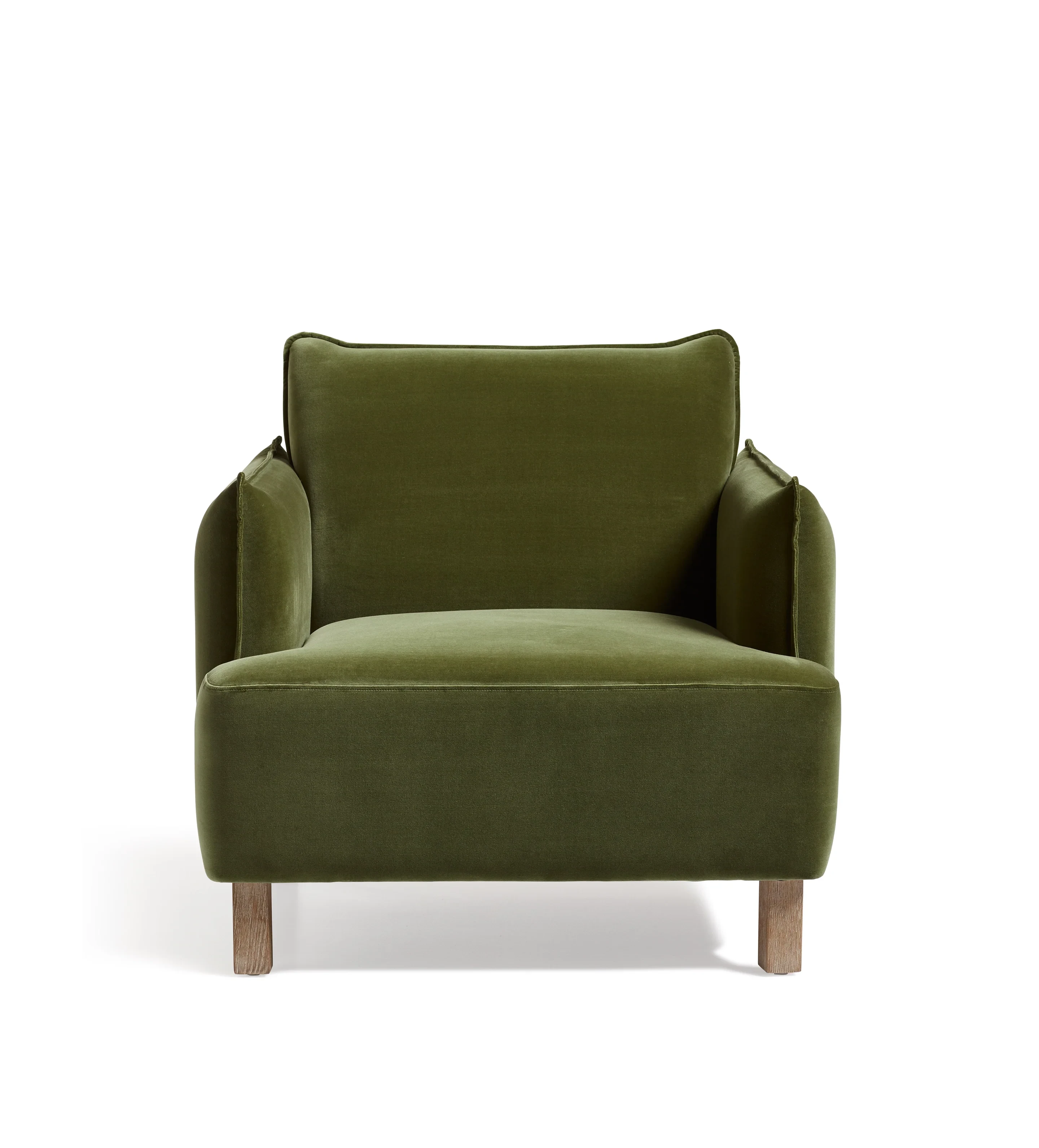
Velvet delivers colour depth that no other fabric matches. A green or blue velvet armchair becomes a focal point without trying. Across our collection, we found 17 velvet armchairs from £475 to £1,295. The trade-off: velvet shows pressure marks (called "crushing") and attracts pet hair. Brush it regularly and keep it out of direct sunlight.
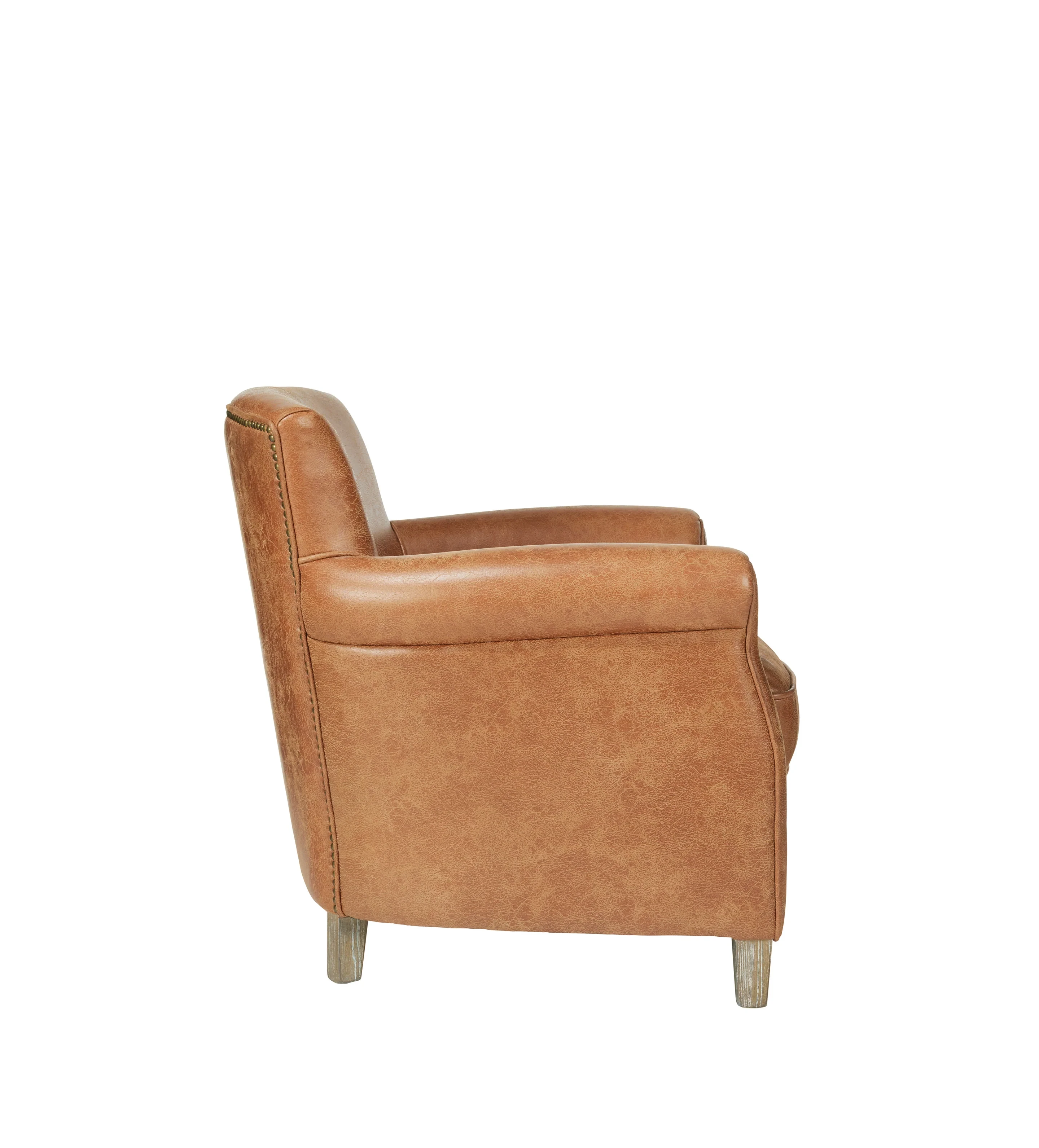
Leather ages better than any other upholstery -- a well-maintained leather armchair looks better at ten years than it did new. We list 14 leather armchairs starting from £995, mostly from OKA and Konk. Full-grain leather costs more but develops a richer patina than bonded or split leather.
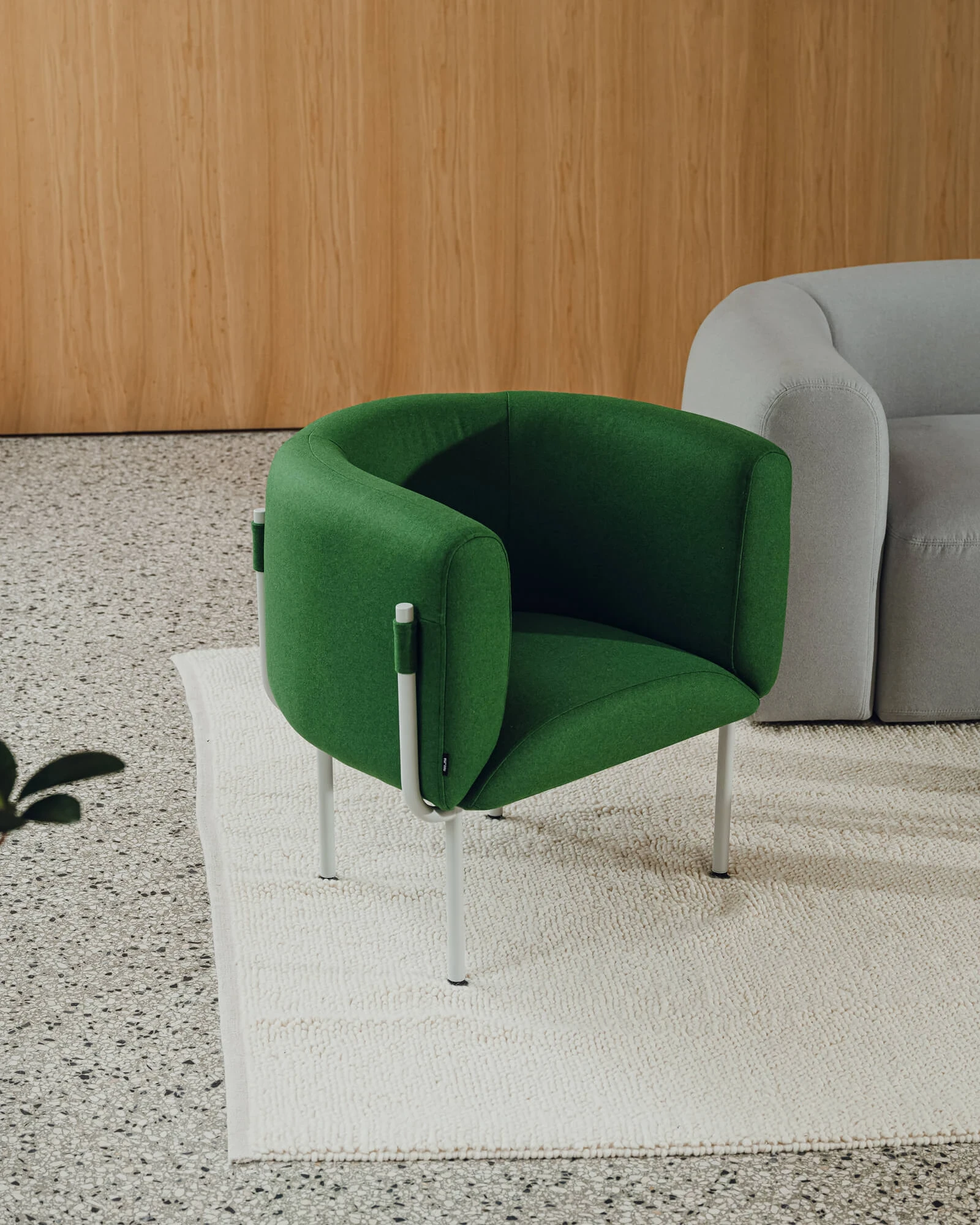
Wool is the quiet achiever: naturally stain-resistant, warm in winter, and hard-wearing. Noo.ma's wool armchairs (from £623) are some of the most interesting in the mid-range, combining Scandinavian design with durable wool upholstery in colours like moss green and rusty red.

Best Armchairs by Budget: What You Get at Every Price Point
Price does not always correlate with comfort, but it almost always correlates with longevity. Here is what to expect at each tier, based on what we see across our seven partner retailers.
Under £500: Entry-Level With Surprises
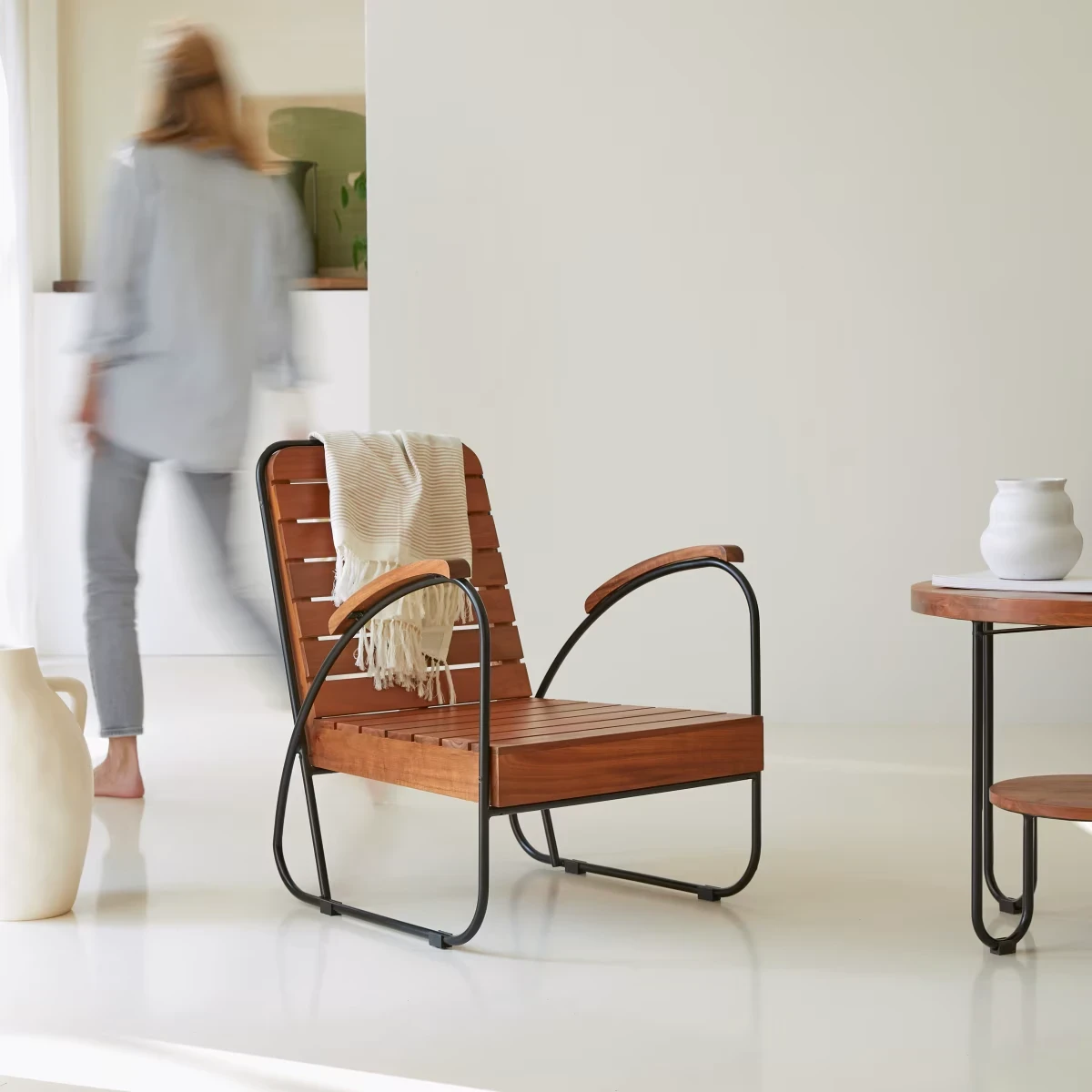
At this price, you are mainly looking at metal frames, simpler construction, and imported designs. Tikamoon's Key Wood armchair in solid acacia (£329) punches above its weight -- genuine hardwood, clean lines, and a material that weathers well. The Six The Residence Canvas & Walnut Armchair at £455 is another standout, mixing ash timber with a canvas sling seat for a mid-century look.
£500-£1,000: The Sweet Spot
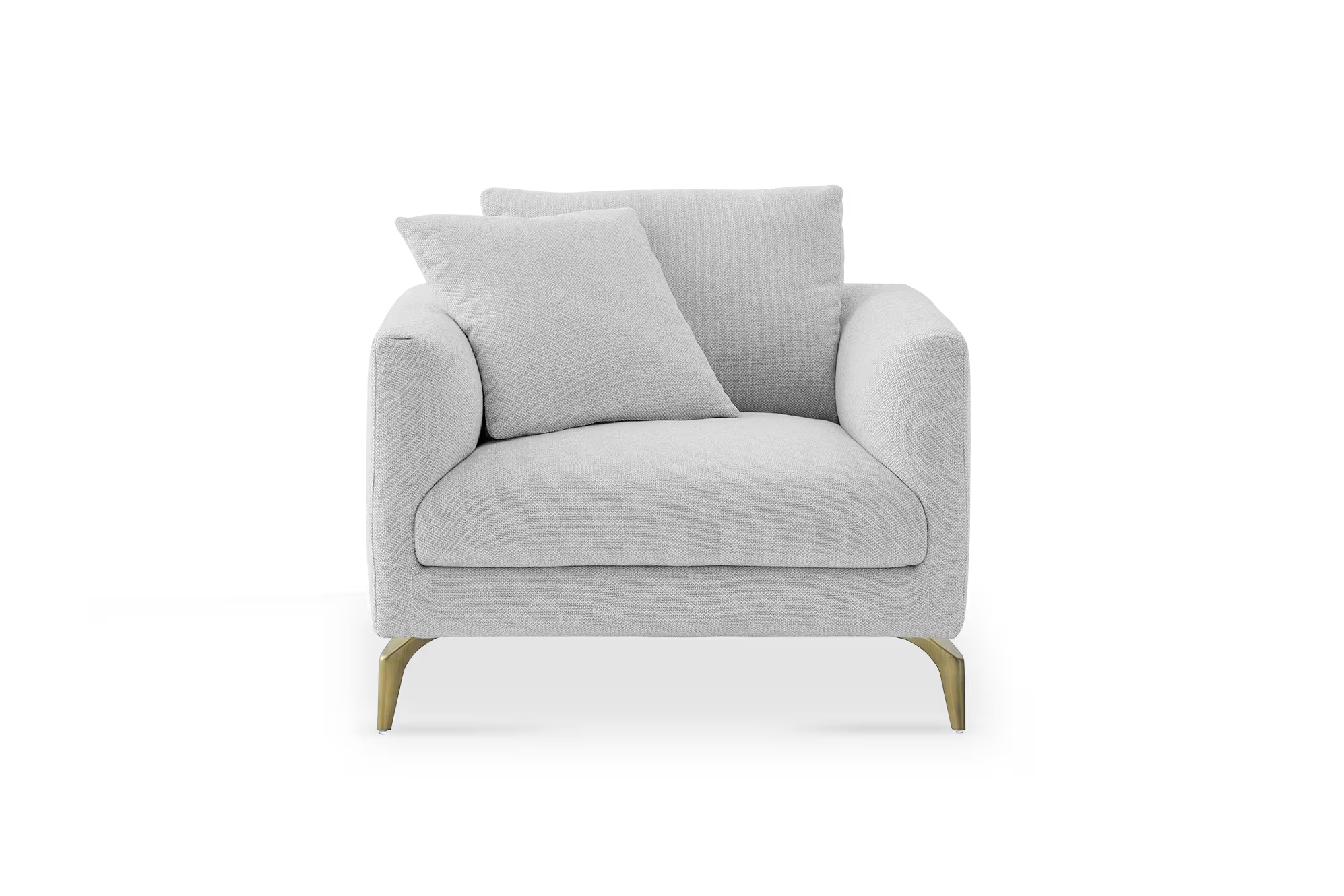
This is where construction quality jumps noticeably. Expect solid hardwood frames, better suspension (sinuous springs rather than webbing alone), and upholstery that holds its shape. Noo.ma's Ubi Mini in moss green wool (£623) is compact enough for smaller rooms without feeling cramped. Castlery's Lena Performance Fabric Armchair (£699) uses pocket springs and engineered wood for a seat that holds up to daily use. Loaf's Queenie (£895) brings a more relaxed British aesthetic with deep cushioning.
Over £1,000: Investment Pieces
Above a thousand pounds, you are paying for premium materials, hand-finished details, and construction designed to last decades. OKA dominates this tier in our collection, with over 50 armchairs including their Alora velvet range (£1,095) and Berstone leather collection (up to £1,695). Castlery's Desmond Rocking Armchair with Ottoman (£1,329) offers a different proposition -- a complete reading station in leather and rubber wood.
Armchairs for Small Rooms: How to Get It Right Without Compromising Comfort
A compact armchair does not have to mean an uncomfortable one. The key measurements to check are overall width (aim for 65-75 cm for a small room), seat height (standard is 42-46 cm), and depth when measured from the wall (account for any backward lean).
In our current collection, armchairs with Scandinavian and minimalist styling tend to have the smallest footprints. Noo.ma's range is particularly well-suited to smaller spaces -- their Ubi Mini has a seat width of around 55 cm, which works in a bedroom corner or a home office without dominating the floor plan.
Three rules for small-room armchair placement:
Avoid arms wider than the seat. Flared arms add visual bulk. Look for chairs where the arm width matches or is narrower than the seat width.
Choose raised legs over skirted bases. Visible floor beneath the chair makes the room feel more open. Most Scandinavian-style armchairs in our collection (33 listings) have this feature.
Consider a swivel base. In a room where the armchair serves double duty (TV watching, reading, conversation), a swivel avoids the need for repositioning and keeps traffic flow clear.
How to Match an Armchair to Your Existing Furniture
The easiest approach is to use the armchair as either a complement or a deliberate contrast -- never something in between. A complement means matching the material family (a linen armchair beside a linen sofa) but varying the colour or pattern. A contrast means a different material altogether (a leather armchair opposite a fabric sofa), which works when the colour temperature stays consistent.
Across the armchairs we list, contemporary style is the most common (78 listings), followed by modern (62) and mid-century modern (46). If your room already has mid-century pieces, picking an armchair from that same style family creates coherence without requiring an exact match.
Colour pairing shortcuts:
Neutral sofa + coloured armchair: the most reliable combination. A grey sofa with an olive or rust armchair adds warmth without risk.
Patterned sofa + solid armchair: pick a colour from the pattern for the armchair.
Leather sofa + fabric armchair (or vice versa): the material contrast does the work, so keep colours within two tones of each other.
For a mid-century pairing that works in most living rooms, the noo.ma RM58 in rusty red wool (£742) has the right proportions and colour warmth to sit comfortably alongside a neutral sofa.
Caring for Your Armchair: Maintenance by Material
How long your armchair lasts depends less on how much you spent and more on how you maintain it. Here is a material-by-material guide.
Material | Weekly | Monthly | Annually |
|---|---|---|---|
Velvet | Brush with a soft clothes brush | Vacuum with upholstery attachment | Professional clean if needed |
Leather | Wipe with a dry cloth | Condition with leather balm | Deep condition, check for cracks |
Linen/Cotton | Brush off debris | Vacuum crevices, rotate cushions | Wash removable covers (check label) |
Wool | Brush gently | Vacuum on low suction | Professional clean recommended |
Universal rules: Keep all upholstered armchairs out of direct sunlight to prevent fading. Rotate and flip any removable seat cushions monthly. Address spills immediately -- blot, never rub.
Browse Armchairs on MeetFelix
MeetFelix brings together armchairs from boutique UK retailers in one place, so you can compare styles, materials, and prices without visiting a dozen websites. Browse all armchairs, explore velvet armchairs, or filter by leather armchairs to find the right one for your room.
Frequently Asked Questions
What is the most comfortable type of armchair?
Comfort depends on how you sit. For upright reading or working, a high-backed armchair with firm seat cushioning and arms at desk height (60-65 cm) is the most supportive. For lounging, a deep-seated armchair with a lower back angle and soft fill (feather or fibre blend) lets you sink in. In our collection, Loaf and Castlery tend towards the lounging end, while OKA and noo.ma offer more structured, upright options.
How much should I spend on an armchair?
For an armchair you plan to use daily for five or more years, £500-£1,000 is the range where construction quality, material durability, and comfort converge. Below £500, you can find good design but may compromise on longevity. Above £1,000, you are paying for premium materials (full-grain leather, high-quality velvet) and hand-finished construction. In our current collection of over 140 armchairs, around 60% fall within the £500-£1,000 range.
What is the difference between an armchair and an accent chair?
An armchair is designed primarily for comfort and regular use, typically with padded arms, a deep seat, and substantial cushioning. An accent chair prioritises aesthetics -- it is often lighter, smaller, and designed to complement a room's decor rather than serve as a primary seat. Many chairs blur the line between the two. If you need something you will sit in for hours, choose an armchair. If you need a visual anchor that sees occasional use, an accent chair works.
How do I choose an armchair for a small living room?
Measure your available floor space first, then look for armchairs under 75 cm wide with raised legs (which create visual space beneath). Avoid bulky rolled arms or deep skirts. In our collection, Scandinavian and minimalist styles (over 40 listings combined) tend to have the most compact proportions. A swivel base adds flexibility without needing extra clearance for repositioning.
Are velvet armchairs hard to maintain?
Velvet requires more attention than leather or performance fabric, but it is not high-maintenance if you follow a routine. Brush weekly with a soft clothes brush to prevent crushing, vacuum monthly with an upholstery attachment, and keep it away from direct sunlight. Modern velvet blends are more resilient than pure cotton velvet. Across our 17 velvet armchairs, prices range from £475 to £1,295 -- the fabric itself is not the cost driver so much as the frame and fill quality beneath it.
Which armchair materials are best for homes with pets?
Leather is the most pet-friendly material -- it does not trap hair, resists scratches better than fabric, and cleans with a simple wipe. Performance fabrics (like those used in Castlery's range) are engineered to resist stains and are easy to spot-clean. Avoid loose-weave linens and pure velvet if you have cats, as claws catch in the fibres. Wool sits in the middle: naturally stain-resistant but can attract hair.

