

Best Benches UK: How to Choose the Right One for Every Room
A bench is one of the most versatile pieces of furniture you can own. It seats three where two chairs would fit, doubles as a hallway drop zone, anchors the foot of a bed, and tucks under a table when not in use. In our current collection, MeetFelix brings together 122 benches from 6 UK boutique retailers -- in solid oak, American black walnut, reclaimed teak, mango wood, and upholstered designs -- priced from £79 to £2,935. This guide covers what to look for, what to avoid, and how to choose a bench that earns its place in your home. Browse all benches on MeetFelix to see the full range, or read on for our recommendations.
Dining Bench vs Chairs: When a Bench Makes More Sense
A dining bench seats more people per metre than individual chairs, which makes it the better choice for narrow rooms, family kitchens, and anyone who regularly hosts. A 150cm bench typically fits three adults comfortably -- the same space that two dining chairs occupy. Benches also push flush against the table when not in use, freeing up floor area in a way chairs never manage.
That said, benches work best on one side of the table, with chairs opposite. This gives you the flexibility of individual seating where you want it and the space efficiency of a bench where you need it. If your dining table sits against a wall, a bench on the wall side is the obvious choice -- it eliminates the need to pull chairs out into limited floor space.
Across our current collection, we found 27 benches specifically designed for dining, from straightforward wooden dining benches starting at £229 to upholstered designs with padded seats reaching £825. The rest of our 122-piece bench collection spans hallway, bedroom, and multi-purpose designs. If you are furnishing a dining room from scratch, our dining tables buying guide covers table selection -- get the table right first, then size your bench to match.
Sizing Your Dining Bench
Getting the length right matters more than anything else. A bench that is too short looks awkward; one that is too long blocks chair placement at the ends.
Table Length | Bench Length | Seats |
|---|---|---|
120-140cm | 100-120cm | 2 adults |
150-180cm | 130-160cm | 3 adults |
200-220cm | 170-190cm | 4 adults |
240cm+ | 200cm+ | 5 adults |
Height rule: Your bench seat should sit 28-32cm below the table top. Most dining tables are 74-76cm high, so aim for a bench seat height of 44-48cm. Standard dining bench height is 45cm -- check before you buy, especially with thicker table tops.
Depth rule: A seat depth of 35-40cm works for upright dining. Anything deeper and you are building a lounging bench, not a dining one.
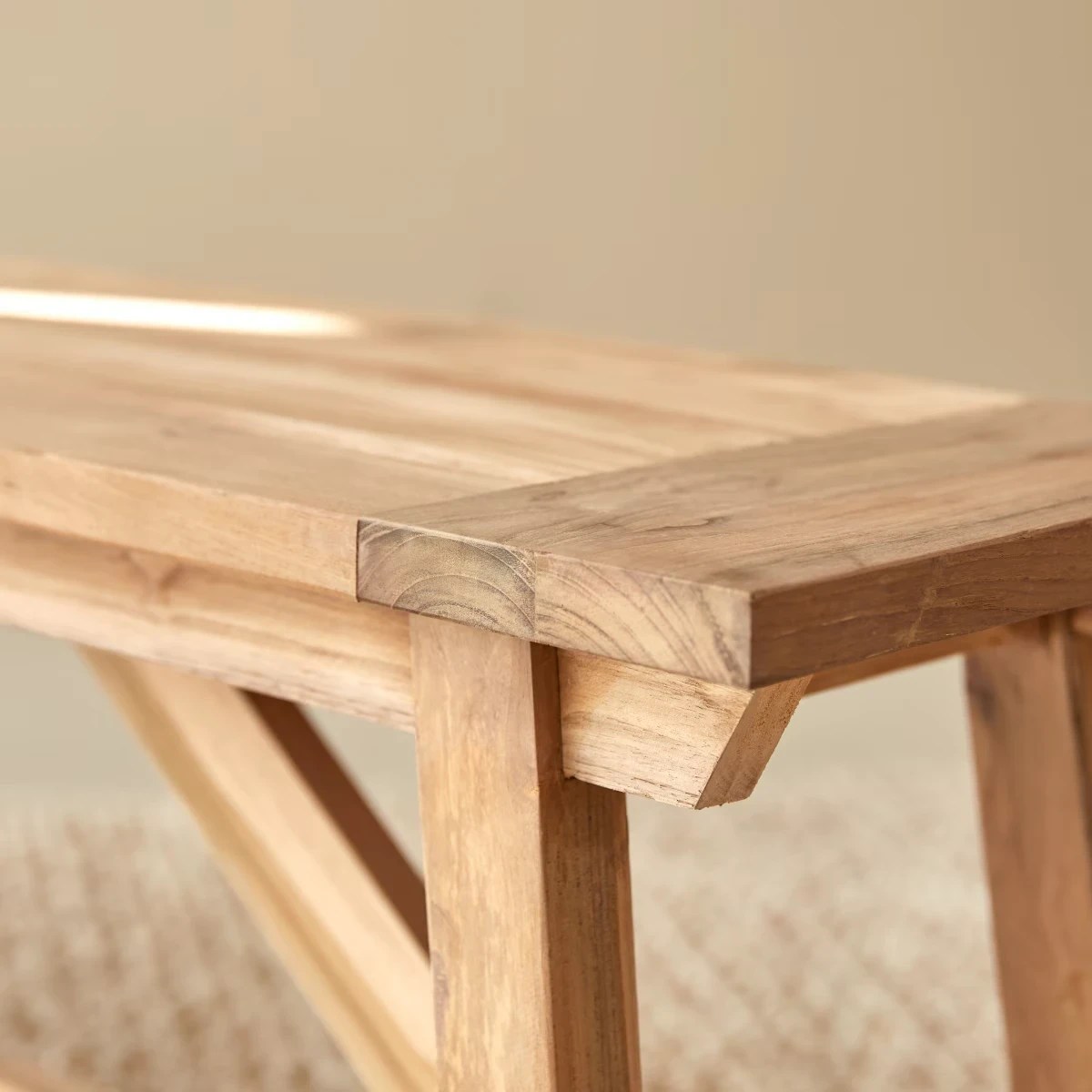
![Signature Bench [Oak]](https://zpeqbrudpqjbpfhmntcb.supabase.co/storage/v1/object/public/product-images/konk-furniture/konk-furniture-signatureb-mjc0sc5t/original/9db460b1ebcb.webp)
Bench Materials: What Holds Up and What Does Not
The material you choose determines how your bench looks in year one, year five, and year ten. Solid hardwood benches age well; engineered or softwood options often do not.
Oak is the benchmark for dining and hallway benches in the UK. It is hard enough to resist dents from shoes and bag drops, takes a beating from daily use, and develops a warmer tone over time. In our collection, we list 19 oak benches from brands like Konk, priced from £539 to £649 for hallway designs. Oak works in traditional, Scandinavian, and contemporary settings -- it is the safest material choice if you are unsure.
American black walnut brings a richer, darker grain that suits mid-century and modern interiors. Walnut benches tend to cost 10-15% more than their oak equivalents -- a Konk hallway bench in oak starts at £539, while the same design in walnut starts at £589. Walnut is slightly softer than oak but still a hardwood that holds up to daily use.
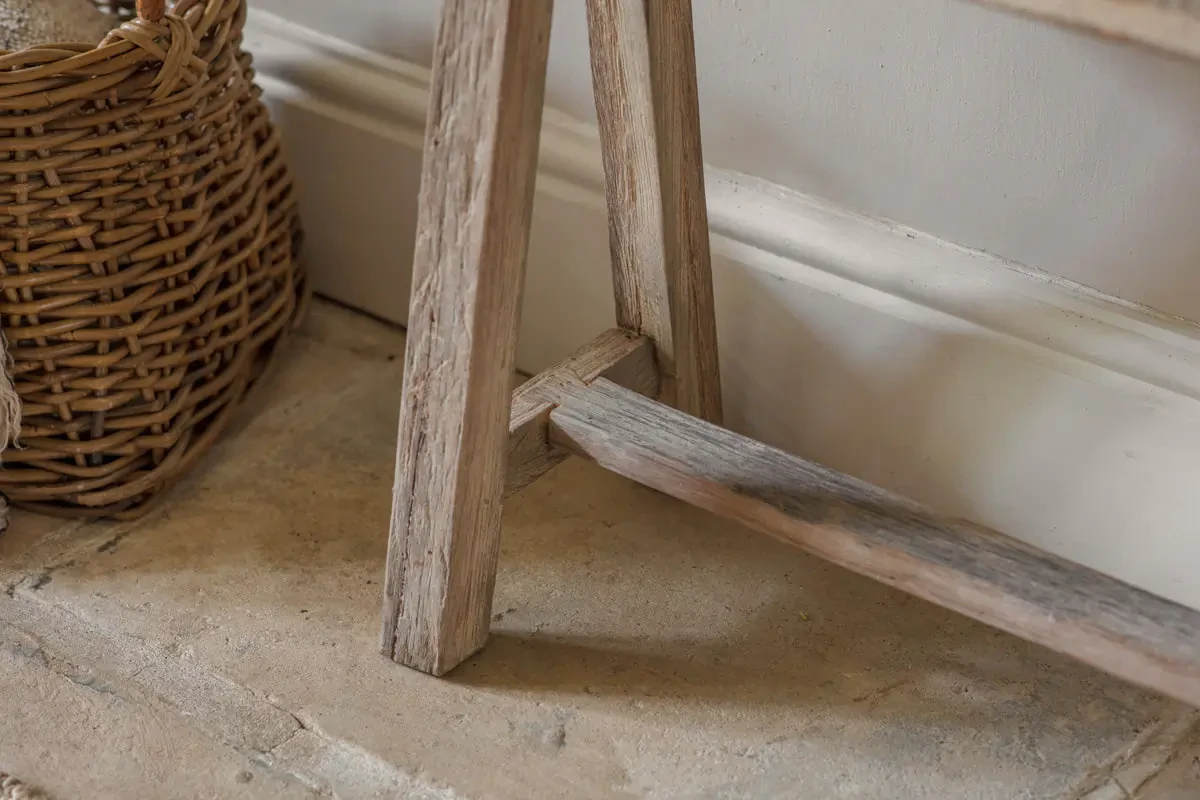
Teak is the hardest-wearing option, particularly for entryways and any space near exterior doors. Teak's natural oils make it resistant to moisture, which is why it has been used in shipbuilding for centuries. Tikamoon offers reclaimed teak benches from £79 (decorative) to £999 (full-size dining), with the recycled timber adding character that new wood cannot replicate.
Mango wood offers a similar warmth to oak at a lower price point, though it is softer and more prone to marking. It suits rooms where the bench will not take heavy daily impact. Nkuku carries mango wood benches paired with iron frames for added stability.
Reclaimed wood varies widely in hardness depending on the source timber, but the appeal is in the character -- visible grain, knots, and patina that factory-finished wood lacks. Nkuku's Ibo Reclaimed Wood Long Bench at £300 is a good example of what reclaimed timber can offer at a mid-range price.
Material | Hardness | Best For | Price Range (our collection) |
|---|---|---|---|
Oak | High | Dining, hallway, daily use | £539-£649 |
American black walnut | Medium-high | Dining, bedroom, mid-century interiors | £589-£909 |
Teak | Very high | Entryway, garden crossover, high-traffic | £79-£999 |
Mango wood | Medium | Bedroom, occasional use, budget-conscious | £300-£550 |
Reclaimed wood | Varies | Character pieces, hallway, statement | £300-£800 |
!['Signature' Bench [Walnut]](https://zpeqbrudpqjbpfhmntcb.supabase.co/storage/v1/object/public/product-images/konk-furniture/konk-furniture-signatureb-mjc0pe0y/original/dd9a0fc3be5d.webp)
Hallway and Entryway Benches: What to Prioritise
A hallway bench needs to do three things: give you somewhere to sit while putting on shoes, offer a landing spot for bags and keys, and fit into what is often the narrowest room in the house. At time of writing, we list 40 benches suited to hallway use across our collection.
Depth matters most. Most UK hallways are 90-120cm wide. A bench with a seat depth over 40cm will block foot traffic. Aim for 30-38cm depth for hallway benches -- just enough to perch on comfortably without turning the corridor into an obstacle course.
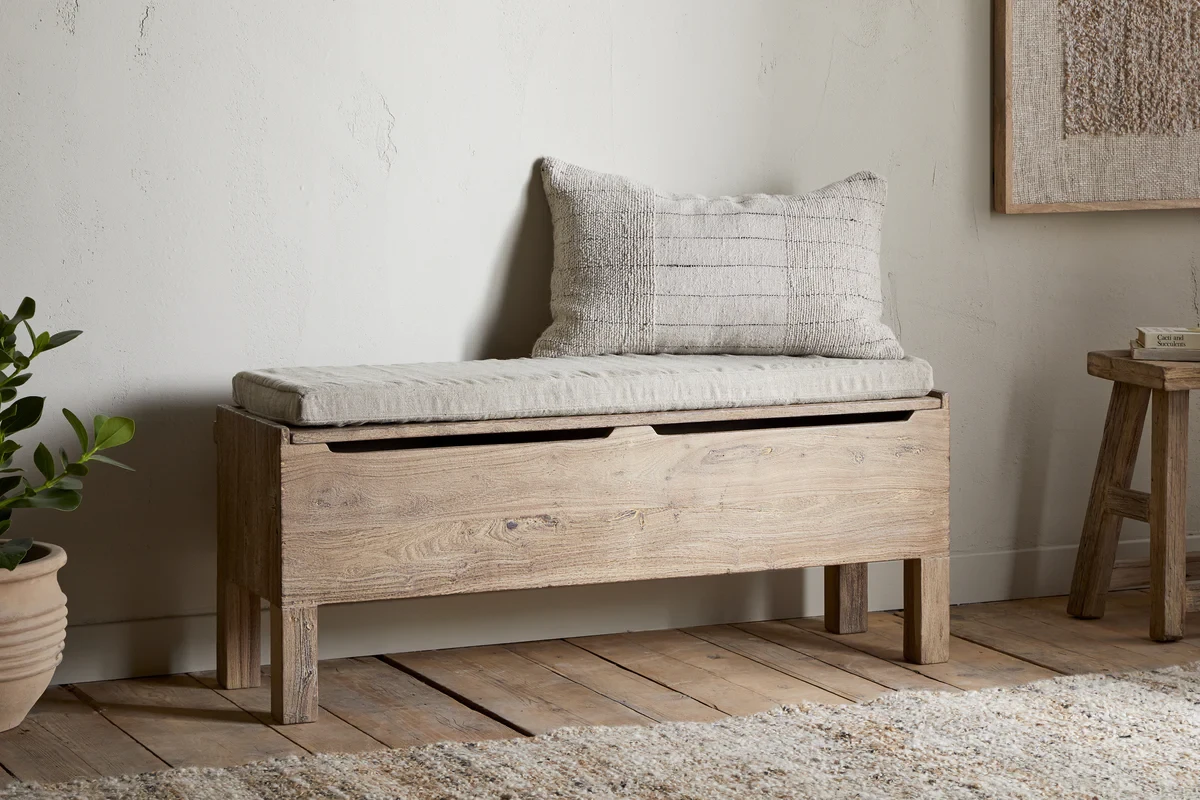
Storage changes everything. A hallway bench with a lift-up seat or lower shelf turns dead space into shoe storage. Nkuku's Teni Reclaimed Wood Storage Bench (£800) combines an upholstered linen cushion with reclaimed wood storage underneath -- practical and considered. For a simpler approach, benches with a slatted lower shelf give you somewhere to stash shoes without the enclosed feel.
Seat height for shoe-putting-on: 42-48cm is comfortable for most adults. Lower than 40cm and you will struggle to stand up easily, especially in a narrow space.
Konk makes some of the most thoughtfully proportioned hallway benches in our collection. Their Lonn Hallway Bench in oak (£539) and walnut (£589) is designed specifically for narrow spaces, with a seat depth that does not overwhelm the corridor.
![Lönn Hallway Bench [Oak] (Ready to Ship)](https://zpeqbrudpqjbpfhmntcb.supabase.co/storage/v1/object/public/product-images/konk-furniture/konk-furniture-lnnhallway-mjc0qe4v/original/008cc8d54e70.webp)
End of Bed Benches: More Than Decoration
An end of bed bench should match your bed width or sit 5-15cm narrower -- so 135-150cm for a king, 120-135cm for a double. That single measurement matters more than material or style. Get the width right and the bench gives you somewhere to sit while dressing, a place to lay out tomorrow's clothes, and a visual full stop that makes the bed look intentional rather than just placed.
Width rule: Your bench should be the same width as your bed or 5-15cm narrower. A bench wider than the bed frame looks clumsy; one that is significantly narrower looks like an afterthought.
Bed Size | Bench Width |
|---|---|
Double (135cm) | 120-135cm |
King (150cm) | 135-150cm |
Super king (180cm) | 160-180cm |
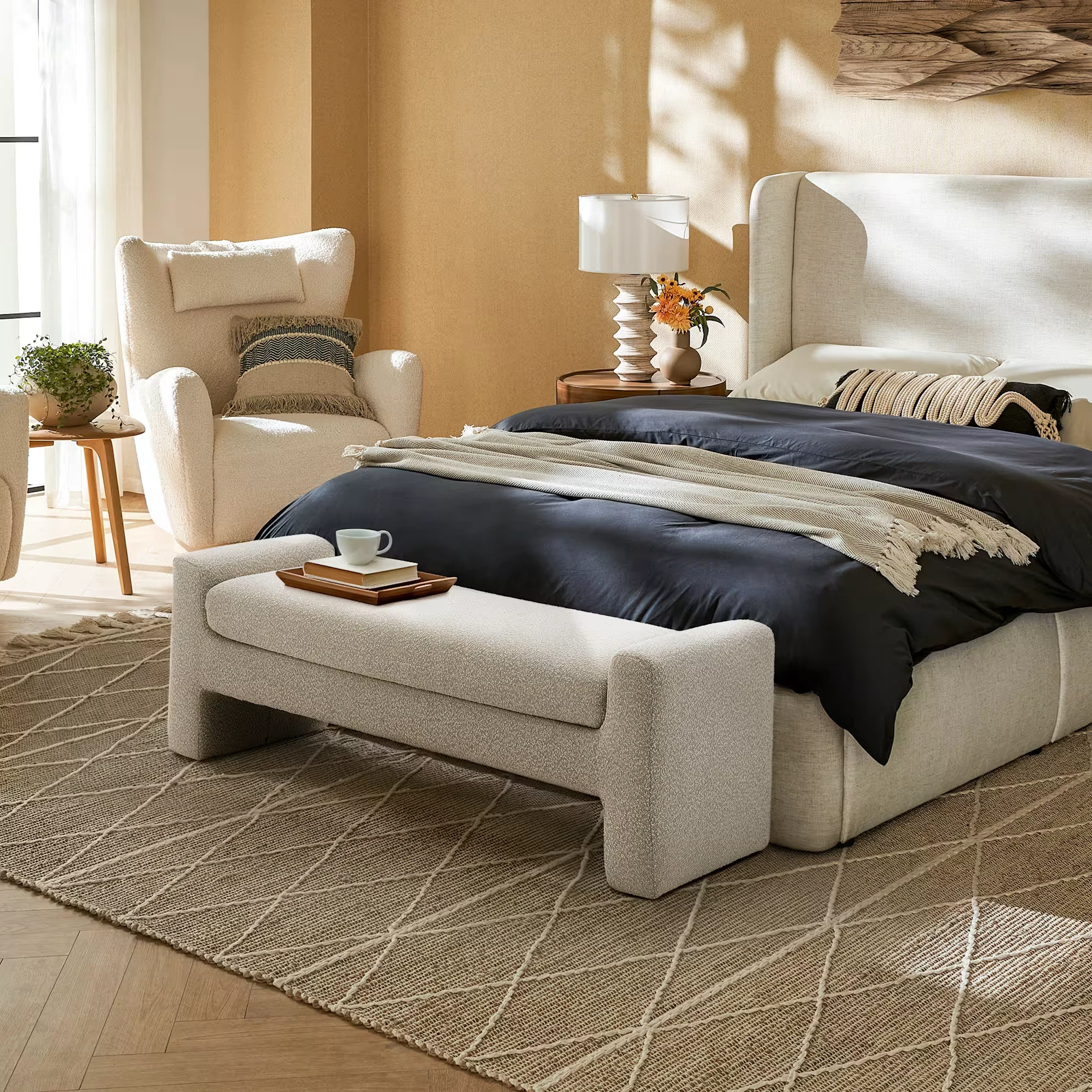
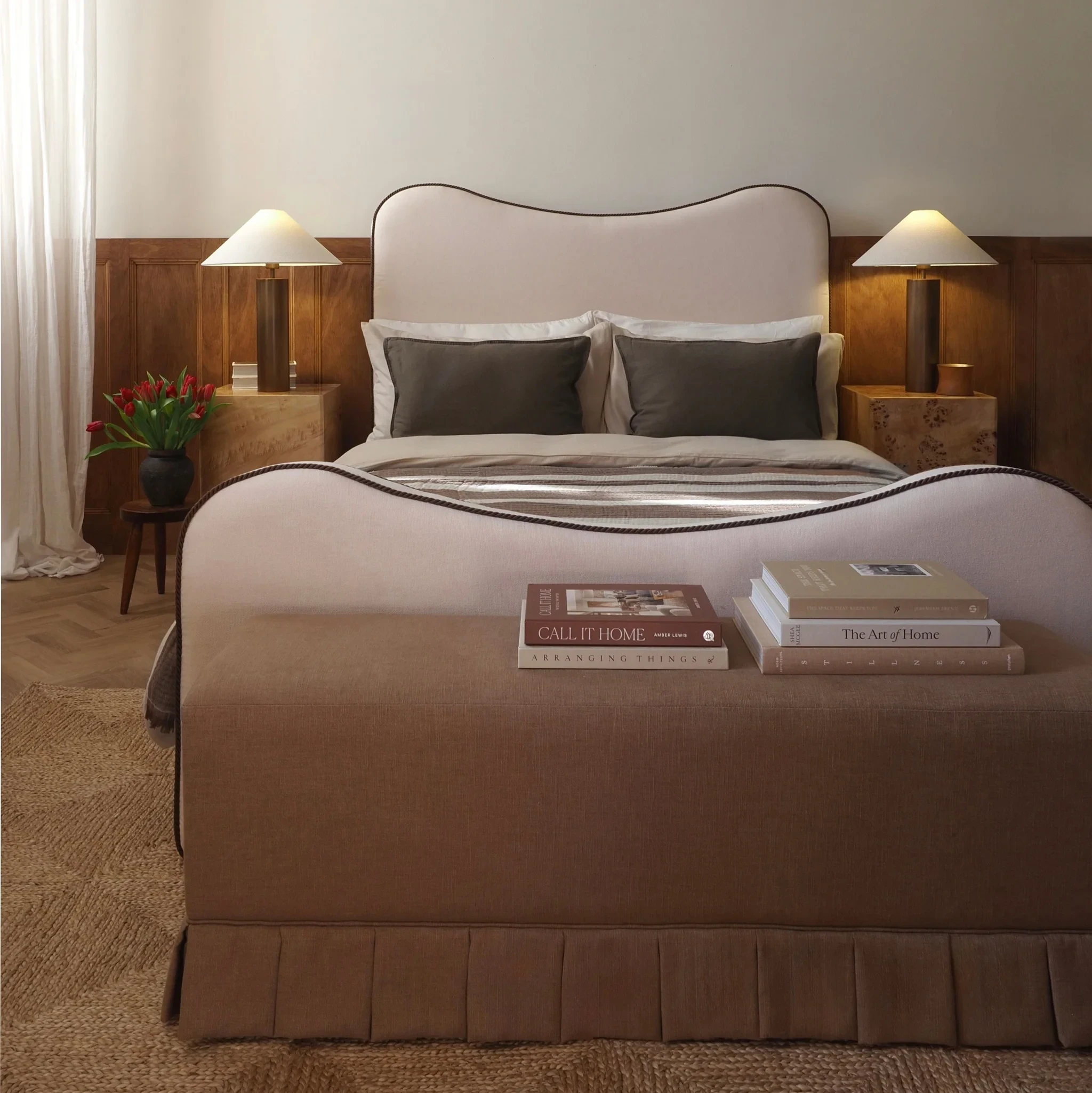
Upholstered vs wood at the foot of the bed: An upholstered bench adds softness to a bedroom that already has hard floors and wooden furniture. A wooden bench suits bedrooms with thick rugs and plenty of textiles. Think about what the room needs to balance, not what matches.
Castlery's Dakota Performance Boucle End of Bed Bench (£329) is purpose-built for the bedroom -- low-profile, soft to the touch, and wide enough for a king-size bed. The Abbey version at £429 adds solid ash legs for a more mid-century feel. For more on choosing a bed frame that works with a bench at its foot, see our bed frames buying guide.
Style Guide: Matching a Bench to Your Room
Benches span a wider style range than you might expect. In our current collection, contemporary (81 benches) and Scandinavian (54) are the most common styles, followed by rustic (38), industrial (33), and mid-century modern (27).
Contemporary and Scandinavian benches tend toward clean lines, tapered legs, and lighter wood tones. Oak and ash are the go-to materials. These work in most settings and are the safest choice if your interior style is still evolving.
Rustic and industrial benches lean on heavier proportions, iron hardware, and reclaimed or weathered timber. Nkuku's Kesu Kilim and Iron Bench (£550) blends industrial iron legs with a woven kilim seat -- a good example of how industrial furniture can still feel warm.
Upholstered benches cross style boundaries. A linen-covered bench in a natural tone suits Scandi, contemporary, and traditional rooms. Six The Residence's Box-Pleat Bench (£825) adds a tailored, upholstered look that works in both formal and relaxed dining rooms.
Mixing bench styles with your dining table: The bench does not need to match the table exactly. A weathered oak bench under a sleek walnut table creates deliberate contrast. What matters is that the wood tones are complementary (warm with warm, cool with cool) and the proportions are right. Read our materials guide for more on pairing different timbers.
What to Spend: A Price Guide for Every Budget
Bench prices reflect three things: material quality, joinery method, and brand positioning. Here is what each price tier typically gets you, based on our current collection.
Budget | Price Range | What You Get | Typical Materials |
|---|---|---|---|
Entry | £79-£250 | Decorative or compact benches, basic construction | Reclaimed teak, engineered wood, mango wood |
Mid-range | £250-£650 | Solid hardwood dining and hallway benches, reliable joinery | Oak, acacia, reclaimed wood, upholstered cotton |
Premium | £650-£1,000 | Handcrafted solid wood, bespoke options, upholstered designs | American black walnut, solid oak, linen, leather |
Investment | £1,000+ | Statement pieces, curved benches, designer upholstery, sets | Premium walnut, bespoke dimensions, table-and-bench sets |
Where to focus your money: The bench you sit on every day deserves a higher budget than the one that holds a plant in the hallway. For a dining bench that will see daily use for a decade, £400-£700 in solid oak or walnut is the sweet spot. For a hallway bench, £250-£500 gets you something that looks considered and holds up to shoe-related wear.
Sets vs separate: Castlery offers dining table and bench sets (from £969 for the Casa set) that guarantee proportion and finish matching. Buying separately gives you more flexibility but requires careful measurement. If you are less confident pairing pieces, a set removes the guesswork.
Browse Benches on MeetFelix
MeetFelix brings together benches from boutique UK makers including Konk, Nkuku, Tikamoon, Castlery, Loaf, and Six The Residence -- so you can compare materials, dimensions, and prices side by side without visiting half a dozen websites. Browse all benches, explore oak benches, or start with dining benches if you know where the bench is going.
Frequently Asked Questions
How long should a dining bench be?
A dining bench should be 20-30cm shorter than your table to leave room for chairs at each end. For a 180cm table, aim for a 150-160cm bench. This seats three adults comfortably and keeps the table looking balanced. Always measure the distance between table legs too -- the bench needs to fit between them if you plan to tuck it underneath.
Can you use a bench as hallway seating?
A bench works well as hallway seating if you choose the right depth. Keep the seat depth under 38cm for standard UK hallways (90-120cm wide). A bench height of 42-48cm makes sitting down to put on shoes comfortable without being too low to stand up from easily. Slatted lower shelves add shoe storage without the bulk of a closed unit.
Are wooden benches comfortable for dining?
A solid wood bench without cushioning is comfortable for meals lasting up to 45-60 minutes. Beyond that, most people prefer padding. Adding a bench cushion or seat pad is the simplest upgrade -- it costs £20-£50 and transforms comfort without changing the look. Some designs, like Loaf's Drummer Bench, come with integrated upholstery from the start.
What type of wood is best for a bench?
Oak and teak are the most durable choices for benches that will see daily use. Oak is the better all-rounder for indoor benches -- it is hard, widely available, and suits most interior styles. Teak excels in hallways or anywhere near exterior doors thanks to its natural moisture resistance. Walnut is a strong choice if you prefer a darker grain, though it costs more and is marginally softer.
How much should I spend on a bench?
For a dining bench you will use daily, £400-£700 in solid hardwood is the sweet spot for quality that lasts a decade or more. Hallway and bedroom benches can be found for £250-£500 in reliable materials. Below £200, you are generally looking at decorative pieces, engineered wood, or compact designs that work for occasional use but may not hold up to heavy daily traffic.
Should a bench match the dining table exactly?
No -- deliberate contrast often looks more considered than an exact match. A lighter oak bench under a dark walnut table creates visual interest, provided the wood tones are in the same warmth family. What matters more than matching is proportion: the bench height should put sitters at the same level as those on chairs, and the length should suit the table without overhanging or looking lost.


