

Best Bar Stools UK: How to Choose the Right One for Your Kitchen
The right bar stool turns a kitchen island from a worktop into the place where your household actually gathers. But choosing well means thinking beyond colour swatches -- seat height, footrest placement, and material durability matter far more than most guides let on. In our current collection, we list 23 bar stools and counter stools from 6 boutique UK retailers, priced from £159 to £775, in materials ranging from solid oak to cane and leather.
This guide covers the practical decisions -- height, material, comfort -- so you end up with stools that work for your kitchen, not just ones that looked good on a mood board.
What Height Bar Stool Do You Actually Need?
For a standard 90cm kitchen counter, choose a stool with a seat height between 63cm and 67cm. For a taller 100-110cm breakfast bar, you need a seat height of 73-80cm. The target gap between the top of the seat and the underside of your counter is 25-30cm -- enough legroom to sit comfortably without hunching.
Most UK kitchens fall into one of two categories:
Counter/Bar Height | Stool Seat Height | Common Name |
|---|---|---|
85-90cm | 60-67cm | Counter stool |
100-110cm | 73-80cm | Bar stool |
115cm+ | 80-85cm | Tall bar stool |
Measure your counter before you shop. The single most common mistake is buying stools that are too tall or too short, and returns on bulky furniture cost time and money.
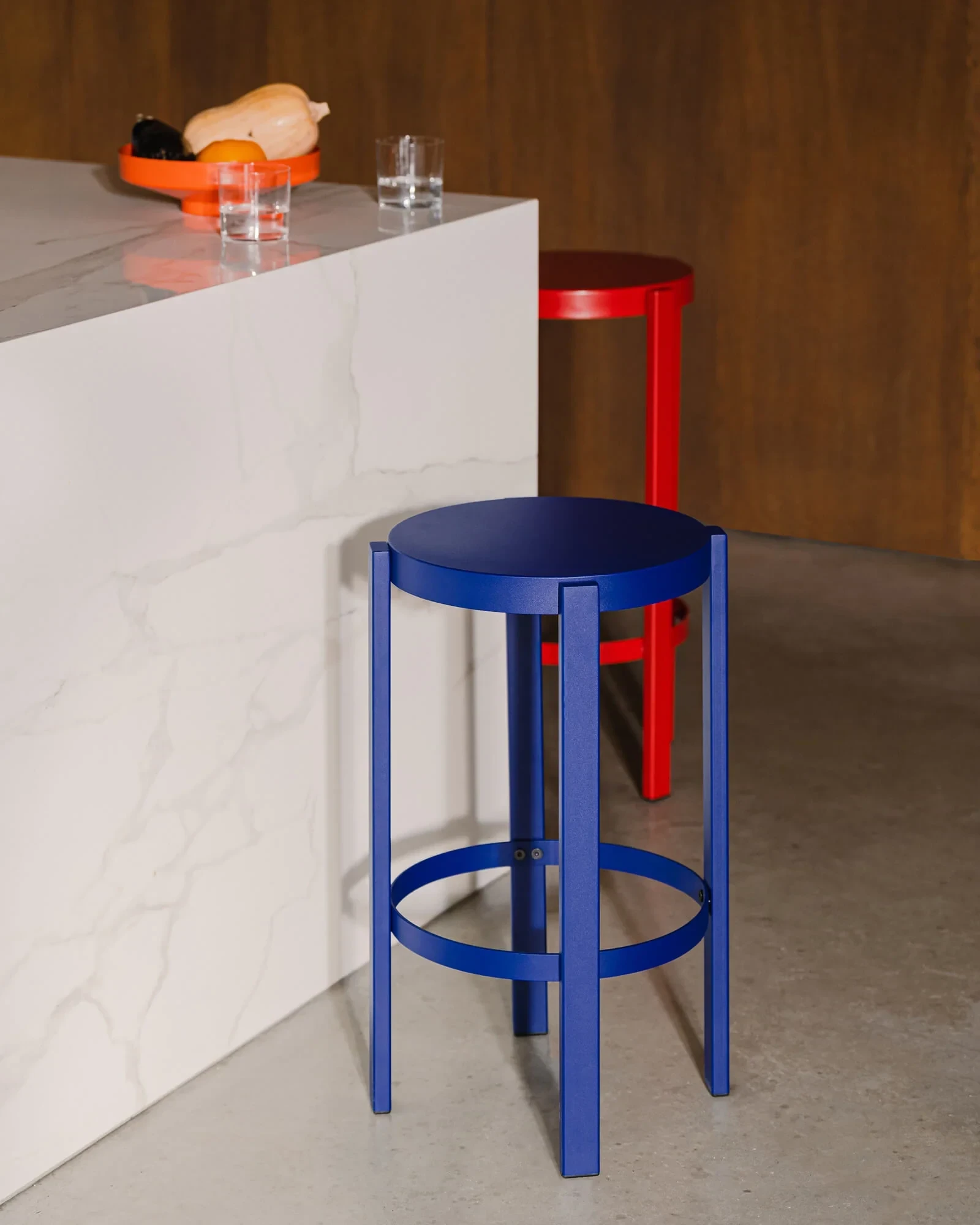
If your counter falls between standard heights -- say 95cm, which some kitchen fitters install -- look for adjustable-height stools or split the difference with a 70cm seat height. The noo.ma Doon, available in both 65cm and 75cm seat heights, is a good example of a design that lets you match the stool to your specific counter.
Materials That Last in a Kitchen
Oak and teak are the most durable wood choices for bar stools that see daily kitchen use -- both resist moisture and wipe clean without special treatment. In our current collection, solid oak and teak account for the majority of wooden bar stool options, with steel frames as the most common metal pairing.
Here is how the main materials compare for kitchen use:
Material | Durability | Maintenance | Best For |
|---|---|---|---|
Solid oak | Excellent -- hardens with age | Oil annually | Traditional and Scandi kitchens |
Teak | Excellent -- naturally water-resistant | Minimal | Kitchens near exterior doors |
Steel frame | Very good -- rust-resistant if powder-coated | Wipe down | Industrial and modern kitchens |
Cane / rattan | Good -- surprisingly sturdy | Keep dry | Warm, textural kitchens |
Upholstered seat | Varies | Fabric needs protection | Kitchens used for long meals |
For households with young children, a steel-frame stool with a wipeable seat (like the noo.ma Doon range in powder-coated steel) handles spills far better than a fully upholstered option. Leather seats age well in kitchens -- developing a patina rather than looking worn -- but genuine leather stools tend to sit at the higher end of the price range.
![Huffer J Stool [three heights]](https://zpeqbrudpqjbpfhmntcb.supabase.co/storage/v1/object/public/product-images/konk-furniture/konk-furniture-hufferjsto-mjc0jngr/original/66e2e90f6376.webp)
The Konk Huffer J Stool pairs a solid oak seat with a raw steel frame -- a combination that suits industrial-leaning kitchens and cleans up with a damp cloth. At £239, it sits at the accessible end of handmade British furniture.
With Back or Without? The Comfort Question
A backless stool works well for quick breakfasts and casual perching -- anything under 20 minutes. If your kitchen island doubles as a dining table or home office, a stool with a low back or lumbar support makes a meaningful difference to comfort over longer sits.
Consider your use pattern honestly:
Quick meals and coffee: Backless stools are fine, and they tuck fully under the counter to save space
Evening drinks and conversation: A low back (15-25cm) offers support without blocking sightlines across an open-plan space
Working from the kitchen island: A full back with footrest is worth the extra cost and visual bulk
Footrests matter more than most people realise. Without one, your legs dangle at counter height, which gets uncomfortable within minutes. Every stool in our collection over £200 includes an integrated footrest -- either a steel crossbar or a wooden rail.
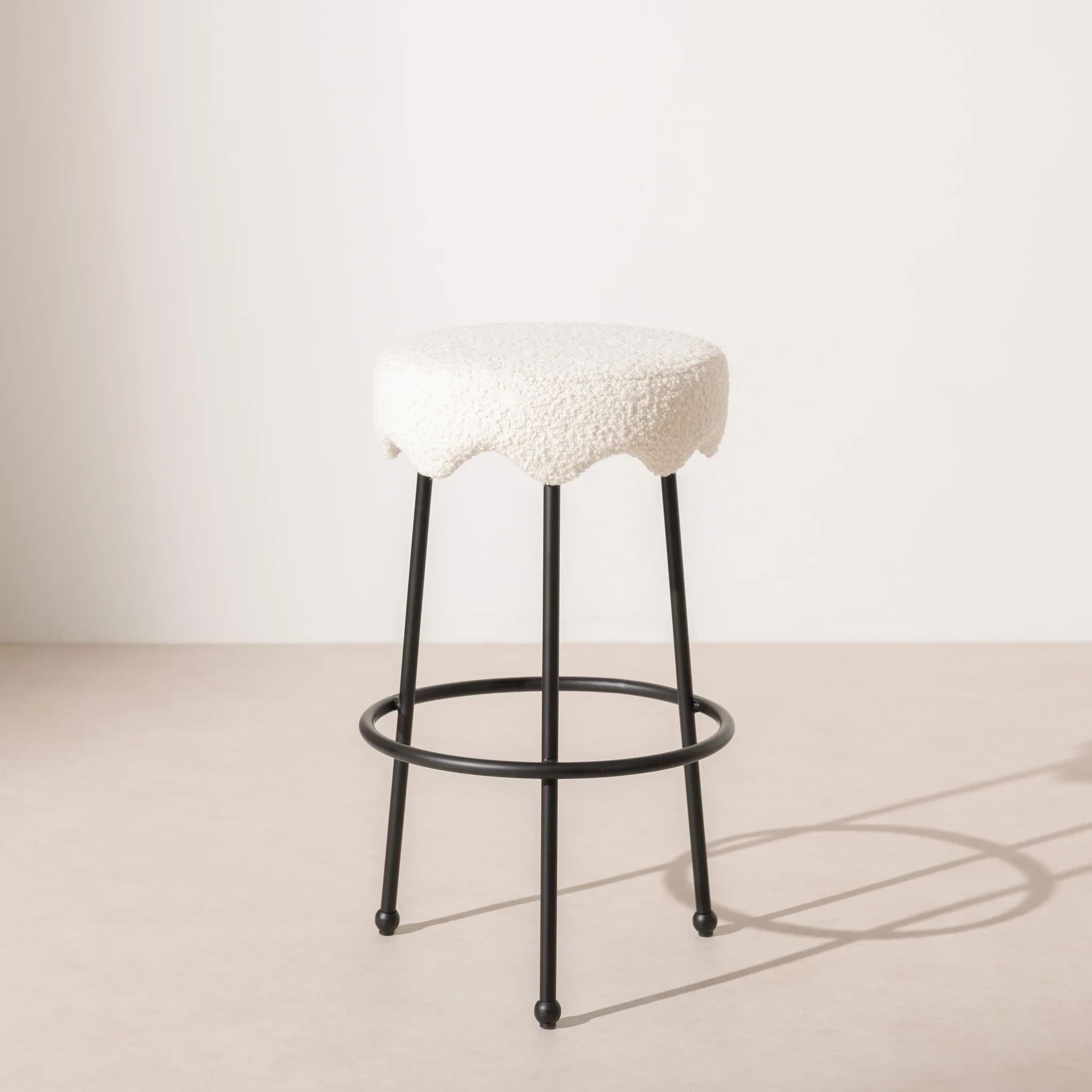
The Six The Residence Honore Scalloped Bar Stool offers a shaped back in boucle fabric -- supportive enough for a long Saturday lunch but low-profile enough to not dominate the kitchen visually.
Choosing a Style That Works With Your Kitchen
Bar stool style should follow your kitchen's existing material palette rather than fight against it. Oak cabinets pair naturally with wooden-seated stools; sleek handleless kitchens suit metal or cane. Across our bar stool collection, contemporary and modern styles are the most represented, followed by industrial and mid-century options.
For modern kitchens (clean lines, handleless units): Look for slim steel frames and minimal silhouettes. The noo.ma Doon range in colours like Blueberry Pie and Tomato Red adds personality without clutter.
For traditional kitchens (Shaker, country, farmhouse): Solid wood construction and natural finishes ground the space. Teak and oak stools with turned or tapered legs work well here.
For industrial kitchens (exposed brick, concrete, steel): Raw steel frames paired with oak or leather seats hit the right note. The Konk Huffer range, with its mild steel and character-grade oak combination, was designed for exactly this aesthetic.
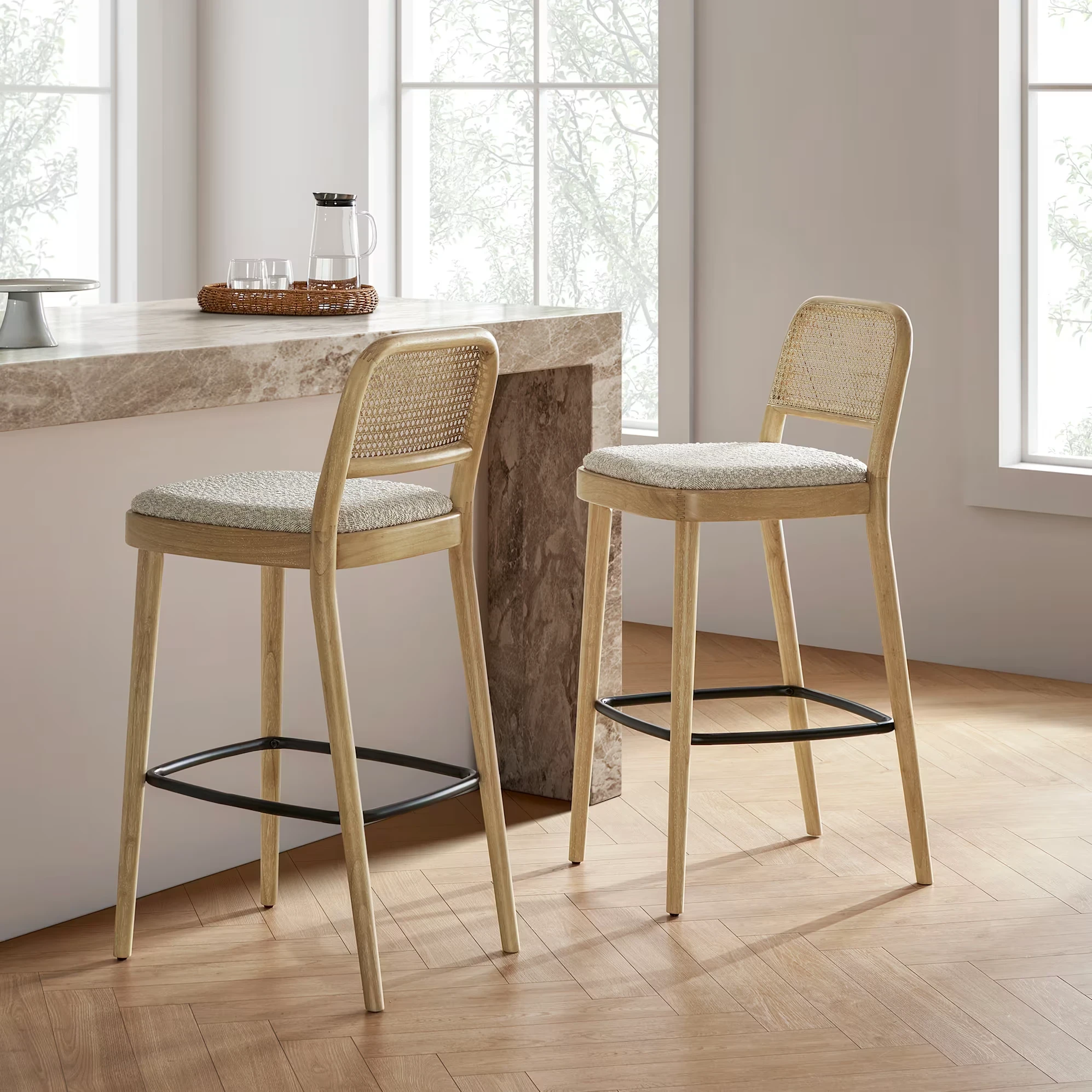
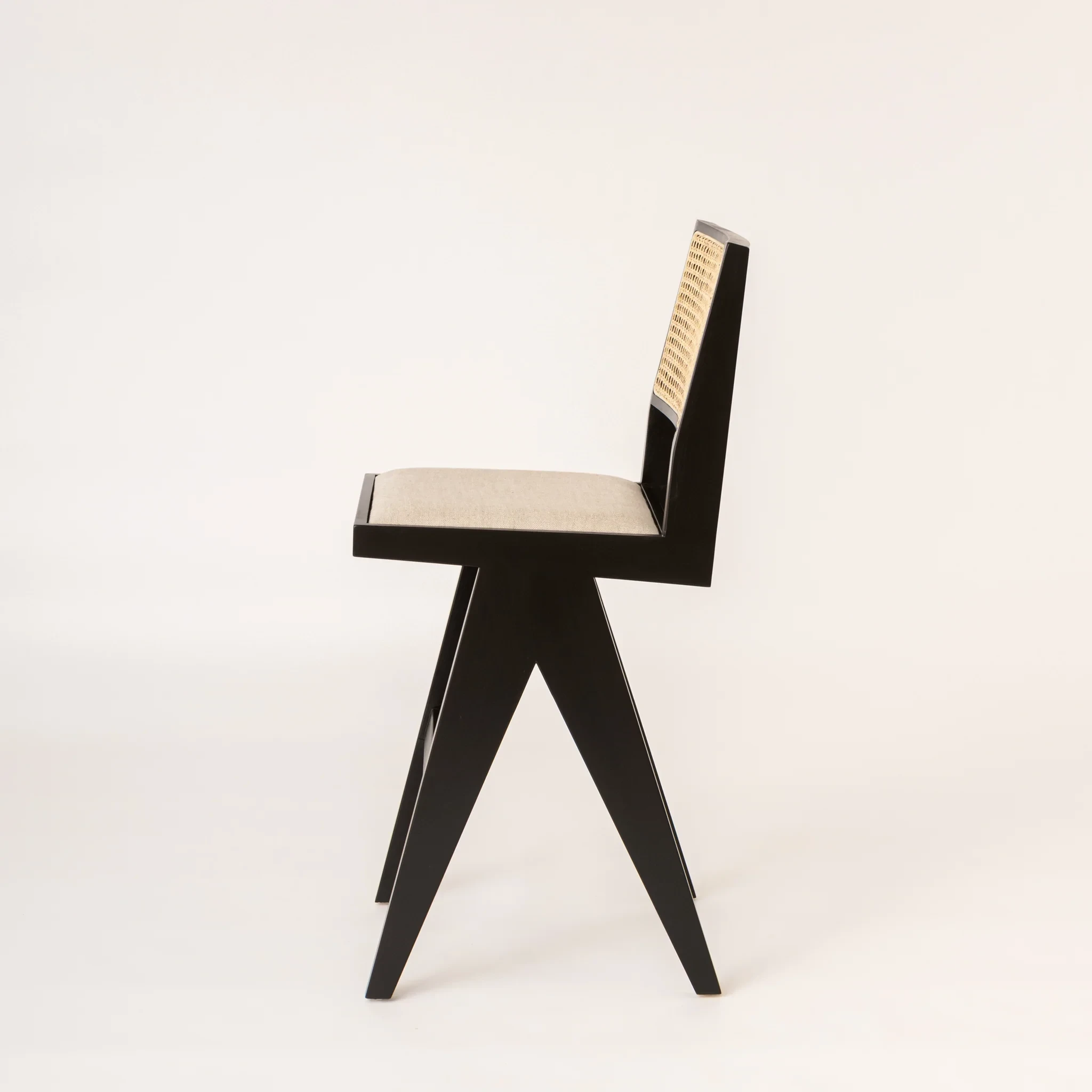
For Scandi and japandi kitchens: Cane and light wood dominate. The Castlery Edith Cane Bar Stool, available in black or white wash at £498, brings rattan warmth to a pared-back kitchen.
How Many Bar Stools Do You Need?
Allow 60cm between the centre of each stool for comfortable spacing -- 70cm if you are choosing stools with arms or wide seats. Measure your counter's usable length (subtract 15cm from each end so nobody sits pressed against a wall or appliance) and divide by 60.
Counter Length | Usable Length | Recommended Stools |
|---|---|---|
120cm | 90cm | 1 (tight) |
150cm | 120cm | 2 |
180cm | 150cm | 2-3 |
240cm | 210cm | 3 |
300cm+ | 270cm+ | 4 |
Most UK kitchen islands run 180-240cm, which comfortably fits two to three stools. Resist the temptation to squeeze in an extra stool -- cramped seating means nobody uses it.
What to Spend on Bar Stools
In our current collection, bar stool prices range from £159 for the noo.ma Doon (a powder-coated steel frame with moulded seat) to £775 for the Konk Perch Stool in hand-finished walnut. The sweet spot for a well-made stool that will last a decade sits between £200 and £500.
Here is what you get at each price tier:
Price Range | What to Expect | Example |
|---|---|---|
£150-£250 | Steel or basic wood frame, limited colour options, good daily durability | noo.ma Doon (£159-£173) |
£250-£500 | Solid hardwood or premium upholstery, more refined joinery, wider style range | Six The Residence Honore (£345), Castlery Edith Cane (£498) |
£500-£800 | Handcrafted British hardwood, bespoke options, heirloom quality | Konk Perch (£709-£775), Six The Residence Bolster in leather (£685) |
Buying in pairs or sets of three often brings the per-stool cost into better perspective. Two stools at £250 each is £500 total -- comparable to a single mid-range dining chair from many retailers.

Browse Bar Stools on MeetFelix
MeetFelix brings together bar stools and counter stools from boutique UK retailers -- so you can compare styles, materials, and prices in one place rather than trawling individual websites. Browse all bar stools, explore wooden bar stools, or discover counter stools for kitchen islands.
Frequently Asked Questions
What is the difference between a bar stool and a counter stool?
A counter stool has a seat height of 60-67cm, designed for standard 90cm kitchen counters. A bar stool is taller, with a seat height of 73-80cm, built for higher 100-110cm breakfast bars. The terms are often used interchangeably in the UK, but the height difference matters -- always measure your counter before ordering.
How much space do you need between bar stools?
Allow 60cm between the centre of each stool, measured at seat level. For stools with arms or particularly wide seats, increase this to 70cm. Leave at least 15cm between the end stool and any wall or appliance.
Are backless bar stools comfortable?
Backless bar stools work well for short sits of 20 minutes or less -- quick breakfasts, coffee, casual perching. For longer use, a stool with even a low back (15-25cm high) makes a noticeable difference. A footrest is essential regardless of back support.
What is the best material for kitchen bar stools?
Oak and teak are the most practical wood choices for kitchen use -- both resist moisture and clean easily. Steel frames with powder coating handle spills well and suit modern kitchens. Avoid fully upholstered stools without removable or washable covers if your kitchen sees heavy daily use.
How tall should bar stools be for a kitchen island?
Measure from the floor to the underside of your counter, then subtract 25-30cm. That gives you the target seat height. For a standard 90cm counter, aim for 63-67cm seat height. For a 105cm breakfast bar, look for 75-80cm.
Can you mix different bar stool styles?
Mixing works well when the stools share one common element -- the same seat height, the same material, or the same colour. Two oak stools paired with one cane stool in the same height creates a collected look. Avoid mixing more than two styles at a single counter, or the effect becomes cluttered rather than curated.


